4 Years of Transformation in Bangkok
In the past four years, Bangkok has not only changed its city image but is also restructuring its entire operational framework. Development is not limited to roads, parks, or new projects; it is about changing the mindset of "urban management" from the traditional bureaucratic system to one driven by data, technology, and responsiveness. Looking at the numbers, this transformation is not just about creating a facade but is a systematic effort to "reduce the city's hidden costs."
Through discussions about the mission of the Bangkok Metropolitan Administration, which states, "Turning away from the governor and facing the people," four main points illustrate the overall picture of a "city in transformation" through technology and care:
1. Digital Governance: Reforming services with "the heart is the people".
The core of this transformation is the use of technology to decentralize power, allowing citizens to participate directly in solving urban issues.
▪️Traffy Fondue: Previously, complaints had to go through multiple paper channels. Now, there are over 1.2 million complaints, with a satisfaction rate of 81%, addressing the previous pain point of complaints disappearing after being sent via email.
▪️New Experience: Notifications are updated immediately (e.g., pipe repairs completed in 16 hours) and are also used to manage emergencies, such as inspecting building cracks after earthquakes, with over 20,000 cases handled in just weeks.
▪️Public Space & Online Service: Requesting space has become easier through the Public Space website, allowing for transparent applications for events or film shoots.
▪️Online House Construction Applications: Reducing face-to-face interactions with officials, minimizing delays, and increasing transparency (with 17,000 applications submitted).
▪️Online CCTV Access: Requesting footage of incidents (e.g., accidents) can be done within 24 hours online, eliminating the need for multiple trips to police stations.
2. Sidewalk Infrastructure: "Walkable, pleasant, and inviting".
Urban development starts at the "feet" to connect travel from home to public transport (First Mile/Last Mile).
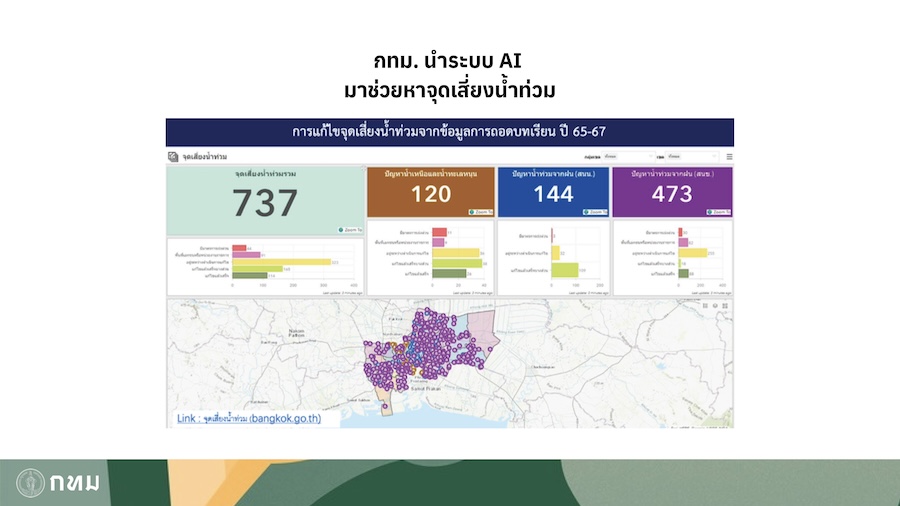
▪️Goal of 1,000 kilometers: Currently, over 1,100 kilometers have been completed, with sidewalks improved to be even and free of obstacles, including standard ramps for Universal Design (wheelchair accessible).
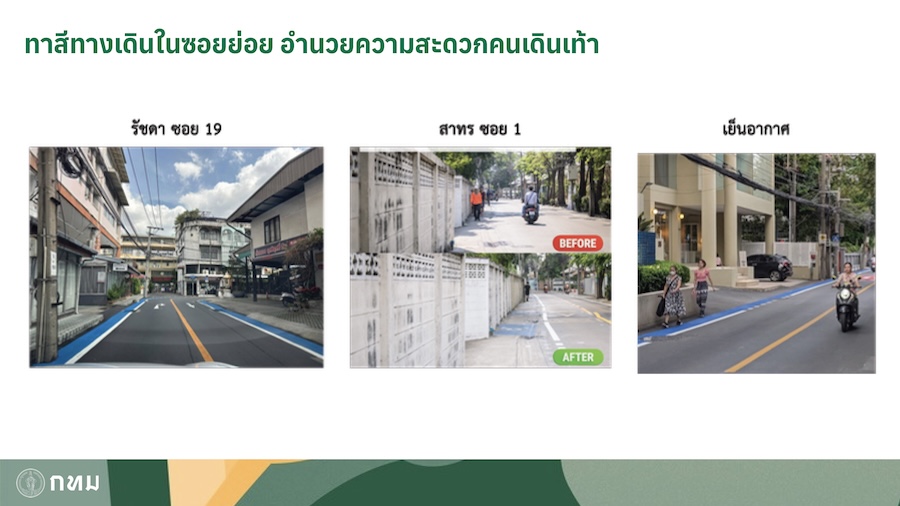
▪️Covered Walkways & Canal Walks: Creating covered walkways in high-demand areas, such as Sathorn, and improving the paths along the Saen Saeb and Phadung Krung Kasem canals for seamless connectivity without stopping at red lights.
▪️Skywalk at Victory Monument: Plans to upgrade it for full circular walking access, linking surrounding hospitals for convenience and emergency patient transport using golf carts.
3. Environment & Sustainability: A clean city with clean air. Waste management and green spaces are not just about "campaigning" but using "incentives".
▪️No More Trash Mixing: Changing the mindset from the traditional waste collection that costs the city 7 billion baht annually.
▪️Using Incentives: "If you separate waste, pay 20; if not, pay 60" helps reduce waste volume and saves hundreds of millions in budget.
▪️PM 2.5 Dust Management: Using a 7-day forecast to coordinate with neighboring provinces to request a "burning ban" during stagnant air periods, significantly reducing the number of days with excessive dust.
▪️15-Minute Parks: Currently, there are over 456 parks throughout the city.
▪️Land Tax Model: Private owners can offer vacant land to the city for public parks (minimum 7-10 years) in exchange for land tax exemptions, which is preferable to "urban agriculture" (e.g., growing limes in the city) that is becoming more regulated.
Criteria for accepting properties that private owners agree to allow the Bangkok Metropolitan Administration to use for public benefit:
1. The duration for which the Bangkok Metropolitan Administration is allowed to use the property for public benefit must be no less than 7 years, and the land rights must be registered.
2. The land and buildings must align with the Bangkok development plan, land use regulations, population density in the area, and be easily accessible to the public.
3. The budget that the Bangkok Metropolitan Administration must allocate for developing and improving the area, with coordination with the Bangkok budget office for preliminary information before making agreements with property owners.
4. The amount of land and building taxes that the Bangkok Metropolitan Administration exempts from collection.
5. The timeframe for operational improvements must not exceed 200 days.
4. Future Landmarks: The future of Bangkok with major projects that will create a "new image" for the city.
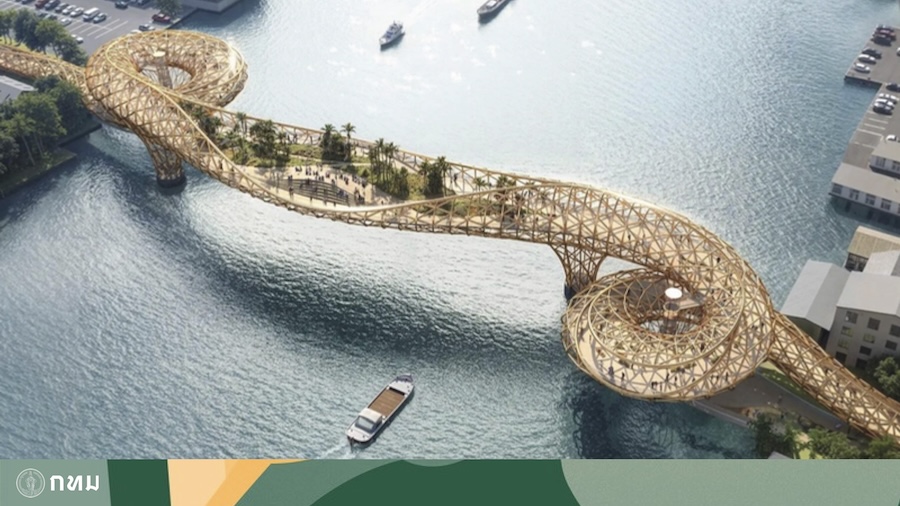
▪️Pedestrian Bridge across the Chao Phraya River (Din Daeng Pier - Song Wat): A new landmark emphasizing pedestrian and bicycle crossings to connect the economies of both riverbanks, designed by a world-class team.
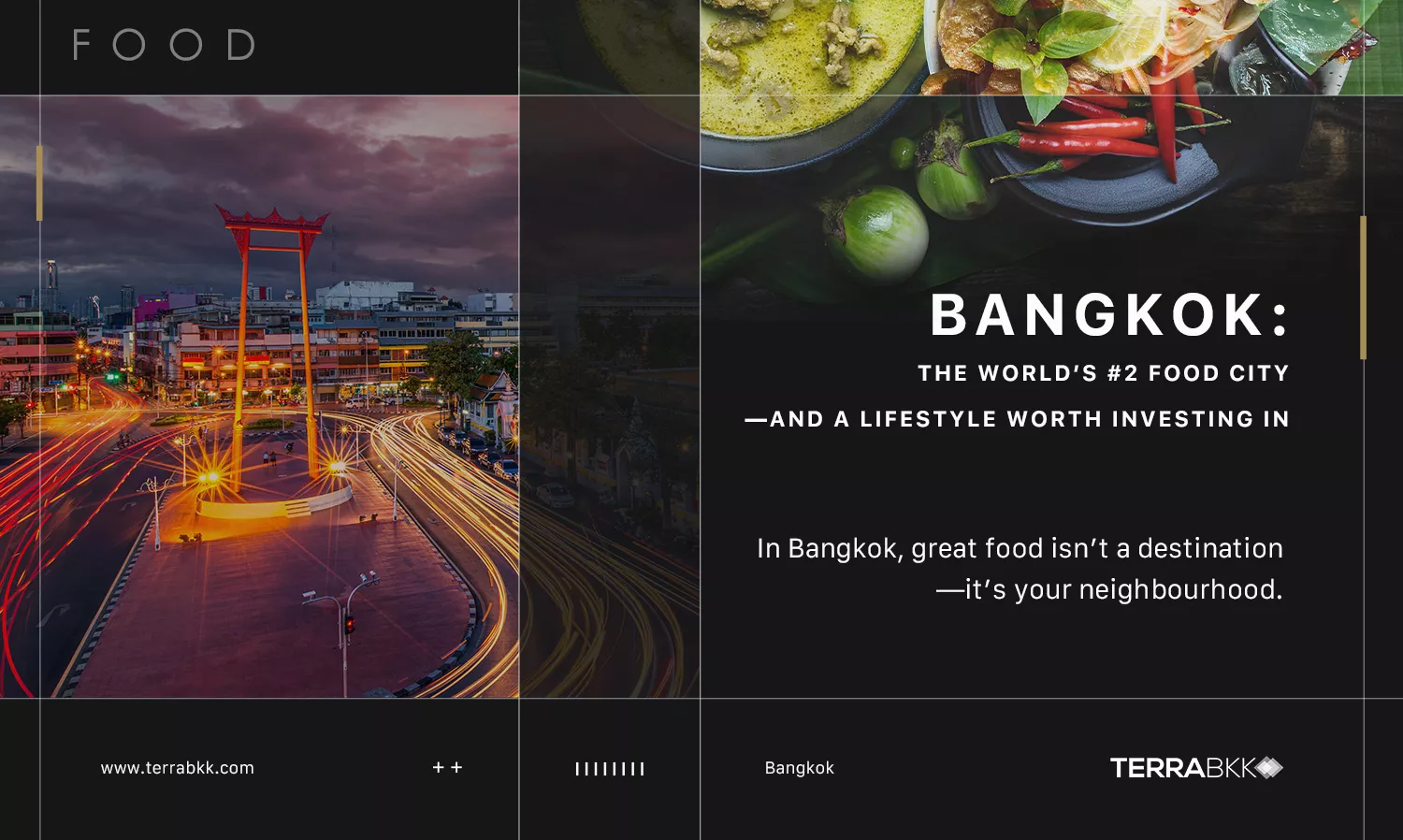
▪️Bangkok City Hall (Giant Swing) to City Museum: Transforming the old office into a living museum that connects the history of Rattanakosin Island.
▪️Global Public Space: The idea of transforming the area around Pathumwan (Supachalasai Stadium) into a large square in the city center for public activities for everyone.
Summary: The overall goal of the Bangkok Metropolitan Administration is to create "efficient infrastructure" through data management, whether it be for drainage in high-risk areas or increasing travel options, to make Bangkok a truly livable city for everyone.
.