The Growth of the Wellness Economy and Health Business Trends in Thailand
Thailand is currently entering the "golden age of the wellness economy," as reflected in the increasing focus on both physical and mental health among the population. This includes wellness tourism, healthy eating, regular exercise, and self-care, particularly following the COVID-19 pandemic, which heightened awareness of health's importance.
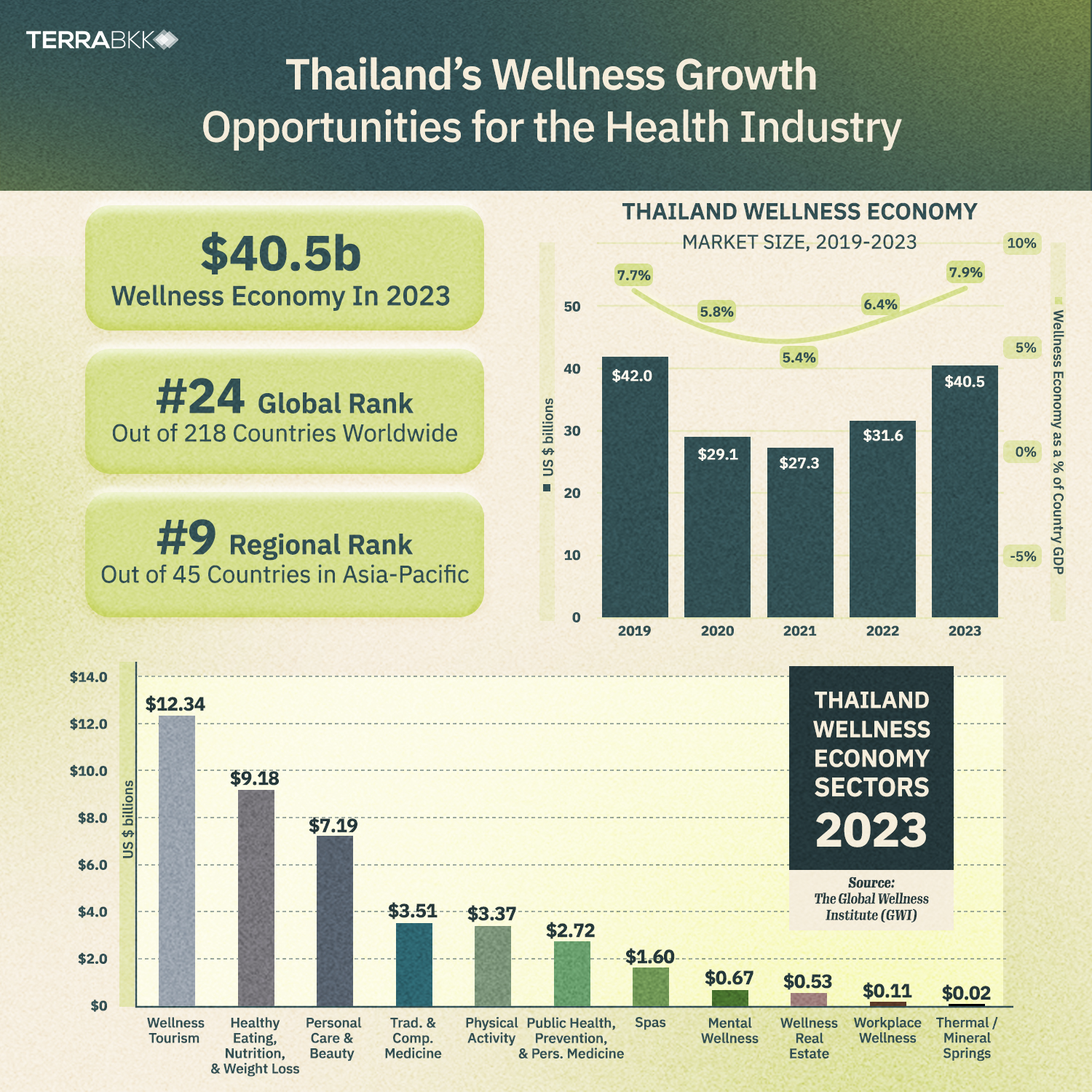
According to the Global Wellness Institute, in 2023, Thailand's wellness economy was valued at approximately THB 1.4 trillion, close to the pre-COVID level of THB 1.45 trillion in 2019, with an average growth rate of 8.62% from 2020 to 2023.
Although the market contracted to THB 940 billion during 2020-2021, it rebounded quickly, growing by 28% in 2023 compared to the previous year. Key factors driving this recovery include the return of tourists and an increased consumer focus on health.
One of the standout sectors is wellness tourism, which saw total spending reach THB 419 billion in 2023, more than double the THB 194 billion spent in 2022. The health-conscious mindset has permeated daily life, influencing food, exercise, fashion, and mental health, leading to the healthy-labeled food and beverage market reaching THB 198 billion and connecting with fitness, beauty, and other wellness services.
All these elements position Thailand's wellness economy not only to meet domestic consumer needs but also to attract international tourists, presenting a significant opportunity for Thailand to become a global wellness hub in the future.
Five Major Sectors of Thailand's Wellness Economy
In 2023, Thailand's wellness economy was divided into 10 sub-sectors, with the five most valuable and impactful sectors being:
1. Tourism
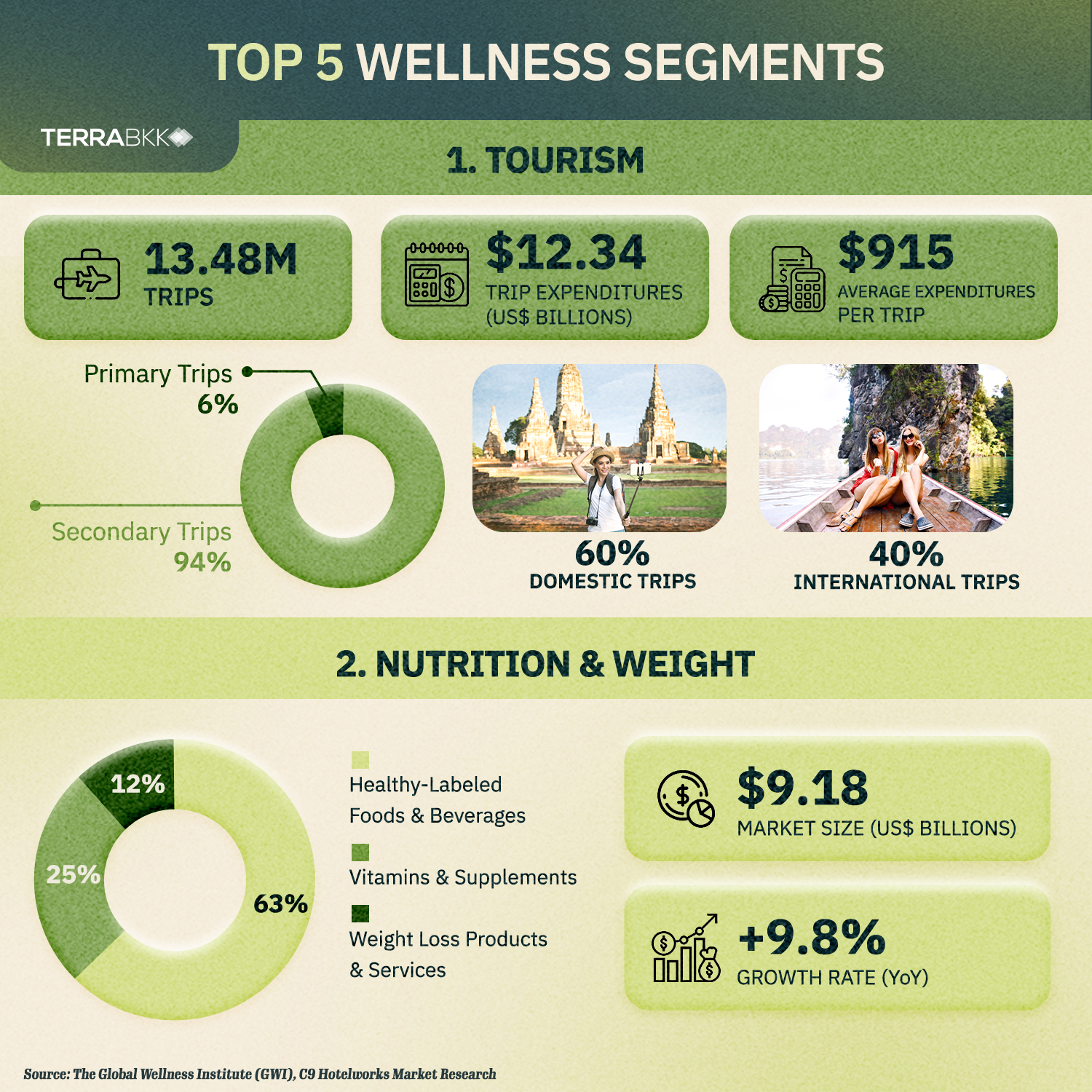
Wellness tourism is the largest market segment in Thailand's wellness economy, with 13.48 million trips generating THB 419 billion in 2023. This sector features diverse travel styles, categorized into two main groups:
- Primary Trips (6%): Travelers whose main purpose is health, such as detox retreats, yoga camps, or post-illness recovery.
- Secondary Trips (94%): Travelers who engage in health-related activities alongside their trips, such as yoga classes, healthy cooking workshops, or spa services.
Moreover, Thai consumers account for 60% of all wellness-related travel, while foreign tourists make up 40%, indicating strong domestic demand and a significant opportunity to develop wellness projects that cater to both locals and international visitors.
2. Nutrition & Weight Management
This market encompasses a range of health-supporting and weight management products, including:
- 63%: Healthy-labeled foods and beverages
- 25%: Vitamins and supplements
- 12%: Weight loss products and related services
The growing popularity in this sector reflects a trend of increasing consumer health awareness, driven by better nutrition knowledge and fast-paced lifestyles, leading to rapid growth in health food restaurants, plant-based beverages, and comprehensive meal planning services.
3. Aesthetics & Beauty
The beauty market, including services and products, continues to grow, reaching THB 244 billion in 2023, up from THB 235 billion in 2019, reflecting a 3.8% growth. This sector includes skincare, haircare, and aesthetic clinics, highlighting the increasing demand for self-care, especially among younger consumers who view beauty as integral to confidence and social image.
4. Traditional & Complementary Medicine
Thailand's traditional medicine and herbal wisdom are strengths that support ongoing market growth, valued at THB 119 billion in 2023, up from THB 112 billion in 2019 (a 6.3% increase). This sector is divided into two main categories:
- Medicines & Products: Herbal remedies such as Andrographis, balms, inhalers, herbal compresses, and teas.
- Services & Practitioners: Treatments like acupuncture, cupping, herbal compress therapy, and traditional Chinese medicine.
This sector's appeal lies in its cultural connections, natural healing, and holistic care, aligning with global holistic wellness trends.
5. Fitness & Physical Activities
This market reflects a shift in consumer behavior towards exercise and fitness fashion, transitioning from "exercise as a hobby" to a "health-oriented lifestyle." Key contributors include:
- Fitness fashion and accessories (52%)
- Exercise equipment (14%)
- Sports and other health-related activities
This trend underscores the growing emphasis on integrating wellness into daily routines, supported by a booming market for activewear, fitness technology, and boutique gyms.
Wellness Hotels: A Booming Trend Across Thailand
The growth of wellness tourism has prompted hotels and resorts nationwide to develop brands that cater to wellness, particularly in popular tourist areas such as:
- Phuket, Phang Nga, Krabi (45%)
- Koh Samui (15%)
- Bangkok and Chiang Mai (10?ch)
- Hua Hin, Koh Kood, Khao Yai, and other secondary cities
Wellness hotels typically start at under THB 10,000 per night (37% of the market) and can go over THB 20,000 per night for premium offerings (30%).
Notable upcoming wellness hotel projects include:
- Fivelements, Koh Samui – A luxury wellness resort set to open in mid-2026
- Clinique La Prairie, Phuket – A Swiss-based global health center expected to open in 2025
- Tiva Ao Makham, Phuket – A Centara Group project opening in late 2025
- BDMS Silver Wellness & Residence – A mixed-use project with senior care facilities scheduled for 2030
Currently, 62% of wellness hotels in Thailand are non-branded, indicating significant growth potential for new hotel brands in this market.
Thailand has emerged as one of the largest wellness markets in the Asia-Pacific region, supported by strong tourism infrastructure, diverse landscapes, and a culture conducive to holistic health, including food, herbal medicine, and spa services.
This market growth is not just a temporary rebound but a long-term trend reflecting modern consumers' desire for quality living, creating business opportunities across tourism, accommodation, food, beauty, fitness, and health products.
For investors, entrepreneurs, or anyone interested in the wellness business, Thailand in 2025 is not just a "tourist destination" but is rapidly becoming a "global wellness hub" with endless new opportunities.
Source: c9hotelworks
The Global Wellness Institute (GWI)