
Earthquake: Stay Calm! Guidelines for Project Owners and Residents
Since March 28, it is believed that nearly half of the Thai population felt unwell due to dizziness, only to soon realize we were facing the most severe earthquake in 95 years, becoming an unforgettable (and unwanted) memory for the entire nation.
Many residents in high-rise condos and buildings clearly felt the tremors and began to worry about how safe their condos or office buildings would be upon returning.
At this point, what should we check? Both project owners and residents, or if you are looking for a new condo, what additional factors should you consider?
Don't Panic If You See Cracks After an Earthquake
When an earthquake occurs, the first priority is to check the safety of the building before re-entering. Key areas to focus on include cracks in beams and columns, walls inside the units, potential subsidence, or even warped doors and windows. If any abnormalities are found, report them to the building owner or management to send in experts for immediate inspection.
However, residents should not panic if they see cracks on the building walls. Even if the building is designed to withstand earthquakes, cracks can still occur. The key is that the building should not collapse. Buildings designed for earthquakes must be constructed to be ductile and flexible. Achieving both requires a good understanding of engineering principles. While some plaster may crack, the beams and columns must remain strong, as they are the heart of a sturdy building.
Initially, the level of damage to the building can be assessed in three categories:
- Green - The building is safe and can be used as normal.
- Yellow - The building has sustained some damage and requires further inspection.
- Red - The building is in a dangerous condition and must not be used.
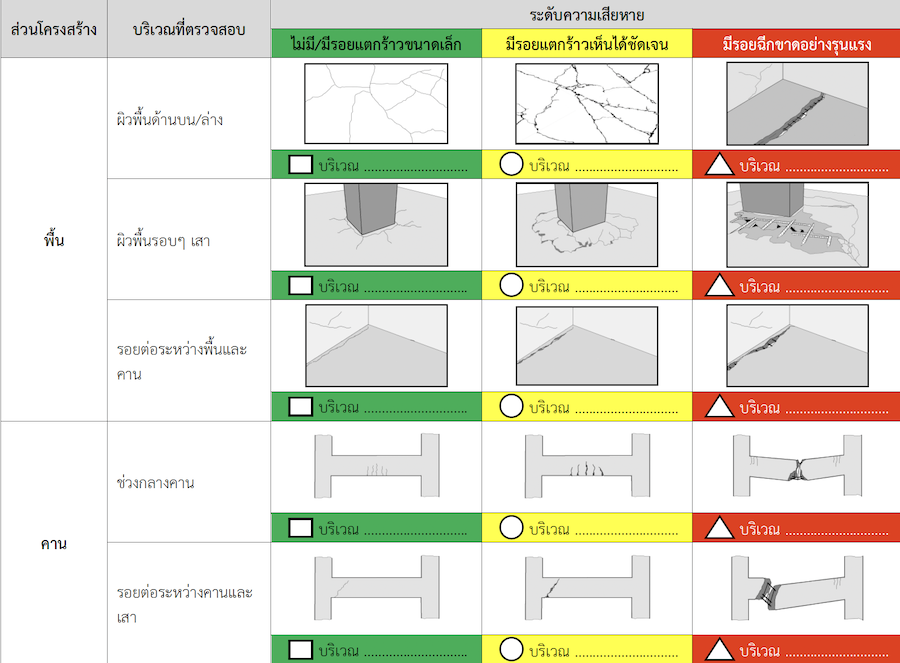
Image from the initial damage assessment guide for earthquake events by the Department of Public Works and Town & Country Planning, Ministry of Interior.
In the perspective of project owners, it is crucial to promptly assess and evaluate the damage accurately to reduce risks from unsafe buildings, which could pose dangers to life and property in case of aftershocks or additional tremors.
Earthquake Shakes the Condo Market: What Should Residents Consider?
For those already residing in a condo, having documentation regarding the building's structure that demonstrates earthquake-resistant construction standards is essential to check, along with insurance coverage for earthquake damage.
For those who have booked a condo but have not yet moved in, it is advisable to inquire about the safety standards of the project and inspect the structure before transferring ownership.
In the case of purchasing real estate, consumers should now consider three key factors:
- Quality & Safety - Quality that encompasses construction standards and considers the safety of residents.
- Design - Design that aligns with natural principles such as earth, water, wind, fire, and earthquakes, ensuring the building does not obstruct wind flow, is flexible enough to withstand disasters, and has sufficient green space or open areas for emergencies, allowing access for fire trucks and ambulances, as well as safe assembly points.
- Brand - Choose reputable developers who prioritize sustainable development and social responsibility, not just sales growth, and ensure they have a capable after-sales service team.
Management Must Be Prepared! Upgrade Condos and Offices to Handle Earthquakes
From the project owner's perspective, if the building has sustained damage, the management or project owner, responsible for maintaining common areas and facilitating owners, should take responsibility for managing the common areas and assist unit owners by supporting repair teams, conducting building inspections, installing vibration detection sensors, organizing evacuation drills, and improving at-risk structures. Additionally, hiring an engineering firm to assess the building's strength is crucial for ongoing safety and to instill confidence in residents.
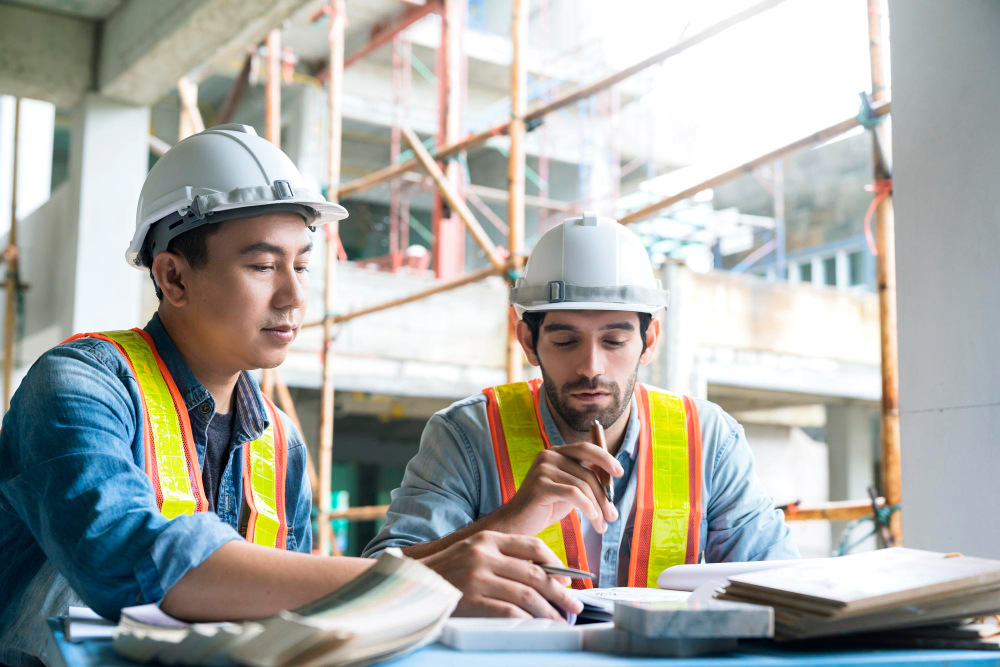
Similarly, office buildings and exhibition venues must adapt by having clear emergency exit signs, which are vital for design and information dissemination in unexpected events. An internal communication system must include a command center that covers all areas, functioning as an operations room for timely management and providing shelter for large numbers of people.
Lessons from Japan to Bangkok: High-Rise Buildings Must Adapt
In preparing for earthquakes, Thailand should learn from Japan, which serves as a good example due to its lessons and experiences in handling such situations. Today, most buildings in Japan are designed to withstand tremors, incorporating various technologies such as base isolation and damping systems, along with early warning systems and regular evacuation drills.
Japan is known for having one of the most advanced earthquake warning systems in the world, with over 1,000 vibration detection sensors installed nationwide. This system can send alerts within seconds of detecting tremors, giving citizens time to take cover or make decisions in response to the situation.
Additionally, schools and workplaces in Japan regularly train for earthquakes and other emergencies, ensuring everyone knows how to act during real events without panicking. For instance, every family has a clear evacuation plan and knows the assembly points in emergencies. Japanese people often prepare emergency kits containing drinking water, food supplies, flashlights, spare batteries, and radios. Remarkably, after an earthquake, Japan has a highly efficient public utility management system, with electricity, water supply, and transportation restored within hours or, at most, a day if the area is not severely damaged.
A Turning Point in the Real Estate Market: Establishing New Standards
Following this earthquake, the condominium market will undergo changes due to shifting consumer confidence. Buyers will place greater importance on earthquake-resistant structural standards. New projects may need to improve construction standards, and the market for single-family homes may see increased interest as they are perceived to be safer.
Ultimately, this earthquake serves as a reminder that natural disasters can occur at any time. We must always be prepared, whether as condo owners, prospective buyers, or project owners. Everyone must collaborate to make living spaces safer. "Better to know in advance, safer in the end!"