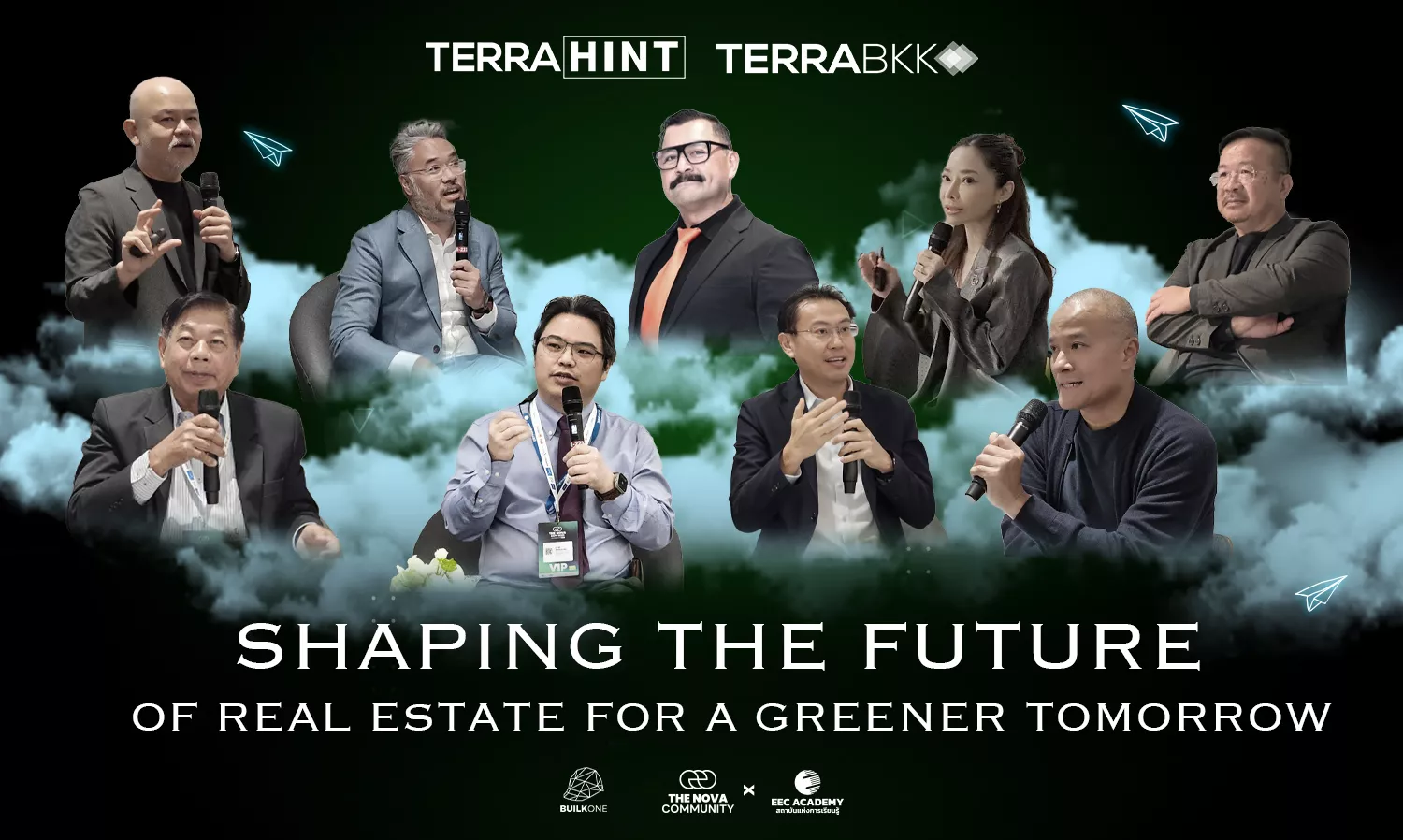
Shaping the Future of Real Estate for a Greener Tomorrow: A Sustainable Future for Real Estate
TerraBKK organized the first TERRAHINT seminar of 2025 at the BITEC Bangna Convention Center, themed 'Shaping the Future of Real Estate for a Greener Tomorrow.' This seminar is part of the 'Nova Expo 2025: Green Innovation Revolutionizing the World,' showcasing innovations in building design and various products related to construction. The content of this TERRAHINT seminar aims to open perspectives and approaches to creating tangible and concrete sustainability from experts across various business sectors, including retail, real estate, architecture, and technology.
Turning Sustainability Concepts into Action
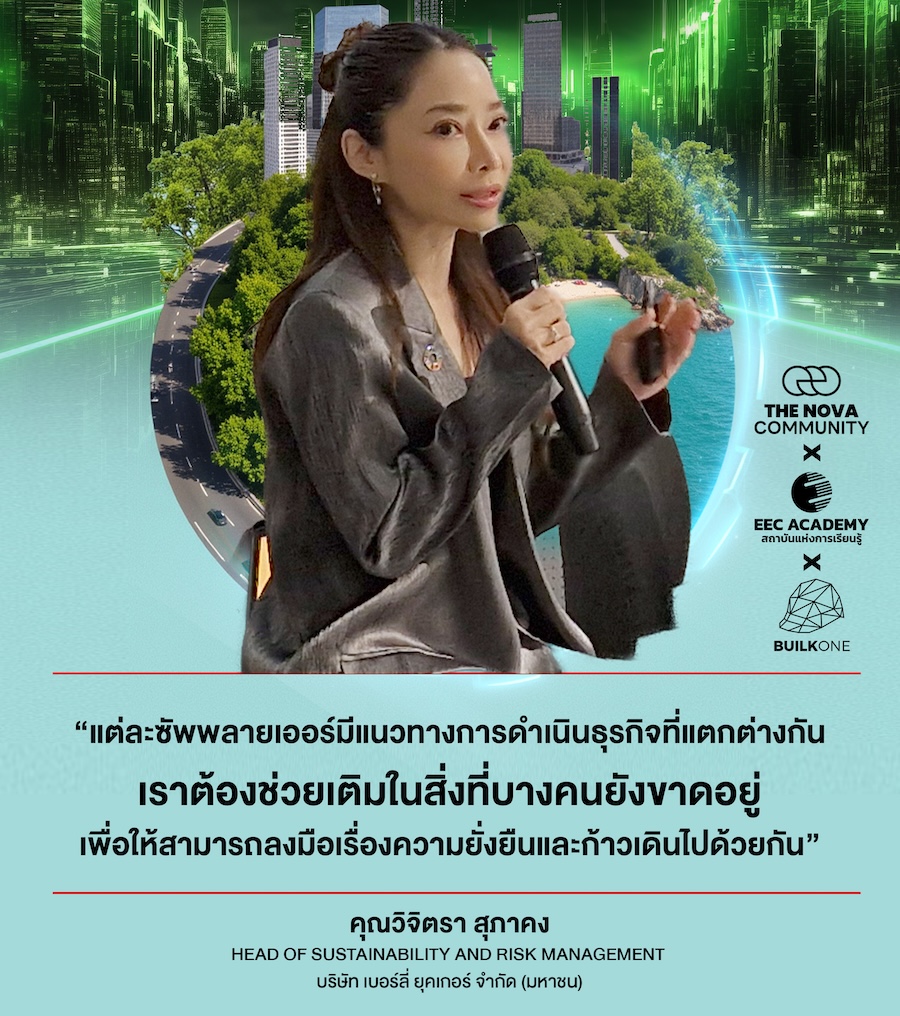
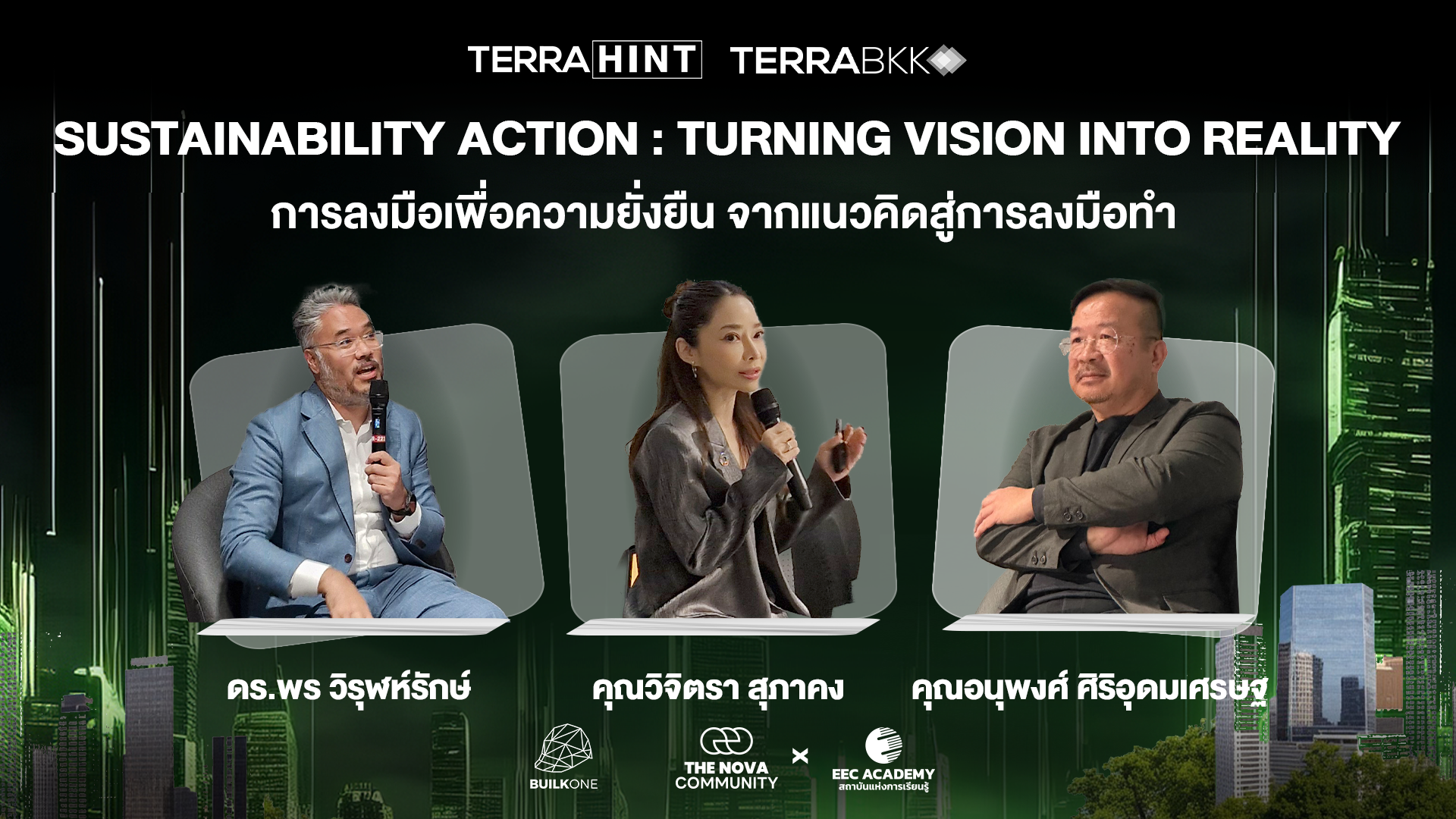
During the panel discussion titled “Sustainability Action: Turning Vision into Reality,” Ms. Vijitra Supakong, Head of Sustainability and Risk Management at Berli Jucker Public Company Limited, shared that implementing sustainability begins with frameworks like ESG or SDGs to set strategies. When it comes to execution, attention to sustainability must be integrated into every part of the production line, from raw materials to the final product, which varies significantly. This includes educating partners and stakeholders about the benefits of sustainability for them. Regarding sustainability in the context of DEI (Diversity, Equality, Inclusivity), there should be an organizational culture that supports acceptance of differences, such as having a lactation room and policies that allow LGBTQ+ groups to take leave for adoption or gender reassignment surgery.
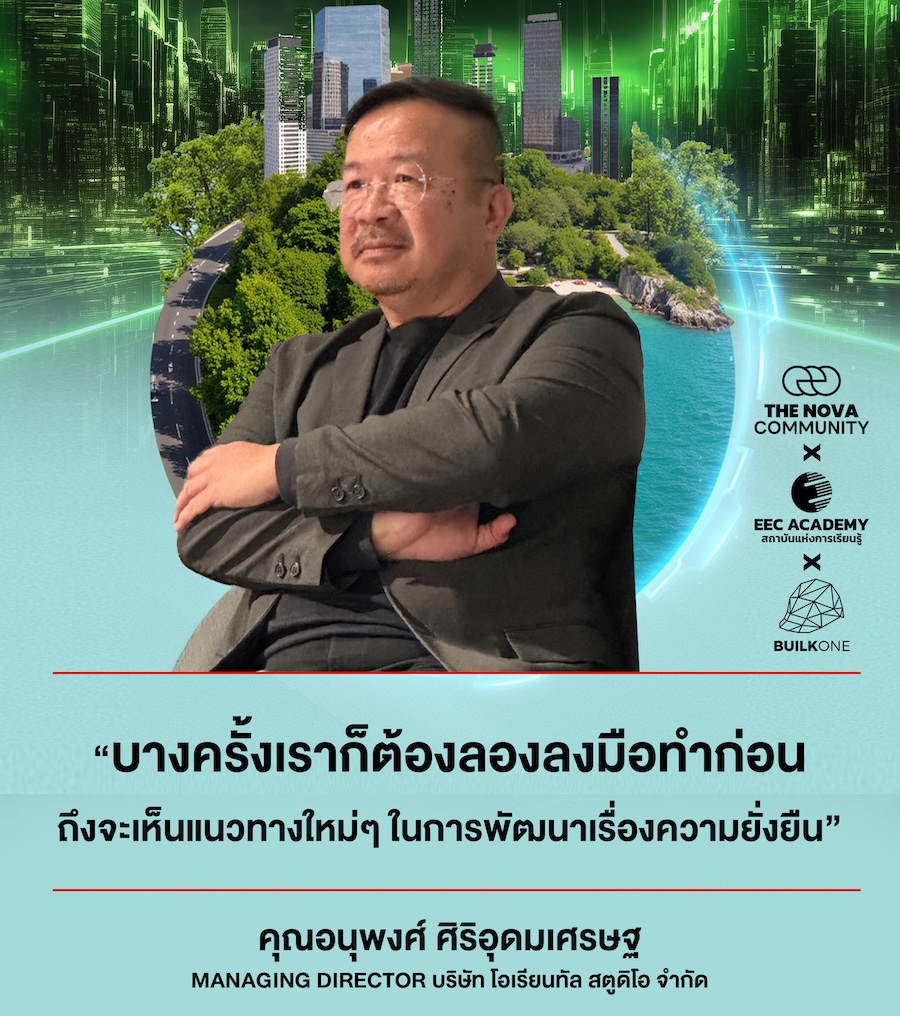
Mr. Anupong Siriudomsathit, Managing Director of Oriental Studio Co., Ltd., explained that sustainability, which used to be pushed by designers to clients, has seen clients taking a more active role in advocating for sustainable design in recent years. Designers must now choose design approaches that meet the sustainability demands of their clients. Currently, designing new buildings to align with sustainability does not incur significantly higher costs, contrary to common belief.
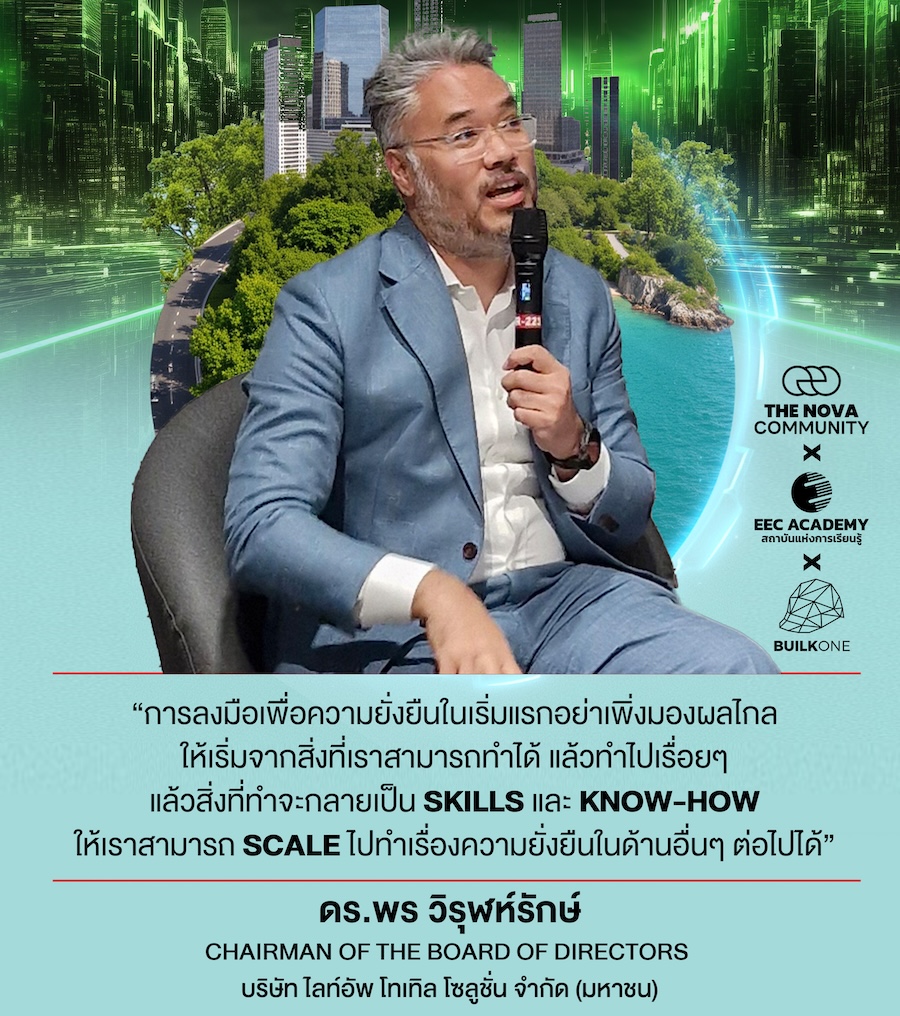
Dr. Porn Virunlakharn, Chairman of the Board of Directors at Light Up Total Solution Public Company Limited, discussed digital tracking as a method for achieving sustainability, particularly in buildings, as it provides real-time feedback that allows for immediate adjustments. It also enables performance monitoring for sustainability reporting and other uses. Starting with manageable aspects of sustainability, digital tracking can help collect data to visualize results, creating foundational know-how for expanding into other areas.
Integrating the Supply Chain Must Begin with Oneself
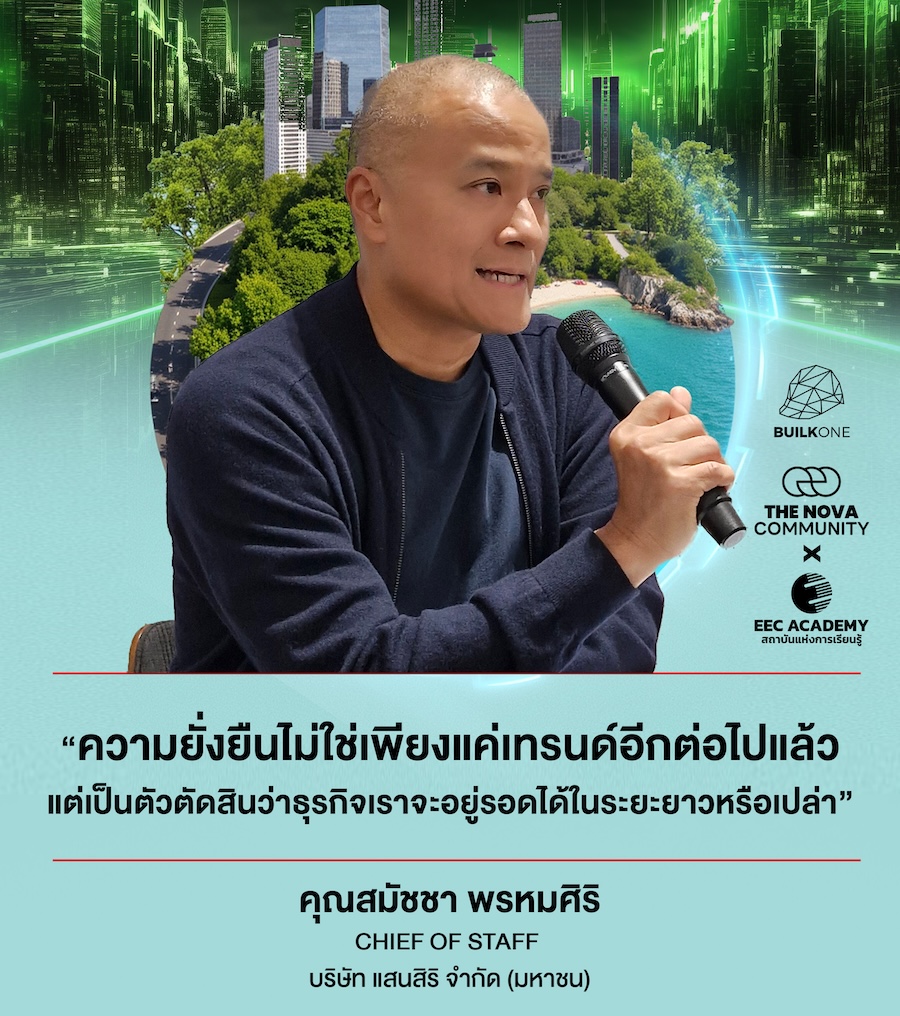
Mr. Samatcha Promsirir, Chief of Staff at Sansiri Public Company Limited, shared insights on “Building a Sustainable Real Estate Network through Supply Chain Integration,” stating that the supply chain in business is quite lengthy, from land procurement to after-sales services, involving many stakeholders. Supply chain integration should start internally by establishing a central team responsible for sustainability, educating the organization, analyzing business risks, and fostering an understanding of sustainability. Clear goals, such as achieving net-zero by 2050, should be set, along with a rough roadmap to ensure all parties, including management and employees, understand the direction and support the initiative. After internal implementation, the focus should expand to external integration with partners and contractors, balancing commercial viability with education and shared perspectives on sustainability for mutual success.
Transforming Building Usage to Mitigate Environmental Impact
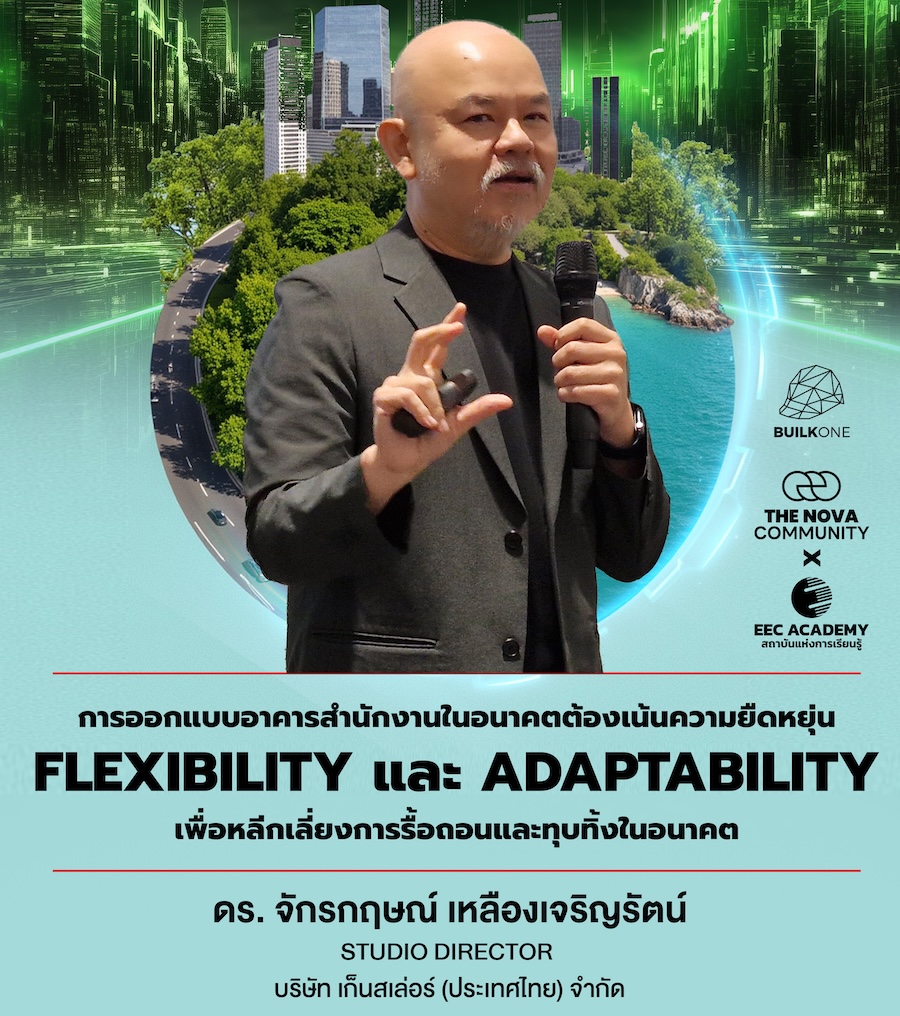
Dr. Jakkrich Leungjaroenrat, Studio Director at Gensler (Thailand) Co., Ltd., spoke on “Adaptive Reuse for a Sustainable Future,” explaining that the carbon footprint in the built environment is divided into operational carbon (from building usage) and embodied carbon (from construction materials and processes). Adaptive reuse, or upgrading existing buildings for continued use, can significantly reduce operational carbon as building technologies are modernized, avoiding future demolition and substantially lowering overall carbon footprints.
Buildings that are Friendly to Residents Have Many Components Beyond Aesthetics
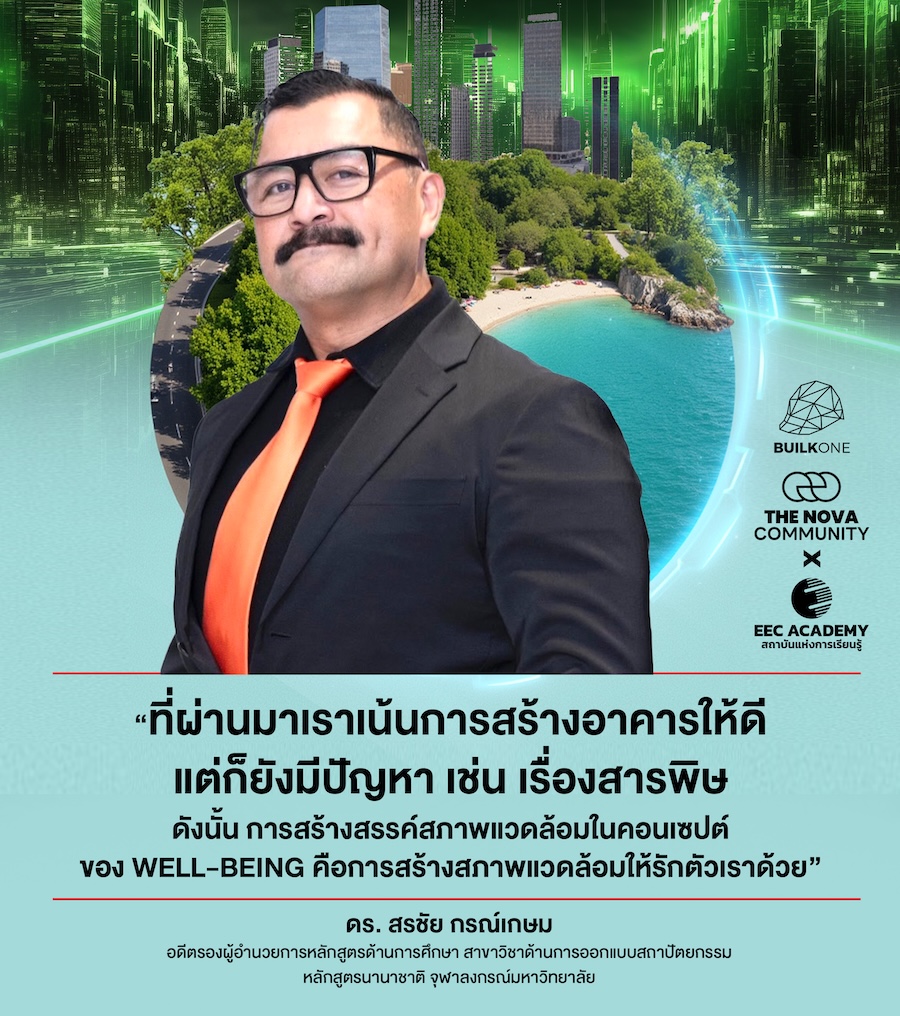
Dr. Sarach Korkasem, a lecturer in the International Architecture Program at Chulalongkorn University, discussed “Beyond the Buildings: How to Elevate Well-Being in Real Estate,” noting that people today experience cognitive fatigue from noise and dust. Design strategies that reduce cognitive fatigue, such as using green colors, adjusting lighting according to mood, and incorporating music, can help alleviate mental exhaustion and stress. Future designs may include mood rooms, small spaces that enhance mental well-being, leaving individuals feeling refreshed and happy.
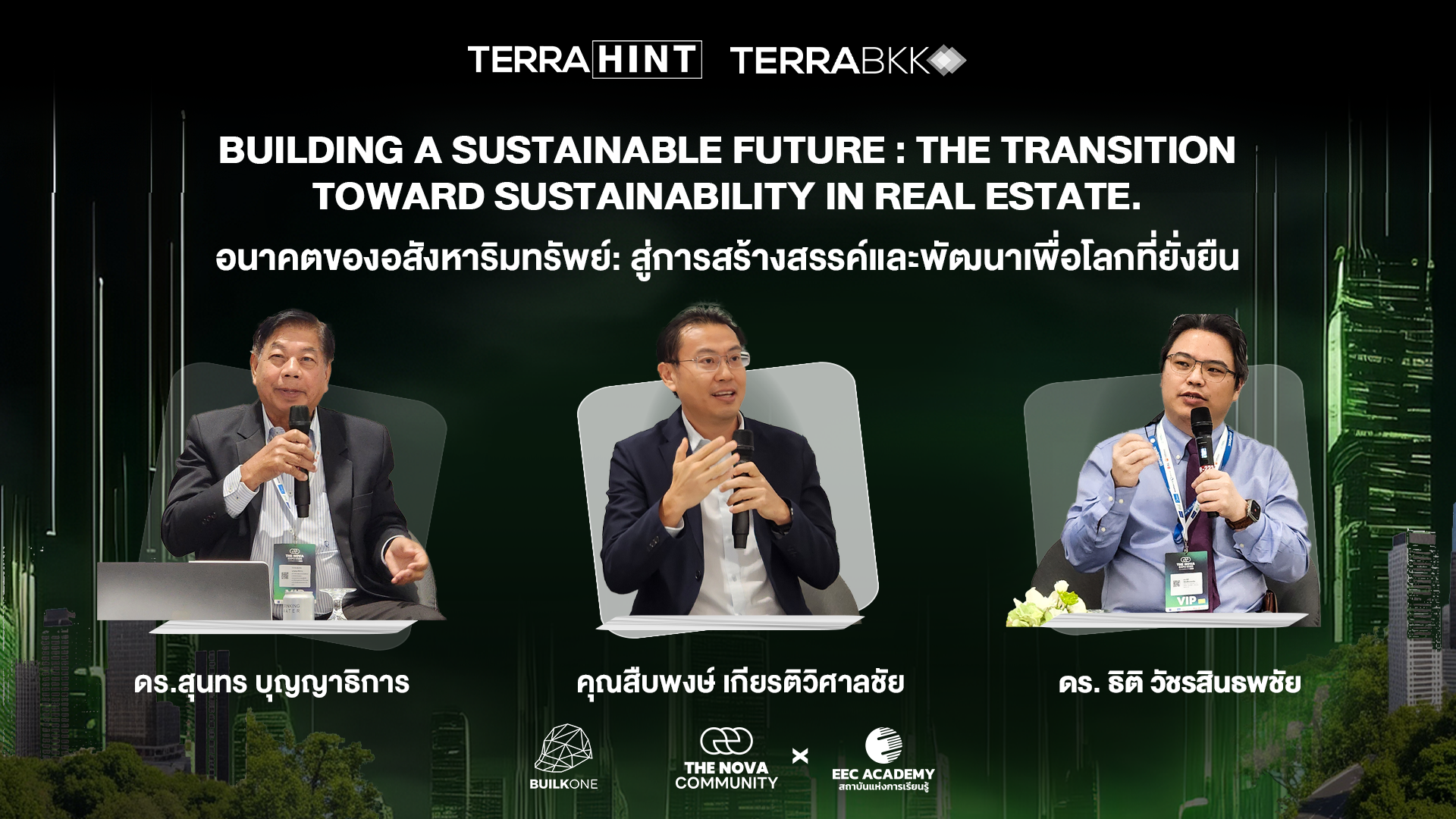
Future Directions for Sustainable Real Estate Development
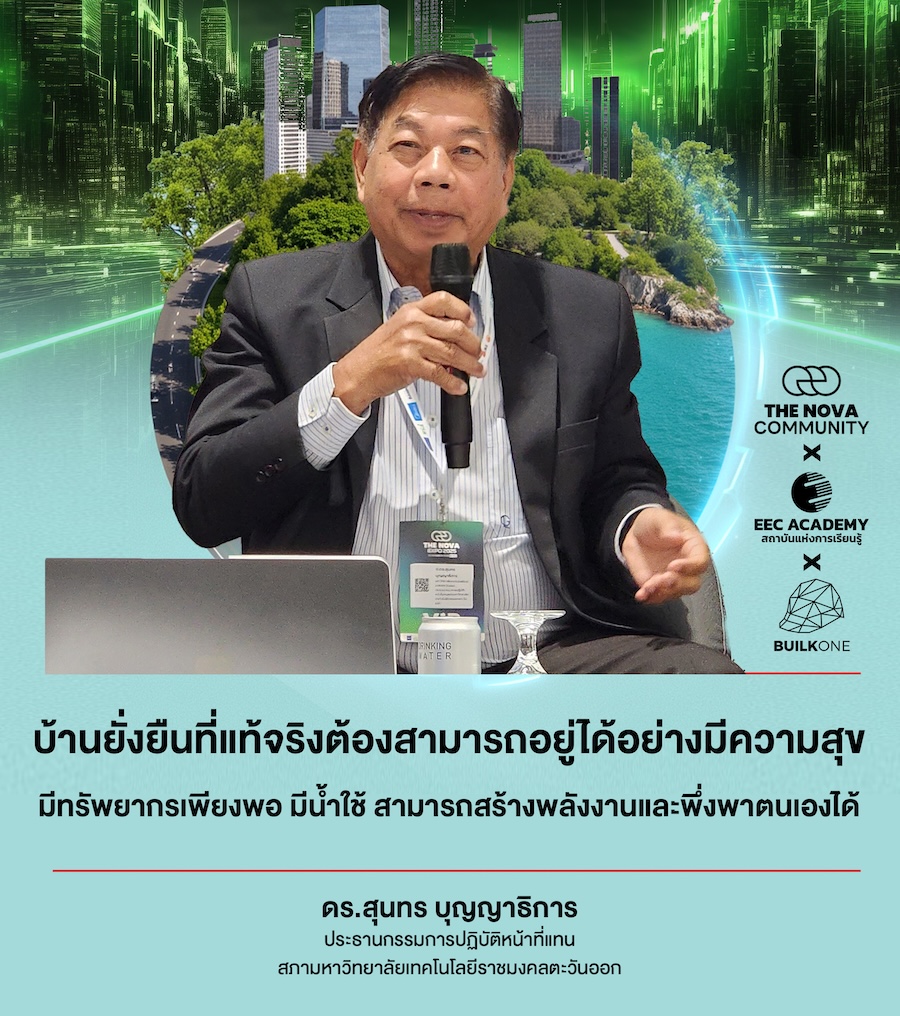
In the panel discussion “Building a Sustainable Future: The Transition toward Sustainability in Real Estate,” Prof. Dr. Sunthorn Boonyathikarn, Acting Chairman of the Rajamangala University of Technology Eastern Thailand, shared insights on sustainable homes of the future, emphasizing that sustainability is not a new concept but has been around for a long time. Principles from sustainable home design used 24 years ago can still be applied today, such as homes that generate energy, utilize rainwater and dew, and require minimal energy, allowing residents to live independently without worrying about utility costs. This lifestyle resembles off-grid living. Additionally, given Thailand's tropical climate, home designs should be suitable for the local environment, considering heat and humidity to prevent mold and health issues, which are often overlooked. Developers should focus not only on business profits but also on the health and happiness of residents.
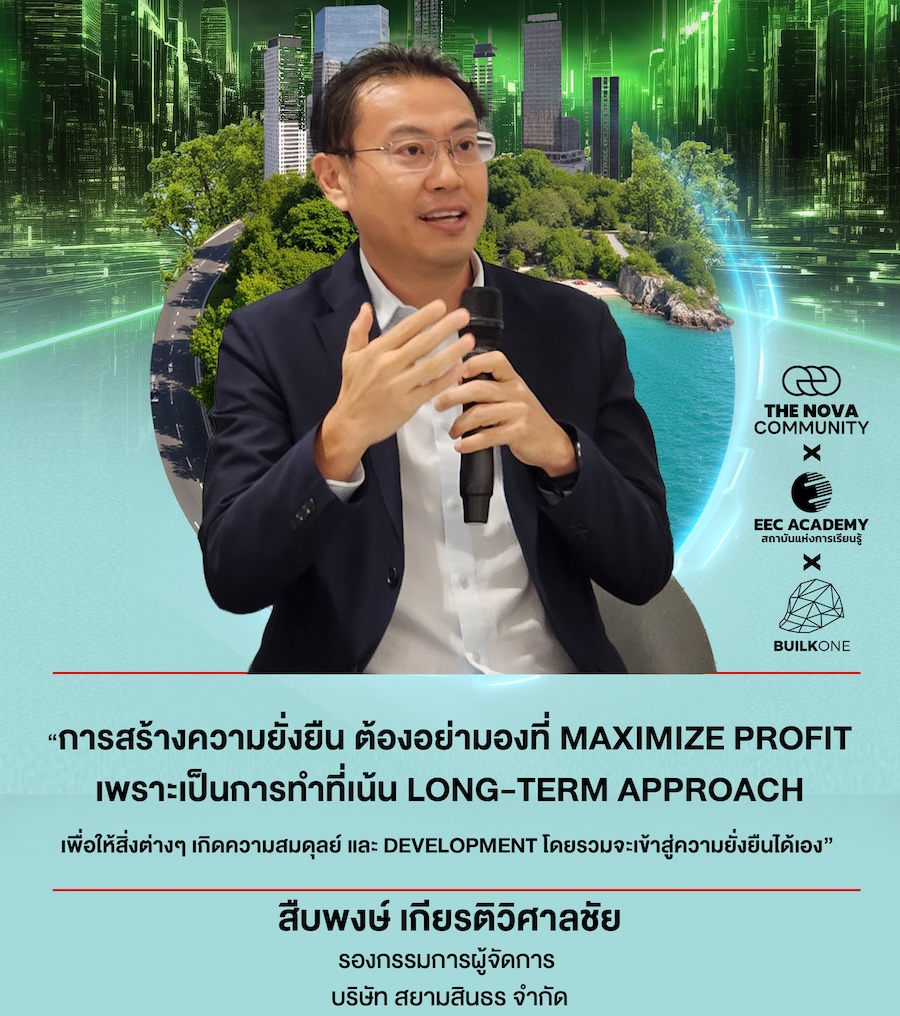
Mr. Seubpong Kiattiwisarachai, Deputy Managing Director of Siam Sinthorn Co., Ltd., views sustainable real estate development as a long-term endeavor that requires projects and surrounding areas to grow together. Consideration must be given to the surrounding areas, such as designing the Sinthorn Village project with a water retention system to help reduce flooding in the area behind Suan. This not only enhances the livability of the surrounding area but also increases the value and supports the local economy. Factors like heat gain, reflection from glass, and relative humidity significantly affect residents' feelings and perceptions of the project, making them crucial considerations in sustainable project development. To achieve effective sustainable development, developers should avoid maximizing profits, as this can lead to imbalances across various dimensions and negatively impact long-term sustainability.
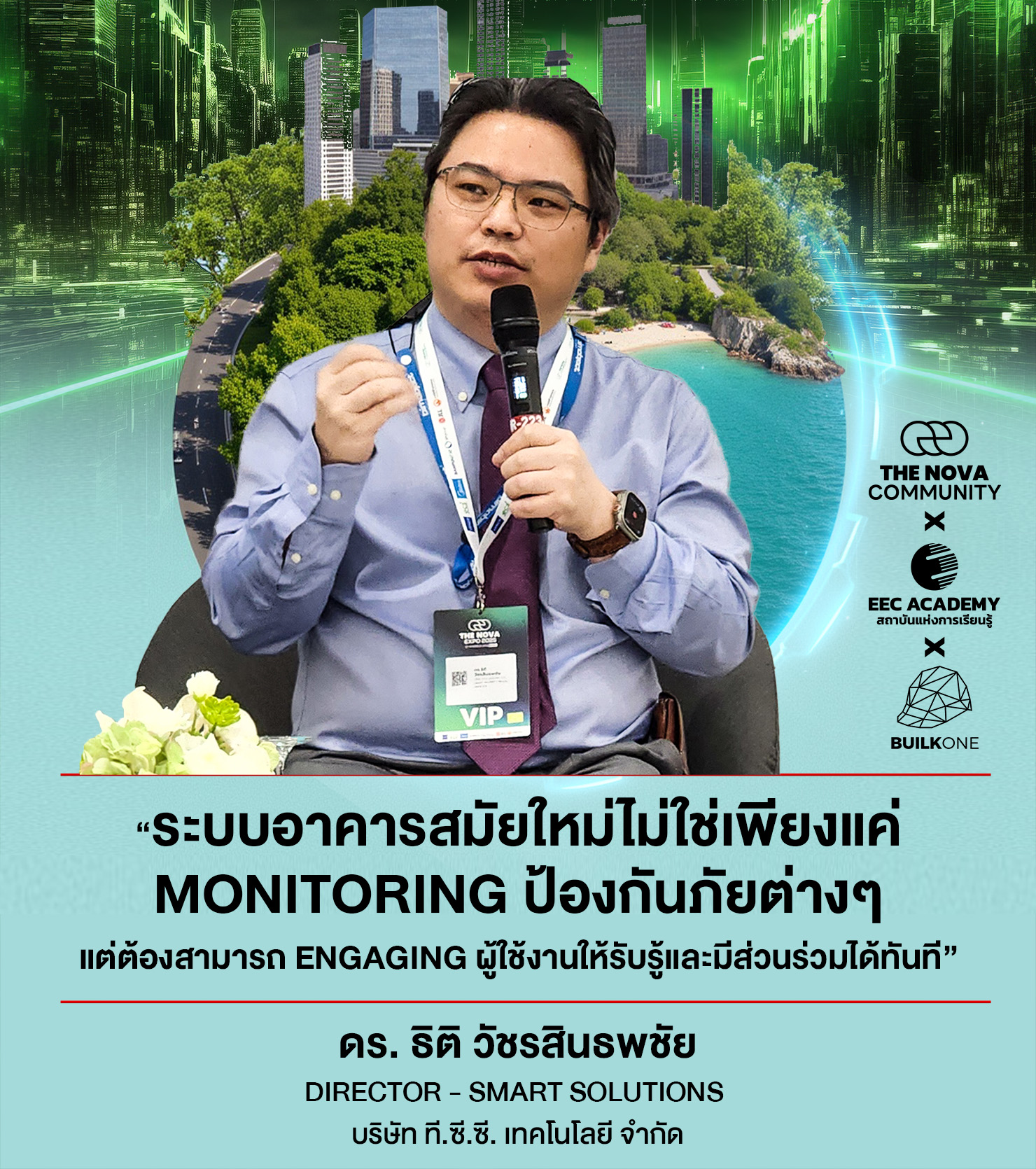
Dr. Thiti Watcharasinthapachai, Director of Smart Solutions at TCC Technology Co., Ltd., commented that when implementing existing technologies in buildings for sustainability, it is often the case that the actual users and system designers are different teams. Developing systems that allow users to operate efficiently, similar to the designers' intentions, is crucial. Educating and empowering users is essential for maximizing system efficiency. Currently, the role of Artificial Intelligence (AI) is increasingly significant, but AI can still make errors. Therefore, it is important to understand the origins of AI processing to quickly identify and rectify any mistakes.