"Green Bonds" Driving Green Business
Mr. Prabhan Sak Raksaiwan
Managing Director
LWIS Wisdom and Solutions Co., Ltd.
As we step into the 11th month of 2024, how is everyone doing? This year has been undeniably “tiring” for the business sector throughout. However, there is some good news to lift our spirits with the reduction in interest rates, which has lowered the cost of doing business for many in the final quarter of the year, and the trend is likely to continue decreasing by at least 0.25-0.5%.
Speaking of interest rates, it reminds me of the issuance of debt securities or bonds known as “Green Bonds”!
What are “Green Bonds”?
“Green Bonds” are part of the ESG Bonds, which include:
- Green Bonds: These are debt securities aimed at raising funds for environmentally friendly projects or initiatives that promote environmental conservation, such as alternative energy projects, wastewater treatment, and clean transportation.
- Social Bonds: These are debt securities aimed at raising funds to develop social welfare and improve the quality of life in communities, such as public health services, education promotion, job creation, and housing for low-income individuals.
- Sustainability Bonds: These are debt securities aimed at promoting sustainability, combining elements of both Green and Social initiatives.
From the definitions above, “Green Bonds” are designed to raise funds for projects related to the environment and are connected to efforts to reduce global warming or greenhouse gases. They can be used to restructure business production processes to reduce greenhouse gas emissions, minimize waste, and significantly improve the environment.
Typically, issuing debt securities or bonds that businesses raise directly from the public allows them to reduce their interest payment burdens compared to borrowing from financial institutions. Currently, the issuance of “Green Bonds” with government support enables businesses to lower their interest costs even further, incentivizing them to improve production processes and play a crucial role in developing the industry towards a more environmentally friendly approach.
Thus, “Green Bonds” are an attractive financial tool for entrepreneurs to enhance their business development towards green initiatives at a lower cost, significantly reducing long-term expenses sustainably.
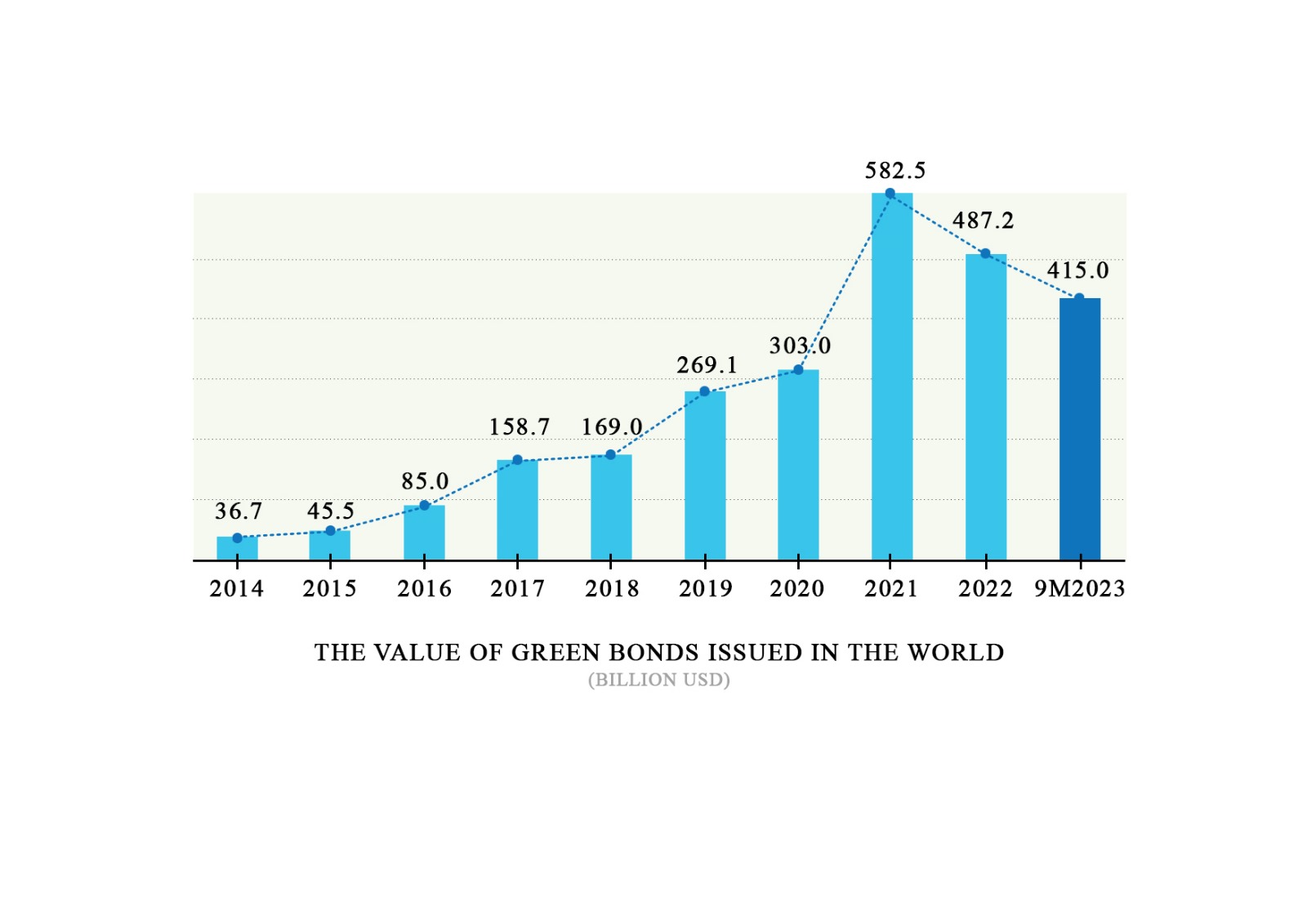
According to a report from the Climate Bonds Initiative, from 2019 to 2023, the global issuance of ESG bonds reached a staggering $870 billion (approximately 32 trillion baht), reflecting a growth rate of 300%. Of these, 64% were Green Bonds, amounting to approximately $556.8 billion or about 20.48 trillion baht.
In 2024, a report compiled by Bloomberg indicated that global sales of Green Bonds or bonds raised for environmental projects reached $54.7 billion in February, breaking previous records for that month, following $83.3 billion in sales in January 2024.
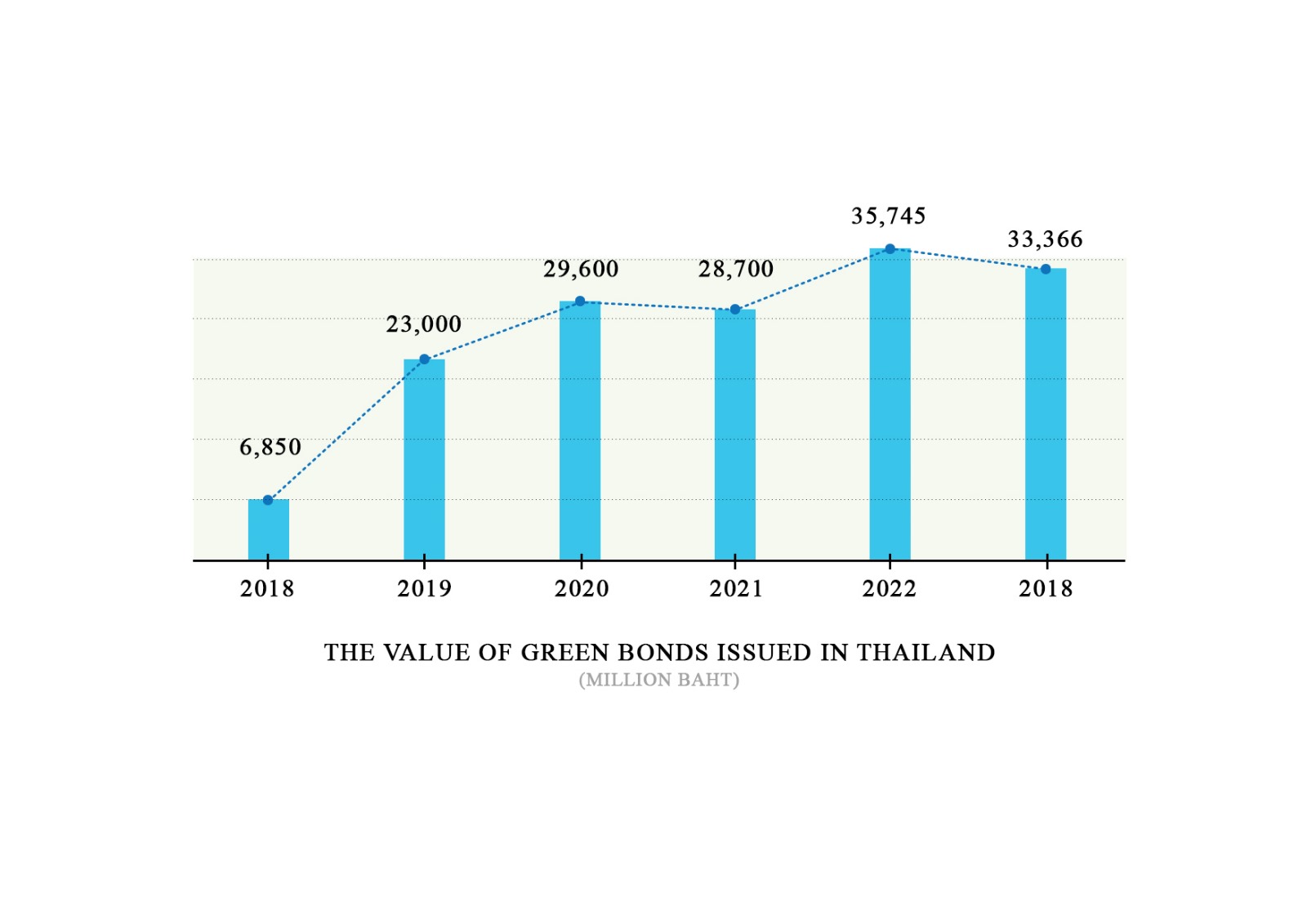
In Thailand, since the first issuance of ESG bonds in 2019 until 2023, the value of ESG bonds has dramatically increased from 23 billion baht to 179.866 billion baht, growing eightfold in just five years. According to Kasikorn Research Center, the issuance of Green Bonds in Thailand since 2019 has totaled 85.3 billion baht from 11 companies, accounting for 47% of total ESG bond issuance, but only 2% of the total value of private sector bonds. More than 50% of these were issued by companies in the energy sector, which estimates that Thailand needs an average annual investment of at least 100 billion baht in the energy sector to achieve a 25% reduction in greenhouse gas emissions by 2030.
The increasing volume of Green Bond issuance reflects that businesses worldwide, including in Thailand, are prioritizing the restructuring of production processes to be more environmentally friendly, aligning with the global economic drive towards green industry development to reduce greenhouse gas emissions, as outlined in the Paris Agreement on greenhouse gas reduction. Thailand has been a member of this agreement since 2016, and it has been incorporated into the Thai government's policy, aiming to drive the country towards carbon neutrality by 2050 and net-zero greenhouse gas emissions by 2065.
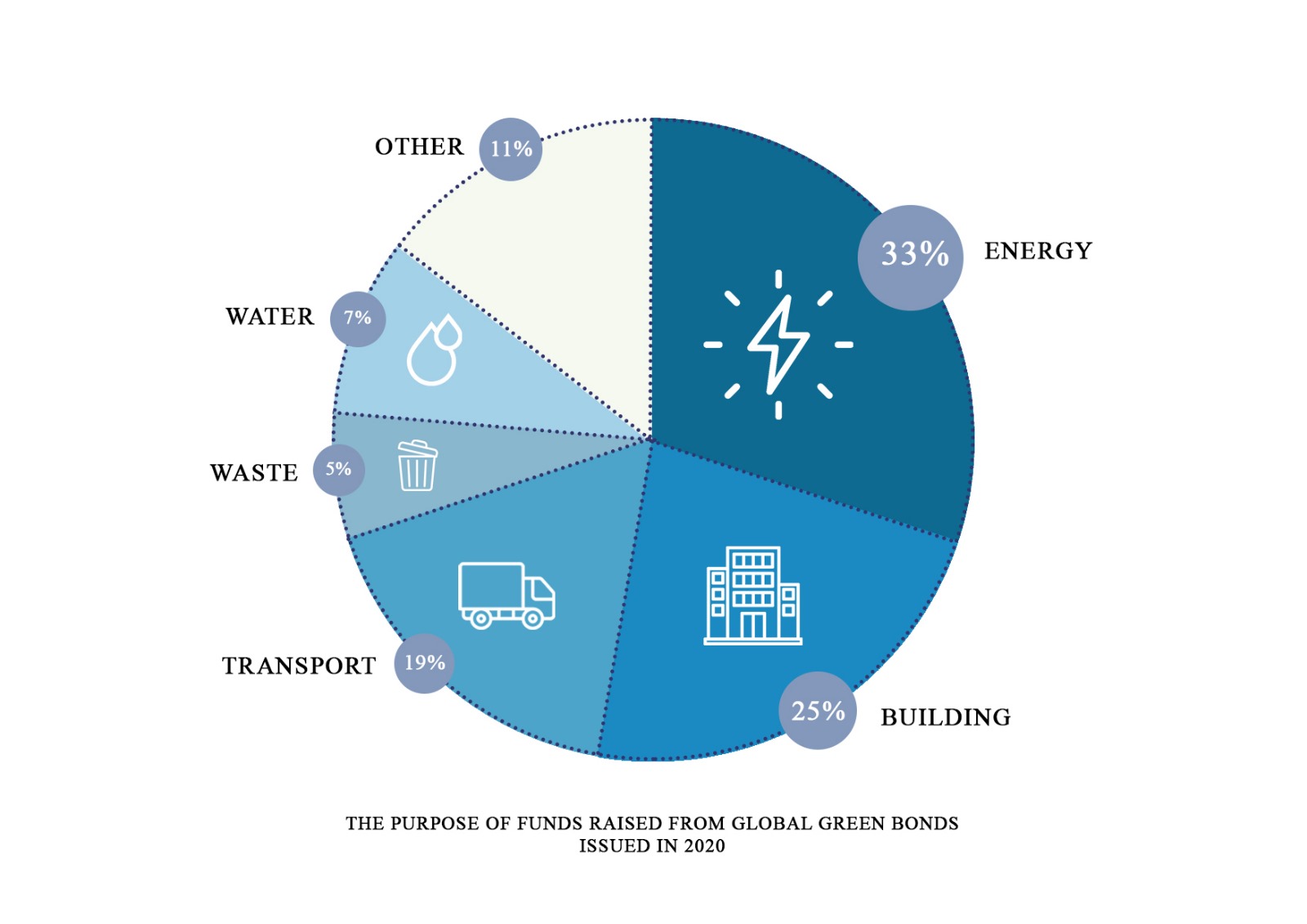
Real Estate Business and the Issuance of “Green Bonds”
The real estate sector is one of the top contributors to greenhouse gas emissions compared to other industries, due to materials used such as cement, which directly impact the environment, as well as construction processes that generate waste and pollution, including greenhouse gas emissions. Therefore, the real estate sector must adjust its construction processes from upstream to downstream to become a green business, aiming to minimize greenhouse gas emissions as much as possible.
If the real estate sector can adjust its construction processes to significantly reduce greenhouse gas emissions, it will contribute to accelerating the country's transition to net-zero greenhouse gas emissions.
An example of a real estate project that clearly adopts environmentally friendly construction practices is the One Bangkok project.
One Bangkok is a project that prioritizes environmental considerations from the construction process, achieving more than a 75% reduction in construction waste through reuse and recycling. For instance, technology is used to crush concrete waste from pile caps to create building walls in the project, helping to reduce carbon dioxide emissions by 5.94 tons, equivalent to the oxygen production of 540 trees. Additionally, leftover lightweight bricks from construction are repurposed into soundproof wall panels in the project's underpass.
Recycling food waste from the consumption of construction workers into fertilizer through a Food Waste Composter can reduce greenhouse gas emissions by 1.2 tons of carbon per day or 367 tons of carbon per year, equivalent to planting 40,815 trees.
Recycling wastewater with an automated water management system that can monitor water quality reduces water usage (Reduce) and reuses wastewater through treatment technology, increasing oxygen levels in the water to improve its quality. The Wastewater Treatment Plant (Recycle) is used in various areas, such as the irrigation system within the project and the cleaning system for sanitary fixtures.
Moreover, the One Bangkok project employs an environmentally friendly cooling system, utilizing low-temperature water from a centralized system through underground pipes to each building, saving 17,000 megawatt-hours of electricity per year and reducing carbon emissions by 9,000 tons annually.
They also integrate IoT technology to enhance the efficiency of sorting and managing recyclable waste, allowing the project to monitor and analyze waste volumes in real-time, facilitating the reintegration of leftover materials into the production process and reducing accumulated waste.
With innovations in construction materials and technologies today, the real estate business can improve its construction processes to be more environmentally friendly. Investing in improving various construction processes can reduce the increased costs associated with these improvements by issuing “Green Bonds” with lower interest costs than traditional bonds and loans from financial institutions.
Improving construction processes that lead to reduced greenhouse gas emissions not only benefits the environment and allows for effective financial cost management but also, in the future, when the climate change legislation currently under public consultation comes into effect, businesses that can significantly reduce their greenhouse gas emissions will be able to lower their tax burdens.
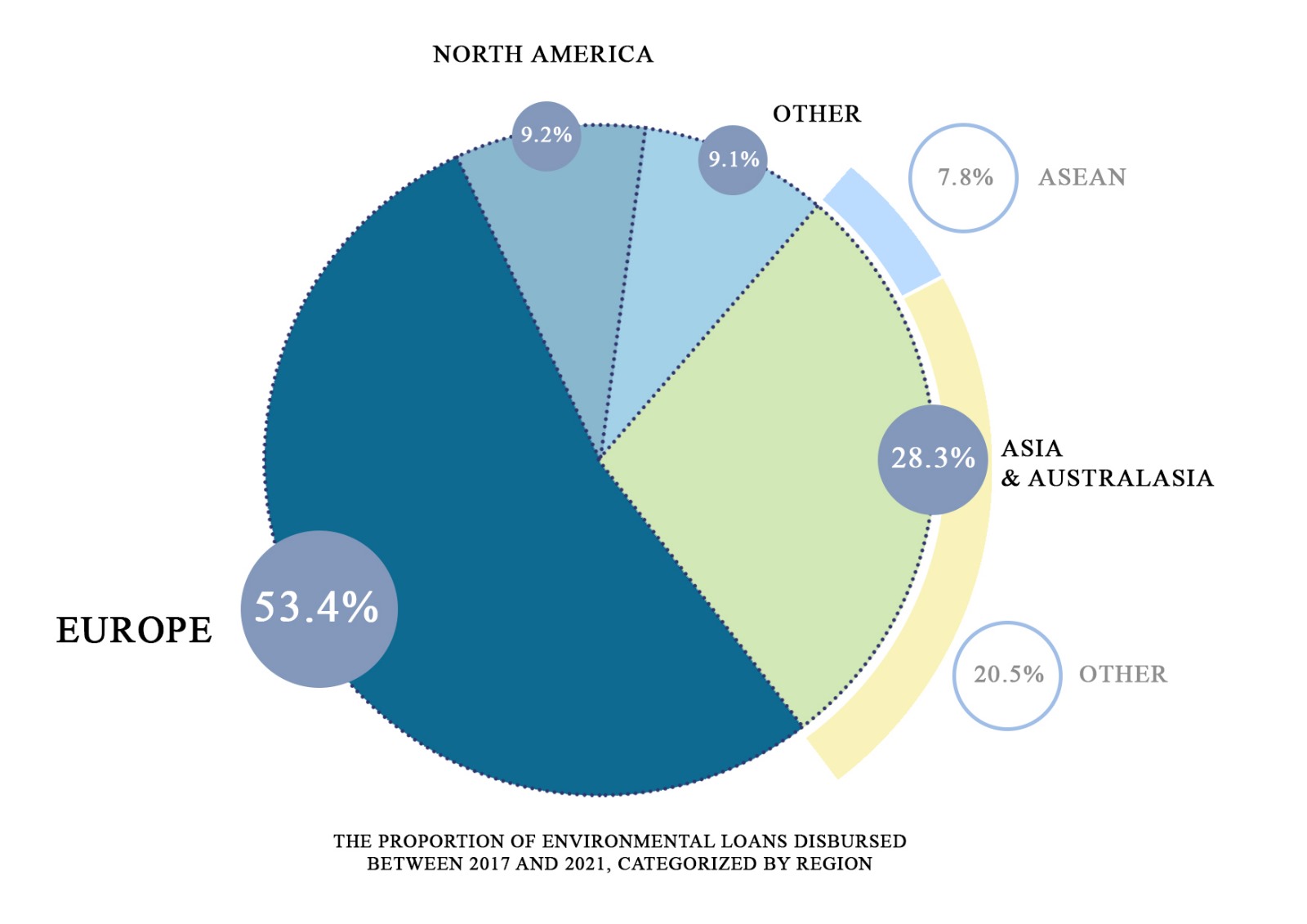
According to the current climate change legislation draft, the costs will be calculated based on the greenhouse gas emissions of the business sector to determine the greenhouse gas emission tax. If real estate developers improve their construction processes and choose environmentally friendly materials, they can reduce greenhouse gas emissions from their operations, thus lowering their tax burdens. For example, if the normal construction process for one house emits 5-7 tCO2eq, adjusting the construction process to reduce emissions by 1-2 tCO2eq per year means that the carbon tax liability could decrease from 5-7 tCO2eq to 3-4 tCO2eq per year.
Personally, I believe that transitioning construction processes to become “Green Real Estate” not only benefits financial cost management through issuing “Green Bonds” or reducing taxes from decreased greenhouse gas emissions but also signifies a step towards becoming a sustainable real estate developer. The reduction in various costs is merely a byproduct of the changes that occur.
See you again in December!