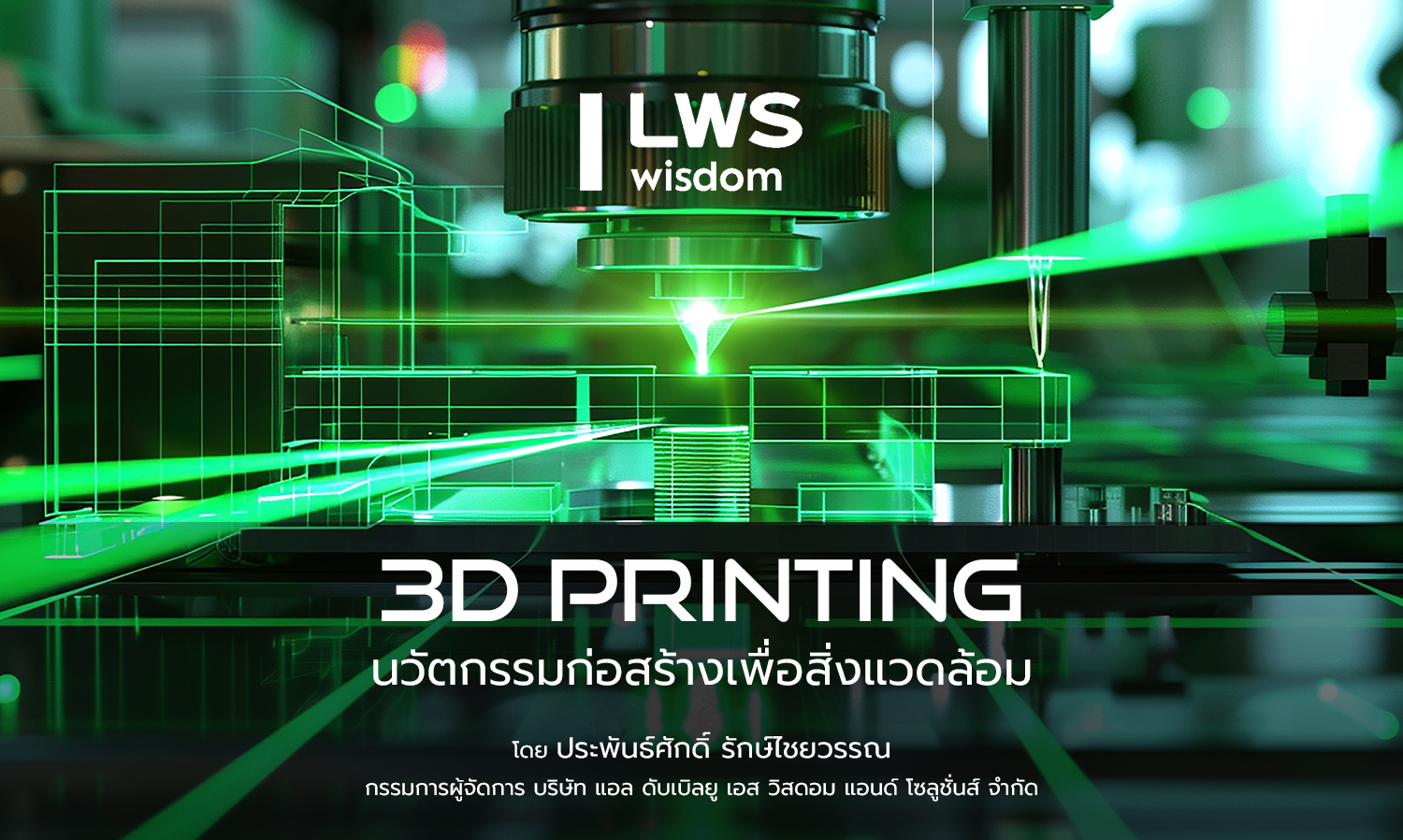
"3D Printing" - Construction Innovation for the Environment
By Prabhanasak Raksaiwan
Managing Director
LWSS Wisdom and Solutions Co., Ltd.
The "3D Printing" technology has been utilized in the production of various industrial goods, partly to reduce labor usage, while also helping to minimize waste in the manufacturing process, saving costs and unnecessary expenses in the industrial sector.
From its application in the manufacturing industry, the "3D Printing" technology is now being used in the construction industry, which is one of the continuously growing sectors and also one that significantly contributes to environmental pollution, including noise, dust, and waste. According to a study by the United Nations titled "Building Materials and the Climate: Constructing a New Future" published in September 2023, the construction industry accounts for 37% of global greenhouse gas emissions.
Thus, the adoption of "3D Printing" technology in construction is part of the effort to reduce waste and greenhouse gas emissions during the construction process. This technology is gaining interest and is being implemented in several countries around the world, including Thailand. Today, I would like to share the concept of building structures using "3D Printing" technology with TerraBKK readers. Although the initial costs of implementing this technology are higher than traditional construction methods when considering monetary expenses, the benefits gained from time savings in construction, reduction of material waste during construction, and the decrease in waste and greenhouse gases, which directly impact the environment, suggest that the overall benefits outweigh the drawbacks. This aligns with the concept of sustainable economic and social development within the framework of ESG (Environment, Social, and Governance).
First, let’s get to know the technology of 3D Printing.
3D Printing in the construction industry is a computer-controlled and automated process that creates structures by adding material layer by layer according to a digital model. The materials used in 3D Printing vary widely, including concrete, polymers, composites, steel, ceramics, glass, and recycled materials. The most commonly used material for building construction and as the primary load-bearing structure is concrete, which includes cement paste and mortar, also known as 3D Concrete Printing (3DCP).
The 3D Printing process begins with:
- Digital Design and Modeling that serves as a blueprint for the construction process.
- This is followed by Slicing Software Preparation, which divides the digital model into layers so that the 3D printer can understand the various components, such as the thickness of each layer, printing speed, and material control.
- Next is Material Preparation, where concrete is mixed in precise proportions to ensure it flows properly through the printer's nozzle while maintaining the structural integrity. Once the material is ready for construction,
- it enters the Printing Process, where concrete is injected layer by layer until the designated layers are completed. This is typically controlled by Robotic Arms or Gantry Systems. As each layer of concrete overlaps, it adheres effectively to the previous layer, ensuring proper bonding and reducing air gaps that could weaken the structure. Reinforcement, such as rebar or wire mesh, is then added to enhance overall durability.
- After the printing process is complete, it moves to the Curing and Finishing phase. Once the cured concrete hardens, additional finishing can be done, such as smoothing surfaces, painting, or applying coatings.
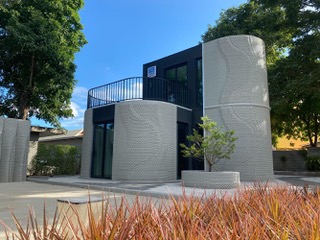
3D Printing technology is not new in the manufacturing sector, but advancements have made it increasingly relevant in the construction industry since the early 2000s. There are five key factors driving the transformation of the construction industry through 3D Printing technology:
- Accelerated Construction Process – Traditional construction can take months or even years to complete. One of the most significant advantages of 3D Printing technology in construction is the reduction in time and increased agility in operations through automated processes controlled by computer systems, which enhance precision, reduce errors, and enable rapid construction of complex building shapes, potentially saving 50-70% of the time compared to traditional construction methods.
A highly discussed project is the 3D Printed House by Apis Cor, a collaboration between construction company Apis Cor and real estate developer PIK Company Group, which took only 24 hours to build a house using 3D Printing. The project was completed in 2016 in Stupino, Russia, featuring a single-story, ice-cottage-style building of 400 square feet (approximately 38 square meters) with a bedroom, bathroom, and hall. Apis Cor developed a mobile 3D printer that can operate directly at the construction site, reducing the need to transport components from a factory to the site, as this process is similar to conventional Panel Construction, which involves transportation and assembly at the construction site, requiring additional labor and increasing the risk of errors during transport, directly affecting construction time. Therefore, due to the challenging weather conditions of the 3D Printed House project, which is cold, construction had to be done as quickly and accurately as possible. Apis Cor utilized a mobile concrete printer that can be installed and operated on-site.
This printer can be transported to the construction site using a standard truck and takes only 30 minutes to set up. The printer can cover an area of 132 square meters, making this project a global success.
2. Cost-Effectiveness – Although the initial investment in 3D Printing technology is higher than usual, it can lead to significant cost savings in the long run by reducing labor costs, ensuring precise automated processes, minimizing material waste during construction, and speeding up the construction process compared to traditional methods.
For example, the Office of the Future in Dubai holds the Guinness World Record for the first commercial building constructed using 3D Printing in 2020. Built in 2016, the Office of the Future aimed to develop 3D Printing technology to improve the quality of life for people in the construction and medical sectors.
Currently, this project houses the Dubai Future Foundation and serves as an exhibition space and incubator for emerging technologies in the region. The building has an area of 2,691 square feet (approximately 250 square meters), and the entire structure was created using the "3D printing" technique of adding concrete material for convenience and speed in construction.
The project utilized the 3D Printing process for the entire building structure, produced in a factory before being installed on-site, taking a total of 17 days for concrete printing and an additional 2 days for installation. Subsequently, the building systems, interior finishing, and landscaping were completed on-site, taking approximately 3 months from the start of the process to the end of construction, employing 18 workers. This project successfully reduced labor costs by over 50% and decreased construction waste by 30%-60% compared to similarly sized buildings.
3. Sustainable Materials – The construction industry is one of the major polluters affecting nature both directly and indirectly. 3D Printing technology helps mitigate this issue as the construction process involves layering materials, reducing the need for formwork to mold structures, and focusing on using only the materials necessary for the structure and its function. This can reduce material waste by up to 50% without compromising structural integrity and performance. Moreover, it supports the use of environmentally friendly alternative materials, such as recycled materials in construction.
In October 2018, WASP, a design and construction company, collaborated with RiceHouse to launch a new environmentally friendly housing model called Gaia House, which integrates 3D Printing technology with locally sourced natural materials. WASP aims to develop green buildings of the future, creating Gaia House as a "new rural housing prototype." The first prototype was built in 2018 in Massa Lombarda, Emilia-Romagna, Italy, as a single-story building of 320 square feet (approximately 30 square meters) completed in 10 days. The main structure was made from natural waste materials from rice production, consisting of 25% soil (30% clay, 40% silt, and 30% sand), 40% chopped rice straw, 25% rice husk, and 10% hydraulic lime. By using entirely natural materials, the Gaia structure is fully biodegradable, significantly reducing carbon dioxide (CO2) emissions while maintaining strength during use.
This design not only utilizes sustainable materials with minimal environmental impact but also provides a comfortable living environment, as the design addresses energy efficiency and indoor health, maintaining a comfortable temperature year-round without relying on heating or air conditioning.
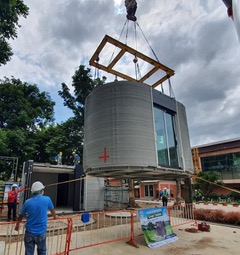
4. Freedom of Design and Construction – Another advantage of 3D Printing technology compared to traditional construction methods is the flexibility in building design and the avoidance of complex construction challenges. As a digital and automated system, 3D Printing can be integrated with BIM (Building Information Modeling), a widely used system among designers, allowing the transmission of digital data into the calculation process for suitable material strength according to the intended use. This leads to an automated construction process that can accurately interpret complex building shapes from models without concerns about the accuracy of the model, structural strength calculations, or the feasibility of complex construction tasks.
5. Creating a Safe Construction Environment – Every construction site carries inherent risks that can lead to injuries or even fatalities among workers. The automation of 3D Printing technology plays a crucial role in reducing the need for human labor in hazardous environments, preventing carelessness and fatigue from work to minimize accidents. Additionally, it improves the overall quality of life and health of workers by reducing exposure to metal dust, fire, high-power lasers, inhalation of fine particles, volatile organic compounds (VOCs), and other hazardous chemicals.
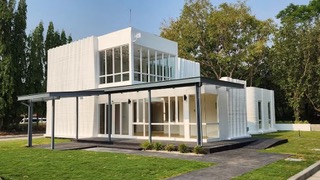
Despite the numerous advantages of 3D Printing technology for construction, it still faces limitations and challenges that require continuous development. The main challenges currently facing 3D Printing technology include:
1. Technology Costs – Currently, the rental or purchase cost of 3D Printing equipment remains relatively high, with prices ranging from $100,000 to $1 million (approximately 3.7 to 36.5 million baht), depending on the size and type of printer. Generally, Robotic Arm systems are more expensive than Gantry-type systems, including costs for transporting equipment to construction sites and assembling components from the factory on-site, as well as maintenance costs.
Therefore, whether to adopt 3D Printing technology for a construction project depends on the project owner’s analysis of the increased costs associated with using the technology compared to the potential savings it offers.
2. Equipment Size and Limited Space – 3D Printing construction equipment comes in various types and sizes, depending on the project’s requirements. Generally, there are two main types of 3D Printing: construction on-site and printing in a factory before installation on-site. Both methods must consider how to transport equipment or components to the construction site and install systems in limited spaces.
3. Project Size – Another significant challenge for 3D Printing technology is its application in large-scale projects, such as skyscrapers, which may involve complex construction techniques and logistical challenges. Historically, 3D Printing has been used to create single-story buildings or showcase innovative structures. However, advancements in technology and collaboration among various sectors have enabled the development of 3D Printing for larger and taller buildings.
For example, the Abdulaziz Abdullah Sharbatly Mosque, the world’s first mosque built using 3D Printing, is located in Jeddah, Saudi Arabia. It was created by Wajnat Abdulwaheed, a prominent Saudi businesswoman, in memory of her late husband, Abdulaziz Abdullah Sharbatly. This project was launched in 2024 and is managed by Forsan Real Estate, utilizing 3D Printing technology from the Chinese company Guanli. The building covers approximately 5,600 square meters, making it the largest structure currently achievable with 3D Printing technology.
In the real estate development sector, the use of 3D Printing technology may still not be suitable for very large or high-rise buildings due to project management factors, construction complexity, limited construction and operational space, and the challenges of transporting large equipment. In 2023, the world’s tallest residential building constructed using 3D Printing was developed by Dar Al Arkan, a leading Saudi real estate developer, successfully designing and building a three-story villa with a height of 9.9 meters, completed within 26 days using a COBOD printer. The villa has three floors, with the first floor covering 130 square meters, including a hall, living area, kitchen, and two bathrooms; the second floor has 140 square meters, comprising three bedrooms, two bathrooms, a living room, and a balcony; while the third floor is an extension featuring a multipurpose hall, a maid's room with a bathroom, and a laundry room.
In the future, 3D Printing technology will continue to be researched and developed, enhancing construction knowledge, advancing the production of efficient printers, and reducing costs, significantly narrowing the limitations of 3D Printing in the real estate sector.
4. Material Usage – The selection of materials for 3D Printing must consider curing time and weather resistance, which are critical variables affecting construction strength. Additionally, the materials used must be developed to accommodate future diversity while maintaining appropriate structural strength.
5. Universal Standards – As this new technology is not yet widely adopted, regulations, guidelines, and standards related to construction using 3D Printing are still in development to ensure user safety.
6. Skills and Collaboration – Construction using 3D Printing technology is specialized, requiring operators to possess knowledge, understanding, and skills aligned with the technology to work effectively with it.
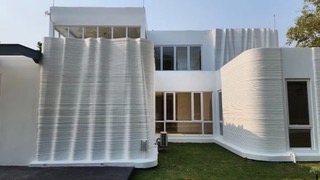
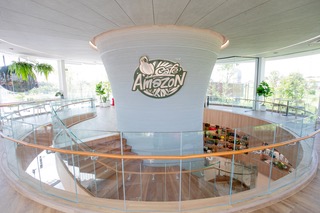
Although 3D Printing technology has advanced significantly abroad, it is still relatively new in Thailand, with limited implementation. Currently, Thai Cement Group (SCG) is the first company to introduce this innovation in Thailand, being the supplier of COBOD printers and the first to construct buildings using 3D Printing technology, such as the Co-working Space of Café Amazon at PTT Station, Phutthamonthon Sai 3, which used 3D Concrete Printing to produce building walls and components for on-site assembly, giving the building a unique character. Another example is the CPAC 3D Modular Space, an innovative two-story building with a usable area of 58 square meters, utilizing 3D Printing technology alongside Prefabricated Prefinished Volumetric Construction (PPVC) for the first time in Thailand.
Most recently, in 2023, SCG constructed the Medical Center in Saraburi, the world’s first building created with 3D Printing using the BOD2 printer from COBOD. This medical center spans 345 square meters, making it the largest 3D Printed building in ASEAN.
Given the advancements in 3D Printing technology, I believe this technology will be an interesting option for real estate developers to incorporate into construction processes under sustainable concepts, aiming to develop environmentally friendly housing and promote good hygiene in living conditions. I am confident we will soon see residential project designs utilizing 3D Printing technology in Thailand. We will have to keep an eye on who will be the first to do so. For more details, visit www.lws.co.th.
See you next month. Goodbye!