Indonesian Elections Boost Q1 2024 Economic Growth to 5.1% YoY, Projected 5.0% Growth for 2024
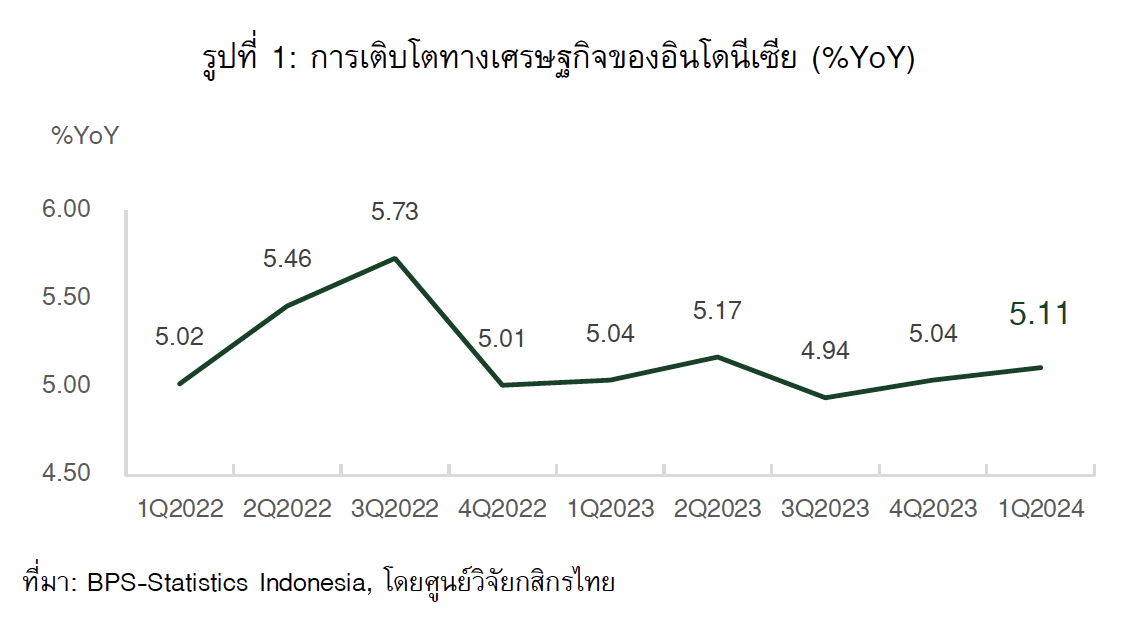
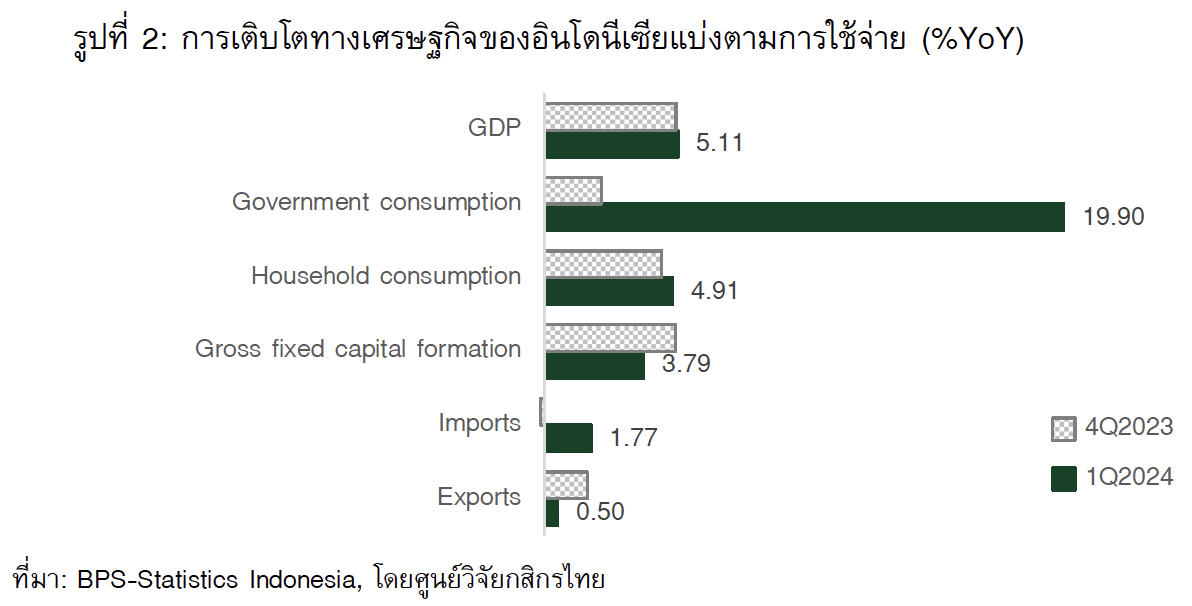
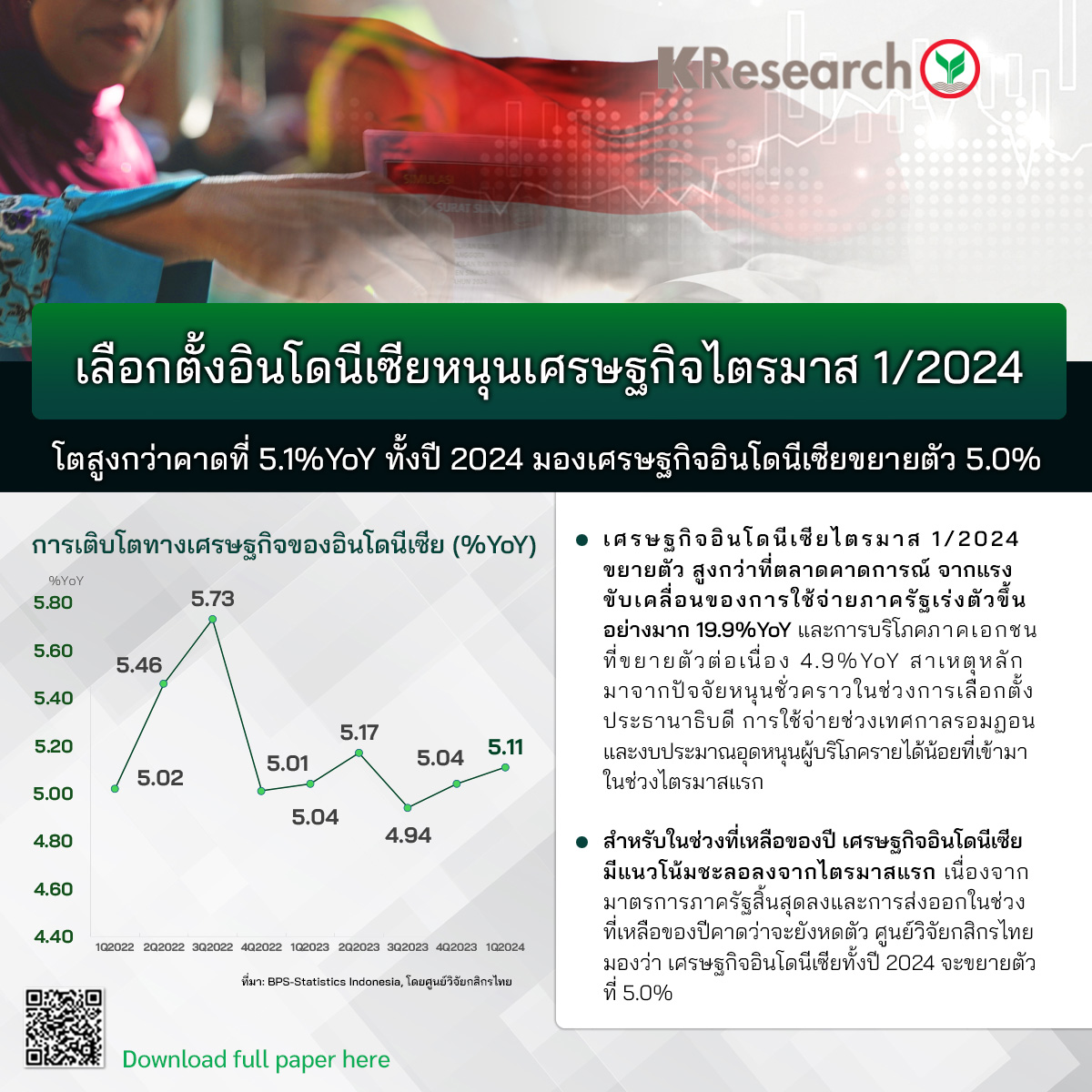
- Indonesia's economy in Q1 2024 expanded by 5.1% YoY, exceeding market expectations of 4.9% YoY (Bloomberg consensus) (Figure 1). This growth was driven by a significant increase in government spending of 19.9% YoY, alongside continuous private consumption growth of 4.9% YoY. The main contributors were temporary factors related to the presidential election, spending during the Ramadan festival, and budget subsidies for low-income consumers that were implemented in the first quarter. Meanwhile, exports showed only a slight recovery, growing by 0.5% YoY, primarily due to a slowdown in demand from trading partners (Figure 2). The details are as follows:
-
- Temporary factors stimulating short-term economic growth include: 1) A budget aimed at reducing the burden of spending and alleviating inflation issues for low-income citizens, which will gradually end from March to June. For example, the distribution of 10 kilograms of rice per household to 22 million households, which started in 2023, will conclude in June 2024, and a budget for living cost assistance totaling 11.25 trillion rupiah (approximately $711.8 million) during January to March 2024, providing 200,000 rupiah per month to 18.8 million low-income households. 2) Festival-related factors stimulating economic activity, including spending for the presidential election campaign in February and purchasing goods during the Ramadan festival in March.
-
- Exports and investments grew modestly. Exports in Q1 2024 grew at a low rate of 0.5% YoY due to the weakening economies of major partners like China, the U.S., and Japan, with exports accounting for one-fifth of Indonesia's economy. During the first quarter, which was the final stretch of the Indonesian presidential election, investors delayed investments to await election results, resulting in a 3.79% YoY growth in investments.
- For the remainder of 2024, Indonesia's economy is expected to slow down from Q1, with the following details:
- Consumption is likely to grow at a slower pace due to the end of government measures and the impact of high base effects from the previous year, coupled with inflationary pressures that are beginning to rise with global oil prices. Recently, the inflation rate remained stable at 3.0% in April.
- Exports are expected to continue contracting for the rest of the year due to a slowdown in the economies of major markets, including exports to China, the U.S., and Japan, which together account for 40% of Indonesia's total exports.
- Additionally, consumption and investment face increasing limitations, as Indonesia's policy interest rates are expected to remain high at 6.25% to support the value of the rupiah. However, if the direction of the Fed's policy interest rates remains high for an extended period, it may pressure Bank Indonesia to consider additional measures, further impacting the financial costs for businesses.
- The Kasikorn Research Center predicts that Indonesia's economy will grow by 5.0% for the entire year of 2024. It will be important to monitor the policies of Mr. Prabowo Subianto, who will officially take office as the new president in October 2024, as significant economic policies are expected to be announced that will play a role in supporting Indonesia's economy in the following year.
Discussion
Follow breaking news Investment property articles on Facebook, click here.