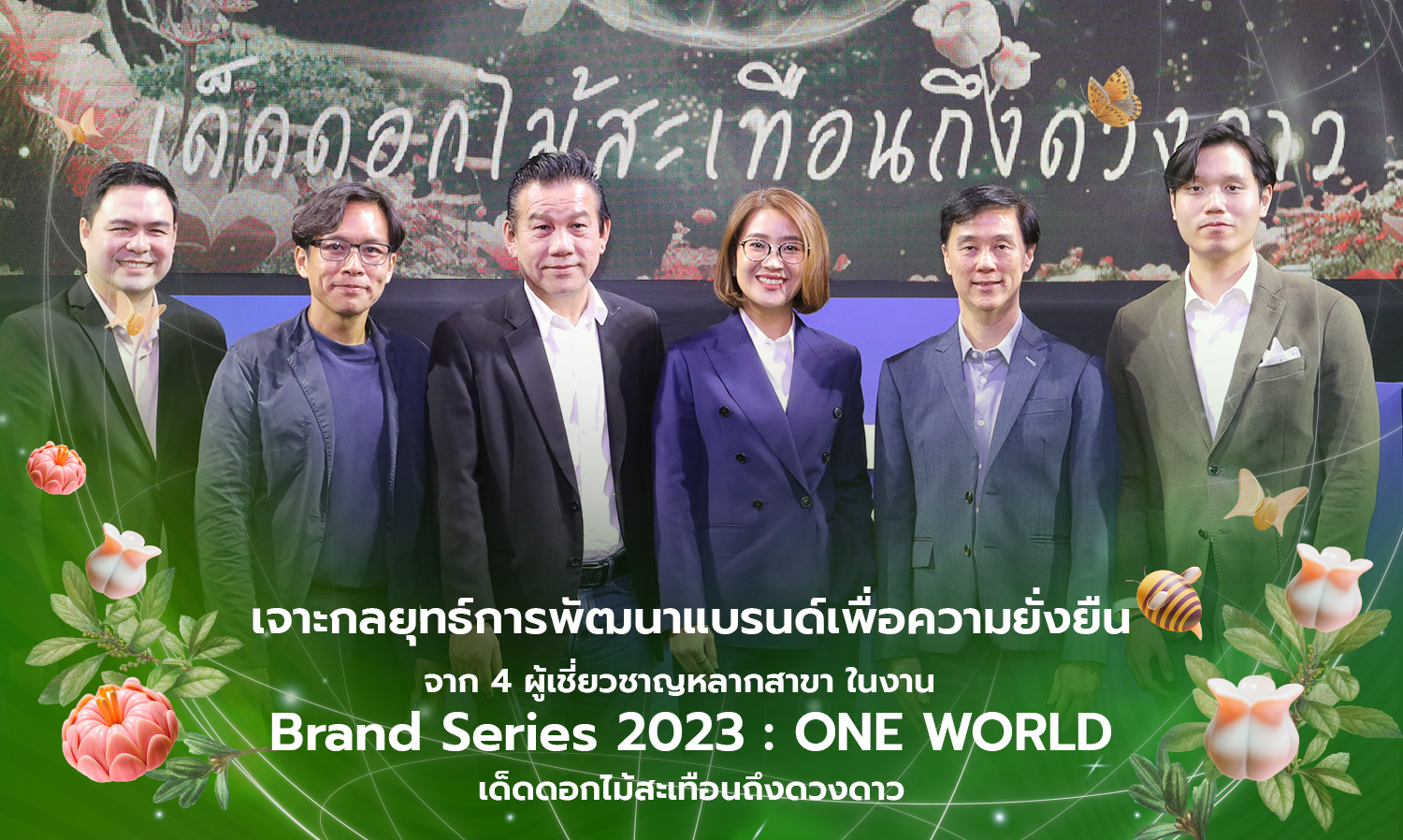
Exploring Brand Development Strategies for Sustainability from 4 Experts in Various Fields at Brand Series 2023: ONE WORLD, Where Flowers Touch the Stars
This is another opportunity to fully gather knowledge about branding, held annually at the Group Talk: Exploring Brand Development Strategies for Sustainability (Make Brand Sustainability for Our One World). This event is part of the TerraHint Brand Series 2023, which has been held for six consecutive years by TERRA BKK, a media outlet focused on real estate and marketing research consulting. This year's theme is “Brand Series | ONE WORLD, Where Flowers Touch the Stars”.
This year, we are honored to have experts driving the real estate industry from various sectors, both front and back end, to share their knowledge. Here’s a summary of the key topics discussed.
Sustainability Branding Mastery: Strategy and Communication
By Mr. Pruk Chiwaworanant, Director of Strategy, Ogilvy Thailand
Mr. Pruk Chiwaworanant opened the discussion on strategies for creating sustainable brands, sharing insights that today’s business growth is not just about expansion but also about sustainability. Brands must address the BANI WORLD challenges (B = Brittle, A = Anxious, N = Nonlinear, I = Incomprehensible) faced by consumers.
A survey conducted in 28 countries by KANTAR, a global marketing consultancy, found that people are primarily concerned about themselves before considering the impact on the world. In Thailand, regardless of generation, there is an increasing emphasis on environmental issues and sustainability, with 37% actively taking consistent action. This reflects back to brand creators in real estate, indicating that communication must make environmental and sustainability issues feel more personal and accessible to consumers.

“We believe that the role of brands and businesses significantly impacts social change and community development. Brands must prioritize creating impact by focusing on People, Planet, and Performance,” he stated.
In terms of strategy and communication with Thai consumers, creating a Sustainability Branding Impact involves a 4D Framework:
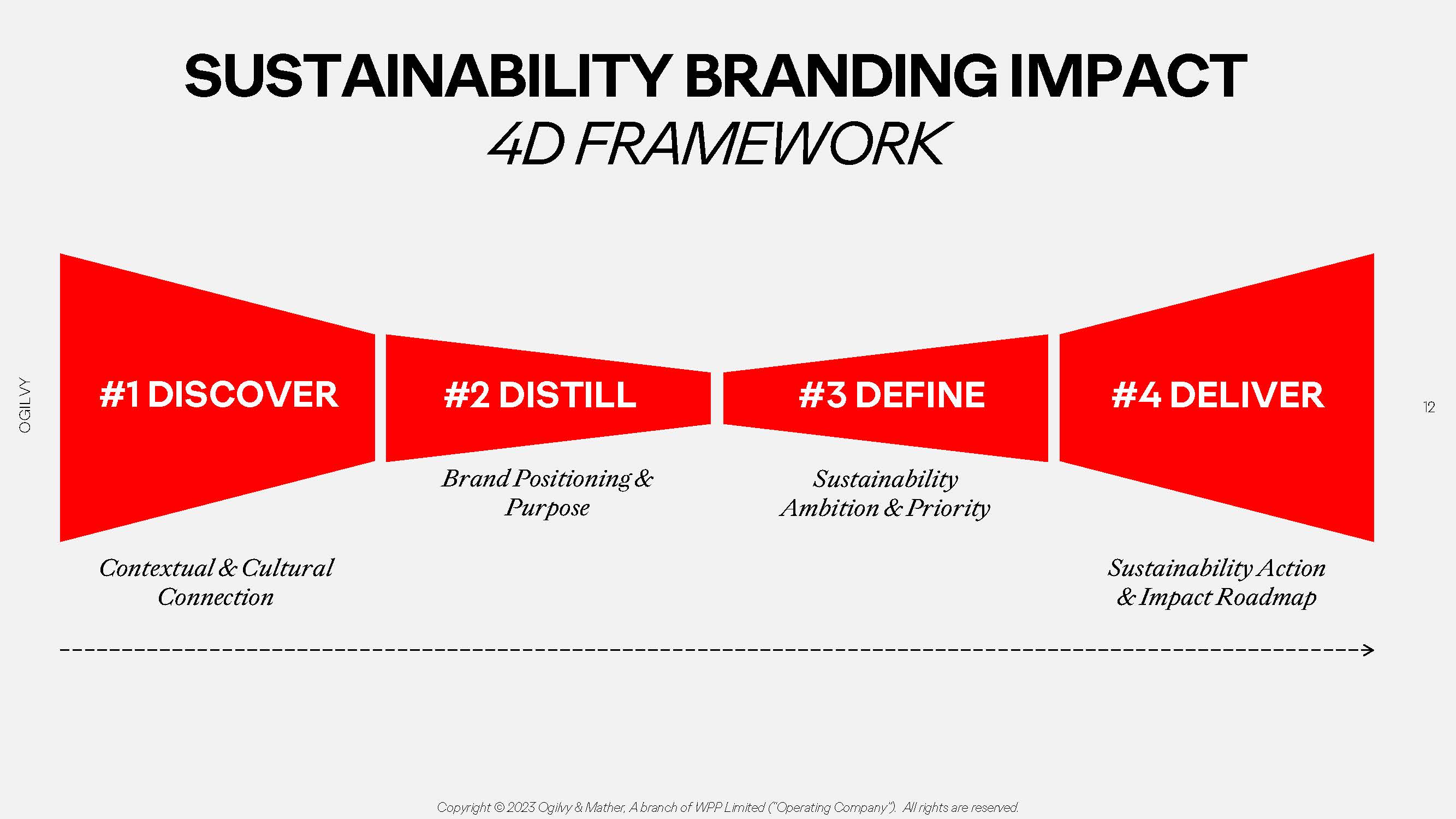
- Discover: When communicating about sustainability, Thai consumers seek simplicity, consistent collaboration, and often question how they, as individuals, can create significant societal impacts. Therefore, brands must foster a sense of simplicity, engagement, and empower consumers to realize their potential for change.
- Distill: Brands must crystallize how their unique strengths can drive change in the world.
- Define: Clearly outline the brand's direction and goals to enhance brand distinction.
- Deliver: Encourage action.
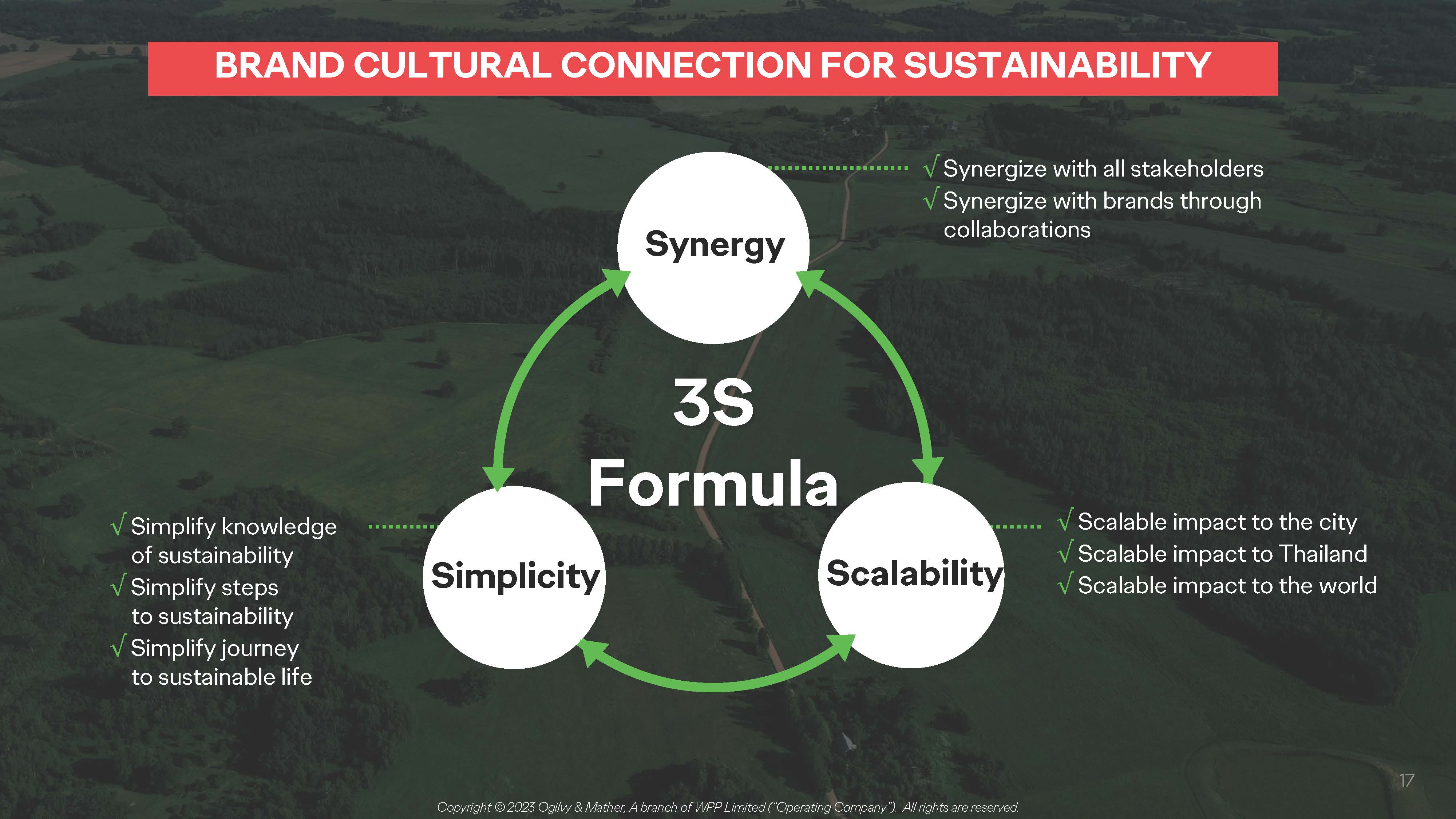
“When discussing sustainability, it is more than just communication or promises; it is about action. How can we make it accessible to partners and customers? Importantly, creating a sustainable brand today must start with the brand's purpose and involve everyone—employees, customers, and the community—to drive societal and global change together.”
For example, Coca-Cola, which has been around for over 130 years, has continuously adapted while maintaining its core purpose: ‘refresh the world, make a difference.’ The brand's actions have evolved, such as shifting from ‘taste the feeling’ during the COVID-19 pandemic to ‘real magic’ with a logo depicting people embracing. This demonstrates how brand actions change with societal contexts while maintaining the brand's purpose.
Crafting Tomorrow: The Art of Sustainability Design & Well-Being
By Mr. Yosapon Boonsom, Executive Director of Chama Co., Ltd. and Co-founder of we!park
Next, we explored design perspectives with Mr. Yosapon Boonsom, an expert in public space design, who noted that in the past, people expected design and functionality, but now they also seek environmental benefits. Today, the production process is crucial for obtaining products.
Designers and architects face larger challenges, needing to consider three key concepts: Human-Centric, Nature-Centric, and Technology Enhancement, while also valuing the process. Both producers and consumers now want to engage in design, assessing how it impacts their lives and the world. Designing public spaces that involve community participation is vital for sustainability, and design should aim not just for impact but for positive effects in communities and neighborhoods, becoming a new measure of design success.
“Sustainability doesn’t require grand visions or heavy investments in technology. Simply positioning buildings correctly to optimize natural light and airflow can reduce energy use. Efficient use of construction resources or utilizing locally produced materials is fundamental for real estate businesses to enhance the quality of life for everyone.”
“We can also look closely at areas like Ploenchit, a thriving CBD in Bangkok, where crossing the street safely is still a challenge, and there are vacant lots. This raises questions about happiness and quality of life, despite the abundant resources available for development. Sustainability is not about demanding more; it is about ensuring a better quality of life for everyone.”
Ultimately, this raises the question of whether the burden of sustainability is being unfairly placed on the private sector by the government, as developed cities still require numerous policy measures to promote tangible progress.
Wellbeing and Sustainability Practice in Real Estate Development
By Assoc. Prof. Dr. Apichart Praditsamanont, Director of Research for Innovation
Research and Innovation Center for Sustainability (RISC)
Assoc. Prof. Dr. Apichart Praditsamanont highlighted that our world is losing biodiversity, with two-thirds of plant species having gone extinct in the past 50 years, indicating a crisis. Humanity must change its lifestyle to achieve Nature Positive and Carbon Negative outcomes.

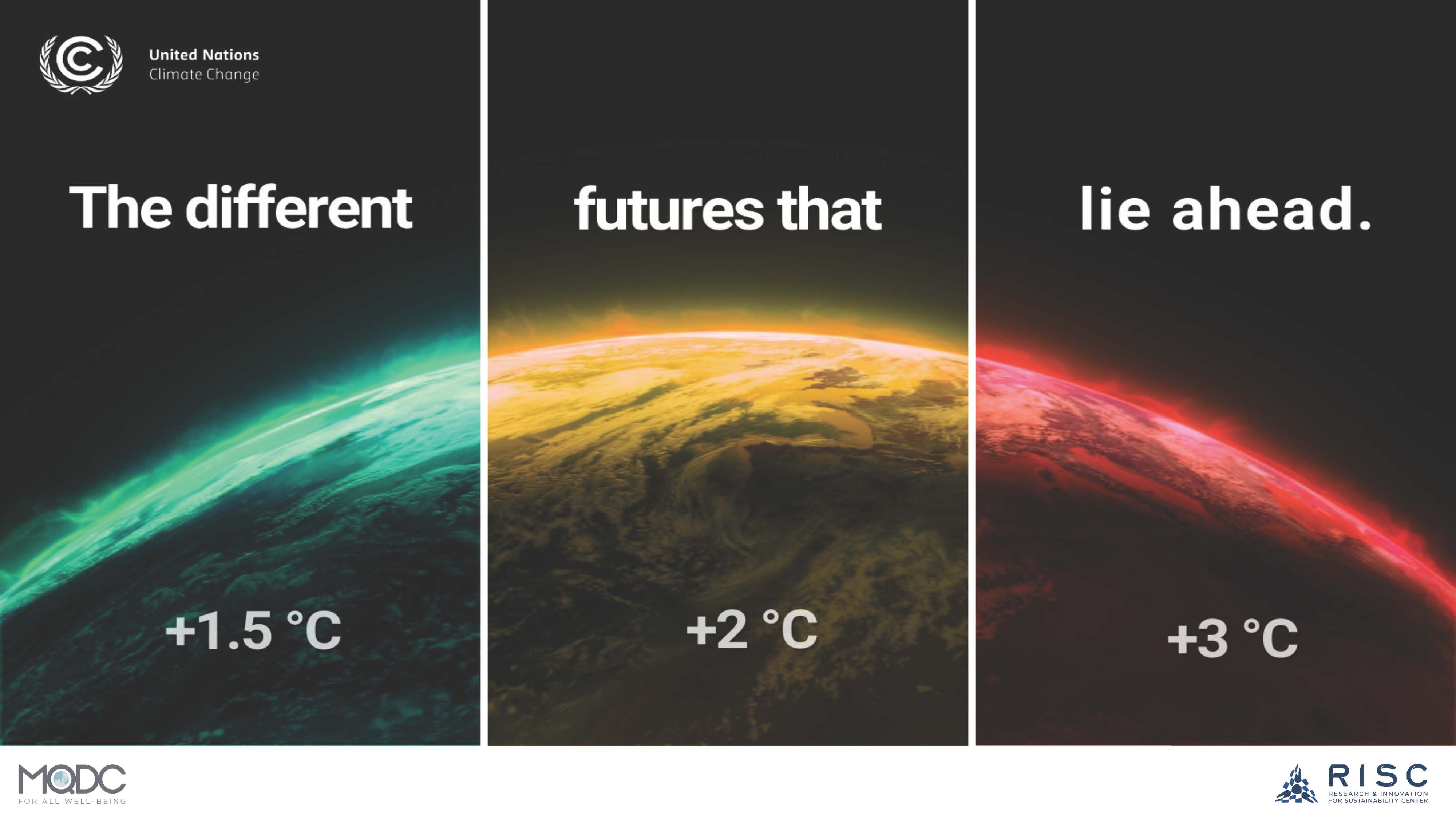
This crisis is evidenced by the efforts of the UNFCCC (United Nations Framework Convention on Climate Change), which aims to control the average global temperature increase to no more than 2 degrees Celsius compared to pre-industrial levels (1850-1900, before fossil fuel proliferation), with a primary goal of limiting the increase to 1.5 degrees Celsius.
Should the global temperature exceed 1.5 degrees, the world will experience two dry months per year, and at +2 degrees, it will face more than four dry months annually. If temperatures rise above +3 degrees, there will be over ten dry months each year, making it uninhabitable for life.
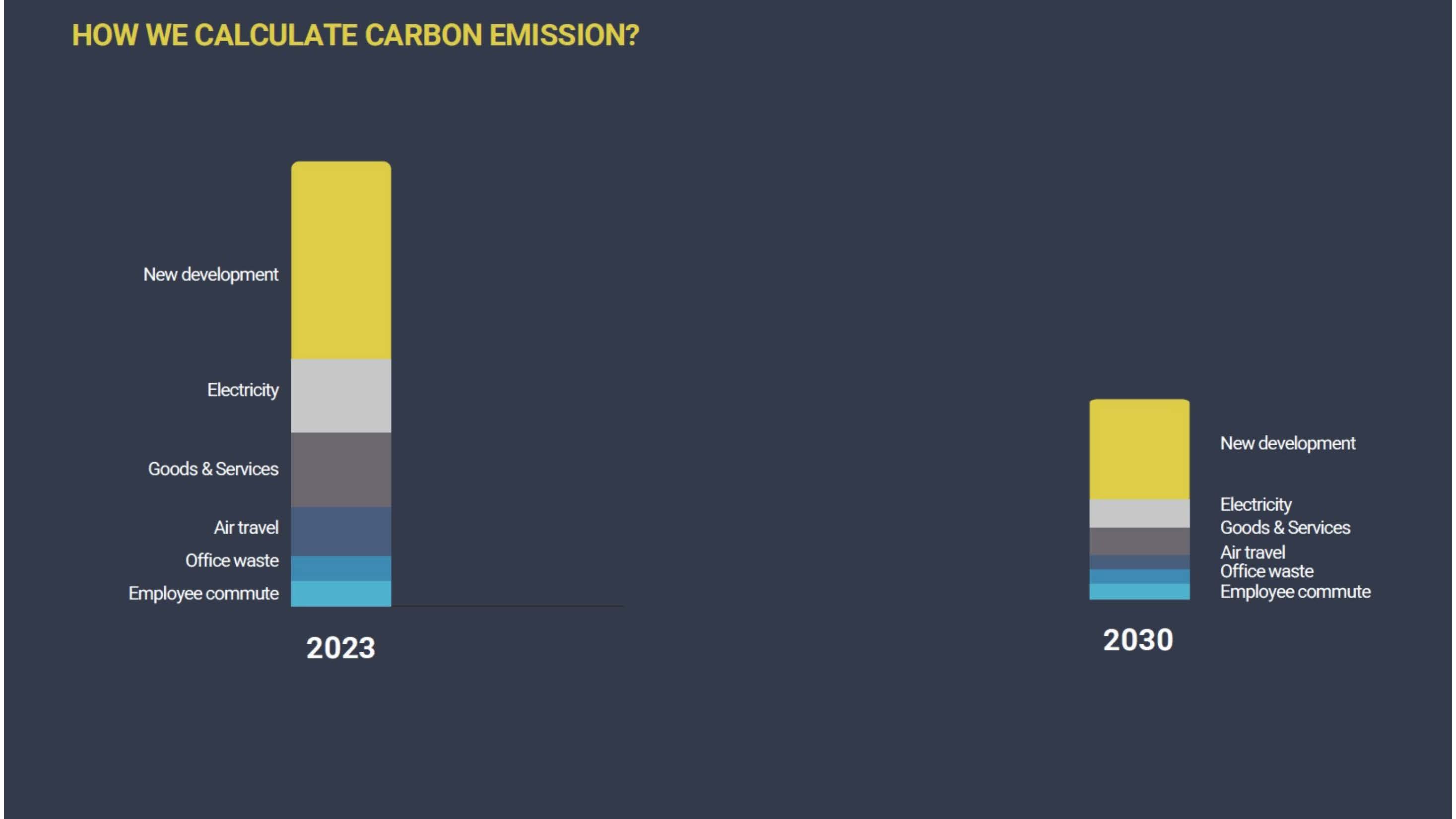
“What we all urgently need to do is reduce our carbon footprint as much as possible. Currently, there is still an opportunity to create positive change. Research shows that 75% of Gen Z do not just consider brand credibility when making purchases but also whether the brand is environmentally friendly, indicating that younger generations prioritize environmental issues more.”
Branding Impact for Foreign Market
By Mr. Simon Lee, Angel Real Estate Consultancy
Finally, we explored the foreign real estate market perspective through the analysis of Mr. Simon Lee from Angel Real Estate Consultancy, who revealed that the real estate market in Bangkok for foreigners is not recovering significantly, unlike Phuket, which is bouncing back faster due to investments from Russian, Chinese, and Indian investors, respectively. Foreign investors interested in Thai real estate can be categorized into three main groups: 1. Those looking to live and rent, making up over 50%; 2. Families purchasing for personal residence, often with children attending international schools in Thailand; 3. Those buying for tourism and retirement.
“It must be acknowledged that the first two groups of foreign investors have high expectations, while the Thai real estate market struggles to meet these demands fully, as investors perceive that Thai properties lack differentiation across brands.”
Foreign investors are looking for projects that offer functions or services that enhance their daily living experience, such as Co-Living Management that can guide foreign residents on shopping options or services that act as personal assistants for various needs in Thailand.
Regarding brand awareness of Thai real estate, it may not significantly influence foreign purchasing decisions, as many foreigners are not familiar with Thai real estate brands. They tend to rely on word-of-mouth recommendations among fellow foreigners and close acquaintances, which is a highly effective marketing approach.
“In the past, we tested new services with foreign clients looking to purchase real estate in Thailand. We found that adding healthcare services to the common areas of projects, even with additional costs, received a very positive response and continuous requests for expansion. This shows that such services are in demand and of interest to them.”
This is just a glimpse of the knowledge shared to ignite sustainability in the real estate sector, as sustainability is not the responsibility of any one individual but something we all must drive forward together.