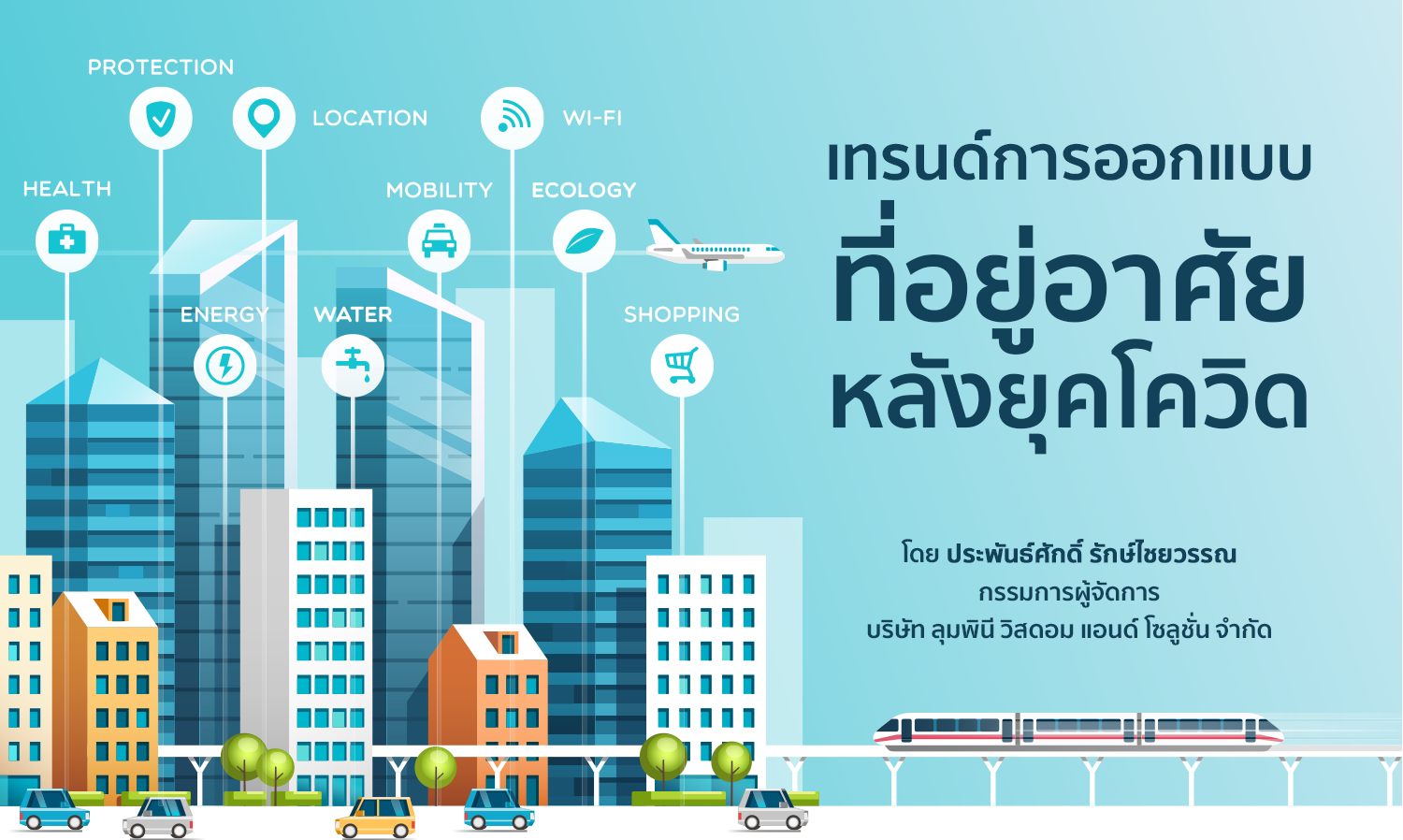
The Next Normal 3-Megatrends: Trends in Residential Design Post-COVID
By: Prabhan Sak Rukchaiwan
Managing Director, Lumpini Wisdom and Solution Co., Ltd.
"October" marks the first month of the final quarter of 2022, and many people are beginning to count down to their year-end vacations, while others are busy planning their business strategies and work for the upcoming year 2023.
Today, I would like to discuss the direction and trends in residential design following the COVID-19 pandemic, which have been evolving since 2020 and continue to develop into 2023. This is a result of changing behaviors among the public after the pandemic, which we refer to as the New Normal. This includes shifts in work habits from working in offices to working from home (Work from Home) and even working from anywhere at any time (Work from Anywhere Anyplace). Shopping has also transformed, allowing purchases from anywhere at any time, 24/7. There is a growing emphasis on living spaces that prioritize hygiene, among other factors, leading us towards the Next Normal.
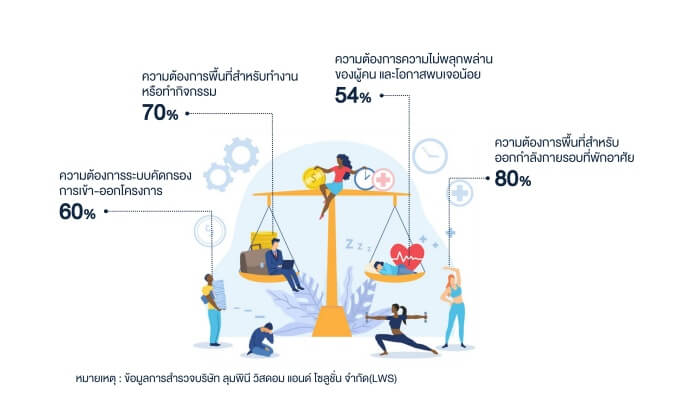
A survey conducted by the Lumpini Wisdom research team revealed that 80% of respondents desire residential spaces with more areas for exercise, as opposed to relying solely on gyms and parks. Simultaneously, 70% of respondents want more space for work or activities. Additionally, 60% of respondents prioritize safety measures in residential projects, emphasizing the importance of screening systems to prevent the spread of COVID-19 and crime within the community. Furthermore, 54% of respondents prefer private spaces that are not crowded to reduce the risk of disease transmission.
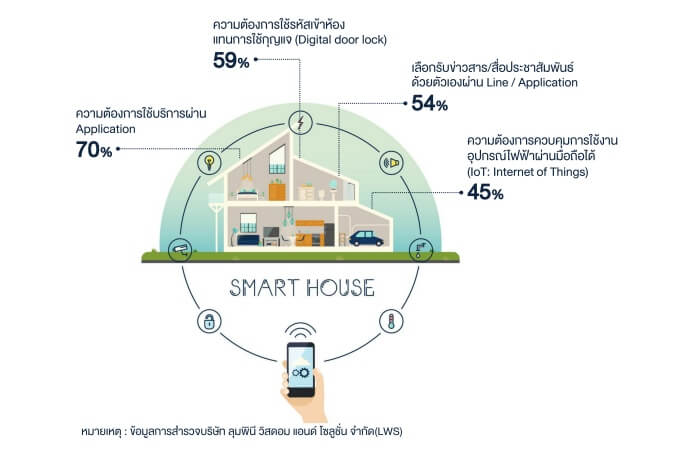
Beyond the survey on residential needs, our research (Lumpini Wisdom) found that consumer behavior has shifted towards valuing learning and being more willing to utilize digital technology to facilitate life in accordance with social distancing measures. Even though social distancing has been relaxed, technology has become an integral part of daily life as consumers have adapted to these changes. The survey indicated that 70% of respondents prefer to use services through applications for both shopping and other services. Meanwhile, home improvements are increasingly incorporating technology, such as digital door locks instead of traditional keys, and the use of digital technology and applications to control home appliances (Internet of Things: IoT).
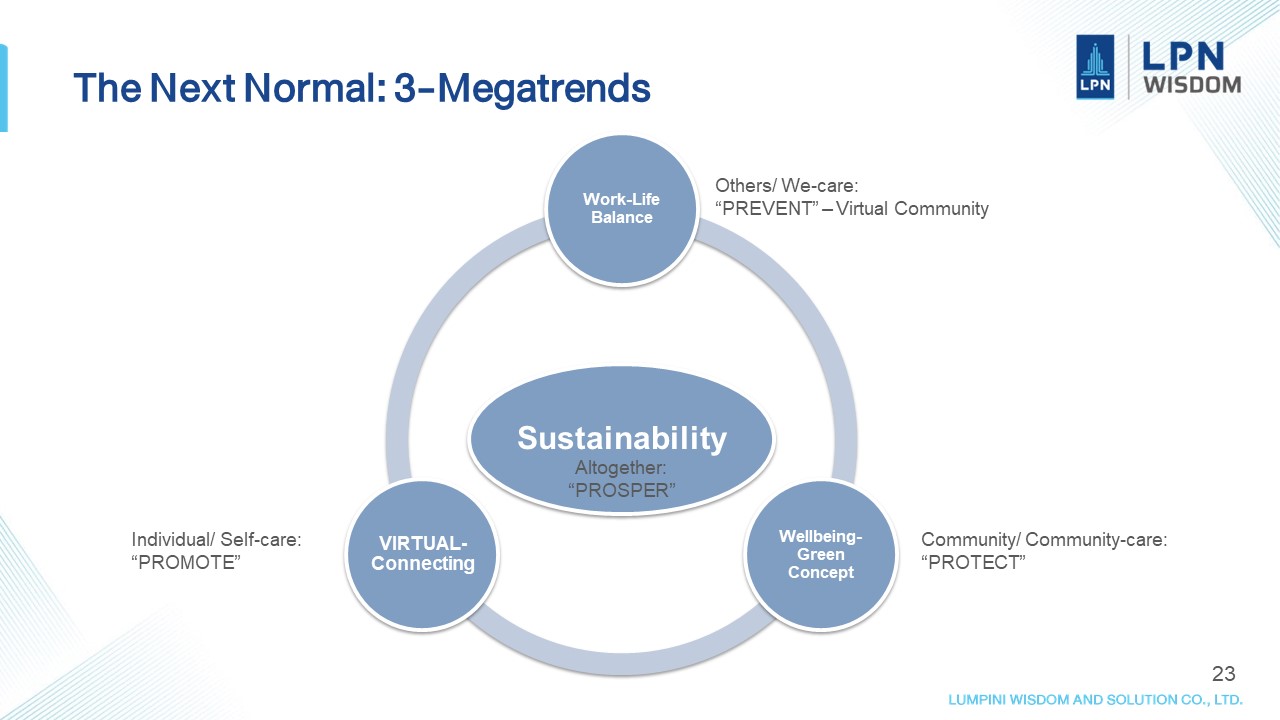
Given these changing lifestyles, I would like to share insights on residential design that meets consumer needs in the Next Normal through 3 Megatrends.
Let's start with...
Developing Residential Spaces that Balance Work and Living (Work-Life Balance)
The severe COVID-19 pandemic has changed the way people live globally. "Home" is no longer just a "place to live" but has also become an office, a meeting room, a gym, or even a cinema, with these activities easily accessible through online platforms. This trend has given rise to the stay-at-home economy, including social gatherings via applications, e-commerce, food delivery services, and virtual reality shopping experiences.
Current and future residential designs must create living spaces, whether in condominiums or houses, that can manage areas suitable for a 360-degree lifestyle—serving as a place for relaxation, work, exercise, and entertainment, with multipurpose areas that can be adapted to the residents' needs.
Integrating Technology to Create Touchless Living Spaces (Virtual Livable Connect following Touchless Society)
Life in the next normal will focus on safety and hygiene. Technology is being developed to "reduce contact," such as non-contact delivery systems that place packages in designated containers or locations, automatic sensor doors in public areas, e-payment methods, and business designs that allow for touchless customer service using voice recognition or augmented reality.
Current and future residential developments must incorporate touchless technology in both condominiums and houses. Before COVID-19, such devices may have seemed like luxuries, but they are now essential for real estate developers to meet consumer demands for safety and hygiene.
Developing Residences with a Focus on Hygiene and Environment (Wellbeing & Green Residence)
Hygiene and environmental considerations are crucial in current residential development. The choice of eco-friendly materials that reduce toxic impacts from production processes is essential for real estate developers. Nowadays, manufacturers are developing environmentally friendly materials to meet consumer demands, along with production processes that reduce CO2 emissions. Construction processes must also focus on minimizing waste under the Net Zero Waste concept to create residences that promote good hygiene while being environmentally friendly.
These three points represent the "3-Megatrends" that are critical in current and future residential development. I see many real estate developers already incorporating these concepts, even if not fully, which is a positive sign for homebuyers who will benefit from developments that consider design, technology integration, and hygiene and environmental factors to better meet consumer needs. I believe that these 3-Megatrends will serve as a checklist for homebuyers today and in the future. Although prices may rise due to innovations and selected materials, I believe that in the long run, we will achieve residences that provide happiness, good hygiene, and sustainability.
That's all for today. See you in November with more insights on residential development for the elderly, addressing the needs of a society transitioning into an aging population.