Thai Export Momentum Slows in July Due to Severe Decline in Exports to China
The value of Thai exports in July grew at its slowest rate in 17 months
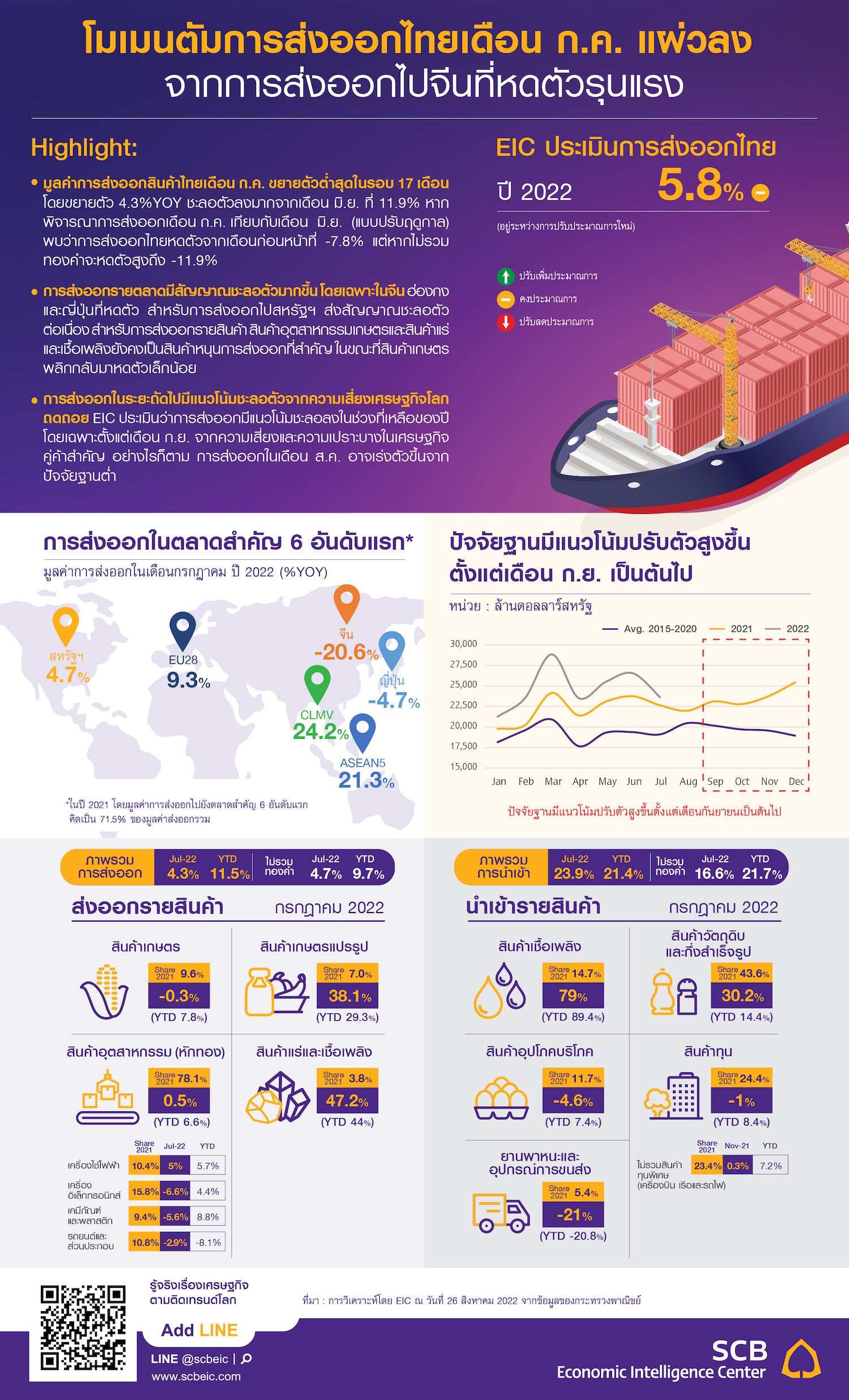
In July 2022, the value of Thai exports was $23,629.3 million, growing by 4.3% year-on-year (compared to the same period last year), a significant slowdown from June's 11.9%. Although this marks the 17th consecutive month of growth, this month's growth is the slowest in 17 months. The value of exports excluding gold grew by 4.7%, down from 11.5% in the previous month. When comparing July's exports to June (seasonally adjusted), Thai exports contracted by -7.8%, and excluding gold, the contraction was as high as -11.9%. Overall, Thai exports in the first seven months of 2022 still showed good growth at 11.5%, and excluding gold, the growth was 9.7%.
Agricultural industrial products and mineral and fuel products remain key export drivers, while agricultural products slightly contracted
In terms of exports by product, (1) agricultural products, which had previously shown good growth, slightly contracted for the first time in five months at -0.3%, compared to the previous month's growth of 21.7%. Key supporting products this month included chicken, rice, and rubber, while fruits (especially fresh fruits to China) saw a significant decline. (2) However, agricultural industrial products grew by as much as 38.1%, accelerating from the previous month's 28.3%. Key supporting products this month included granulated sugar, vegetable and animal fats and oils, pet food, and canned and processed seafood. (3) Industrial products remained stable at 0.1%, down from 6.7% in the previous month. However, if excluding industrial products that do not reflect the true export picture, such as gold, weapons, and aircraft, industrial exports contracted by -0.6%. Key supporting products this month included aircraft, air conditioning units and components, jewelry excluding gold, and transformers and components, while computers and equipment, plastic pellets, gold, automobiles, and components saw significant declines, reflecting ongoing chip shortages. (4) Mineral and fuel products still showed good growth at 47.2%, but slowed from 73.7% in the previous month, which aligns with EIC's expectations in the June Flash Exports report that Thai fuel exports may slow down due to falling global crude oil prices and refining margins amid concerns that major economies may enter recession.
Export markets show increasing signs of slowdown, especially in China, Hong Kong, and Japan
Export markets are showing increasing signs of slowdown, particularly: (1) The value of exports to China contracted by -20.6% this month, significantly worse than the previous month's -2.7%. This aligns with China's import data for July, which, although it showed slight growth of 2.3%, was still below market expectations of 4% (Reuters Consensus). Additionally, seasonally adjusted data showed a contraction of -1.9% compared to the previous month. Moreover, the value of Chinese imports from Thailand contracted by -8.6% (or -12.3% MOM_sa), with key products dragging down exports to China this month including chemicals, fruits (especially fresh fruits), automobiles, equipment and components, cassava products, plastic pellets, steel, and steel products. (2) Exports to Japan and Hong Kong contracted by -4.7% and -31.3%, respectively. (3) Exports to the U.S. continue to show signs of slowdown due to economic uncertainty. (4) Exports to Europe (EU28) still showed good growth at 9.3%, despite significant economic pressures in Europe. (5) Exports to Russia and Ukraine continued to contract sharply at -42.6% and -87.5%, respectively, but this has little impact on the Thai economy as these are small export markets for Thailand. Exports to CLMV and ASEAN5 continue to show good growth as their economies gradually recover.
Imports slow slightly, resulting in a continuous trade deficit
In July, the value of imports was $27,289.8 million, growing by 23.9%, slightly slowing from the previous month's 24.5%. Although global energy prices have decreased somewhat, leading to a reduced growth rate of fuel imports to 79% from 124.8% in the previous month, vehicle and transportation equipment imports continued to contract at -21%, along with capital goods and consumer goods, which turned to contractions of -1% and -4.6%, respectively. However, imports of raw materials and semi-finished goods, which make up the largest share of the import basket, accounting for 43.6% of total imports in 2021, grew significantly by 30.2% this month, accelerating from 11.6% in the previous month. The trade deficit for this month was -$3,660.5 million, resulting in a cumulative import growth of 21.4% in the first seven months of 2022 and a trade deficit of -$9,916.3 million.
EIC assesses that the conflict situation between China, the U.S., and Taiwan will not escalate in severity, with limited impacts on the global economy and trade
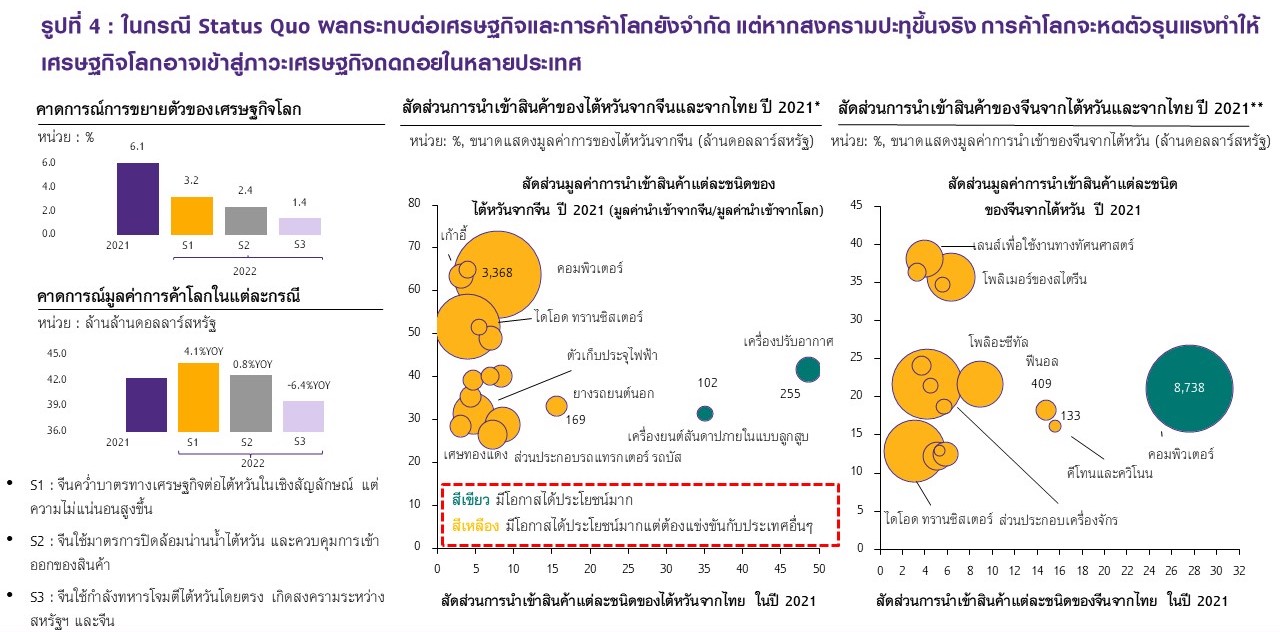
EIC assesses that the current conflict situation regarding Taiwan will not escalate in severity. In the base case, China will impose symbolic economic sanctions on Taiwan and increase military drills temporarily, while the U.S. will not impose direct sanctions on China. In this scenario, EIC estimates that the impact on the global economy and trade will be limited, with the global economy expected to grow at 3.2% and global trade at 4.1% this year. However, in the long term, this tension may accelerate the economic decoupling between China and the U.S., leading to a decrease in international trade and potentially making transportation and logistics more challenging. Nevertheless, if China and Taiwan reduce trade between them, it may positively impact Thai exports in certain product categories, such as computers, air conditioning units, and engines, as China and Taiwan rely heavily on these products from each other, and Thailand holds a market share of these products in both countries (Read more in the August 2022 EIC Monthly and the article on the tension between China and Taiwan: Implications for the global economy and trade).
Exports are expected to slow down in the near term due to global recession risks
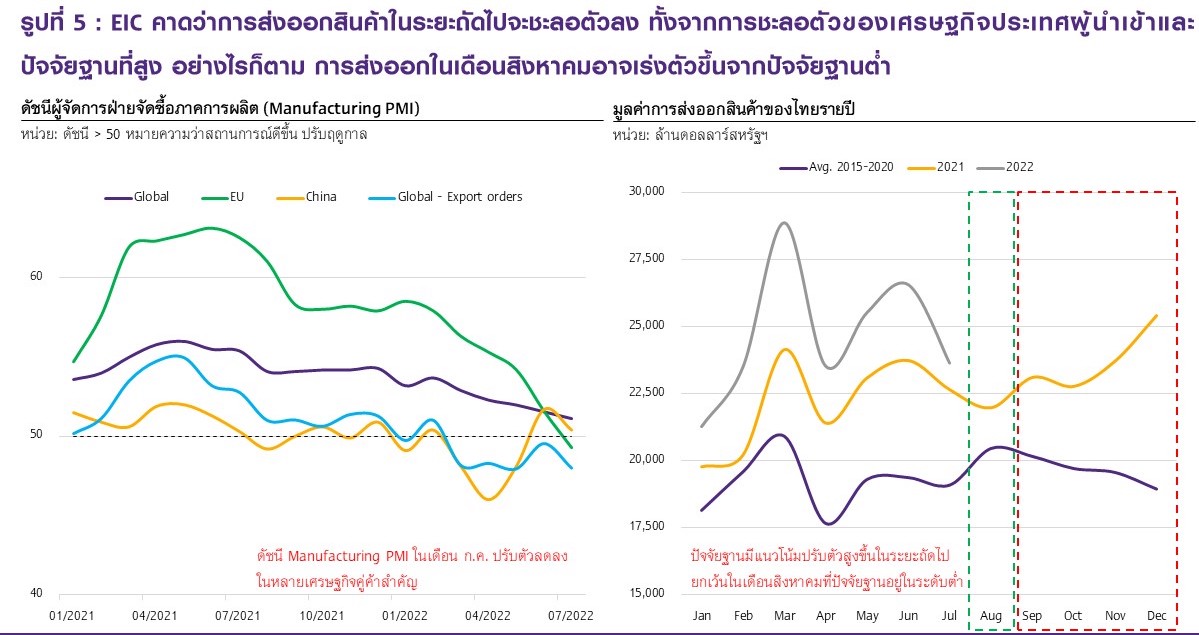
Thai exports showed good growth in the first half of the year at 11.5%, but slowed significantly in July. EIC estimates that exports are likely to slow down for the remainder of the year, particularly from September onwards, due to risks and vulnerabilities in key partner economies, especially in the U.S. and Europe, which are beginning to show more signs of economic slowdown due to inflation and tight monetary policies. Additionally, the recovery of the tourism sector may support Thailand's current account balance, which could lead to a slight appreciation of the Thai baht in the near term. However, the year-on-year export figures may temporarily accelerate in August due to low base effects from August 2021. Furthermore, EIC is closely monitoring the situation and will revise its forecast for Thailand's total export value for 2022, previously expected to grow by 5.8%, to be released in September.
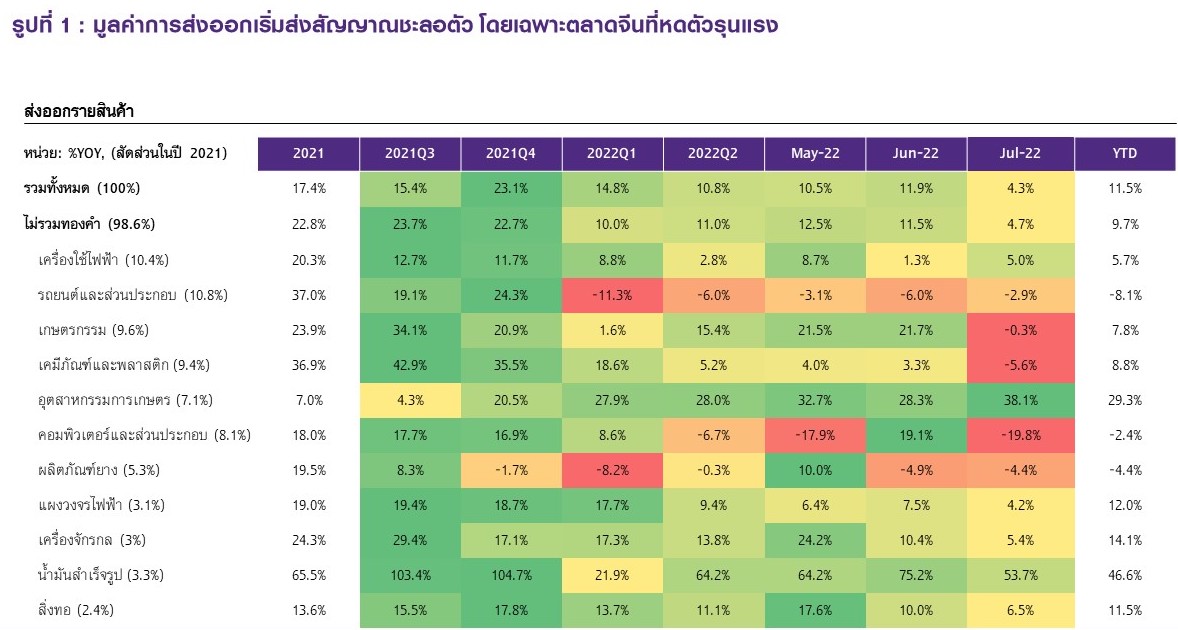
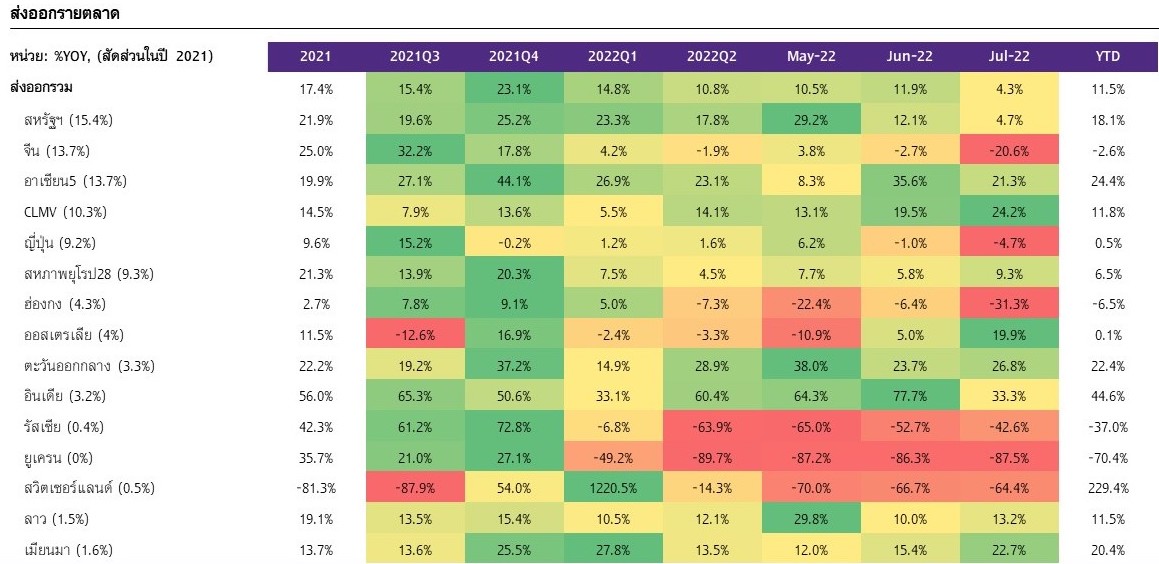
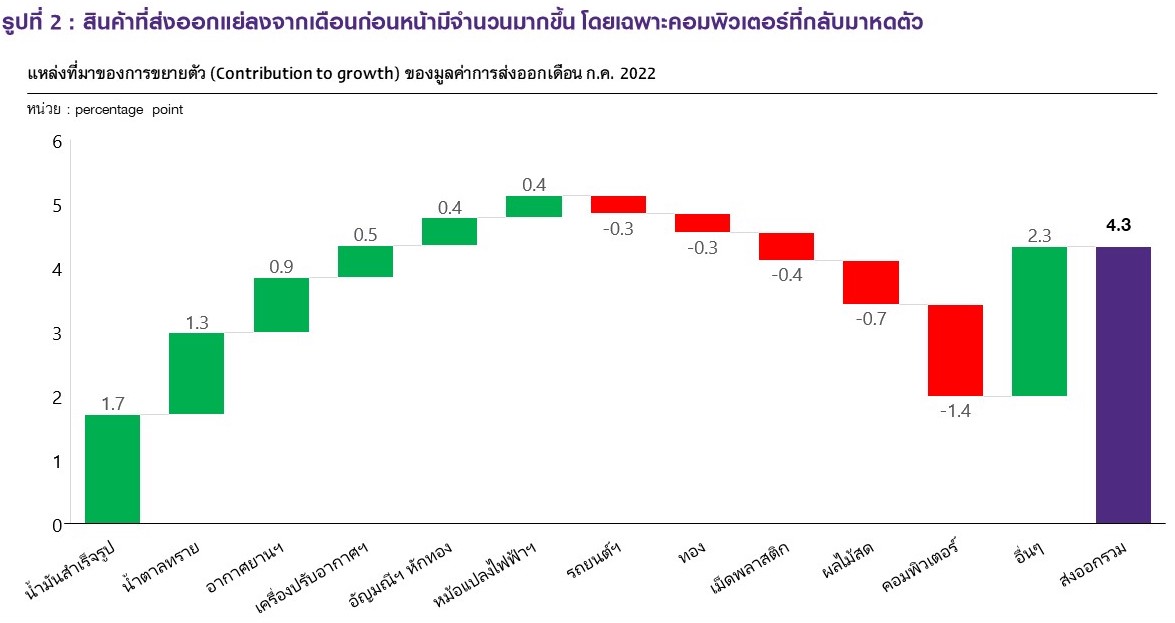
Figure 3: Exports to China contracted severely, particularly in chemicals, fresh fruits, automobiles, cassava products, and plastic pellets, while rubber products, chicken, and copper were key supporting products
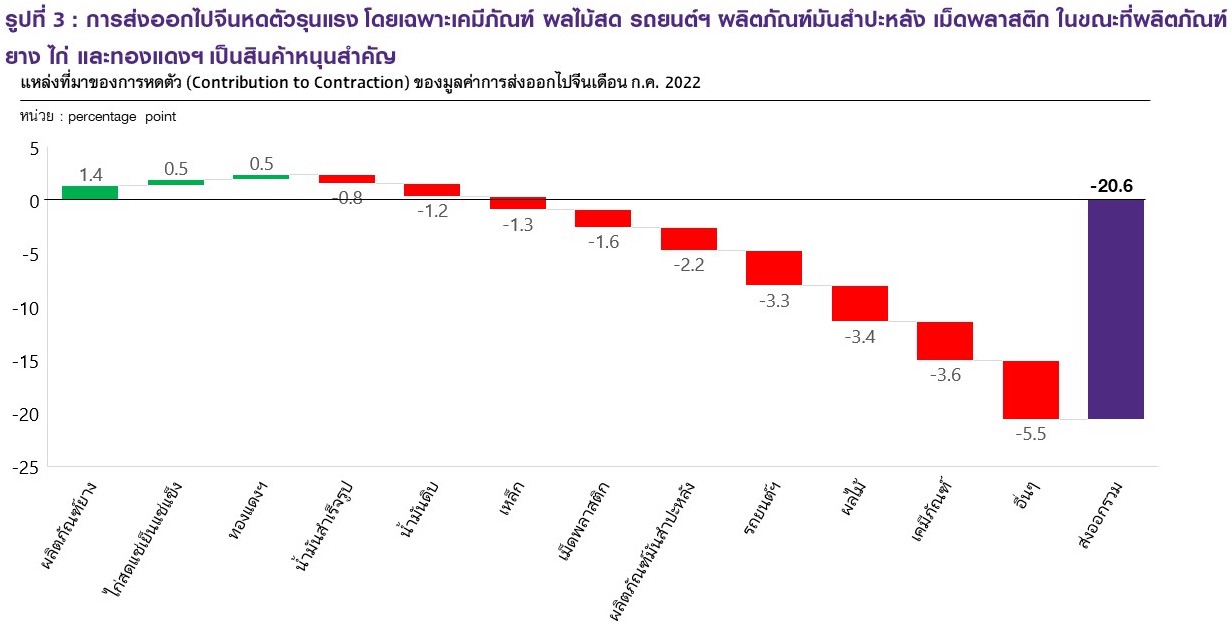
Figure 4: In the Status Quo scenario, the impact on the global economy and trade remains limited, but if war breaks out, global trade will contract sharply, potentially leading to recession in several countries
Note: *Consider only products for which Taiwan has import values from China exceeding $100 million, and only products for which China has import values from Taiwan exceeding $100 million.
Source: Analysis by EIC based on data from Trademap, IMF, WTO, and CEIC.
Figure 5: EIC expects that exports will slow down in the near term due to the slowdown in the economies of importing countries and high base factors. However, exports in August may accelerate due to low base factors.
Source: Analysis by EIC based on data from the Ministry of Commerce, JP Morgan, and S&P Global.
Analysis by... https://www.scbeic.com/th/detail/product/trade-260822
Dr. Poonyawat Sreesing ([email protected])
Senior Economist
Vishal Gulati ([email protected])
Analyst