Developing Condominiums to Meet the Needs of Chinese Investors
Hello readers and TerraBKK members! How have you been? Did you travel anywhere during the long Songkran holiday? If so, please share your experiences with us!
During the recent Songkran festival, I noticed a significant influx of foreign tourists visiting Thailand. This year marks the first Songkran since the outbreak of the novel coronavirus (Covid-19) in 2020, which has made tourism in Thailand particularly vibrant this April. It was also during this time that I met with Chinese investors interested in investing in Thailand. I would like to share the interests of these Chinese investors in the condominium market in Thailand, particularly why they have been the largest group of foreign investors in Thai real estate since 2018, especially in 2022, after Thailand reopened to tourists in July 2022, leading to an increase in foreign investment in real estate.
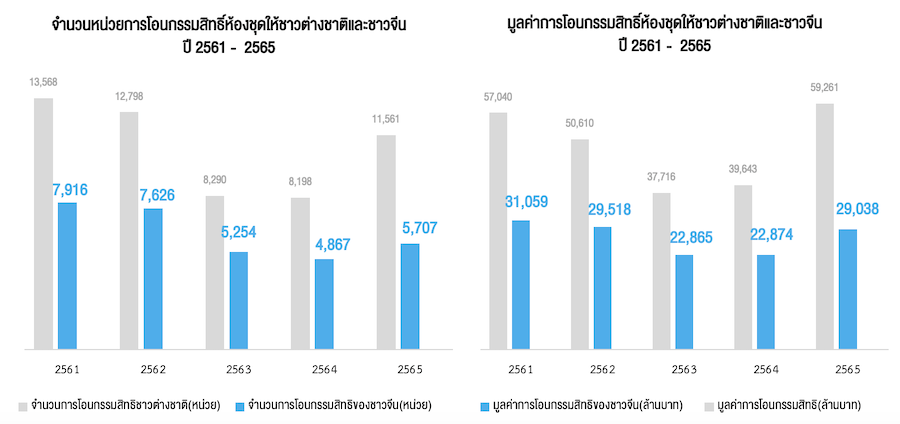
According to a report from the Bank of Thailand, in 2022, a total of 11,561 condominium units were transferred to foreign investors, valued at 59.261 billion baht, marking an increase of 41.02% and 49.17% compared to 2021. This is the highest increase since the Covid-19 pandemic from 2020 to 2022. The highest number and value of transfers were from Chinese investors, who purchased a total of 5,707 units, accounting for 49.36% of all units transferred to foreigners in 2022, with a total value of 29.038 billion baht, or 49% of the total value of foreign transfers in 2022.
I spoke with a Chinese investor interested in real estate investment in Thailand, and he mentioned, “Because the prices of condominiums in Thailand are still lower than those in China, both mainland China and Hong Kong, while the environment in Thailand is suitable for living, both for tourism and work, compared to other countries in the ASEAN region.”
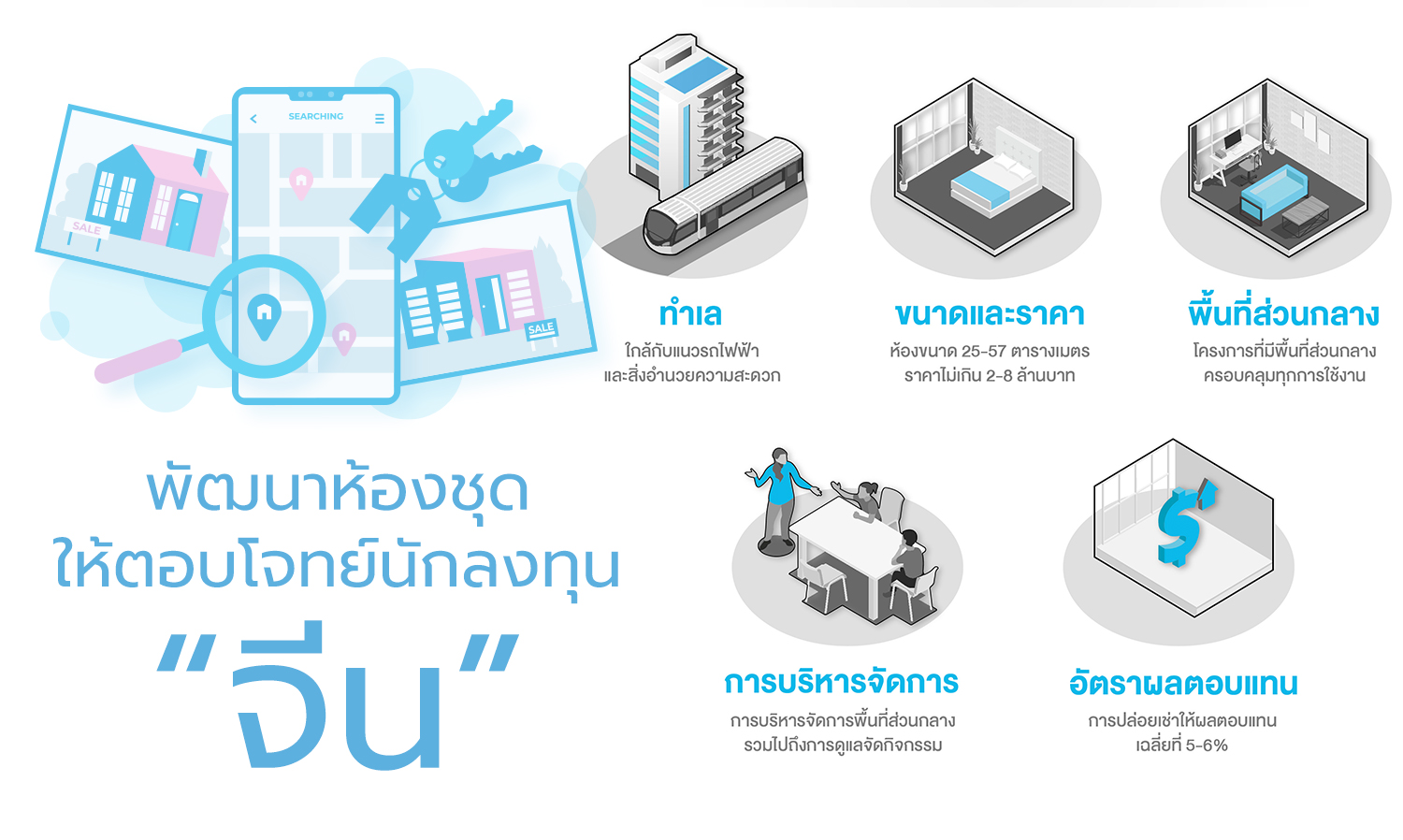
In addition to the price advantage of Thai condominiums, my team and I analyzed the factors that attract Chinese investors to specific projects and locations. We found that there are five main factors that influence Chinese investors' decisions to purchase condominiums for living and investment:
- Location:
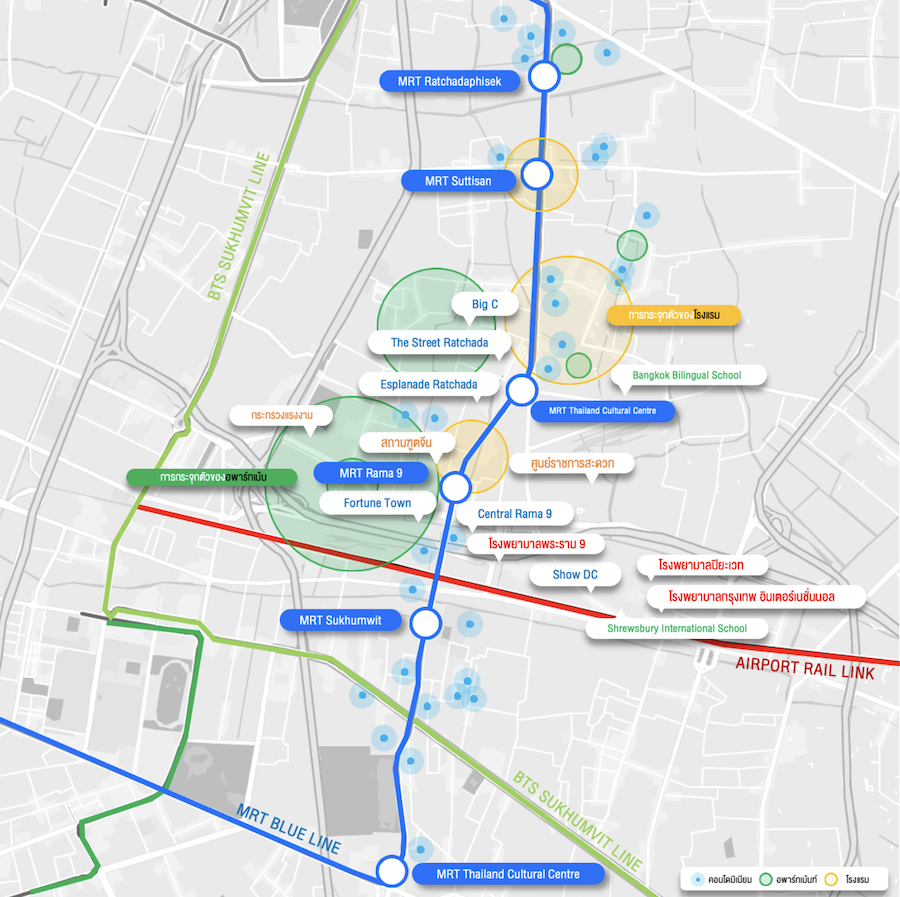
Chinese investors prefer locations close to public transport, such as the BTS and MRT, as well as amenities like shopping malls, hospitals, international schools, and communities.
Surveys of Chinese real estate investments show a preference for condominiums located near BTS and MRT stations, as well as convenient access to shopping malls, hospitals, and other amenities.
Popular areas include Ratchadapisek-Rama 9, which is near the Chinese Embassy and has good access to public transport and various amenities that cater to the lifestyle of Chinese residents, such as shopping centers, cinemas, and hospitals. In this area, there are 35 condominium projects with a total of 12,725 units, achieving an average sales rate of 41% at price levels ranging from 1.9 to 7 million baht per unit.
Additionally, studies show that the Ratchadapisek-Rama 9 area has 29 hotels ranging from 3 to 5 stars, with average rental rates of 750 to 5,200 baht per night and an average occupancy rate of 70-80%. There are also 22 apartment and serviced apartment projects in the area, with average rental rates of 3,500 to 15,000 baht per month, depending on room size, and current occupancy rates of 99-100%.
- Size & Price:
The preferred size of condominiums among Chinese investors is between 25-57 square meters. The most popular type is the studio unit, sized 25-28 square meters, with an average price not exceeding 2 million baht. Following that are one-bedroom units sized 26-35 square meters, priced at no more than 5 million baht, and two-bedroom units sized 48-57 square meters, priced at no more than 8 million baht.
- Facilities:
Projects that attract Chinese investors are those with well-designed common areas that cater to various needs, including workspaces like co-working spaces, meeting rooms, libraries, and leisure facilities such as swimming pools, gyms, and gardens.
- Community Management:
Chinese investors I met in April mentioned that buyers or renters from China value community management and activities within the community, which is significant for the Chinese social environment. Therefore, effective management of common areas and community activities is another factor that influences Chinese investors' decisions to purchase projects for living and investment.
- Average Yield of 5-6%:
Moreover, rental investments in Thailand currently offer an average yield of 5-6%, which is higher than current deposit interest rates and exceeds the average rental yield in China, which is below 4-5%. This presents an opportunity for investment in Thailand.
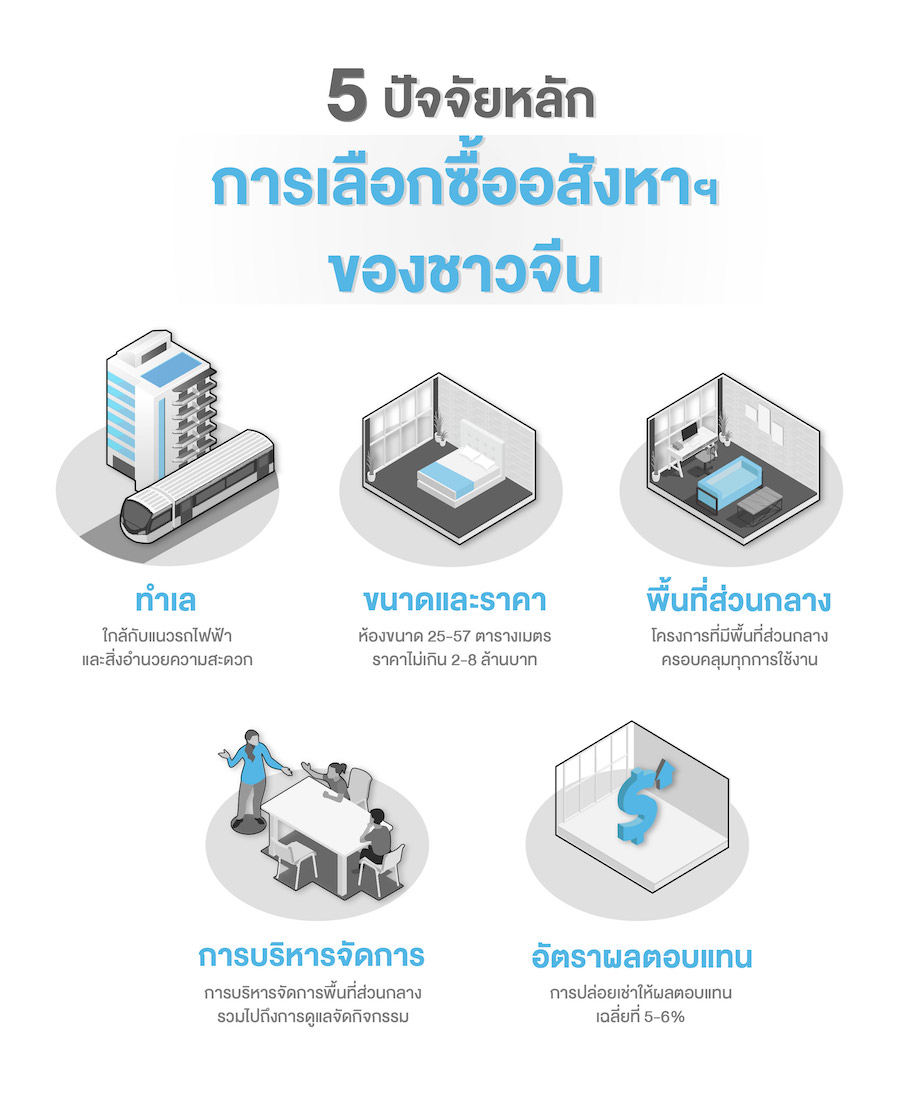
These five factors are crucial for property developers aiming to create residential projects that meet the needs of foreign investors, particularly Chinese investors, who have both similarities and differences compared to Thai buyers. This presents an opportunity for property developers to generate sales and recognize revenue from Chinese investors.
Currently, the laws regarding foreign ownership of residential properties have become more open. Foreigners can hold ownership in two ways:
1. Freehold: The law states that foreign buyers can own up to 49% of the total number of units in a condominium, with a down payment requirement of only 10-15%, which is lower than the 35% down payment required by Chinese law.
2. Leasehold: Ownership through lease in Thailand can be short-term leases of up to 3 years or long-term leases of 3-30 years, with the option to extend after the lease expires.
The openness of Thai laws regarding purchasing and investing presents an opportunity for real estate operators to develop projects and strategize sales that cater to foreign investors, especially those interested in investing in Thai real estate for the remainder of 2023. Wishing you all prosperity and success!
See you again in June!
By Mr. Prabhan Sak Raksaiwan, Managing Director of LWIS Wisdom and Solutions Co., Ltd.