Our body or anyone's body<\/strong><\/span><\/li>
<\/ol>
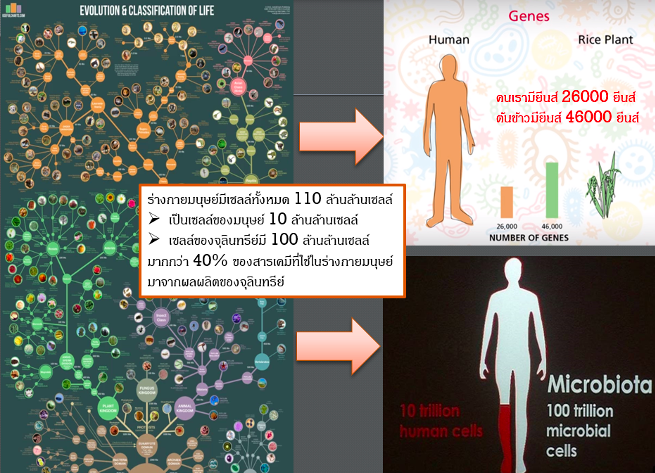
Since 2003, the Human Genome Project, which sequenced three billion nucleotides in human DNA, has been successful. Starting from a single cell, it can represent a sequence of nucleotides that is two meters long. This project has allowed us to definitively distinguish human cells from non-human cells. The total number of cells in our bodies is approximately 110 trillion, with 10 trillion being human cells and 100 trillion being microbial cells. Humans have about 26,000 genes, while the microorganisms in our bodies consist of around 10,000 species with a total of 8,000,000 genes, but the overall weight of these microorganisms is only about 1.5 kilograms. The main takeaway from this discovery is that the mechanisms of our bodies do not rely solely on our cells; there are also microbial cells and mitochondria embedded within our cells. All these mechanisms are being revealed and confirming many past misconceptions, especially regarding dietary consumption standards based solely on human cell understanding, without recognizing the importance of the microbiome in our bodies. Over 40% of the chemicals or enzymes used in metabolic processes or nutrient synthesis come from the microbiome or microorganisms in our bodies. Therefore, our daily activities, including eating, resting, exercising, working, taking medications, and many others, must consider the impacts on the various entities within us. We do not exist in isolation, especially regarding food consumption. The primary food for the microbiome consists of fibers from vegetables or fruits. Many synthetic chemicals created by humans may not have short-term effects, but long-term effects are still unknown. Even natural meat can have harmful long-term effects on our bodies, which will be discussed in detail later.
 <\/p>
<\/p>
Illustration showing the number of human and microbial cells in our bodies<\/u><\/span><\/p>
The conclusion from understanding our true composition shows that the food we consume daily must consider our true companions within us. The preferred food for the microbiome or microorganisms is natural, pesticide-free vegetables and fruits, while the food for the mitochondria residing in our cells is oxygen, which can be achieved through exercise. This is not difficult, is it?
- Homeostasis and the processes of breakdown and synthesis in our bodies<\/strong> (<\/strong>Homeostasis and metabolism<\/strong>)<\/strong><\/span><\/li>
<\/ol>
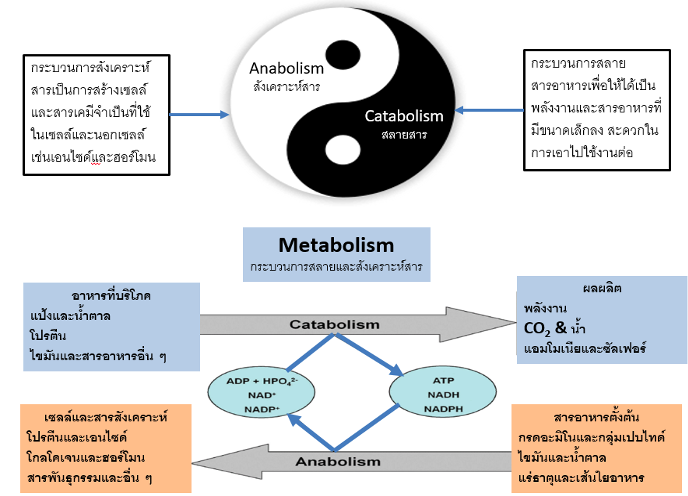
The natural mechanisms of our bodies strive to maintain balance among various elements to keep the body in a normal state. These mechanisms are controlled through the endocrine system and the nervous system, which work in harmony and communicate continuously. There are both sending and receiving processes. For example, when we consume food, blood sugar levels rise, prompting the pancreas to release insulin to transport sugar into the cells, which is the opposite of glucagon that is released when blood sugar is low. Glucagon stimulates the liver to produce sugar and release it into the body. Thus, homeostasis is the maintenance of balance among various compounds in the body, including acid-base balance, calcium levels, and waste elimination. Another mechanism of the body that serves as a tool for homeostasis is the breakdown and synthesis of food, known as metabolism.
 <\/p>
<\/p>
Illustration showing the processes of breakdown and synthesis of nutrients that must be balanced<\/u><\/span><\/span><\/p>
The illustration shows that the body is like a production process where raw materials enter, go through a production process, and emerge as products and waste. This entire process must continuously maintain balance. Currently, the most common cause of diseases is metabolic syndrome, which begins with excessive consumption leading to obesity, diabetes, high cholesterol, and heart disease. If chronic, it can lead to tumors and cancer. Therefore, it is essential to regularly observe changes in our bodies to adjust behaviors or activities to suit our physical conditions.
The conclusion from homeostasis and metabolism is that the body is like a production process that must control the balance of mass and energy at all times (Mass and energy balance). We ourselves are the ones who decide; when we need more energy, we must consume more and excrete more. When we do not use energy, we must consume less. However, if we continue to consume excessively, we must accept that abnormalities will inevitably occur. Thus, it can be concluded that “Whether we are healthy or not is determined only by ourselves.”<\/strong><\/span>
- We are the best doctors in the world for ourselves<\/strong><\/span><\/li>
<\/ol>
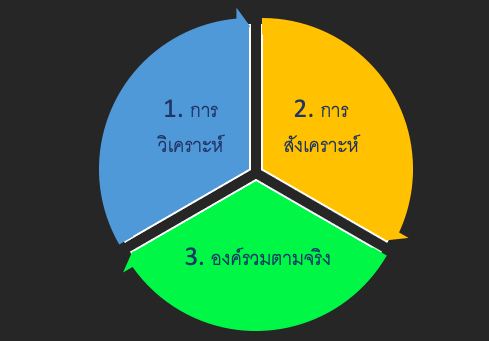
Once we understand the components and mechanisms controlling our body's functions, there is another wonder that nature has created for our bodies: the intelligent sensor system. In addition to the external nervous system, which we are well aware of, consisting of the eyes, ears, nose, tongue, touch, and feelings, our bodies also have processes that interpret information and express it through observable symptoms. However, we have been taught to remember things in a fragmented manner. If we go back to understand the principles of study regarding systems, we will find three methods:
 <\/p>
<\/p>
- Analysis study<\/span> refers to what occurred over 500 years ago when scientific discoveries became a compass guiding the direction of life in society, leading to progress and convenience up to the present. The essential principle of analysis is to separate the components of things and identify the causes of problems from the discovered parts.
- Synthesis study<\/span> involves studying various smaller parts and combining them to understand the impacts or outcomes that will occur after bringing things together, such as producing herbal medicines from multiple plant components.
- Holistic study<\/span> is an early method where humans saw the oneness of everything in this world and universe.
<\/ol>
Due to the influence of scientific development, which has become attached to materialism and believes in reality based solely on what can be seen or touched, the hidden realities have been neglected. The study of the human body reflects this paradigm most clearly. To understand the human body, we cannot consider just one component; the human body is a system composed of:
- Basic components<\/strong><\/span><\/li>
- Status or properties<\/strong><\/span><\/li>
- Relationships with other things<\/strong><\/span><\/li>
- Boundaries of the system<\/strong><\/span><\/li>
<\/ul>
When analyzing problems and causes of diseases, one cannot consider just the abnormalities of one component; it is necessary to understand the status, relationships, or boundaries and limitations of our bodies.
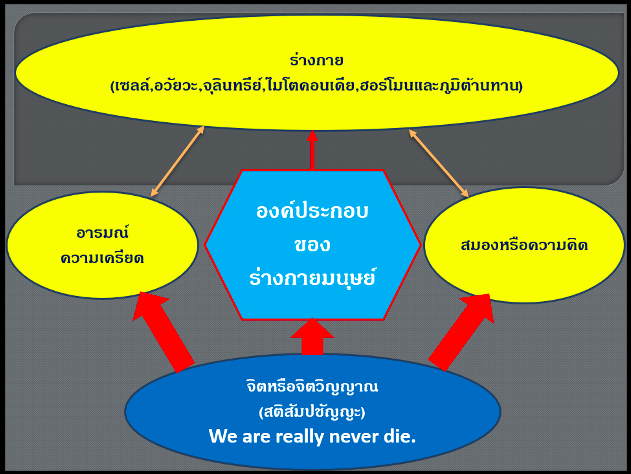 <\/p>
<\/p>
Understanding the paradigms of analysis, synthesis, holistic views, and recognizing that our bodies are systems with components, statuses that relate to other things, and boundaries is the starting point for us to become the best doctors in the world for ourselves, as only we know the changes in our systems over time.
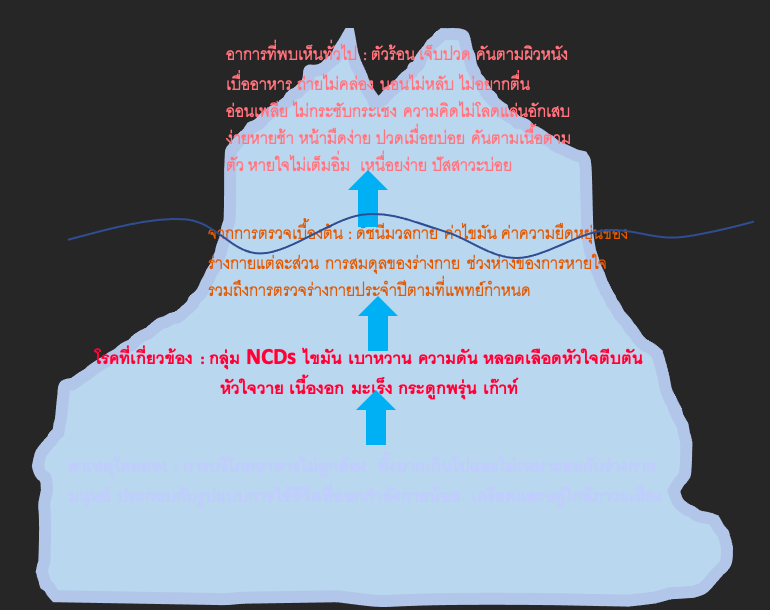
Comparing symptoms to an iceberg, we find that our bodies continuously send warning signals about abnormalities. However, analytical thinking processes based on principles and reasoning often prevent us from understanding the real problems and causes.
For example, when our body has a higher temperature or fever<\/strong><\/span>
Solution<\/strong><\/span><\/u>: Generally, we take fever-reducing medication.
Fact<\/strong><\/span><\/u>: Since humans are warm-blooded animals, our bodies have mechanisms to maintain a temperature between 35.4 - 37.4 degrees Celsius. A higher temperature indicates a reaction between our immune system and pathogens or may indicate inflammation or abnormalities in the body. Therefore, the correct approach is for us to review and understand the relationships, activities, and foods related to us continuously to find the real cause before deciding to take fever-reducing medication immediately. Doing otherwise may lead to compounded adverse effects that could become unmanageable.
 <\/p>
<\/p>
In conclusion, we can all be the best doctors to heal ourselves simply by understanding and regularly observing the changes occurring in our bodies. Importantly, each person's body has a high degree of individuality; the signals each body exhibits will vary. Therefore, we must regularly observe our own changes without immediately comparing ourselves to others, starting with observing our breath in terms of quality and quantity, delicacy, frequency, and intervals of each breath. It becomes evident that each person has a unique breathing pattern, and applying average values based on standards immediately may not be entirely accurate.
The three topics discussed are about health literacy that Thai society has been teaching and instilling incorrectly for a long time. Given the global COVID-19 crisis, it may be time for Thailand to awaken and become a model country for holistic health care with the lowest costs, while also genuinely building an economy from the grassroots. The discoveries to be presented next contradict current beliefs and knowledge, so it is essential for readers to thoroughly understand the basic realities of the body before delving into topics that conflict with the majority.
The China Study<\/u><\/em><\/strong> - A Research Compass for the Homo Sapient Species<\/u><\/em><\/strong><\/span><\/h2>
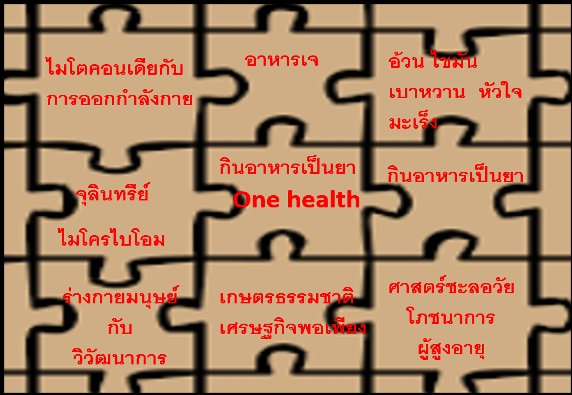
After studying "The Game Changers" in detail, I also explored various related research studies. This has truly been a brain explosion, as the research findings combined with in-depth cellular data presented in previous articles have become like a jigsaw puzzle that reveals the mysteries of the Homo Sapient species, showing how we have evolved to the present and what our future may hold. We have choices for our species to ensure our longevity. We have reached a crossroads where we must choose, with the question being: “Should humans be herbivores, carnivores, or both? And what is the appropriate quantity and ratio?”
 <\/p>
<\/p>
Illustration showing the interconnectedness of nature, environment, and health as one<\/u><\/span><\/p>
Currently, researchers working on plant-based diets, in addition to Dr. Colin Campbell and his son, include many respected figures such as Dr. John McDougall, Dr. Joel Fuhrman, Dr. Milton Mills, and Prof. Dr. Vichai Ektaksin. Especially Dr. Vichai, many Thai people may have seen his work, as he explains everything very clearly and decisively. All these experts agree that true disease treatment begins with proper nutrition, which means avoiding sugar, processed foods, and animal products. All of this is supported by research and widely published. In Thailand, it may be a bit challenging to find translations of this information, as it contradicts the larger economic picture. However, I assess that this is an opportunity for Thailand, and I intend to compile detailed content with evidence to support every word. It has taken nearly two years to crystallize this into easily understandable messages for everyone to use in making decisions for a better life. Each person's path will undoubtedly be different. The reason for choosing to expand on The China Study is that it was conducted in China and the Philippines, with lifestyles similar to those of Thai people. If there were funding agencies supporting similar research in Thailand, it would be immensely beneficial for future generations of Thai people.
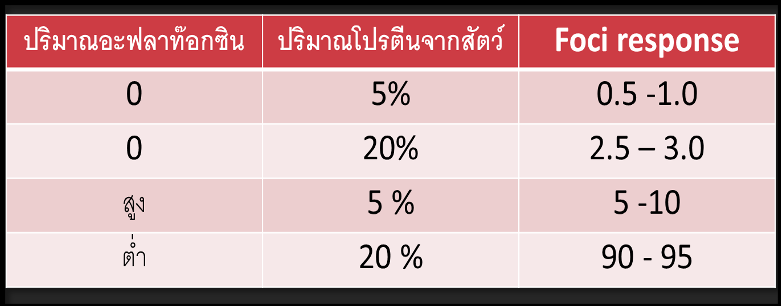
The China Study by Colin Campbell, Ph.D., and his son Thomas Campbell, M.D., is a continuation of the “Mother Craft Project” in the Philippines in 1967, which was a ten-year project aimed at promoting protein or milk consumption among children in the Philippines, believing they were lacking nutrition at that time. However, the findings revealed that wealthy children consuming more protein had higher rates of liver cancer than poorer children. This aligns with research in India, where experiments on rats showed that high protein intake led to cancer, but not all proteins cause cancer—only animal proteins do. Plant proteins have no such effect. The research findings at that time were not widely accepted. Additionally, there were experiments regarding aflatoxins, which the World Health Organization has classified as carcinogenic substances to avoid. It was found that the amount of aflatoxins correlates with a high cancer index (Foci response) when animal protein is present, which Dr. Campbell later researched in depth in China.
Table showing the relationship between aflatoxins, animal protein, and cancer cell formation<\/u><\/strong><\/span><\/h2>
 <\/p>
<\/p>
Additional explanation: Foci response is a measure of the level of response to tumor formation, using Foci cells as an indicator.<\/span><\/p>
Foci are clusters of precursor cells that can lead to cell transformation into tumors. The presence of Foci cells does not mean that those cells will become tumors, but it is an indicator of potential future tumor development.
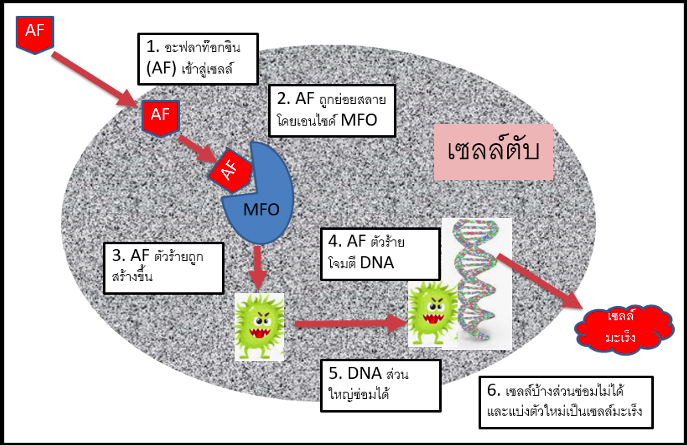
The mechanism of cancer formation by aflatoxins and animal protein can be illustrated as follows:
 <\/p>
<\/p>
Illustration showing the process of liver cancer formation by the enzyme MFO and animal protein (The China Study, 2016<\/u>)<\/u><\/span><\/p>
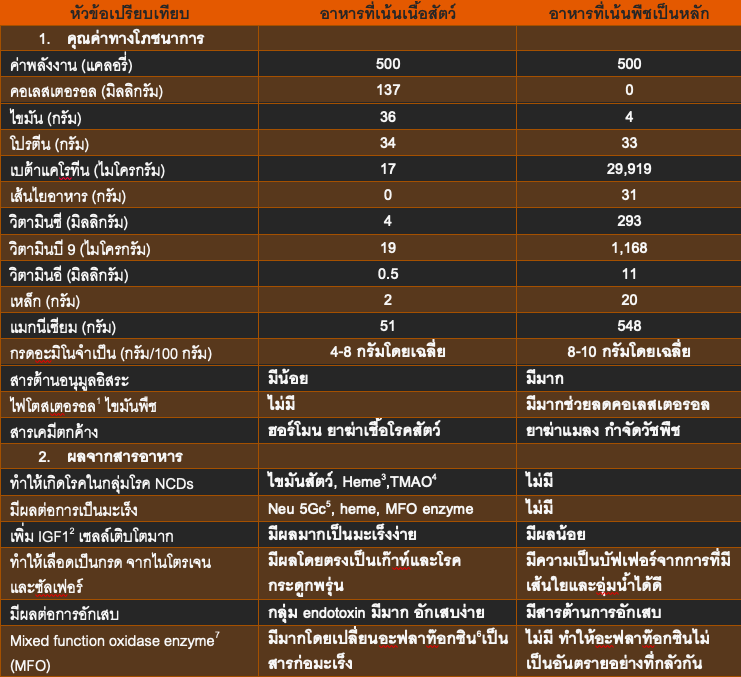
The liver cancer process initiated by aflatoxins begins when aflatoxins enter liver cells and are broken down by the MFO (Mixed Function Oxidase) enzyme, which results from animal protein. This process converts aflatoxins into harmful forms that can damage DNA. Most DNA can repair itself and return to normal function, but some portions may proliferate and become cancerous cells. This experiment with rats also demonstrated the reverse mechanism of cancer cell formation: when the amount of animal protein given to the rats was reduced and replaced with plant protein, the cancer cells also decreased. After the research in the Philippines, The China Study began to delve deeper into these findings and collect more samples, taking nearly 20 years and covering 6,500 communities, resulting in over 350 published works with more than 8,000 statistical data showing significant relationships. It clearly concludes that animal-based foods and plant-based foods differ significantly, as shown in the following table.
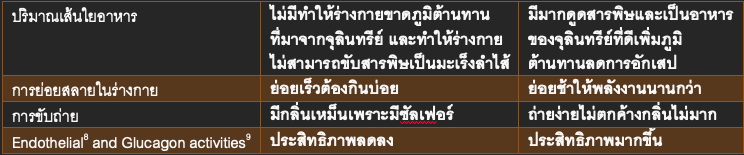
Comparison table of differences between animal-based and plant-based diets<\/u><\/span><\/h2>
 <\/p>
<\/p>
 <\/p>
<\/p>
Additional explanation<\/strong><\/u><\/span>:<\/span><\/span><\/p>
- Phytosterols are a group of fats found only in plants. The benefits of phytosterols include reducing cholesterol absorption in the body, lowering bad cholesterol (LDL-C) without reducing good cholesterol (HDL-C), inhibiting tumor cell growth, and destroying breast cancer cells. They can also help prevent colon cancer and prostate cancer.<\/span><\/li>
- IGF-1 (Insulin-like growth factor 1) is a hormone with a molecular structure similar to insulin, playing a significant role in child growth and new substance synthesis. In adults, IGF-1 is primarily produced in the liver, with six types of binding proteins (IGF-BP). IGFBP-1 is regulated by insulin. IGF-1 is produced throughout life, but its production peaks during adolescence. Its crucial role is to inhibit the process of cell self-destruction (apoptosis) and excessively promote cell growth, which can lead to tumors and cancer.<\/span><\/li>
- Heme iron is a precursor for hemoglobin production, which transports oxygen to cells throughout the body. Research indicates that the human body recognizes heme iron from animals as a foreign substance, leading to the release of antibodies for elimination. Frequent occurrences can cause chronic inflammation and lead to cancer.<\/span><\/li>
- TMAO (Trimethylamine N-oxide) levels increase primarily from red meat consumption. Elevated TMAO levels in the blood are linked to arterial plaque formation, and excessive accumulation can lead to arterial blockage and heart disease. Thus, consuming red meat increases the risk of heart disease, but stopping red meat consumption will also reduce TMAO production.<\/span><\/li>
- Neu 5Gc (N-Glycolylneuraminic acid) is a sialic acid sugar found on cell surfaces. Neu5Gc is commonly found in mammals, while humans have a different sugar, N-acetylneuraminic acid (Neu5Ac). Research confirms that Neu5Gc is more prevalent in cancer patients, indicating a significant correlation.<\/span><\/li>
- Aflatoxin is a chemical produced by a group of fungi, classified as a carcinogen by the World Health Organization. Dr. Colin Campbell summarized in The China Study that aflatoxin becomes carcinogenic only when metabolized by MFO enzymes derived from animal protein. Thus, it can be preliminarily concluded that without animal meat consumption, aflatoxin is not as dangerous as warned by the World Health Organization.<\/span><\/li>
- Mixed Function Oxidase enzyme (MFO) is a group of enzymes derived from animal protein that converts ordinary aflatoxins into carcinogenic aflatoxins.<\/span><\/li>
- Endothelial function refers to the functioning of the inner lining of blood vessels. In groups with high blood fat, dilation function is poor or obstructed, primarily due to excessive meat consumption.<\/span><\/li>
- Glucagon activities are hormones that function oppositely to insulin. When blood sugar is low, the body releases glucagon to convert stored glycogen into sugar. If glucagon functions effectively, it reduces unnecessary fat and glycogen accumulation.<\/span><\/li>
<\/ol>
From the comparison table, it is evident that in terms of nutritional value, plant-based foods contain nutrients that are not inferior to those from animal sources. Particularly, essential amino acids are more abundant in plant proteins. Concerns regarding vitamin B12 and DHA can also be addressed through plant sources. The main issue causing animal protein to lead to diseases is that the human immune system recognizes chemicals from animals, such as heme iron or Neu5Gc, as foreign substances, prompting the immune response for elimination. This reflects the evolutionary differences between humans and animals.<\/span><\/p>
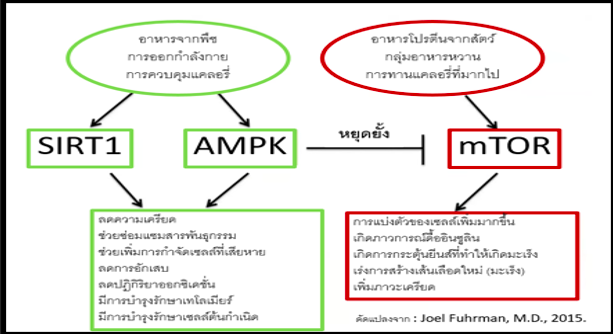
Additionally, Dr. Joel Fuhrman has interestingly explained the disadvantages of animal protein at the cellular and hormonal levels as follows:<\/span><\/p>
 <\/p>
<\/p>
Illustration showing the differences between plant-based and animal-based diets and lifestyle patterns<\/u><\/span><\/span><\/p>
Additional explanation<\/strong><\/span><\/u> <\/span>:<\/span><\/span><\/p>
- SIRT1 (Sirtuins 1) is a protein in the Sirtuins group that functions to slow aging by repairing damaged cells or genetic material.<\/span><\/li>
- AMPK (Adenosine Monophosphate-activated Protein Kinase) is an enzyme that regulates the balance of the body's metabolic system. It is well known that our bodies have adenosine triphosphate (ATP) as a high-energy substance for cells. Therefore, having too little ATP negatively impacts metabolic processes, while excess ATP leads to excessive energy expenditure. AMPK regulates the balance of the metabolic system by stimulating the breakdown of energy sources stored in the body as needed.<\/span><\/li>
- mTOR (mammalian Target Of Rapamycin) is a group of protein kinases that regulate energy levels within cells, promoting growth. This process stimulates cell division, DNA repair, protein synthesis, and blood vessel formation. If this process is overly stimulated, it can have adverse effects on the body, including tumor formation and cancer development.<\/span><\/li>
<\/ol>
When combining appropriate and inappropriate activities with dietary differences, it becomes clear that adopting a plant-based diet while controlling calorie intake and engaging in exercise is something everyone should do immediately, as it directly impacts cellular and hormonal levels.<\/span><\/p>
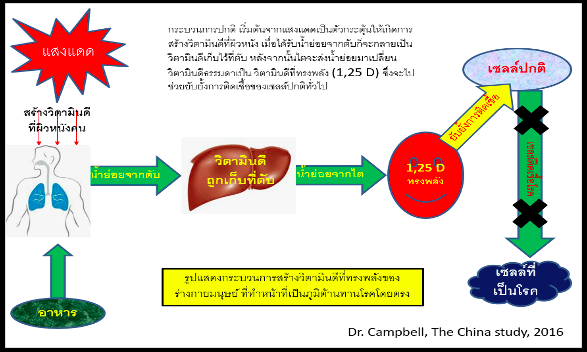
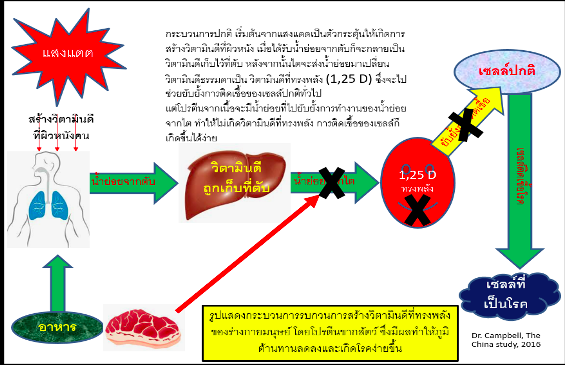
Due to the ongoing COVID-19 pandemic, many are discussing the immunity that can be self-generated, which directly relates to animal protein. It is well known that our bodies produce powerful vitamin D from sunlight, but animal protein has a direct effect on inhibiting immunity, as shown in the following illustration.<\/span><\/p>
 <\/p>
<\/p>
The illustration shows why we need to go out and get sunlight during the COVID-19 pandemic, as sunlight stimulates the production of powerful vitamin D (1,25 D), which enhances immunity and strengthens cells, preventing them from becoming diseased.<\/span><\/p>
 <\/p>
<\/p>
Even if we exercise, excessive consumption of meat can interfere with the kidney's ability to convert vitamin D from the liver into active vitamin D, leading to a lack of immunity and making it easier to become ill.<\/span><\/p>
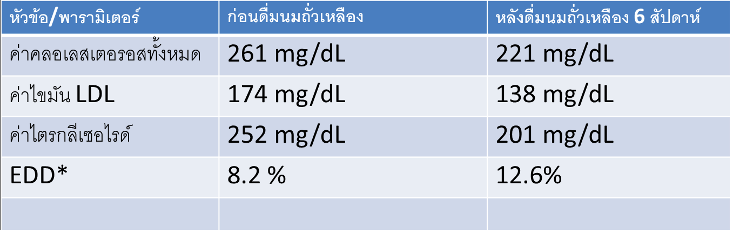
There is also another study for those with fat and heart vessel issues, suggesting that consuming soy milk can be beneficial.<\/span><\/p>
Table showing the experimental results of A. Yildirir and team in 2000 to prove how soy milk affects vascular function and blood fat levels<\/u><\/span><\/span><\/h2>
 <\/p>
<\/p>
* EDD = Endothelial-dependent dilatation is a measure of the ability of the vascular wall to function, which can be enhanced by consuming soy milk and also helps reduce fat.<\/span><\/p>
From the documentary "The Game Changers" to "The China Study" and linking to various research studies, it raises the question of what else we need to start learning anew, especially regarding nutrition, which is about to undergo significant changes. As small citizens with our own freedom of thought, we must help experiment and disseminate these good things more widely, especially in Thailand, where we have geographical advantages. Reviving vegetarianism or a plant-based diet should be an opportunity for national development.
Thai Vegetarian Community Enterprises on the Global Stage<\/u><\/em><\/strong><\/span><\/h2>
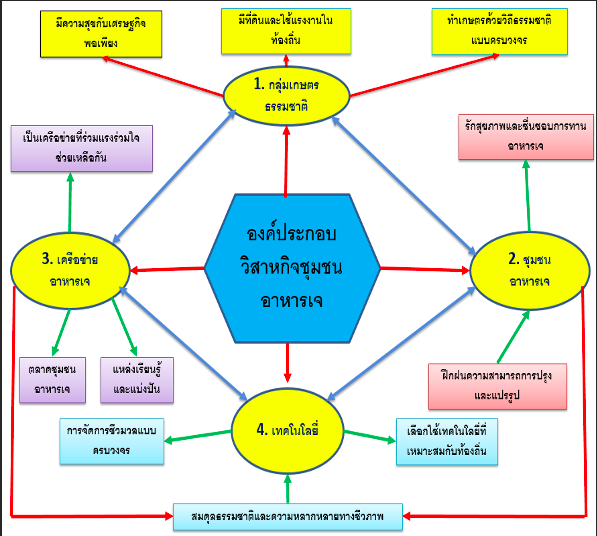
Given the immense benefits of a plant-based diet and the clear harms of meat consumption, awareness of this knowledge is expanding among health enthusiasts and athletes who require high energy. Besides the belief issues that will take time to clarify the benefits and harms of the differences between plant-based and animal-based foods, another current challenge hindering the expansion of plant-based diets is the convenience and accessibility of plant-based food sources, which are often difficult to find in regular markets or stores. These factors present opportunities for those who believe in or have experienced health issues and benefited from a plant-based diet to venture into this business. As a public health professional proud to work with communities, I propose the establishment of model communities where residents collectively commit to serious health care. Initially, I suggest a model comprising four components:
- Natural agriculture groups, which currently exist in almost every district in Thailand.
- Vegetarian or plant-based communities, which currently exist in Chinese temple communities that practice vegetarianism periodically. For Thai society, it does not have to strictly follow the Chinese vegetarian guidelines; local vegetarian food without meat, eggs, or dairy can suffice. Communities that raise animals or chickens can also sell to other communities. This approach will help develop local vegetarian food processing methods.
- Vegetarian food networks, which will serve as markets and learning sources, becoming the identity of each locality.
- Comprehensive agricultural technology and efficient processing must be seriously promoted.
<\/ol>
 <\/p>
<\/p>
Illustration showing the components of the vegetarian community enterprise<\/u><\/span><\/p>
<\/p>
Steps to Transition to a Plant-based Diet<\/u><\/em><\/strong><\/span><\/h2>
In the past year, transitioning to a Thai-style vegetarian diet, I found that we do not need to consume any meat at all. There are plenty of alternatives to animal protein available, although they may be harder to find in regular markets. Nevertheless, I will summarize easy recommendations for those who are still hesitant, addressing the misconception that not eating meat leads to a lack of energy:
- Red meat, sugar, and processed foods can be stopped or reduced immediately, shifting to consuming legumes, soy milk, and tofu made from beans.
- Fish or seafood consumption should be limited to no more than 5% of total calorie intake, gradually reducing until no meat is consumed.
- Gradually reduce egg consumption until it can be stopped altogether.
- Dairy for those over 20 can be stopped immediately, but Dr. Colin Campbell clearly states that casein in animal milk is a cause of tumors and cancer.
- Eat balanced portions at each meal according to energy needs, avoiding excessive intake, especially at dinner. Intermittent fasting can be beneficial, as the body needs rest and digestion. During the night, the body undergoes a process called autophagy, which eliminates excess waste. Overeating can hinder this process.
<\/ol>
All of these are simple recommendations based on personal experience. During the dietary transition, it is essential to regularly observe your basic vital signs. These recommendations are suitable for individuals with generally normal health. Those with chronic conditions should consult their doctors or nutritionists in this field.
In conclusion, it is evident that animal-based foods are less beneficial than plant-based foods. Various evolutionary evidence indicates that our Homo Sapient species has primarily evolved from a plant-based diet, which is the true origin of food as medicine. Humans have only recently become obsessed with meat consumption over the past few hundred years, often exceeding what the body can store, leading to various diseases. Personally, having reached this point, I have no doubts about adopting a Thai-style vegetarian diet. I would like to use this article to invite readers to take better care of their health by increasing their consumption of plant-based foods. If this can expand into a vegetarian community enterprise, it will contribute to food security and economic prosperity for Thailand in the future...
 <\/p>
<\/p>