Foreigners Can Buy Real Estate... Selling the Nation or Opportunity
Source
On September 18, 2021, the Cabinet approved measures to stimulate the economy by allowing foreigners to reside in Thailand long-term and to purchase various properties at an increased rate. This applies to four target groups of long-term residents in Thailand:
1. Wealthy Global Citizens
2. Wealthy Pensioners
3. Work from Thailand Professionals
4. Highly Skilled Professionals
The benefits from the amendments to Thai regulations that these four target groups will receive include:
1. New long-term residence visa benefits for 10 years, including dependents, spouses, and children
2. Exemption from reporting to authorities every 90 days
3. Exemption from income tax on foreign income
4. Ability to own condominiums and houses in designated areas
The National Economic and Social Development Council (NESDC) estimates that this measure will attract 1 million wealthy foreigners to relocate to Thailand within the next 5 fiscal years (2022-2026) and, if successful, will increase spending in the economy by 100-250 billion baht (assuming an average domestic spending of 1 million baht per person per year).
Fact: Nearly 100 countries worldwide allow foreigners to own land[1]
These can be categorized into:
1. Countries with no restrictions on property ownership for foreigners, such as Spain, France, Italy, and Costa Rica.
2. Countries with reciprocal agreements such as Croatia, Turkey, and South Korea, which allow only certain nationalities with reciprocal agreements.
Egypt allows leasing rights for only 99 years and permits leasing only in certain areas, such as the UAE.
Importantly, there are additional measures to prevent rising property prices or for security reasons, such as:
Switzerland limits the number of foreigners who can purchase real estate each year.
The United Kingdom imposes significantly higher taxes on profits from property sales made by foreigners in the UK.
Australia currently restricts the types of properties that can be purchased, generally allowing only new construction projects. Violators can face imprisonment or hefty fines.
Sri Lanka allows foreigners to hold land but imposes a 100% transfer tax on foreigners in Sri Lanka.
Canada in provinces like Quebec, Ontario, and British Columbia has no restrictions on foreign ownership.
In Australia, foreigners who do not reside in Australia and companies can purchase up to 50% of residential developments and are allowed to buy new properties or land for building as long as construction begins within 12 months of purchase. They can buy older properties provided at least 50% of the purchase price is used for renovations.
Restrictions on Foreign Land Purchase
Approximately 40% of 195 countries have restrictions on allowing foreigners to own property, such as:
1. Land located near international borders, such as:
Panama prohibits foreigners from owning land within 6 miles of international borders.
Mexico does not allow foreigners to purchase property within 62 miles of international borders or 31 miles from the coast.
Spain restricts ownership of military land and land near international borders.
2. Certain waterfront properties.
New Zealand restricts "sensitive" land, including reserves, identified islands, and historical or heritage land and lakes.
Panama has restrictions on land on islands and beachfront properties.
5 countries in Asia where foreigners can own land[2]
1. Malaysia
Malaysia is the only place where foreigners can own land in Southeast Asia. The only type of property that foreigners cannot purchase is "heritage property" or ancient colonial properties. Foreigners can apply for residency in Malaysia through the My Second Home Program (MM2H), which allows them to obtain a 10-year visa by depositing approximately $70,000 in a bank.
2. South Korea
South Korea has few restrictions on land ownership. Its openness to foreign investment is quite reasonable considering its global nature. Foreigners often wish to purchase their own properties. The Republic of Korea is meticulous in issuing long-term visas, except for Jeju Island, a small island off the southern coast of the Korean Peninsula that is a special administrative zone allowing anyone to visit without a visa. Similarly, Jeju also offers a residency permit for investors for anyone wishing to invest in real estate worth approximately $430,000 on the island. This residency permit can lead to Korean citizenship.
3. Taiwan
Taiwan is a developed country with minimal restrictions on foreign property ownership. Purchasing property in Taiwan does not automatically grant foreigners the right to reside there, unlike countries like Malaysia and South Korea, which previously had some forms of residency programs for property owners. Foreigners must go through regular immigration channels to reside permanently in Taiwan. Foreigners can purchase undeveloped land or homes in Taiwan.
4. Japan
Foreigners can purchase real estate in Japan without restrictions on the type of property. Foreigners can own land and buildings in their own name, provided they have a job, run a business, or hold a full-time residence visa in Japan.
5. Singapore
In Singapore, foreigners can legally own condos, houses, and land. Singapore is one of the easiest countries in Asia to buy a condo. However, while foreigners are theoretically allowed to own houses or land, acquiring such properties can be incredibly difficult and expensive in practice. Holding land as a foreigner requires government approval, which necessitates a substantial purchase (valuing land over $20 million) and proving that the purchase "benefits the economy of Singapore."
Expert Opinions[3]
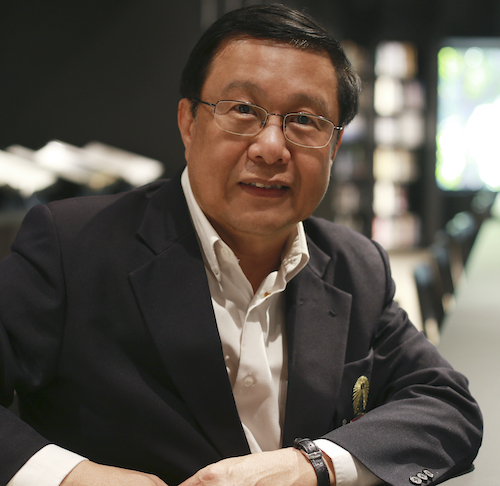
Dr. Vichai Wiratthakhan, Inspector of the Government Housing Bank and Acting Director of the Real Estate Information Center, stated in an interview that the overall ownership of condominiums by foreigners in Thailand is still below 49% as stipulated by law. Particularly, units priced below 5 million baht have less than 10% foreign ownership, while units priced above 5 million baht have 20% foreign ownership. The group of foreigners wanting to Work from Thailand includes skilled labor and high technology workers, and we can designate these groups to strategic areas like the EEC to drive the country forward more quickly. Currently, foreigners already hold property through nominees; why not bring everything above board? Denying the reality sometimes pushes the truth underground, creating a black market that becomes illegal. If we bring it to light, the state can collect taxes and fees more effectively.
Summary and Recommendations
1. The statement that "allowing foreigners to buy real estate is selling the nation" reflects a lack of understanding of the details of neighboring countries or case studies from other nations, and is an outdated nationalist perspective from the World War era.
2. Allowing foreigners to purchase real estate under conditions that benefit the country, whether through area restrictions, ownership forms, qualifications for eligible individuals, or even integration with investment/work promotion policies, is a common practice in many countries.
3. We must acknowledge that Thailand's "competitiveness" is gradually declining. The right to own real estate is a significant advantage (the right to own property means freehold or long-term leasehold rights of 60 or 90 years).
4. Thailand has entered a state of "complete aging society" (with over 20% elderly population), leading to a shortage of workers at all levels. The other side of an aging society is a decrease in the youth and working-age population. Encouraging knowledgeable and skilled foreigners to work is a policy adopted by countries facing "aging society" issues, such as Japan, Singapore, and European nations.
5. Future consumers will be the elderly, especially those from developed countries. Allowing retirees to settle in Thailand in exchange for property ownership is a complementary issue (currently, Thailand has a 5+5 year long-term visa but requires reporting to immigration every 90 days). Despite being a retirement destination due to our strengths in medical services, food, climate, and cost of living, a significant weakness is property ownership. If we have clear regulations, such as target areas, property types, and prices, Thailand could become a paradise for retirees, leading to numerous businesses related to the "aging society."
6. The "aging society" business encompasses healthcare, food, home decoration, tourism, life insurance, and technology for elderly care, which can create jobs and numerous business opportunities. The elderly who can travel to retire abroad are usually high-income individuals with health insurance and clear pensions, meaning they have high purchasing power.
7. We can establish a "Cross Subsidy Fund" from the property ownership fees of foreign retirees to care for the elderly in those areas. This measure can significantly reduce disparities at the local level.
8. However, gradually opening up and testing in certain areas and types of properties should be a decision made immediately.
...Thank you and support to the National Economic and Social Development Council (NESDC) for studying and daring to present this issue, and I encourage all parties involved to proceed successfully (carefully) before Thailand falls to the bottom of development rankings.
Associate Professor Trairat Jarutthas
September 22, 2021
Real Estate & Housing Development Department
Faculty of Architecture
Chulalongkorn University
[1] Even Many Western Countries Are Restricting or Limiting Foreign Ownership https://thairesidential.com/is-thailand-alone-how-many-countries-in-the-world-prohibit-foreign-ownership-of-land/
[2] 5 Countries Where Foreigners Can Own Land in Asia, https://www.investasian.com/2019/07/06/countries-where-foreigners-own-land/
[3] Interview on THE STANDARD NOW, https://thestandard.co/foreign-real-estate-ownership-in-thailand/ September 21, 2021