
Warning to Pet Owners: Don't Overlook These 5 Serious Diseases in Pets During the Rainy Season
Thanks to Talingchan Pet Hospital for the information.
The weather is changing frequently, with hot and rainy spells, which can lead to illnesses in pets. Pet owners need to be particularly observant and attentive to their pets. Besides the usual headaches caused by fleas and ticks, did you know that there are also diseases that come with the rainy season? Today, Talingchan Pet Hospital has some important information about the serious diseases associated with the dampness of the rainy season that you should be aware of.
1. Skin Diseases
Damp conditions are a major cause of skin diseases in dogs. Generally, skin diseases found in our country arise from various factors, such as fungal infections, bacterial infections, or mange. Therefore, owners should regularly care for their dog's skin and coat, ensuring they are dried properly and not left wet or damp. If you notice your dog has itchy bumps, is scratching, or shaking its ears excessively, you should take them to the vet immediately.
2. Respiratory Diseases
One concerning respiratory disease is pneumonia, which may present symptoms such as lethargy, loss of appetite, dry nose, coughing, high fever, runny nose, watery eyes, and difficulty breathing. This disease is mostly caused by bacterial and viral infections, which can make pets seriously ill or even lead to death. Therefore, if your pet is sensitive to cold, consider getting them a sweater during the night or when it’s raining and the temperature drops. If you notice coughing or a runny nose, take them to the vet right away.
3. Tick Fever
This is one of the top diseases affecting pets. Compared to other illnesses, “ticks” are both carriers of diseases, such as blood parasites or tick fever, and can weaken pets, leading to anemia. Ticks feed on blood, which lowers the pet's immunity, making them more susceptible to infections and diseases. The hot and humid climate in our country is ideal for tick breeding, which increases the likelihood of illness in dogs during the rainy season. Therefore, tick removal is crucial, and there are various methods available today. Owners should understand how to use these methods correctly or consult a veterinarian before use, as well as clean the pet's cage or living area to break the tick's life cycle.
4. Blood Parasites
This disease occurs when a tick carrying the parasite bites a dog or when a dog ingests a tick. Symptoms include lethargy, loss of appetite, fever, difficulty clotting blood, pale gums and mucous membranes, jaundice, nosebleeds, and blood in urine. Some cases may also involve liver or kidney inflammation, and there may be neurological symptoms due to blood parasites affecting the nervous system, potentially leading to sudden blindness. Additionally, some cases may show signs of the immune system attacking red blood cells and platelets, but this disease can be treated successfully if the pet sees a veterinarian promptly.
5. Gastrointestinal Diseases
These can include diarrhea, vomiting, food poisoning, or more severe conditions like enteritis, which can occur in dogs of all ages. The main causes are usually due to consuming contaminated food or leaving food out in humid conditions, allowing bacteria to grow. During the rainy season, the humidity promotes bacterial growth.
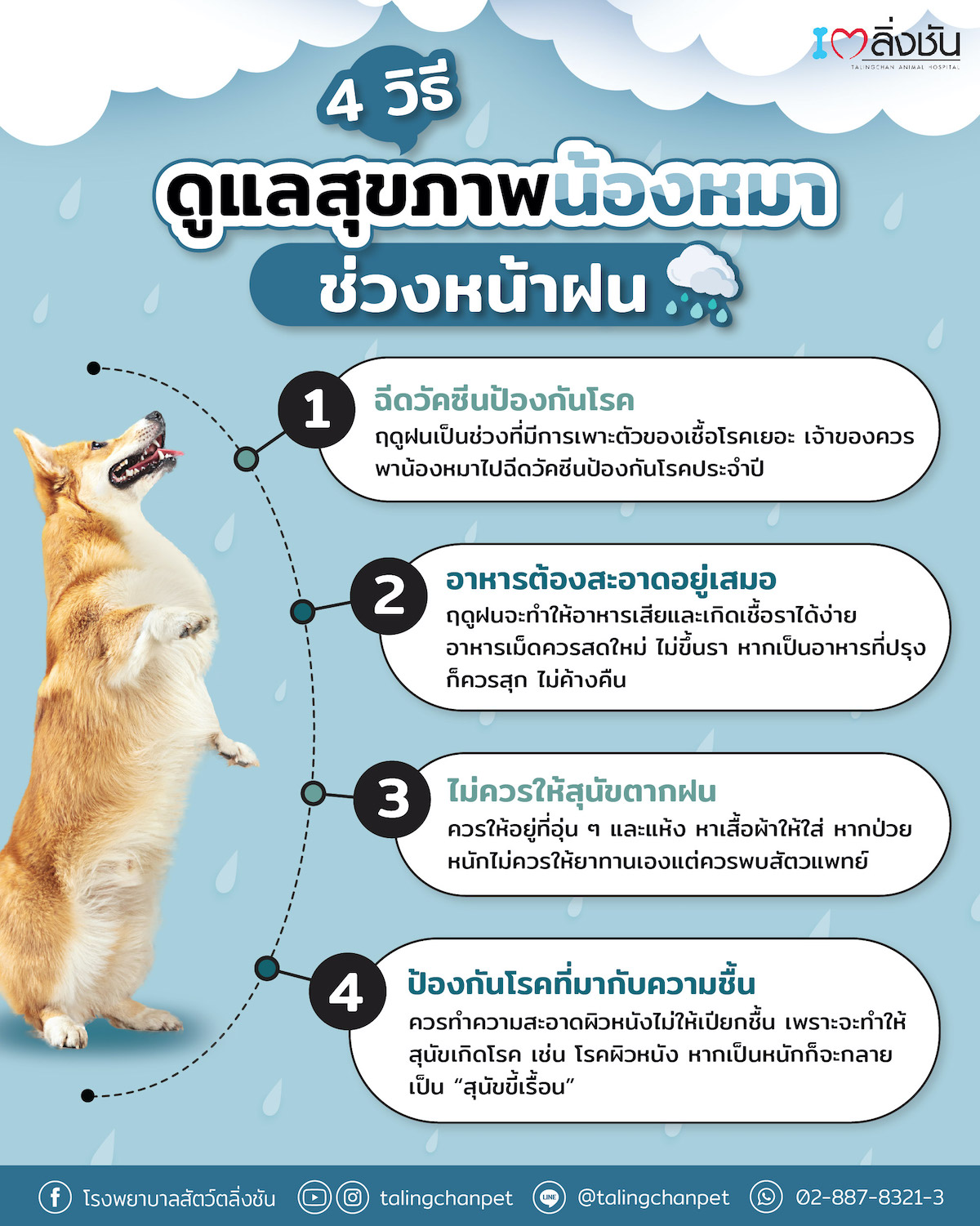
Here are 4 ways to care for dogs during the rainy season:
1. Vaccinate against diseases. The rainy season is a time when pathogens proliferate, so owners should take their dogs for vaccinations.
2. Keep food clean at all times. Rainy weather can spoil food and promote mold growth. Dry food should be fresh and not moldy, and cooked food should be served hot and not left overnight.
3. Avoid letting dogs get wet in the rain. Keep them warm and dry, and provide clothing if necessary. If they are seriously ill, do not self-medicate but consult a veterinarian.
4. Prevent diseases associated with dampness by keeping the skin clean and dry, as moisture can lead to skin diseases. If it worsens, it could lead to “mange.”
If your pet shows any unusual symptoms, you should take them to a veterinarian immediately. Do not leave it untreated for proper care. For more information or services, you can visit https://www.talingchanpet.net/ or Facebook: https://www.facebook.com/talingchanpetfanpage or contact via Line: @Talingchanpet.