Tracing 5 Global Pandemics Since 2000: How Much Has Tourism Been Affected?
The spread of the Covid- 19 has had a widespread impact globally, particularly on the tourism sector which has been heavily affected. However, this is not the first time our world has faced a pandemic. Since 2000, we have encountered approximately 5 major pandemics. Today, Terrabkk invites you to look back at the pandemics that have occurred since 2000 and how they have impacted the tourism sector.
2002-2003: SARS (Severe Acute Respiratory Syndrome)
It heavily spread from late 2002 to 2003, with the first infection reported in Guangdong Province, China, and a severe outbreak in 2003. According to the World Health Organization (WHO), in 2003, there were 8,098 infected individuals across 29 countries, resulting in 774 deaths, which corresponds to a mortality rate of 9.8%. In Thailand, there was 1 reported case.
Regarding tourism, in 2002 there were approximately 711 million tourists, generating about 576 billion USD or approximately 19.61 trillion THB. However, in 2003, the number of tourists significantly dropped to around 701 million, losing about 10 million tourists, with a tourism value of 634 billion USD or approximately 21.56 trillion THB. After the situation improved in 2004, the number of tourists grew by 10% from 2003, and the tourism value increased by 16%, reaching approximately 775 million tourists and a value of 757 billion USD or about 25.75 trillion THB.
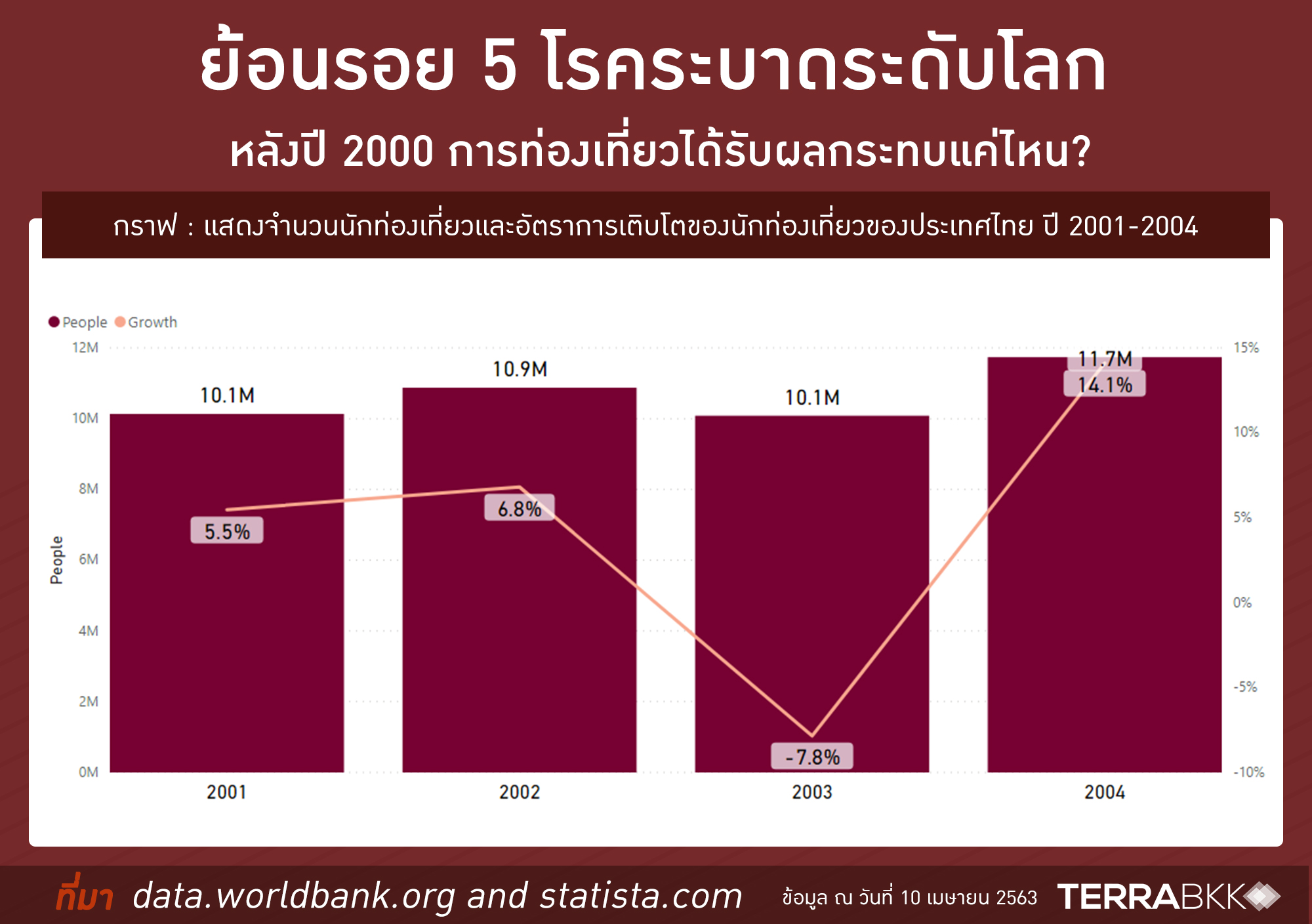
Thailand was also affected by the SARS outbreak. In 2002, there were about 10.9 million tourists visiting Thailand, but after the outbreak, this number dropped to about 10.1 million in 2003, a decrease of 7.8% from 2002. Once the situation was controlled, the number of tourists increased to 11.7 million in 2004, representing a 14% increase from 2003.
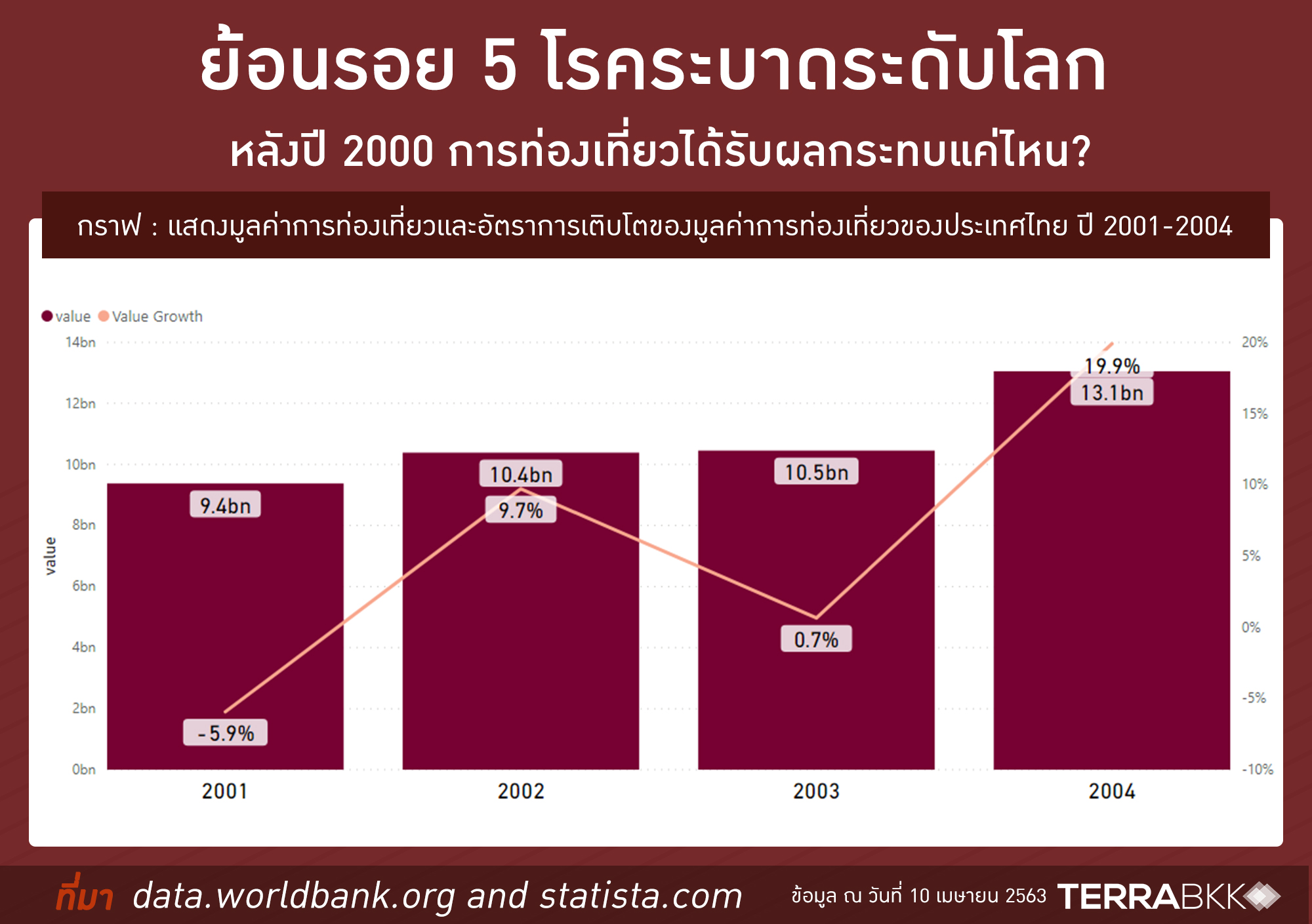
In terms of tourism value, Thailand in 2002 had a tourism value of approximately 10.4 billion USD or about 0.35 trillion THB. After the outbreak, the tourism value in 2003 was approximately 10.5 billion USD or about 0.36 trillion THB, an increase of 0.7% from 2002. Once the situation was controlled in 2004, Thailand's tourism value reached approximately 13 billion USD or about 0.44 trillion THB, a 20% increase from 2003.
The tourism sector was not significantly affected by this outbreak, possibly because it did not spread widely, being confined to 29 countries.
2009: H1N1 Influenza (Swine Flu)
In April 2009, reports of the H1N1 outbreak emerged in Mexico before spreading to 116 countries worldwide. According to WHO, in 2009, there were over 620,000 infected individuals globally, with confirmed deaths under 20,000. The CDC estimated that the 2009 flu pandemic claimed over 280,000 lives worldwide. In Thailand, from April to December 2009, there were 30,956 reported cases, with the Ministry of Public Health confirming 196 deaths (as of January 10, 2009).
Tourism in 2009 saw approximately 911 million tourists, a 4% decrease from the previous year, which had 950 million tourists. The tourism value was approximately 1,010 billion USD, also down 11% from 2018, which had a tourism value of 1,110 billion USD. However, in 2010, after managing the outbreak, the number of tourists increased by about 6% from 2010, reaching approximately 971 million tourists, with an 8% increase in tourism value from 2010, amounting to about 1.09 billion USD.
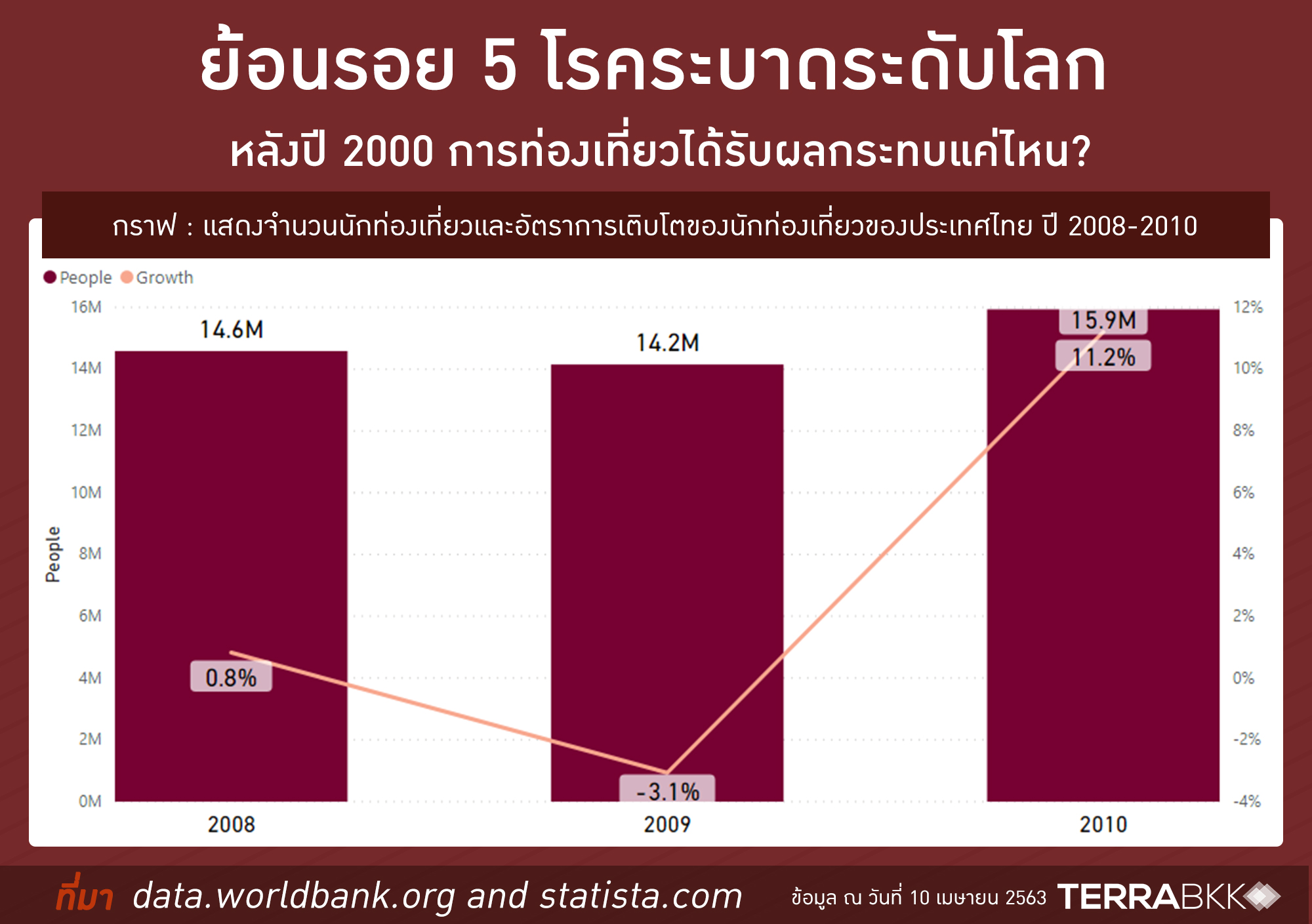
In Thailand, in 2008 there were about 14.4 million tourists. In 2009, during the outbreak, the number dropped to about 14 million, a 3% decrease from 2008. After the situation improved in 2010, the number of tourists rose to approximately 15.9 million, an 11% increase from 2009.
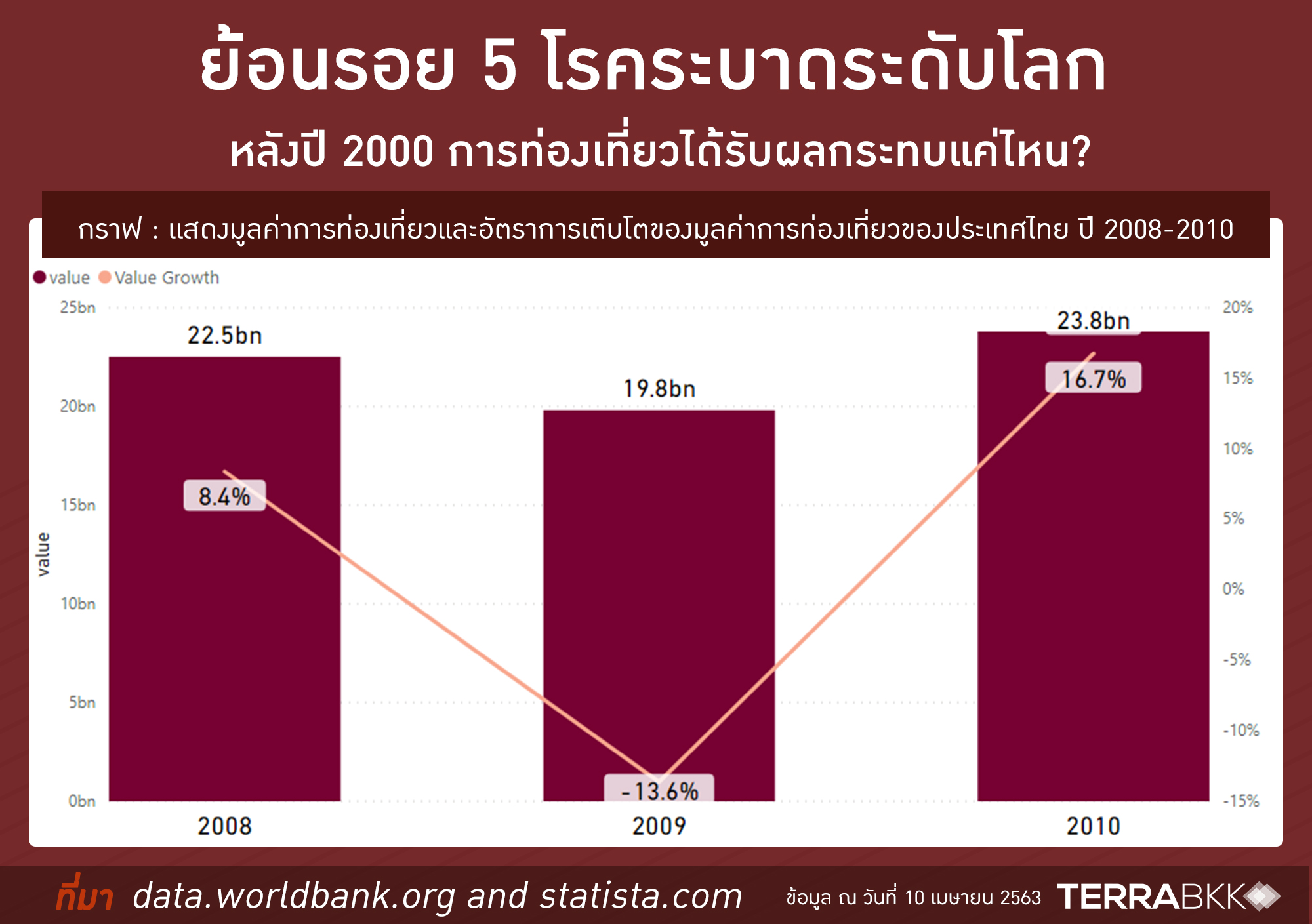
In terms of tourism value for Thailand in 2008 was approximately 22 billion USD or about 0.77 trillion THB. In the outbreak year of 2009, the tourism value was approximately 19.8 billion USD or about 0.67 trillion THB, a decrease of 13.6% from 2008. After the situation improved in 2010, the tourism value reached approximately 23.7 billion USD or about 0.81 trillion THB, an increase of 16.7% from 2009.
This outbreak caused significant concern among tourists, leading to a decrease in travel and a reduction in tourism value. Terrabkk believes this is due to the widespread nature of the outbreak affecting many countries globally, resulting in a lack of confidence among travelers.
2012: MERS (Middle East Respiratory Syndrome)
MERS, caused by a new strain of coronavirus, was first reported in Saudi Arabia in 2012 before spreading to 27 countries worldwide, with a total of 2,494 reported cases and 858 deaths, resulting in a mortality rate of 34.4%. In Thailand, 2 cases were confirmed in 2015, one from Oman and one from Kuwait.
In 2012, the tourism situation saw approximately 1,070 million tourists, a 5% increase from 2011, which had about 1,010 million tourists, with a tourism value of approximately 1,275 billion USD, a 3% increase from 2011's 1,231 billion USD. After the outbreak situation improved in 2013, the number of tourists grew by 5% from 2012, with a tourism value increase of 7% from 2012's value. In 2013, there were approximately 1,122 million tourists and a tourism value of 1,369 billion USD.
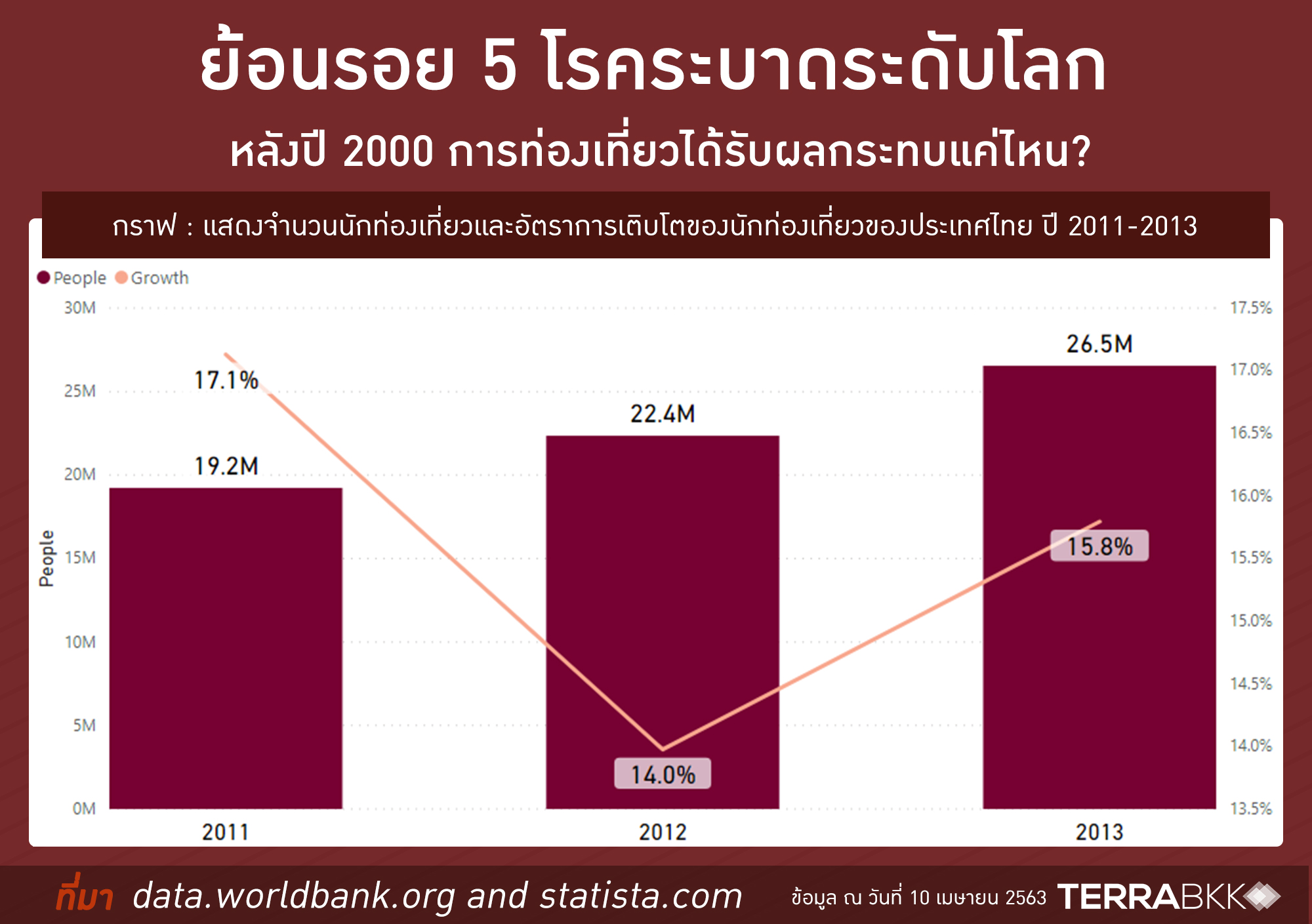
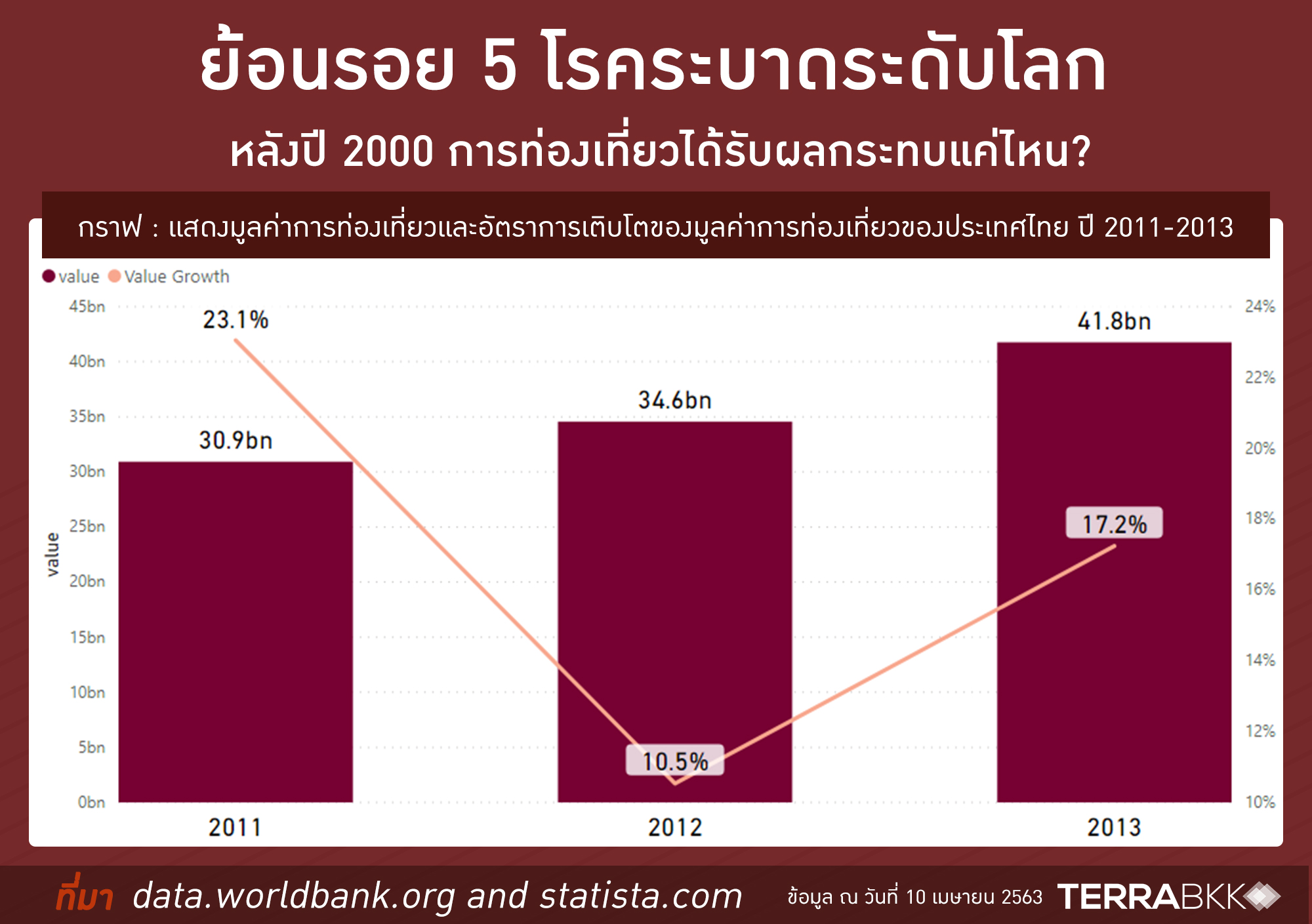
In Thailand, in 2012 was a period of rising popularity for Thai tourism, with tourist numbers growing continuously over 10% since 2010, marking a prosperous time for Thai tourism. In 2012, there were about 22 million tourists, a 14% increase from 2011, with a tourism value of 34 billion USD or about 1.18 trillion THB, an 11% increase from 2011.
Terrabkk believes that this event did not significantly impact global and Thai tourism, likely because it was not a widespread outbreak, affecting only 27 countries, mostly in the Middle East, allowing tourists to continue visiting Thailand, which is in Asia and less affected by the disease.
2014-2016: Ebola (Ebola Haemorrhagic Fever)
Ebola (Ebola Haemorrhagic Fever) is classified among diseases like dengue fever, caused by the Ebola virus, which is a severe infectious disease. The outbreak was primarily concentrated in Africa, first appearing in 1976 in Sudan and the Democratic Republic of the Congo, with a major outbreak from March 2014 to January 2016. According to WHO, there were approximately 28,000 infected individuals and 11,000 deaths, with an average mortality rate of about 50%. The outbreak primarily affected three countries: Guinea, Liberia, and Sierra Leone. In Thailand, no cases of this virus have been reported.
Tourism from 2014 to 2016 saw approximately 1,177 million tourists in 2014, with a tourism value of about 1,445 billion USD, showing growth from 2013, with a 5% increase in both tourist numbers and tourism value. The following year, the number of tourists rose to 1,227 million, a 4% increase from 2014, but the tourism value decreased by 4% to 1,391 billion USD. In 2016, the number of tourists increased by 3%, totaling 1,271 million, with a value of 1,417 billion USD. Overall, from 2014 to 2016, the tourism value decreased by 2%.
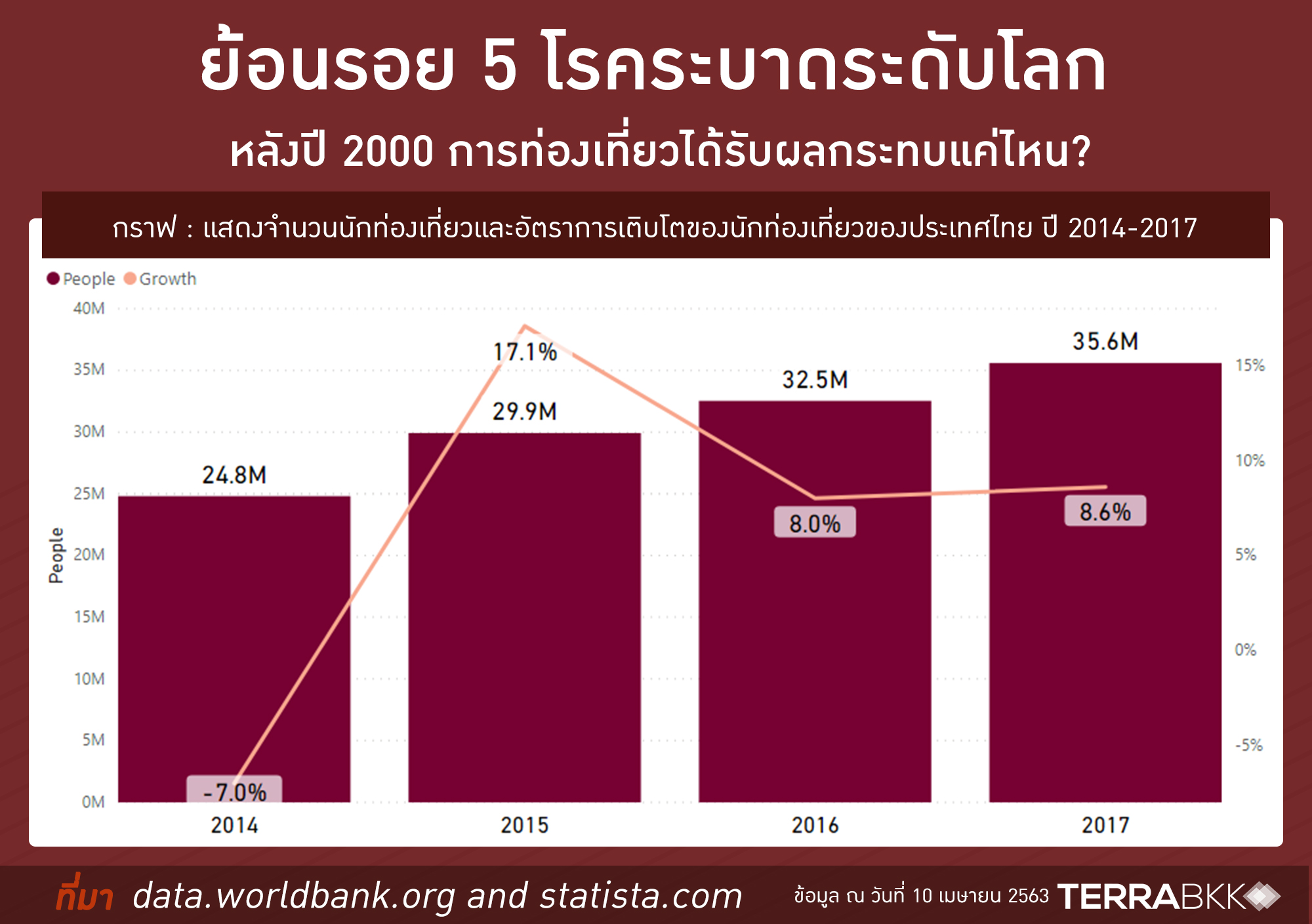
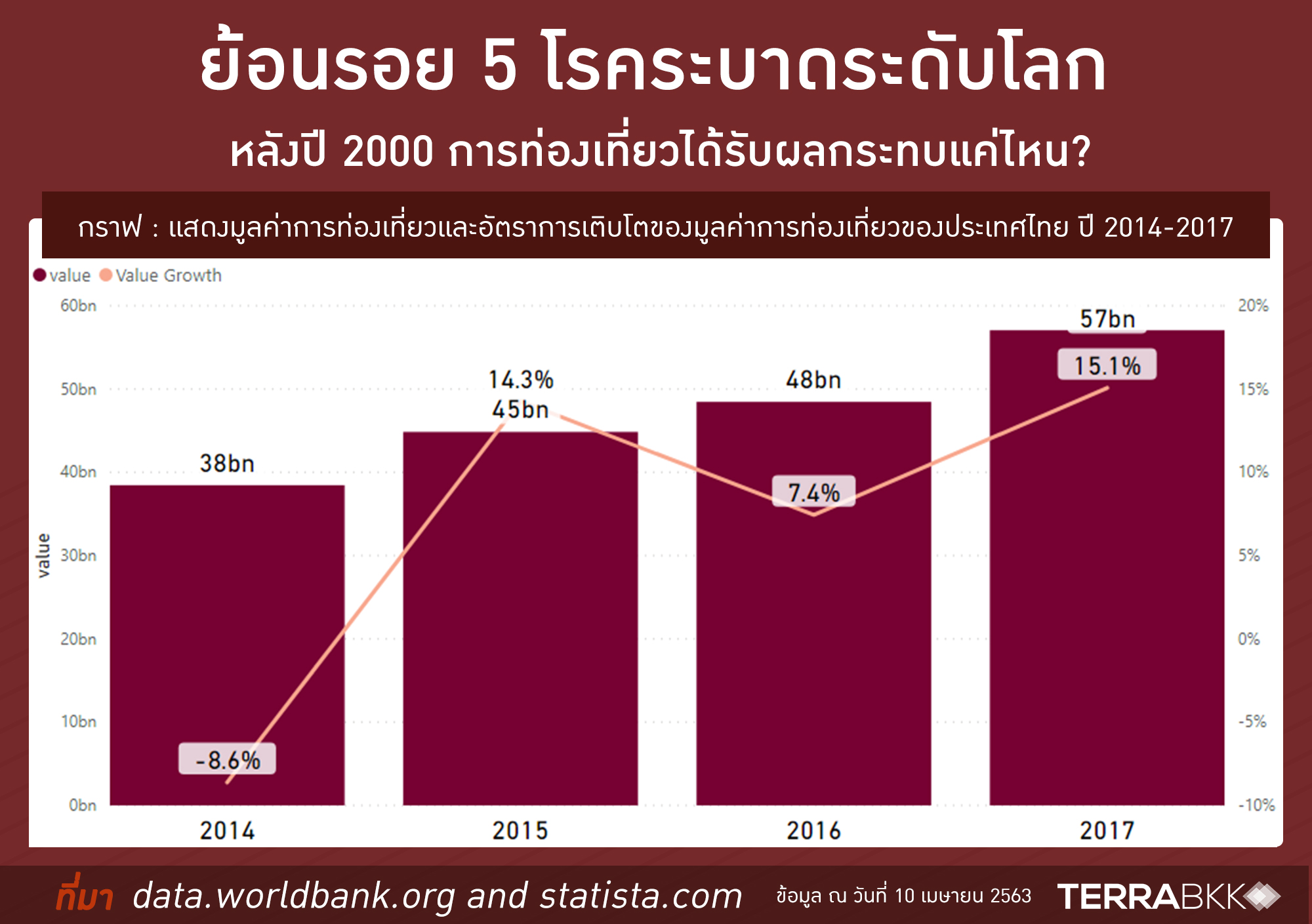
In Thailand in 2014, there were approximately 24 million tourists, a 7% decrease from 2013, with a tourism value of 38 billion USD or about 1.31 trillion THB, down 9% from 2013. After the situation calmed in 2015, as global concerns eased, the number of tourists rose to about 29.9 million, a 17.1% increase from 2014, with a tourism value of approximately 45 billion USD or about 1.52 trillion THB, an increase of 14.3% from 2014's value.
However, the decline in tourists to Thailand during this period was not solely due to the Ebola outbreak but also internal factors within Thailand, as this year saw political issues, including a coup by the National Council for Peace and Order, affecting foreign tourists' confidence.
2019-Now: COVID-19 or Corona Virus Disease 2019
COVID-19 or Corona Virus Disease 2019 is a virus that emerged in late 2019 and continues to affect us today (2020). It presents uncertain symptoms similar to the flu, but some individuals show no symptoms at all. The danger of the COVID-19 virus lies in its rapid spread, with no clear answers on how long it can remain airborne, posing significant risks to daily life. The coronavirus did not stop at Wuhan; it has spread throughout China and to over 173 countries worldwide. Currently, there are 3,077,007 reported cases globally, with 211,953 deaths. In Thailand, there are 2,938 reported cases and 54 deaths as of April 28, 2020.
Regarding tourism in Thailand, prior to the outbreak, the Kasikorn Research Center estimated that in 2020, the number of foreign tourists visiting Thailand would be around 40.5-40.9 million, growing by about 2.0%-3.0%, the lowest growth rate in six years, and this growth would be limited to certain markets, primarily from nearby regions like Asia. Meanwhile, tourists from other regions, such as Europe, Oceania, and the Middle East, are expected to decline. However, following the COVID-19 outbreak, the Kasikorn Research Center predicts that the number of international tourists may shrink by 75%-80% (YoY), averaging about 20-30 million tourists globally per month, or about 0.7-1 million per day, down from an average of about 4 million international travelers per day. This is due to the fact that countries experiencing outbreaks of the coronavirus are significant markets for global tourism.
Analyzing the Tourism Satellite Account (TSA), it is estimated that throughout 2020, the direct impact on the tourism sector will be no less than 500 billion THB.
The Economist Intelligence Unit (EIU) estimates that tourism from Chinese tourists will recover in the second quarter of next year, or 2021, resulting in a global loss of up to 80 billion USD (2.4 trillion THB), causing Chinese tourists to travel less to ASEAN countries by about 30-40%, resulting in a loss of approximately 7 billion USD (218 billion THB).
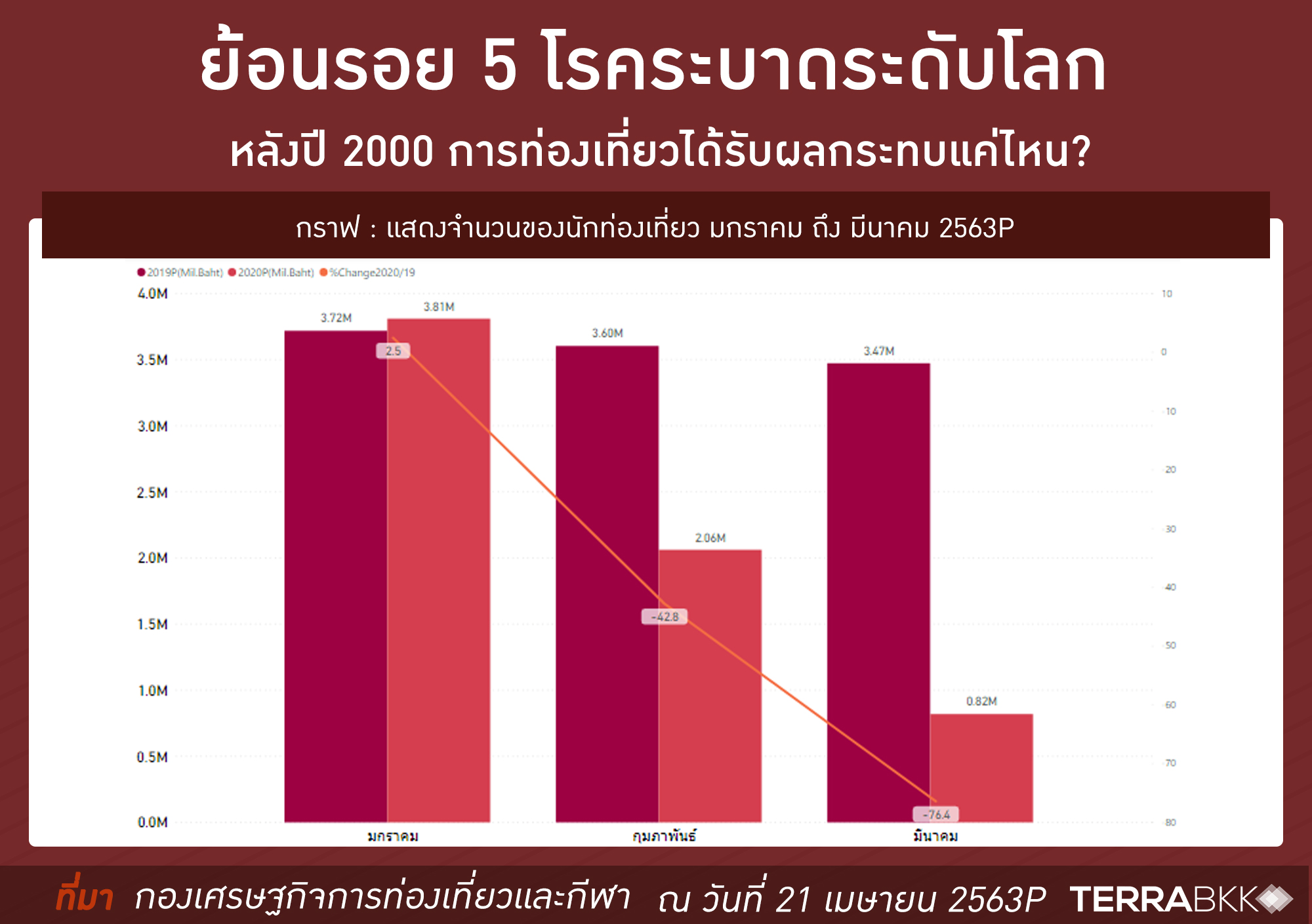
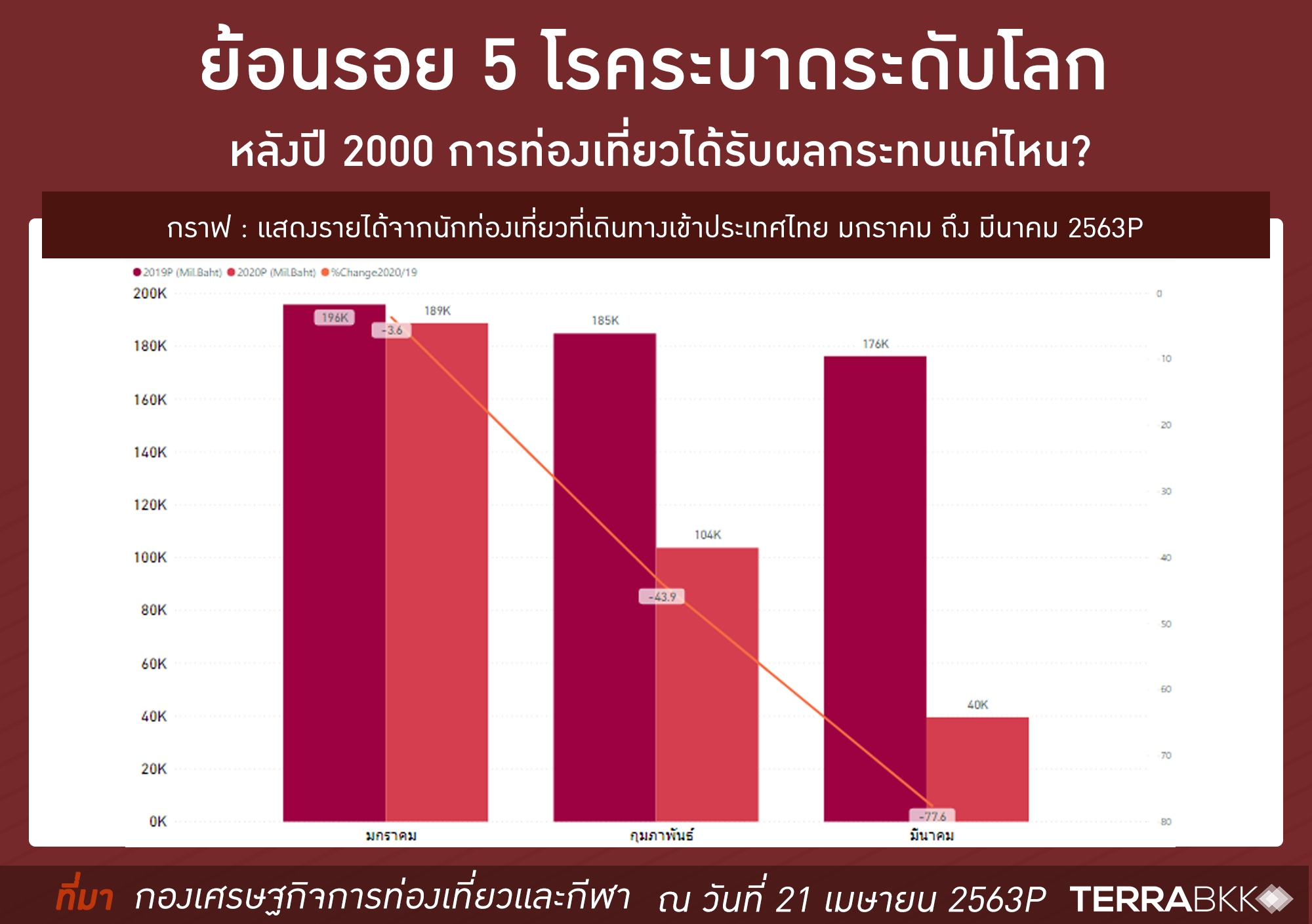
Looking at the number of tourists and revenue from tourists visiting Thailand from January to March 2020, it is evident that Thailand's tourism has been significantly affected by this outbreak. Comparing March 2020 to March 2019, Thailand saw a 76.4% decrease in tourists from March 2019. In terms of tourism revenue, during the same period in March, Thailand's tourism income decreased by 77.6% compared to March 2019.
Looking at the five outbreaks since 2000, COVID-19 is the largest and most severely impactful outbreak, with no effective solutions yet. If we look back at the previous four pandemics before COVID-19, we see that in the years of outbreaks, the tourism sector was affected to varying degrees, but after the situation improved, tourism would grow significantly, typically within just one year. We hope that after the COVID-19 outbreak ends, global and Thai tourism will recover swiftly.
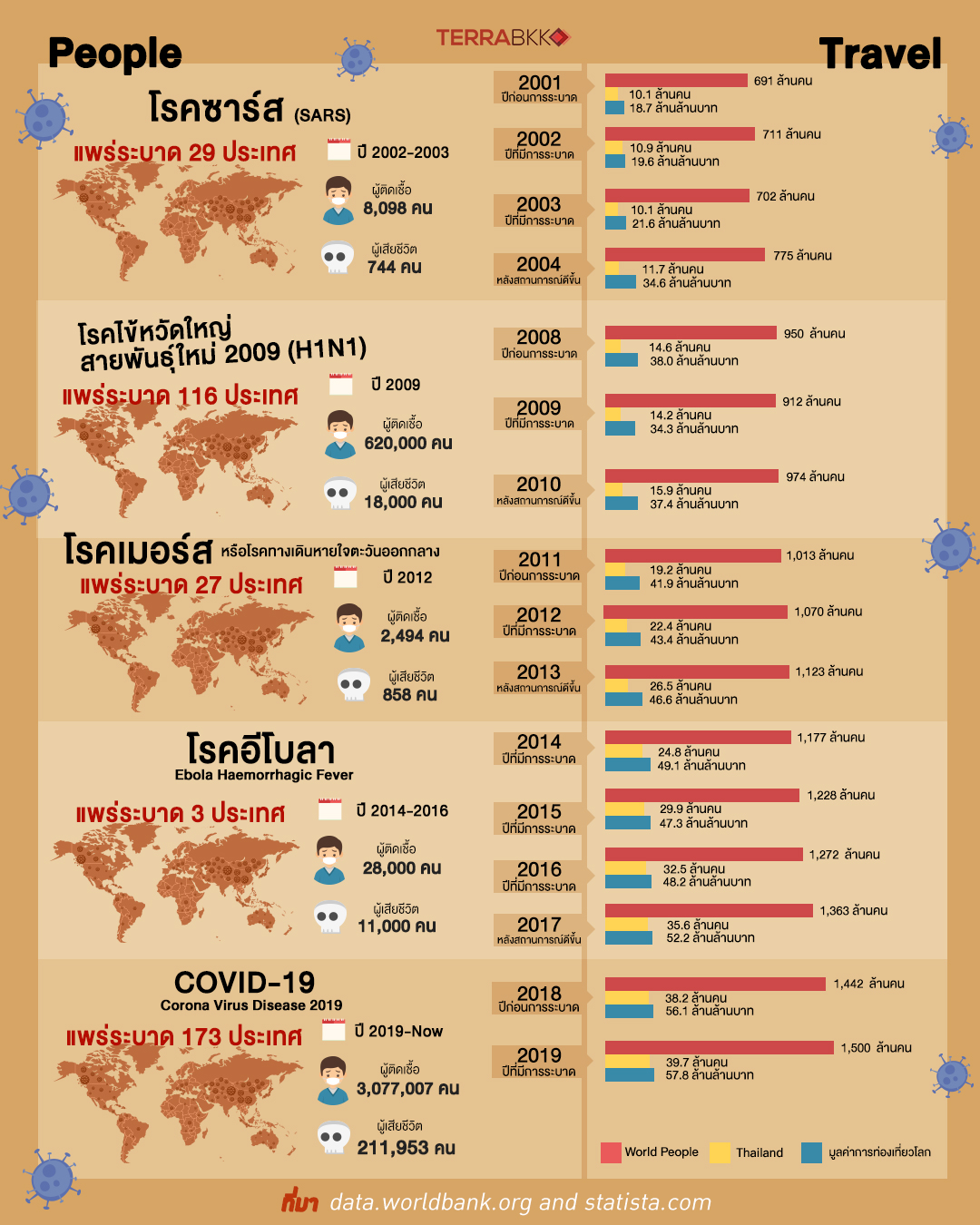
Source: data.worldbank.org/indicator/st.int.rcpt.cd, kasikornresearch.com/th, statista.com
Note: The exchange rate is averaged at 34 THB per USD.