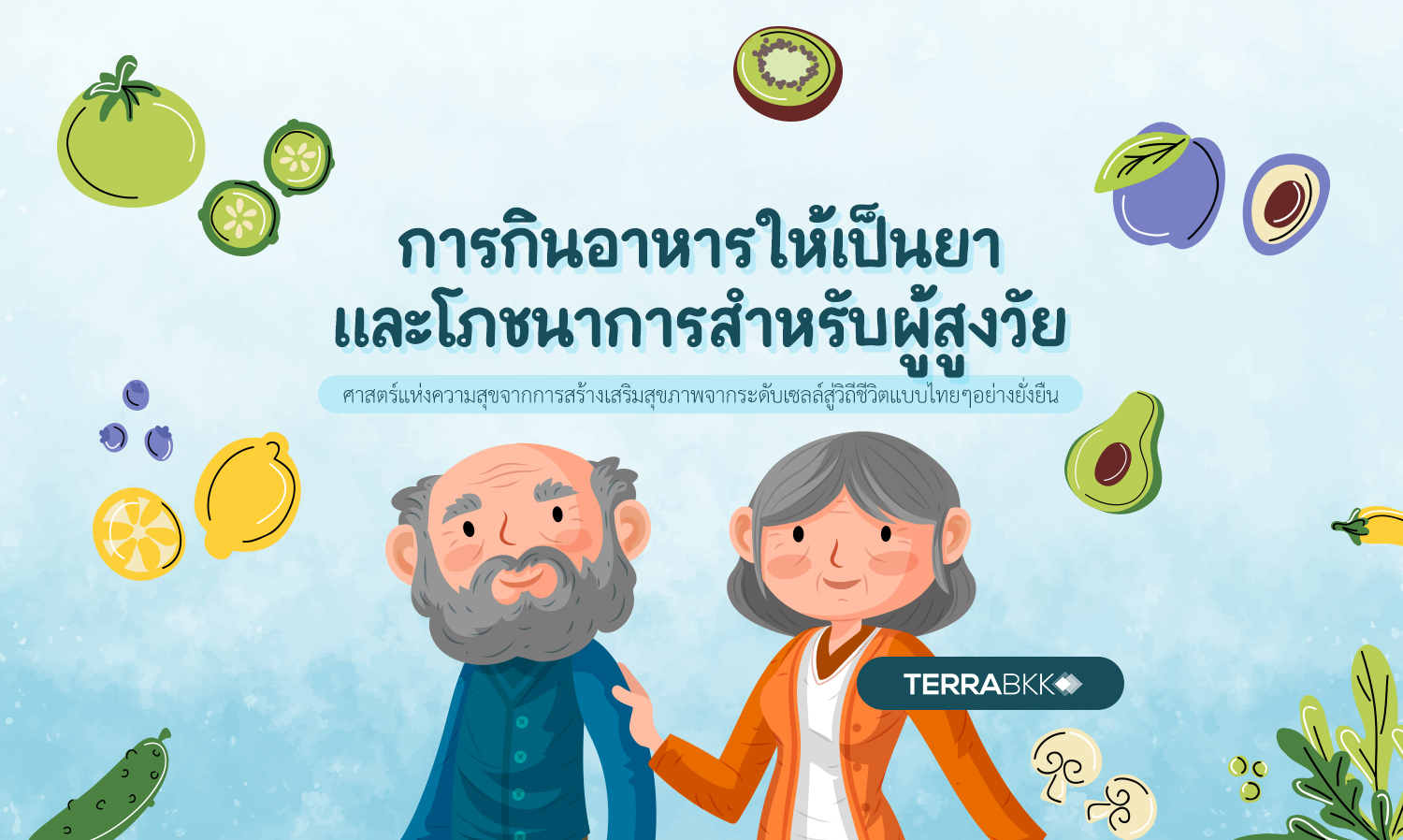
Eating Food as Medicine and Nutrition for the Elderly: The Science of Happiness from Cellular Health to Sustainable Thai Lifestyles
The world has truly changed. It has been nearly two years since the entire globe has been adapting to coexist with COVID-19, and no one can predict how it will end or what the ideal adaptation will look like. Living as self-sufficiently as possible seems to be the best answer for this time. This article aims to compile research that can be applied to a traditional Thai lifestyle for health promotion. The phrase 'eating food as medicine' may be something we hear often, but from the author's perspective, it can be viewed differently. Starting from the word 'food,' it does not only refer to what we consume orally; it encompasses everything that is both tangible and intangible, as all these elements affect our health. The term 'medicine' here refers to anything that contributes to health promotion, including disease prevention and treatment. Additionally, regarding nutrition for the elderly, the author strives to present non-redundant information compared to other academic works, focusing on natural recommendations that do not incur special costs. Therefore, three main hypotheses are proposed in this article:
Three Hypotheses for Sustainable Health Promotion
- Healing the sick is good, but preventing illness is excellent. This follows from the previous article, where the author personally believes that the future of health care will shift towards this approach. The rapid mutation of various pathogens makes it impractical to chase every virus. Instead, the focus will be on enhancing individual immunity. There may be specific areas that require serious preventive measures because everyone understands Antoine Bechamp's statement that weak immunity is the cause of disease. Therefore, strengthening one's internal immunity is the best way to care for health and treat diseases.
- Aging is not natural; it can be slowed down. In our Buddhist society, we believe in the cycle of birth, aging, sickness, and death as a normal part of life. However, while we may not resist these processes, we can slow them down. Generally, we count age and define aging based on the calendar, but in reality, there is also biological age, which varies according to the functionality of different organs. The biological age of organs differs based on care and usage, and there are established benchmarks for organ performance at each age. Thus, biological age serves as a comparative value indicating health care. Moreover, each cell in various organs has an average lifespan, such as:
- Skin cells have a lifespan of 1 month.
- Red blood cells last 120 days.
- Stomach lining cells live for 5 days.
- Liver cells last 6 weeks.
- Bone cells have a lifespan of 3 months, etc.
Within two years, 98% of the atoms in our body will be new, resulting in different organ functionalities among individuals. Scholars have assessed these differences to determine the biological age of organs, which may be greater or lesser than chronological age, depending on individual care. Psychological age relates to emotions and thoughts, with psychologists having standard assessment criteria.
- We are our best doctors. In today's world, there is an abundance of medical knowledge, treatment methods, and health promotion strategies available at all times. Only we can decide which methods to use for our health care. Therefore, “We are our best doctors for this wonderful patient.”
With these three hypotheses, the author wishes to use them as a framework to expand the meaning of 'eating food as medicine and nutrition for the elderly' so that readers can adapt the presented perspectives to their own contexts.
What to Know About the Human Body and the Ultimate Evolution of Living Beings
Modern technology has allowed us to discover many truths about ourselves as Homo sapiens from various perspectives, especially regarding cellular evolution. These discoveries have emerged in the past 20 years, revealing that the average human body contains approximately 110 trillion cells, of which only about 10 trillion are human cells. The rest are microbial cells, known as the 'Microbiome.' More importantly, these microorganisms produce chemicals that serve as our immunity, estimated to account for over 40%. This knowledge leads to the principle of correct food consumption, changing the phrase “You are what you eat” to “You are what your microbiome eats.” This is because the majority of cells in our body are no longer our own. Therefore, our future consumption must take this reality into account.
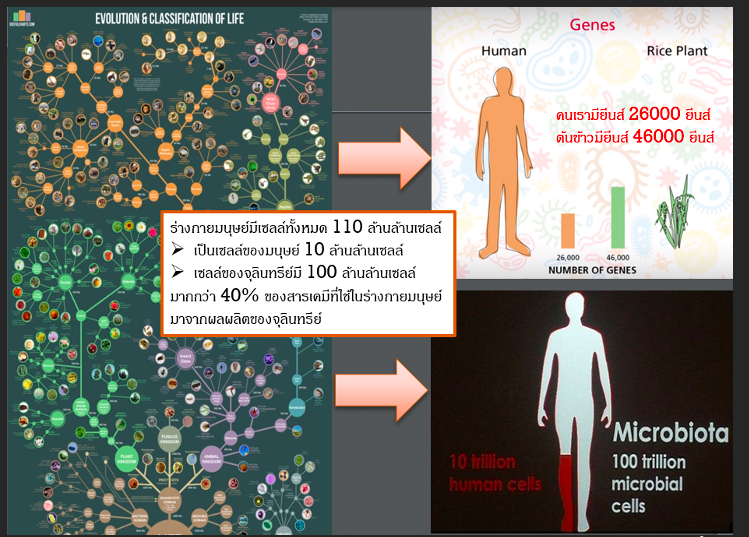
Understanding this deeply also reveals that we do not exist alone on this planet. There are many other species coexisting within us. Understanding the behavior or nature of those living with us becomes essential. We may have been taught the five food groups for our health, but these must change because what resides within us does not require such food. The microorganisms in our bodies prefer natural foods, high-fiber fruits and vegetables, while they reject sugars, chemicals, fried foods, or highly processed foods. If we force ourselves to consume these harmful foods, our cells will resist by transforming from normal cells into cancer cells that divide endlessly. Another important ally is mitochondria, which require oxygen obtained through exercise.
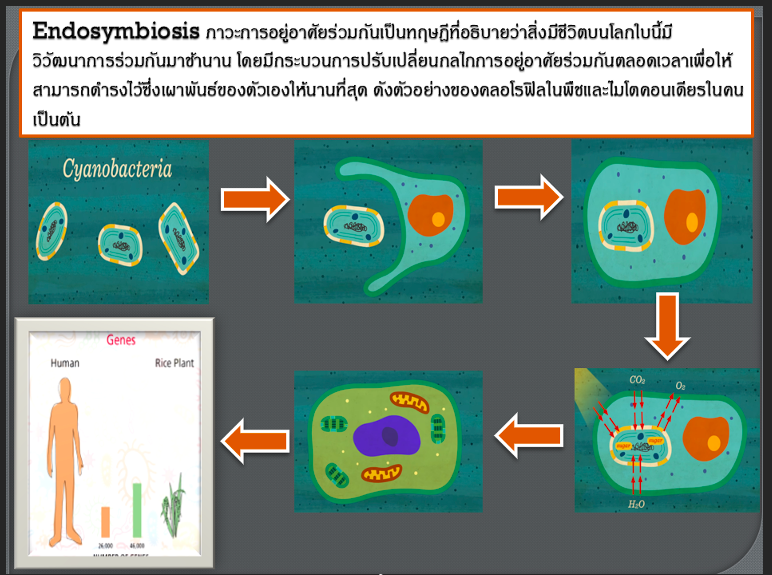
Mitochondria have been part of our bodies since the beginning of evolution from single-celled organisms to multicellular organisms, according to the Endosymbiosis theory, coexisting in a mutually dependent state. The role of mitochondria is to convert the nutrients we consume into energy, with oxygen serving as the substrate for the metabolic process. Therefore, oxygen is directly important to our bodies at the cellular level.
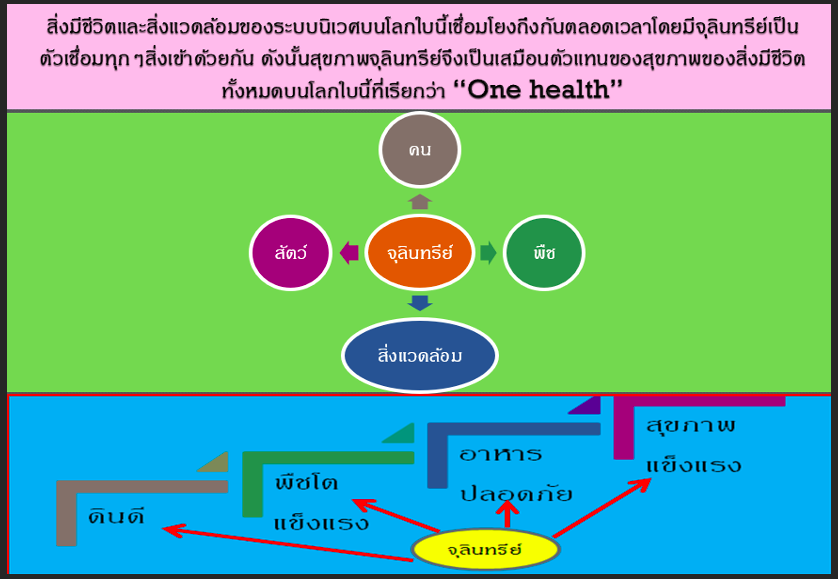
Another crucial aspect is the role and function of microorganisms as a link between all living beings on Earth. Their ability to adapt to changing environments makes them a key mechanism in the evolution of life. The biodiversity of microorganisms acts as a mechanism to control beneficial microorganisms. A high biodiversity of microorganisms allows them to control pathogenic microorganisms, preventing outbreaks that could harm living beings. Additionally, the mechanism of transferring one species to another also alters the existing biodiversity. Thus, we cannot overlook the cycle of relationships among living beings connected by microorganisms, as the health of these microorganisms is transmitted across species. True health assessment and care must consider holistic health (One Health), as illustrated in the image below, showing that strong health begins with good soil, which is part of organic or natural agriculture, demonstrating a direct relationship.
Discoveries About Food as Medicine and Anti-Aging
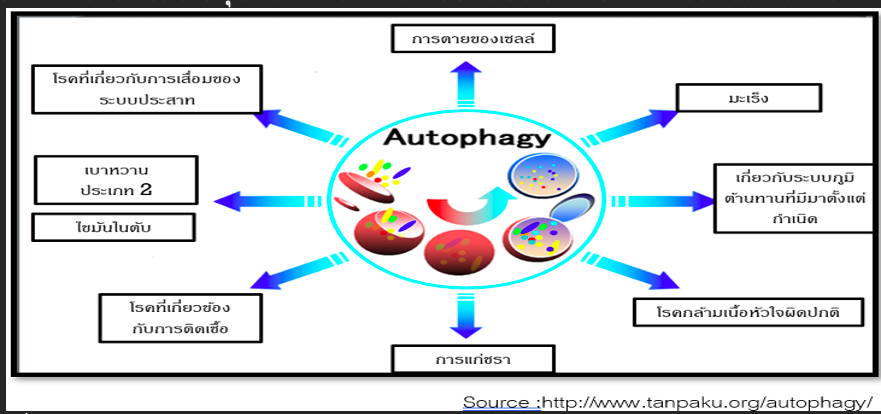
Since 2003, when the human DNA blueprint was announced, numerous studies related to cellular mechanisms have been presented. A significant work that changed perspectives on health care and anti-aging is by Prof. Yoshinori Ohsumi, who won the Nobel Prize in 2016 in the field of biophysics and medicine for his work explaining the mechanism of autophagy, or self-eating of cells. Prof. Yoshinori explains that living beings generally maintain a balance between creation and destruction, a process known as homeostasis, which preserves equilibrium at both cellular and bodily levels. Previously, we understood the mechanisms of nutrient creation and breakdown, but the discovery of how cells eliminate expired ones for reuse is a monumental academic achievement that has transformed health care and treatment.
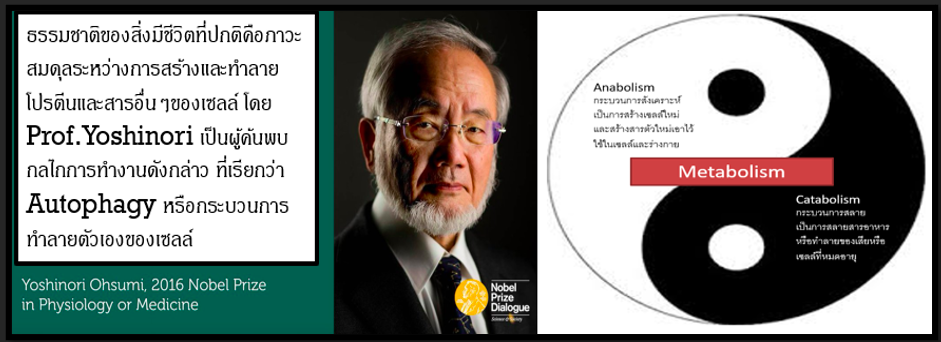
The autophagy process is crucial for maintaining balance and immunity throughout the body, akin to a team responsible for cleanliness and waste disposal. If any cell in the body is expired or abnormal, such as cancer cells, this mechanism will act to eliminate them. Any parts that can be reused will be repurposed for maximum efficiency. As shown in the image, the autophagy process is relevant for both the elderly and young people, emphasizing the need to support this process continuously for health care starting at the cellular level.
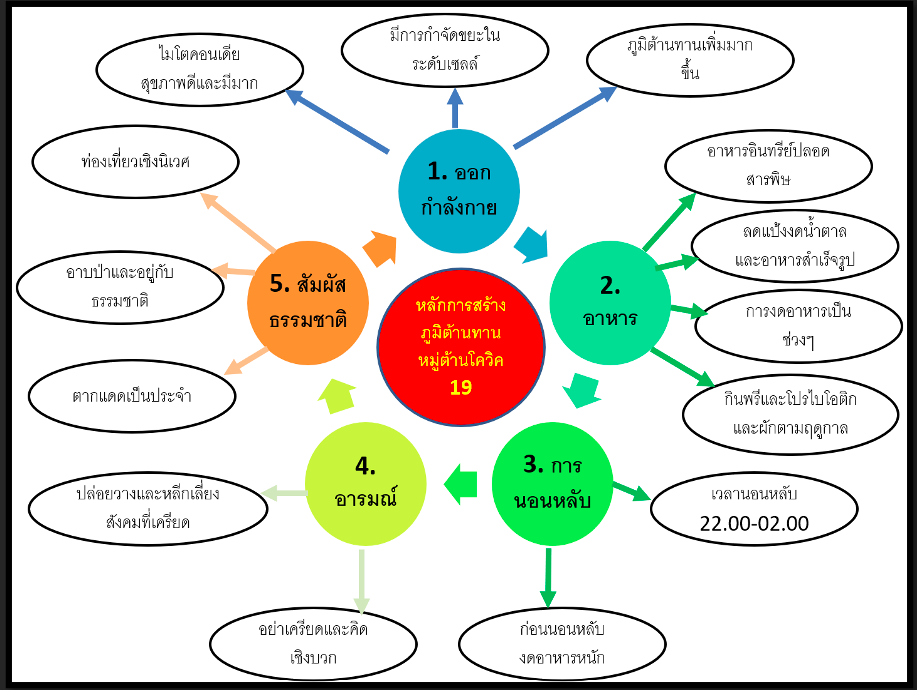
Prof. Yoshinori recommends four ways to stimulate autophagy: exercise, a ketogenic diet, fasting, and sleep. The author has adapted these guidelines slightly to align with the context of Thai people, especially considering the current COVID-19 situation, believing that these processes can effectively build internal immunity without waiting for vaccines, at the lowest cost.
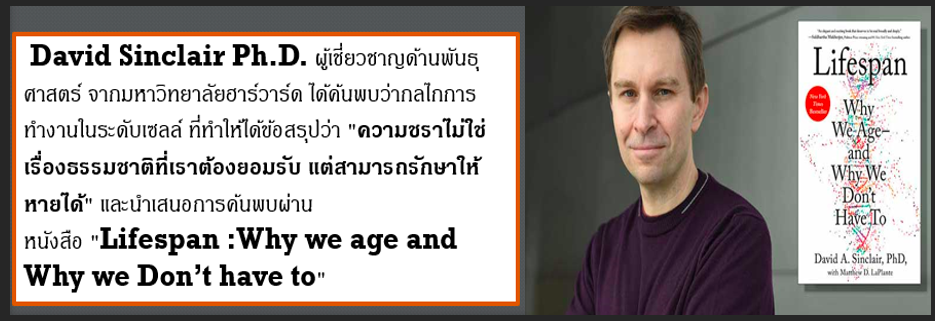
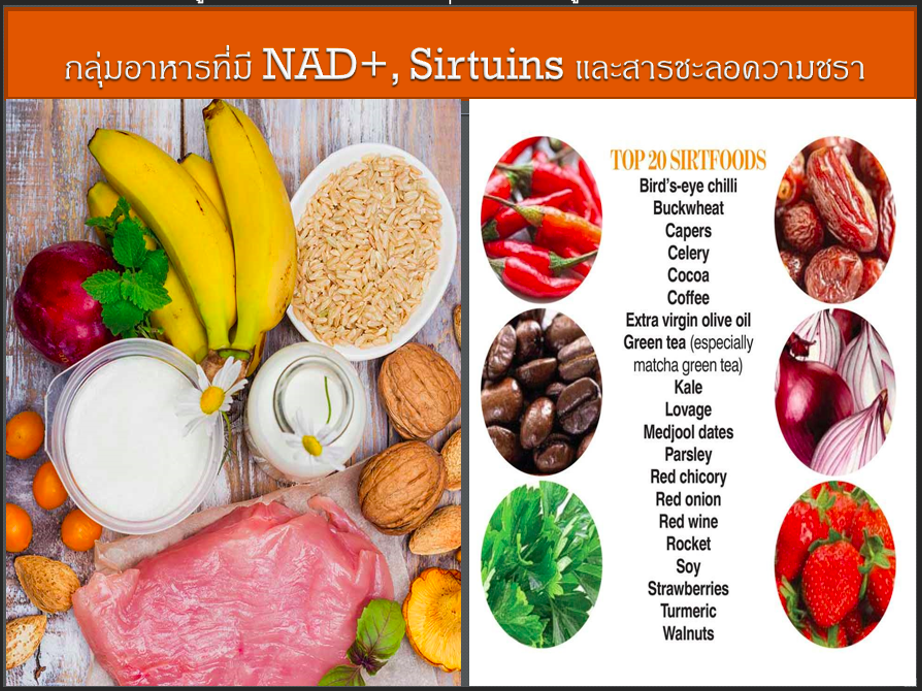
In addition to Prof. Yoshinori's discoveries, there is also David Sinclair, Ph.D., author of the book Lifespan: Why We Age and Why We Don’t Have To, who conducted experiments to explain the mechanisms of aging at the cellular level. He explored the relationship between aging genes, or sirtuins, and NAD+. Sirtuins are genes activated when the body is hungry or fasting, and their levels decrease with age. A significant finding is that the amount of sirtuins is directly related to NAD+, NM, and NMN in the body. Interestingly, compounds in the NAD+ group are commonly found in the everyday foods of Thai people.
The image illustrates that the nutrients needed to enhance anti-aging are already present in our regular diet. Both experts agree that this must be combined with intermittent fasting for sirtuins to be fully effective.
In addition to the types of food that stimulate NAD+ and sirtuins, it is also essential to consume foods beneficial to our body's microorganisms, specifically prebiotic foods. These include high-fiber, low-sugar fruits and vegetables commonly found in Thai households, such as garlic, onions, asparagus, apples, and many others. The principle of correct eating must be accompanied by fasting to give the body time to rest and eliminate excess nutrients. Activities that promote waste elimination according to the autophagy principle include exercise and sleep.
Exercise can be done in various ways depending on space and time. During this work-from-home period, exercises that require little space, such as yoga, stretching, balance training, or home fitness, can be performed. Consistency is key to training the body to adapt to the metabolic system. Coupled with exercise, adequate rest and sleep are essential.
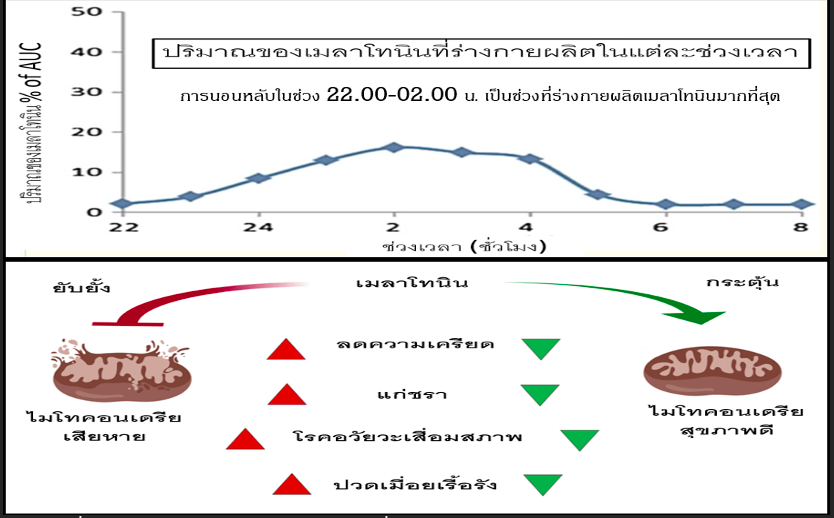
The optimal sleep time is between 10 PM and 2 AM, as the body produces the highest levels of melatonin during this period. Melatonin directly affects mitochondrial health, reducing stress, slowing aging, organ degeneration, and alleviating body aches. However, while everyone seems to understand the importance of sleep, achieving quality sleep is challenging. A simple recommendation for sleep activities is to combine them with exercise and fasting. This will require time and practice until it becomes a habit. If all proposed activities, including prebiotic and probiotic foods, fasting, exercise, and quality sleep, are consistently followed for at least two weeks, noticeable improvements in health will surely occur.
Conclusion: Eating Food as Medicine and Nutrition for the Elderly
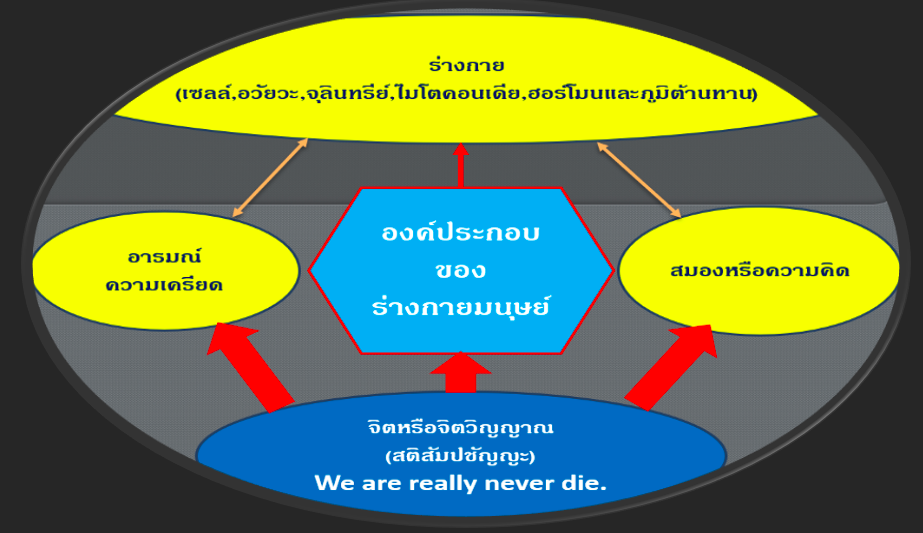
From all the content presented, the author aims to encourage readers to view the concept of food from another dimension, understanding that food does not only refer to what is consumed orally. The true composition of the body is not just the physical body visible to the eye; a person's identity also includes thoughts from the brain, emotions, and spirit, all of which directly impact health. However, the scientific world has yet to fully articulate these aspects according to established scientific criteria. Many discoveries remain underappreciated, even though there is evidence linking these elements. Nevertheless, the principles of consuming food for thought, emotions, and spirit must also be filtered and selected, as assessing the nutritional value of these three components is complex and profound. It cannot be interpreted using general terms for understanding, as knowledge alone is insufficient; one must reach the level of knowing. Therefore, the author recommends two books as starting points for readers to understand and practice: The Buddha's Brain and New Heart, New Life, which clearly and concretely explain the relationship of the four components of the body. The Buddha's Brain discusses the connection between the body's perception mechanisms and brain function, leading to thought processes that release hormones. These processes have been tracked and studied using modern tools, revealing the sequential functioning of the body's components. Filtering food entering these four components is thus essential for determining health strength. The New Heart, New Life book explains the body's perception mechanisms and hormone release, also offering various methods to reduce stress and enhance positive energy and hormones.
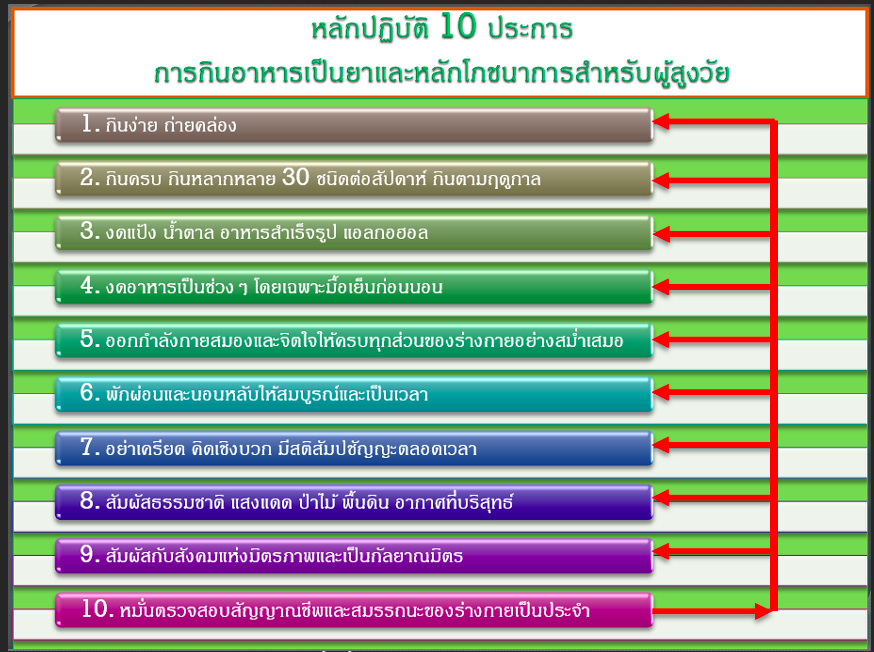
To facilitate practical implementation, the author summarizes ten simple principles as follows:
The heart of these principles is the tenth one: regularly monitoring vital signs and body performance. With the framework that “We are our best doctors in the world,” regularly checking the results of following the nine guidelines will allow us to closely observe changes. These changes will occur gradually, and when we see positive or negative results from monitoring various aspects, it will foster a genuine awareness of the importance of health. Thus, it is hoped that the information presented in this article will help transform the fear that society imposes on us into a conscious understanding of health, leading to informed decisions that change behaviors and share knowledge with others, proving that “We ourselves are the best doctors in the world.”
ABOUT THE AUTHOR
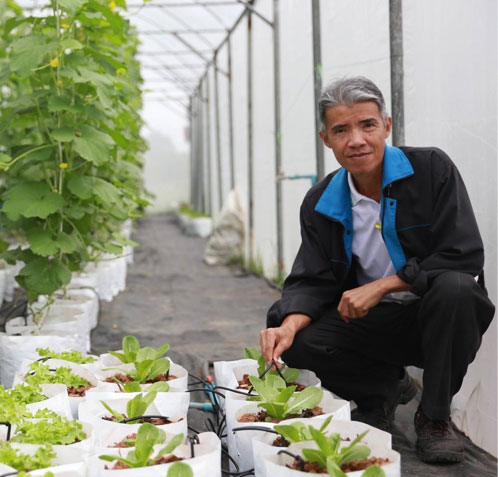
ดร.ประเสริฐ ปิ่นงาม (Ph.D., TREES-A NC) วท.บ. สาธารณสุขศาสตร์ ม.มหิดล