Terrain Theory: The Forgotten Resistance Theory Against COVID-19
As news of the COVID-19 outbreak from the Klong Toey cluster spreads panic among the public, with 120,000 residents in this community and an estimated 300 cases expected, which exceeds all previous clusters, the Bangkok Metropolitan Administration is urgently ramping up vaccination efforts in Klong Toey. We must continue to support the relevant officials. According to a report from The Standard on April 30, 2021, from February 28 to April 29, 2021, 1,411,614 Thais had received the COVID-19 vaccine, accounting for 2.132% of the total population. The government aims to vaccinate 50 million Thais by the end of 2021, and there is ongoing debate about whether this target will be met. However, it is believed that the Thai people will overcome this situation successfully, as our country possesses natural resources and traditional lifestyles that can counter the spread of COVID-19. It is easy to observe that rural people, who live simply and are close to nature, have never been reported to have contracted COVID-19. If we seriously learn from these experiences, it could greatly benefit both Thais and the world without relying on the vaccines that are currently in high demand. Therefore, I hope this article prompts us to reflect and return to preserving and sharing the good practices that our ancestors have passed down to us.

Nonetheless, the topic of vaccination will continue to be debated for a long time. Technically, the effects of the COVID-19 vaccine have not yet reached a clear conclusion, and it is expected to take several years to understand the true impacts. During this time, anyone who has the opportunity to receive any vaccine should take advantage of it, as the goal of vaccination is to stimulate the body to build immunity against the COVID-19 virus. The difference lies in each individual's ability to develop immunity or their potential response to the COVID-19 vaccine, which varies based on their innate immune system, genetics, environment, and lifestyle. Each person's immune system is unique and can change over time, so it is essential for individuals to observe and monitor these factors themselves. Thus, I would like to summarize the understanding of the body's immunity as follows:
Innate Immunity and Adaptive Immunity
Prof. Yong Poovorawan explained the evolution of the COVID-19 virus, stating that it is normal for coronaviruses to continuously evolve. For example, the first outbreak from China was known as the Wuhan strain, which was the L type. When it spread to Europe and around the world, it mutated into strains V, G, GH, and GR. When it first arrived in Thailand in January, it was the same L strain as in China. However, by March, at the boxing stadium and entertainment venues in Thonglor, it had mutated into the S strain, which was different from the original (https://learningcovid.ku.ac.th/course/?c=1&l=6).
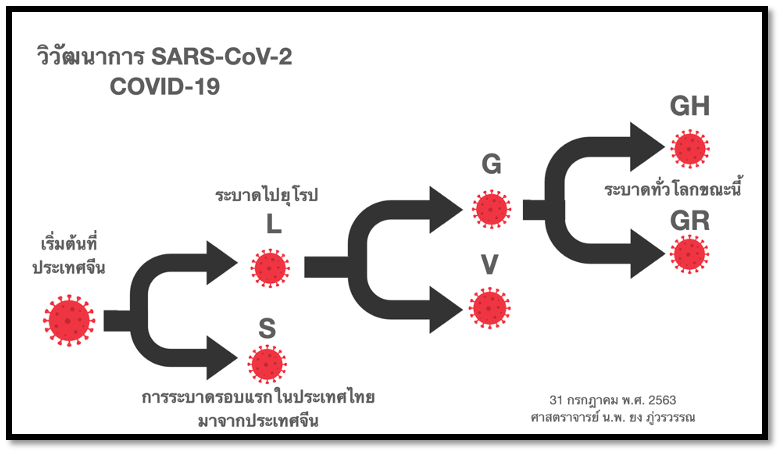
Current Virus Mutation Diagram
The diagram indicates that the mutation of this virus will likely continue for a long time. If this is the case, we will need to continuously develop treatments and vaccines to combat this disease. The origins of these tiny microorganisms have long been in a balanced and peaceful coexistence with other living beings. Scientific evidence has confirmed that microorganisms primarily exist in a symbiotic relationship. If abnormalities occur, there will be a process to adapt and return to a balanced system, as exemplified by Dr. Lynn Margulis's Endosymbiosis theory, which explains the mechanism of coexistence among different bacteria that eventually became mitochondria and chloroplasts residing in animal and plant cells today (more details can be found in the article on the origin of these tiny beings, the world-flipping theory).
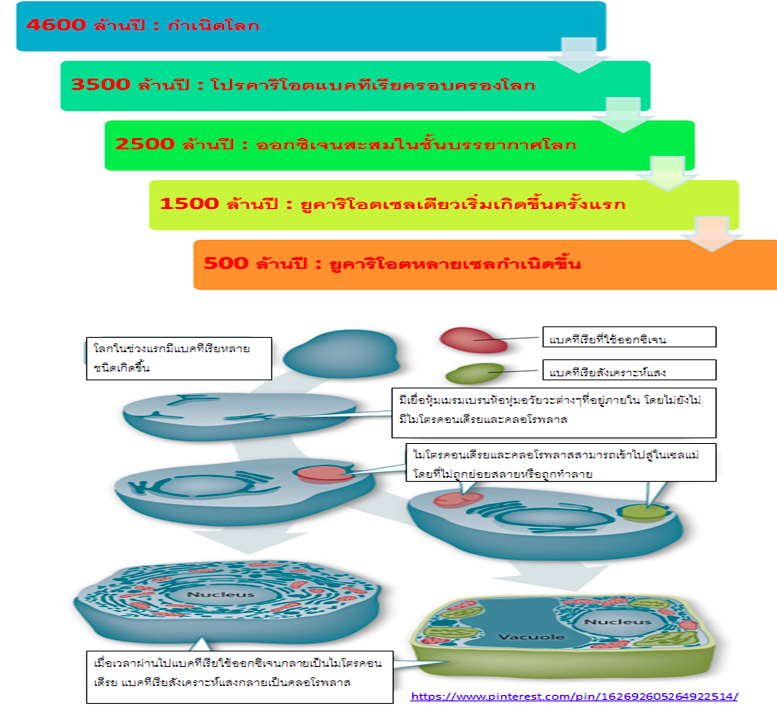
Evolution of Coexistence According to the Endosymbiosis Theory
The principle of symbiotic coexistence from Dr. Lynn Margulis's theory is a crucial aspect of how the human immune system functions naturally. Anything in excess will be limited and controlled to maintain the diversity of the overall ecosystem for as long as possible. The innate and adaptive immune systems of the human body have evolved to operate according to these principles.
The human immune system has evolved over a long time, functioning as a complex network to protect our bodies from foreign substances. Currently, it can be divided into two systems:
- Innate Immunity - This is the first line of defense against foreign substances entering the body, responding immediately and rapidly. It consists of various epithelial cells that act as barriers to prevent pathogens from entering the body. When pathogens do enter, there are cells that engulf them, such as Neutrophils, Eosinophils, Basophils, and Monocytes in the blood, while Macrophages consume pathogens in tissues. Additionally, when foreign substances or pathogens hide within cells or abnormal cells (cancer cells), Natural Killer (NK) cells recognize and destroy these abnormal cells. Complement, cytokines, and interferon type I are substances in the blood that support and enhance the immune system's efficiency.
- Adaptive Immunity - This immune system develops after the innate immunity has begun functioning. The main cells involved are T cells and B cells, which have receptors on their surfaces that can distinguish between different pathogens. This specificity allows the body to develop targeted immunity against those pathogens. In addition to the ability to respond accurately to various foreign substances, this adaptive immune system can also remember these foreign substances well, leading to the development of vaccines that are currently in high demand.

Components of Innate and Adaptive Immunity

Response Levels of the Body's Immune System
The diagram shows the sequence of immune system responses. When an infection begins, the innate immune system responds immediately, as indicated by the blue graph. The immune system then signals the adaptive immune system, represented by the red graph, to respond by eliminating foreign substances or pathogens until the body returns to normal. The level of immune response decreases thereafter. This process occurs continuously, and the onset of infection does not necessarily indicate the start of illness. Actual symptoms arise when both immune systems can no longer cope, prompting the need for external intervention, such as medication. Vaccination stimulates the body to enhance its immune response, as indicated by the red graph, to a stronger level. Therefore, health care options can be implemented in three phases from the onset of infection to immune response:
Phase 1: The initial stage of infection involves avoiding contact with microorganisms or pathogens through elimination or avoidance. Practically, it is well-known that microorganisms are ubiquitous both outside and inside our bodies, with 90% of our body cells being microbial. Thus, it is nearly impossible for most people to achieve this, except for those in sterile environments.
Phase 2: The response phase involves continuously strengthening our internal immunity through natural methods, such as exercise, sun exposure, engaging with nature, consuming safe foods, and avoiding harmful substances like sugar and highly processed foods.
Phase 3: The onset of disease symptoms involves using medications, supplements, or vaccines, which are currently popular according to modern medical principles.
From these three options, it is clear that as long as we can adhere to the second principle, we should start immediately. If we cannot follow the second principle, we can resort to the third one first. Once our bodies are ready, we can then practice the second principle. There are many ways to implement the second principle; we just need to believe in ourselves that we can do it. Encouragement and self-confidence are crucial for this.
Terrain Theory: The Forgotten Disease Resistance Theory
Despite graduating directly in public health, I must admit that I had never heard of the term Terrain Theory or the name of Antoine Bechamp, its originator, until I began studying and working with plants. I discovered the remarkable potential of plant immunity, which far exceeds that of humans, as plants have a systematic working relationship with microorganisms. When comparing the functions of plants and humans, it crystallized the idea that “everything is connected.” Humans should not develop growth through isolated scientific analysis, as this leads to ecological imbalance, evident in issues like global warming, disasters, and pandemics today. This thinking gives rise to the concept of “One Health,” where the health of all living beings, including the environment, is interconnected. The coexistence of humans, animals, plants, and the environment must be balanced, with microorganisms serving as the link in all processes.
Thus, the choice for good health care must align with the meaning of One Health to avoid unforeseen long-term consequences. Adhering to principles that align with natural existence seems to be the best choice. Antoine Bechamp proposed this principle while working at the University of Montpellier when Louis Pasteur's germ theory was gaining acceptance as a monumental discovery, following his methods for sterilizing microorganisms in 1863 and developing the anthrax vaccine in 1879. This led to the development of health care technologies primarily based on germ theory.
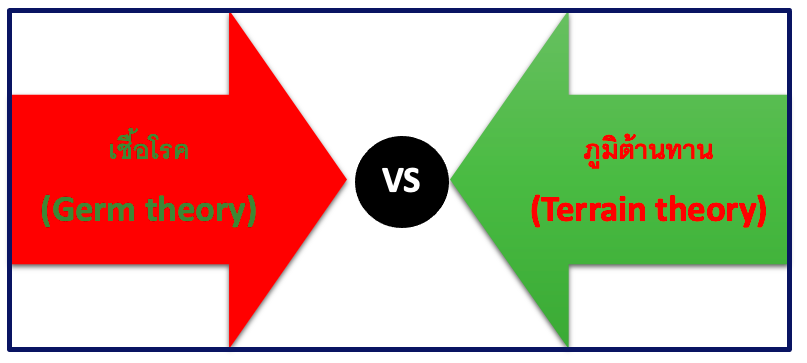
Since both Louis Pasteur and Antoine Bechamp were French and lived during the 1800s, their theories have been debated ever since. It is well-known that Pasteur's germ theory has been more widely accepted since then.
With advancements in technology for measuring microorganisms and various life forms, including the successful sequencing of the human genome in 2003, our understanding of microorganisms and their roles in the human body has increased. A widely accepted discovery is that over 60% of our immunity comes from the work of the microorganisms residing in our bodies. This has led to serious control over the use of antibiotics that kill microorganisms. The differences between the two theories are now being compared seriously again to determine which approach is more effective for health promotion.
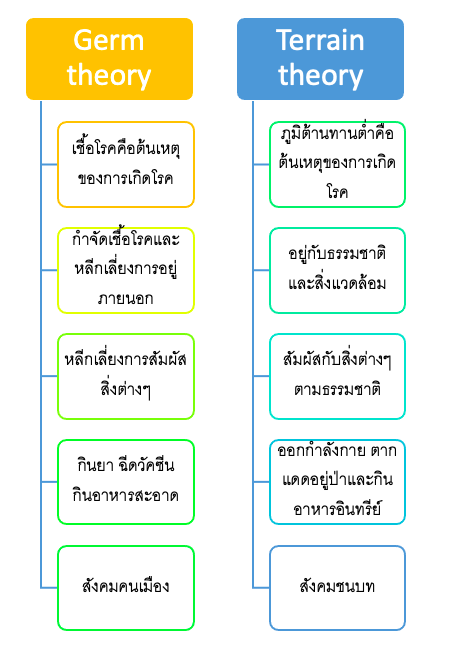
Comparison of Germ Theory and Terrain Theory
When analyzing the behavioral expressions of life according to both theories, it is evident that there are clear differences. Individuals who believe in germ theory tend to be more anxious and concerned about the cleanliness of food and their environment than those who adhere to terrain theory. Urban society represents the belief in germ theory, while rural society embodies the belief in terrain theory. Personally, I lean more towards the principles of terrain theory because, when analyzing the spatial outbreak of COVID-19, it is clear that all clusters of outbreaks are in urban areas, characterized by crowded and poorly ventilated environments. There have been no reports of outbreaks in rural areas. This empirical data suggests that living in a rural lifestyle, close to nature, with clean air, exercise, and non-toxic food, along with spiritual practices, could effectively create herd immunity for Thais.
Self-Generated Herd Immunity Against COVID-19 According to Terrain Theory
When comparing the evolutionary timeline of our body's internal immunity mechanisms with the timeline of human drug development, it is evident that they are vastly different. If natural evolution were flawed, humanity would have likely gone extinct long ago. Any technology we develop, believing it to be the smartest, will ultimately fail if it contradicts natural principles. The path of humanity is to learn and mimic the realities of nature as closely as possible. The true secrets of nature will remain a mystery until humanity faces extinction. Therefore, living in harmony with nature is the fundamental principle of true health care.
The human immune system operates in harmony with nature. Seasonal fruits and vegetables are sources of local microorganisms, sunlight is the primary energy source for plants and helps us produce vitamin D, and clean air provides oxygen for our bodies. We already know these basics are beneficial, but the current societal focus on material development has caused us to neglect and forget the practices of our ancestors. It is time for us Thais to show the world that the virtuous culture passed down by our ancestors through a natural lifestyle is the true way to create herd immunity.
Initially, the guidelines for self-generating immunity can be divided into five points:
- Exercise - For rural communities, working in fields is a natural form of exercise. Any form of exercise is beneficial as long as it becomes a daily routine. Immunity gained from exercise has many benefits, including increasing white blood cell counts, boosting mitochondria, and eliminating cellular waste, which directly impacts cancer cells. Therefore, maintaining a disciplined exercise routine is the first rule for self-generating immunity. Regular exercise and a diet rich in fruits and vegetables can also help prevent osteoporosis.
- Nutrition - Food is a direct source of immunity enhancement. Fresh green vegetables are high in calcium, strengthening bones. Seasonal fruits and vegetables increase local microorganisms. The principle of proper nutrition is to consume a diverse diet of at least 30 different items per week while avoiding high-carb, high-sugar, and highly processed foods. Additionally, intermittent fasting should be practiced to allow the digestive system to rest.
- Sleep - Sleep is crucial for the body to rest and for waste elimination (Autophagy). It is essential to avoid eating or stressful activities before sleep. Meditating before bed can help the body rest and detoxify effectively.
- Emotional and Stress Management - Negative emotions or stress directly affect immunity levels. It is important to identify stressors and avoid negative influences or practice letting go of things and accepting the natural flow of life. Training oneself to be present and not cling to the past or worry excessively about the future is vital.
- Connection with Nature - This is the essence of rural life. Working in fields, sleeping under trees, hearing the sounds of nature, smelling the earth, and forest bathing have been scientifically proven to enhance immunity, particularly increasing NK cell levels.

In addition to the five principles suggested, there are many other natural healing methods that can be adapted to suit individual circumstances and time constraints. The key is consistency and regularly monitoring changes. For those starting anew, encouragement and self-belief are crucial because exercise and dietary control can be challenging without confidence in their benefits. These experiences are personal and cannot be conveyed by others, so it is essential to create these experiences for oneself. Finally, for those who have read this article to this point, I want to say as a friend that “We should start building our immunity according to the principles of Terrain Theory while we still can, rather than waiting to rely on germ theory when we are bedridden.” Please share this message to help create herd immunity against COVID-19 in Thailand.
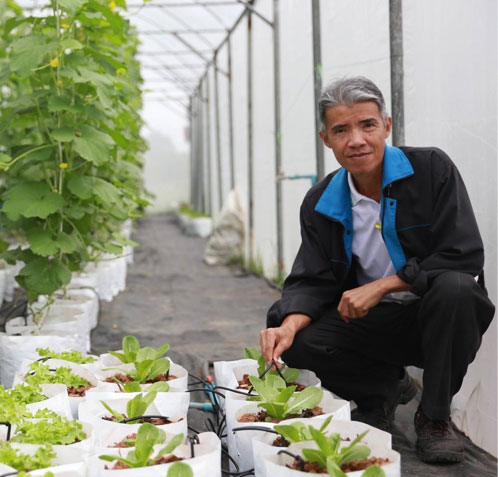
ABOUT THE AUTHOR
ดร.ประเสริฐ ปิ่นงาม (Ph.D., TREES-A NC) วท.บ. สาธารณสุขศาสตร์ ม.มหิดล