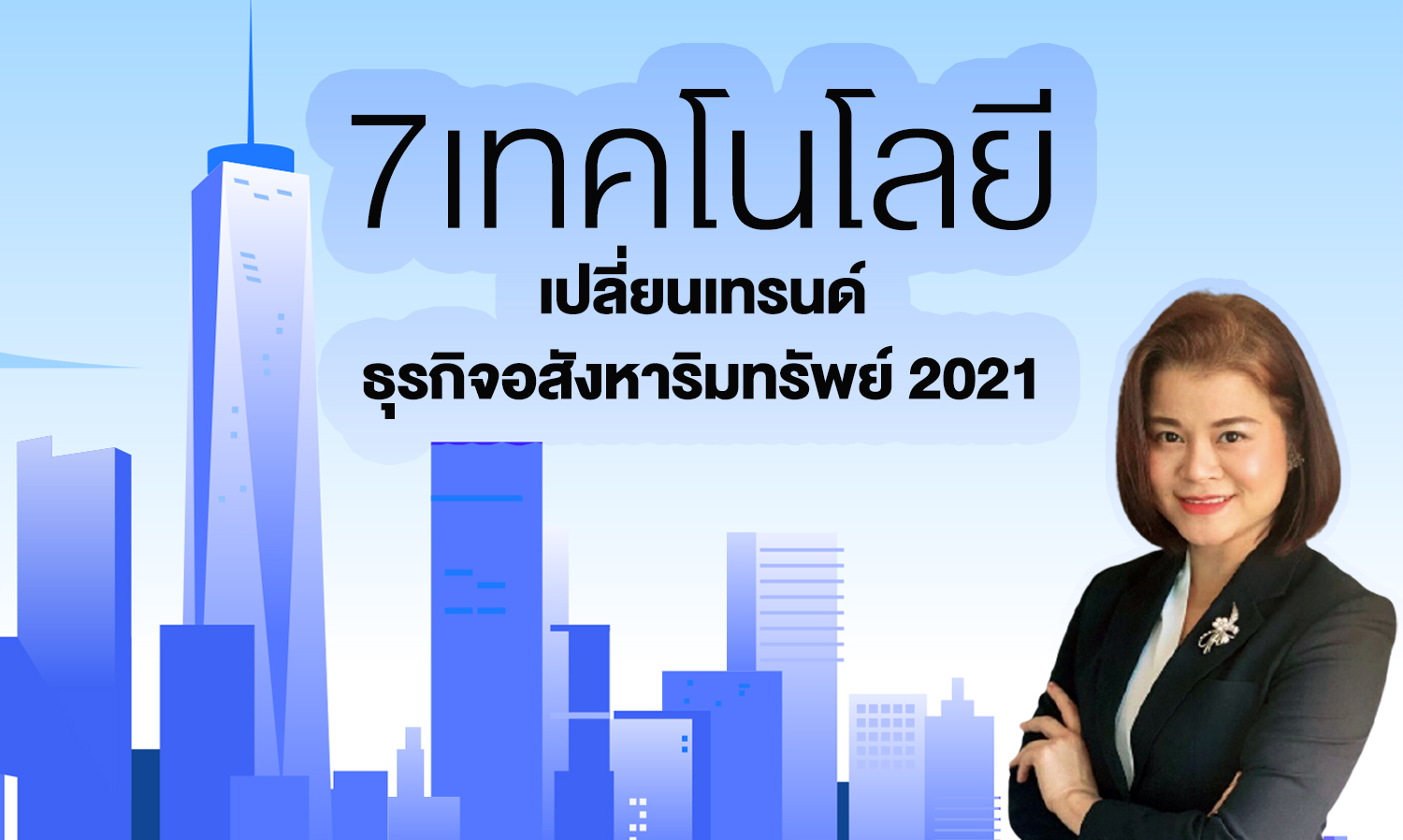
7 Technologies Transforming Real Estate Business Trends in 2021
In the real estate business, we are often familiar with three main strategies that most residential project developers commonly use to enhance their capabilities and competitive opportunities over rivals:
- Location Selection Choosing prime locations with potential that meet consumer demands allows for quick sales of residential projects at favorable prices.
- Price Setting prices appropriately according to various Brand Portfolios that can compete effectively, which results from the corporate branding of developers aiming to create diverse residential projects in various locations.
- Corporate Credibility Building a trustworthy image of the project development organization with consumers, as housing is a high-value asset, leading consumers to consider the credibility of the service provider as a key factor in their purchasing decisions.
Although these three strategies are crucial for the competitive capabilities of residential project developers, the era of technology-driven economic growth has significantly impacted lifestyles, values, consumer demands, and behaviors in society. This has prompted businesses across all sectors, including real estate, which is a fundamental industry in many countries worldwide, to prioritize, stay alert, and prepare for the changes occurring.
As a result, we often hear about Property Technology or Prop Tech, which is considered a vital factor for success that project developers need to adopt to support their businesses. It is anticipated that in the near future, Prop Tech may become a new standard in conducting real estate business with innovative technology, enabling consumers to access housing conveniently, creating new experiences for residents, and facilitating project developers in various transactions quickly and efficiently, while also adding value to the projects.
Let’s explore the 7 trending technologies that may become the new standard in the Real Estate sector, to prepare for innovative real estate development for project developers. These seven technologies are:
(1) Big Data Managing vast databases collected for analysis, forecasting, and planning project development.
(2) Building Information Modeling (BIM) A system used by residential project developers to simulate building designs in 3D before construction, helping visualize the overlap of building structures and utilities, allowing developers to adjust designs and reduce issues during actual construction.
(3) Internet of Things (IoT) Utilizing devices connected to online networks and sensors to control appliances and various equipment within residences, enhancing comfort and safety, such as smart door lock systems, motion detection sensors, automatic sensor systems, emergency alert systems, and smart home systems.
(4) Artificial Intelligence (AI) Aiding in data recognition, analysis, and processing quickly and accurately, such as helping agents sell properties through chatbots and analyzing price changes closely aligned with market prices.
(5) After Sales Service Applications Post-sale services that facilitate communication between management and residents, from collecting usage data or resident issues to notifying various information and services, such as repair requests, booking common areas, reserving electric vehicles for short distances, paying maintenance fees, and listing for sale or rent.
(6) Augmented Reality (AR) and Virtual Reality (VR) Technologies that merge the real and virtual worlds, simulating images in a realistic 360-degree view, including online housing reservations and loan processing through online systems and online payment technologies for transactions by creating virtual representations of projects.
(7) Blockchain Used for direct transactions with customers, reducing time and complexity in managing sales documents, speeding up transactions, lowering transaction costs, and providing high transparency and security.
From the above presentation, we understand the reasons and necessity for integrating technology to support real estate business operations. However, real estate operators should study and learn to gain additional knowledge about innovative real estate development approaches that go beyond merely adopting technology. It involves managing business, technology, and innovation appropriately in line with the context and strategic plans of each organization. As we live in a rapidly changing world driven by technology and innovation, we cannot deny the need to learn and adapt to new business practices. On behalf of the Master of Science in Real Estate Development Innovation (MIRED) program, Faculty of Architecture and Planning, Thammasat University, we extend our support to all real estate operators to overcome obstacles and navigate through the challenges of the new normal era.