The Warburg Effect: A Theory Unraveling the Secrets of Sugar, Diabetes, and Cancer for Longevity
Dr. Prasert Pin-ngam (Ph.D., TREES-A NC)
B.Sc. in Public Health, Mahidol University
Research by Prof. Samy Hadjadj published in the journal Diabetologia on May 29, 2020, revealed risk factors contributing to mortality in COVID-19 patients with diabetes. The study involved 1,317 participants, predominantly male (65%) with an average age over 70. The treatment results indicated that 10% died within the first 7 days, and 20% required ventilators. Notably, blood sugar management during treatment was unaffected by COVID-19 care. It can be preliminarily concluded that body weight, obesity, and diabetes are significant risk factors associated with COVID-19 infection and mortality (Source: https://diabetologia-journal.org).
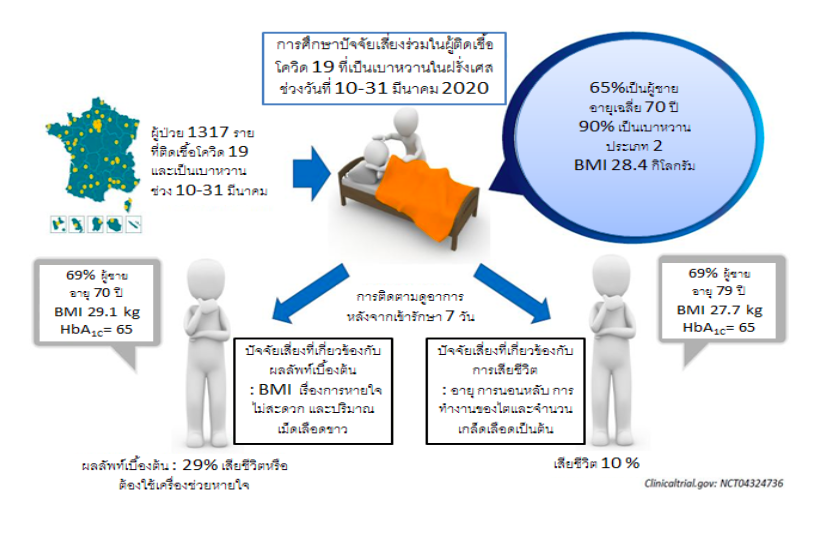
International research has confirmed the correlation, and upon reviewing data from Thailand, the association appears clearer than in France. According to the CCSA data from April 18, Thailand recorded 47 COVID-19 deaths, with 43 having diabetes, 38 with hypertension, 19 with high cholesterol, 13 with heart disease, 9 with obesity, and 9 with kidney disease. This data indicates a group of non-communicable chronic diseases (NCDs), which are well understood to stem from modern dietary habits. Currently, there are 4.8 million diabetes patients in Thailand, and once diagnosed, they face numerous complications, with cancer being a major concern. There is substantial evidence linking diabetes and cancer significantly.
A Ray of Hope in the Relationship Between Sugar, Diabetes, and Cancer
Prof. Robert Lustig from the University of California has studied the effects of excessive sugar consumption and concluded that cancer is a metabolic disorder, with sugar accelerating its onset.
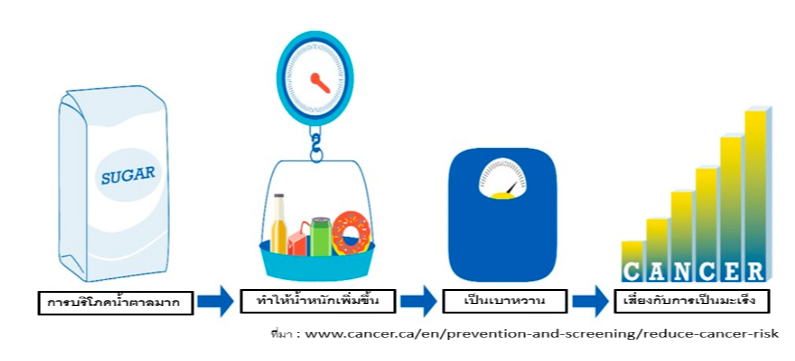
Hypothesis Diagram of the Relationship Between Sugar, Diabetes, and Cancer
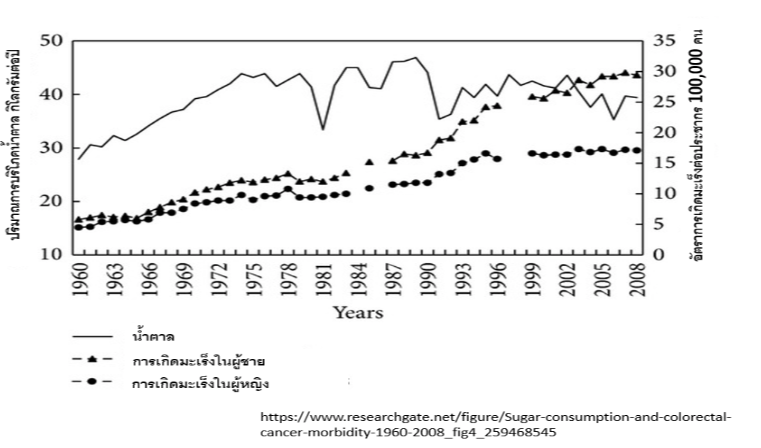
The diagram below shows a clear trend of increasing sugar consumption correlating with rising cancer incidence. However, the relationship between sugar intake and cancer rates remains debated, as many factors contribute to cancer development. Scientists continue to seek scientific evidence to confirm the causes and mechanisms of cancer to develop prevention and treatment strategies.
The Warburg Effect: Unlocking the Secrets of Cancer Development
The quest to understand the causes and mechanisms of cancer cell transformation began nearly 100 years ago with German scientist Otto Warburg in 1924. Warburg discovered that cancer cells primarily generate energy (ATP) through glycolysis rather than the more energy-efficient citric acid cycle or electron transport chain in mitochondria. This phenomenon, where cancer cells produce energy via glycolysis, is termed "Aerobic Glycolysis" or the "Warburg Effect." For this work, Otto Warburg received the Nobel Prize in Physiology or Medicine in 1931. Since then, extensive research has been conducted on cancer cell mechanisms, yet the primary cause of normal cells transforming into cancer cells remains elusive.
In 2017, Johan M. Thevelein and his team published research in the journal Nature Communications titled "Fructose-1,6-bisphosphate couples glycolytic flux to activation of Ras." They began this research project in 2008, taking 9 years to complete, using yeast as a model due to its similarity to human tissue cells, demonstrating growth cycles and glucose metabolism as a primary energy source. After observing yeast reactions in the lab, the researchers concluded that excessive sugar consumption stimulates cancer cells, which require more sugar for energy than normal cells, as glucose breakdown yields less energy in cancer cells. The long-awaited answer is that "sugar triggers the transformation from normal cells to cancer cells, and in high-sugar conditions, it exacerbates tumor growth." Current research can also explain the mechanisms and components of enzymes or proteins involved comprehensively. This groundbreaking work has been globally recognized as a significant contribution to cancer research, successfully unraveling the Warburg Effect and cancer proliferation, paving the way for more effective cancer prevention and treatment strategies in the future.
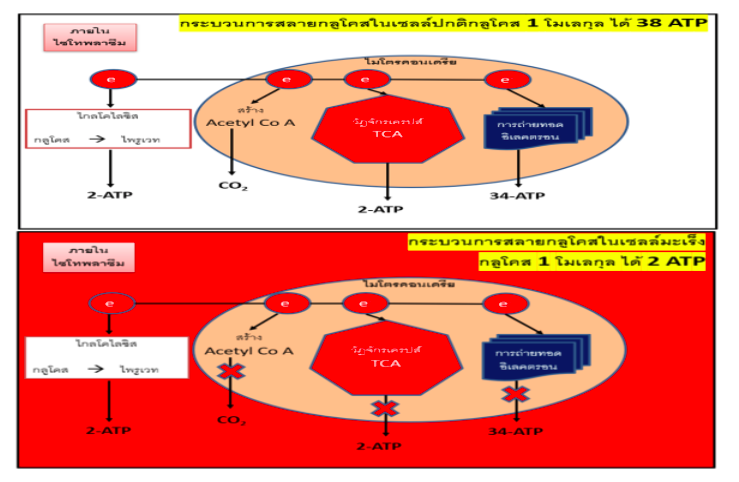
Comparison of Glucose Metabolism Mechanisms in Normal and Cancer Cells
Previously, the fundamental principle of cancer development was attributed to genetic abnormalities leading to uncontrolled cell growth, with mutations resulting in tumor formation. This process requires a long accumulation of abnormalities based on various factors. However, with the validation of the Warburg Effect, the analysis of cancer prevention and treatment causes and factors has shifted towards metabolic processes. Prof. Robert Lustig has redefined cancer as a metabolic disease, stemming from abnormal metabolic processes. Generally, the human body has a metabolic system divided into two processes: Anabolism and Catabolism.
- Anabolism refers to the building of biological molecules to create new physical mass, such as new tissue for various organs and muscle mass, requiring nutrients and energy.
- Catabolism is the breakdown of food and biological molecules to release energy, such as muscle breakdown and the breakdown of starch and fats to generate energy.
Both processes must work in balance to maintain a state known as Homeostasis, meaning the body must stabilize the balance between building and breaking down biological molecules. An imbalance leads to abnormal states, resulting in disease. The biomolecules or hormones controlling this balance are well-known insulin.
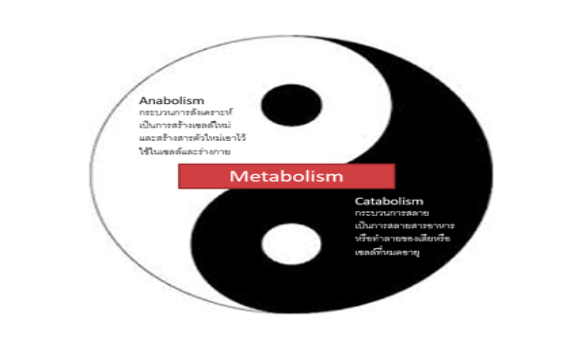
Diagram Illustrating Homeostasis in Metabolic Processes
Insulin acts as the primary hormone to guide and control the body's processes, determining whether to use carbohydrates or fats for energy (ATP) or how much energy to store. This is achieved through glycolysis, the citric acid cycle, and electron transport to deliver energy to the required organs. The main issue currently disrupting insulin function is excessive sugar consumption, leading to insulin resistance or diabetes.
Sugar and Cancer
On average, Thais consume 28 teaspoons of sugar daily, which is significantly high compared to the public health recommendation of 6 teaspoons or 24 grams per day. However, the understanding of the properties, benefits, and harms of commonly sold sugars is still lacking. It is crucial to prioritize this issue seriously, as current academic advancements clearly confirm the harms of excessive sugar consumption, which occur gradually but surely. The following table illustrates the differences among various types of sugar.
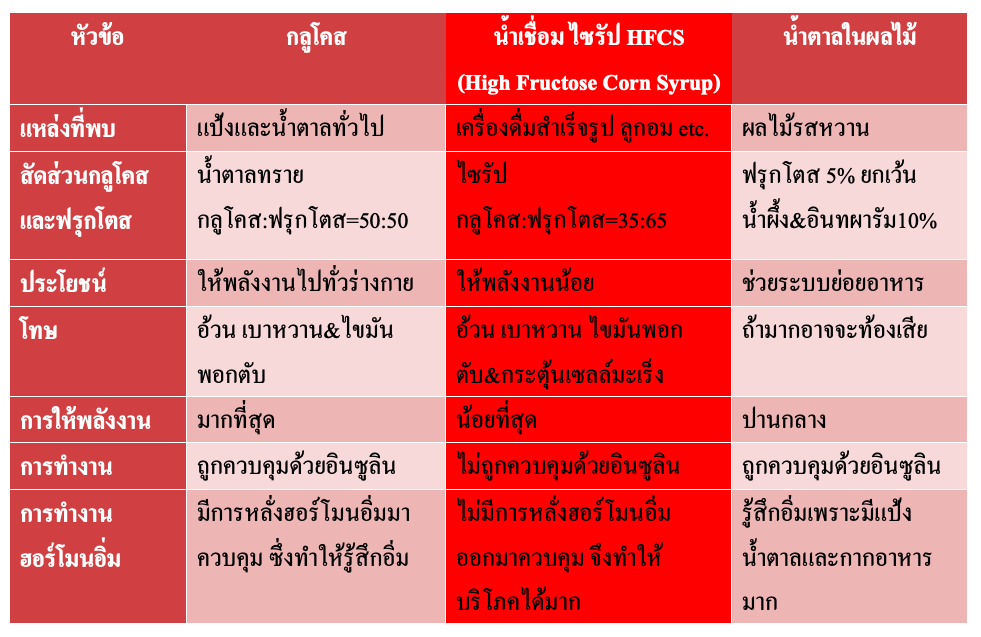
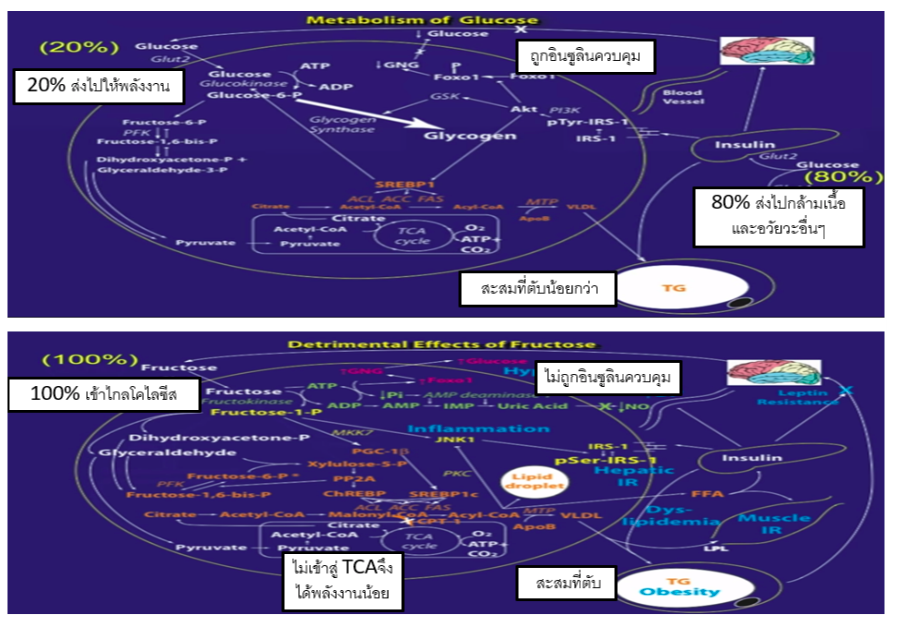
Diagram Comparing the Breakdown Processes of Glucose and Fructose
(Prof. Robert Lustig Sugar, Metabolic Syndrome, and Cancer)
The comparison shows that glucose breakdown is controlled and managed by insulin, distributing glucose to various body parts as needed. In contrast, fructose lacks this regulation and enters glycolysis directly, yielding less energy than glucose. Ultimately, it converts to liver fat. More importantly, fructose breaks down seven times faster than glucose and releases reactive oxygen species (ROS) 400 times more than glucose, which significantly accelerates cancer cell development. Additionally, fructose promotes undesirable processes while inhibiting beneficial ones in the body.
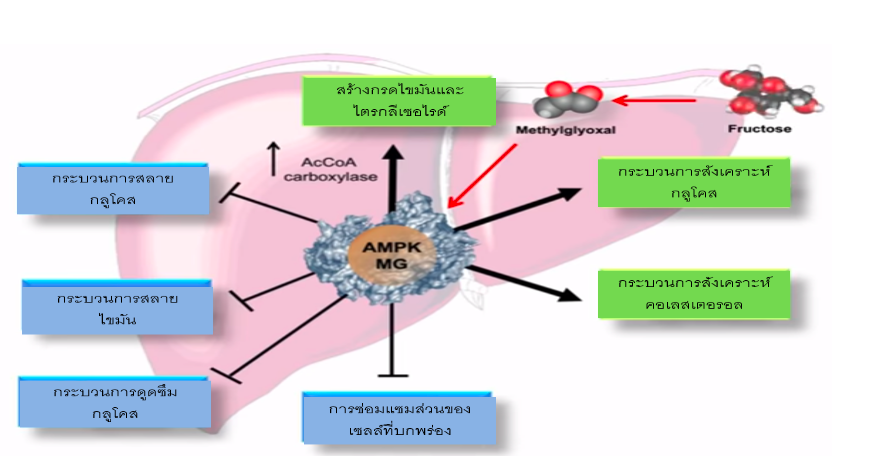
Diagram Illustrating Enzyme Activation and Inhibition Resulting from Fructose
(Prof. Robert Lustig Sugar, Metabolic Syndrome, and Cancer)
The diagram shows that when fructose breaks down, it produces Methylglyoxal (MGO), an organic compound affecting AMPK (Adenosine Monophosphate Protein Kinase) activity, which signals mitochondria to burn energy. During fructose breakdown, AMPK is activated to perform three activities: fat, glucose, and cholesterol synthesis, all of which are detrimental. Simultaneously, AMPK is inhibited from performing beneficial activities such as glucose breakdown, fat breakdown, glucose absorption, and most importantly, fructose inhibits the body's self-repair processes, including autophagy, discovered by Yoshinori Ohsumi, who received the Nobel Prize in Physiology or Medicine in 2016. This autophagy process underpins weight loss and dietary control principles emphasizing natural fats, followed by proteins and minimal carbohydrates, known as the ketogenic diet.
All this information indicates that sugar consumption, especially high fructose content (HFCS), directly harms the body concerning weight, diabetes, and ultimately cancer development. These narratives will increasingly present supporting data, making it essential to study and understand these issues more deeply, rather than blindly trusting advertisements primarily aimed at business interests.
Tips for Longevity by Prof. Yasunori Ohsumi, Nobel Prize 2016
The COVID-19 pandemic has revealed that there are still many aspects of reality on this planet that humanity does not fully understand. Scholars across various fields strive to research and uncover the secrets of nature that conceal hidden truths. However, one clear conclusion is that the world and all living beings are intricately evolved and interconnected in a chain. Any activity disrupting the natural evolutionary reality will ultimately lead to abnormalities. For instance, our sugar consumption disrupts the metabolic mechanisms of Homo sapiens, which have evolved over millions of years. In the early stages of evolution, we never encountered concentrated sugar as we do today. The introduction of concentrated sugar over the past few hundred years inevitably impacts cellular adaptation and transformation into cancer cells, which can also be seen as part of evolution. The knowledge of these internal cellular processes is being unveiled, leading to a New Normal in lifestyle changes. Prof. Yasunori summarizes four principles for longevity as follows:
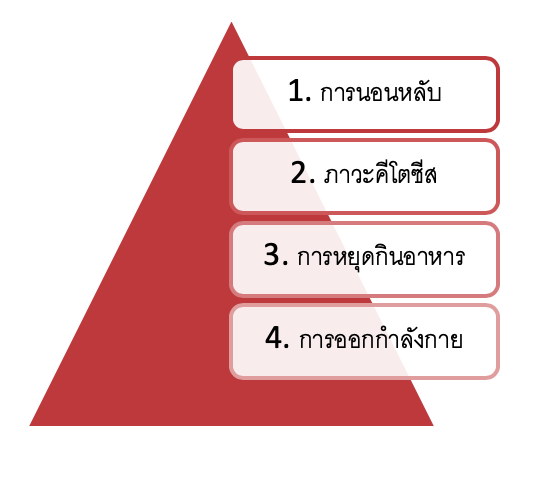
- Quality Sleep is the best rest for the body to repair abnormal cells. The optimal sleep time is from 10:00 PM to 2:00 AM (Golden Time).
- Entering Ketosis involves daily dietary control, focusing on high fats, followed by proteins, and minimizing carbohydrates to allow the body to burn stored fat for energy. The food ratio should be 70% healthy fats, 25% all types of proteins, and 5% carbohydrates of daily calorie intake.
- Fasting can be done intermittently each day or on specific days, assessing one's physical condition. The simplest fasting method is to stop eating from 6:00 PM to 7:00 AM. Fasting enhances mitochondrial, brain, immune, and digestive system functions, allowing the body to utilize stored fat more effectively, thus aiding fat reduction.
- Exercise is essential for increasing oxygen intake and eliminating unnecessary excess. Regular exercise for at least 25 minutes daily is sufficient.
If all four principles can be consistently followed, it will undoubtedly benefit health. Just maintaining regularity is enough.
The entire narrative began with the question of why COVID-19 patients with diabetes have such high mortality rates, leading to an exploration of the Warburg Effect in 1924. This effect earned Otto Warburg the Nobel Prize in 1931, and it took another 93 years for Johan M. Thevelein and his team to validate the Warburg Effect through 9 years of research. This has significantly impacted the cancer field today. Prof. Yasunori, who received the Nobel Prize in 2016, discovered the workings of autophagy related to cancer prevention, leading to the popularization of fasting principles today. While all this academic information may seem complex and challenging to apply in real life, the best lifestyle principle can be simply summarized as "living in harmony with nature and the environment is the best way to live." Let's start today!
"Reduce sugar intake to enhance the true sweetness of life."
ABOUT THE AUTHOR
ดร.ประเสริฐ ปิ่นงาม (Ph.D., TREES-A NC) วท.บ. สาธารณสุขศาสตร์ ม.มหิดล