Lessons from Plants: Adapting and Learning for Sustainable Development
Dr. Prasert Pinngam (Ph.D., TREES-A NC)
B.Sc. in Public Health, Mahidol University
“The illiterate of the 21st century will not be those who
cannot read and write, but those who cannot learn, unlearn, and relearn.”
Alvin Toffler
“The illiterate of the 21st century will not refer to individuals who cannot read or write, but to those who do not learn, are unwilling to forget what they have learned, and do not embrace new learning.” This quote from Alvin Toffler clearly reflects the philosophy of those who will survive in the future. Due to rapid changes in politics, economics, society, technology, and environmental conditions, traditional knowledge cannot dictate effective management methods as it once did. It is time to adapt and learn seriously with new knowledge. Among all living beings on this planet, we consider humans to have the best ability to adapt and learn. Over the past 200-300 years, the Industrial Revolution has led to the development of modern technology, transforming human lifestyles into more convenient ones, albeit at the cost of significant natural resource depletion, impacting the world and the environment like never before. Furthermore, economic development that neglects the importance of preserving local identities, such as the issue surrounding the Comprehensive and Progressive Agreement for Trans-Pacific Partnership (CPTPP), poses long-term negative effects. This raises the crucial question of whether we are on the right path regarding current development approaches. To avoid being part of the illiterate in the 21st century, we must revisit our development strategies, reflect on past mistakes, and determine what sustainable development should look like so that our descendants can learn the correct ways and collectively preserve this planet.
The First Land Invasion of Plants and Their Major Adaptation
Life on Earth began approximately 3.8 billion years ago with single-celled prokaryotes like bacteria. Multicellular organisms evolved about 1 billion years later, still residing in the sea. About 485 million years ago, the first land plants, known as liverworts, emerged, which are non-vascular plants.
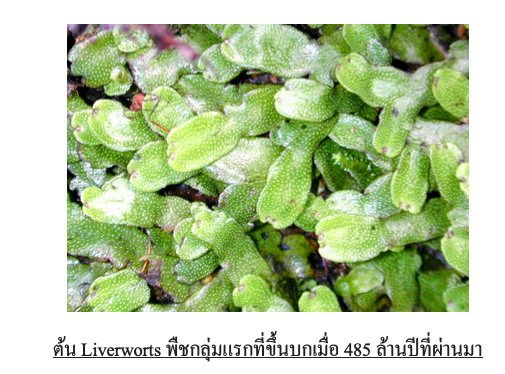
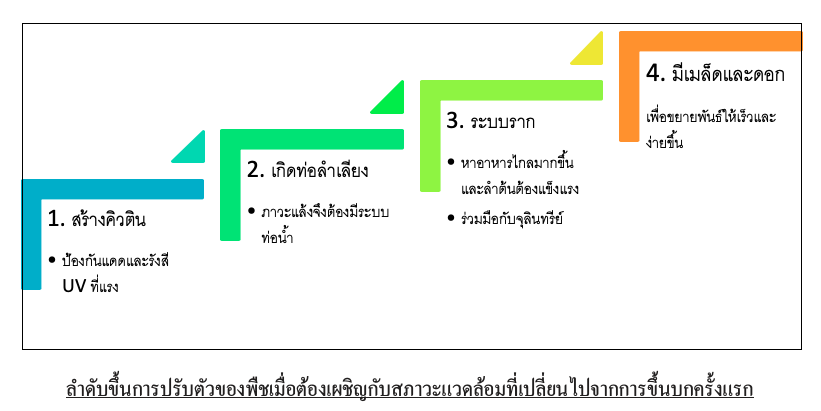
Initially, plants faced entirely different environmental conditions, including sunlight and UV radiation, without water to filter the light. Therefore, plants had to develop cuticles to protect against light and reduce water evaporation. Subsequently, they developed vascular systems to aid in water transport. The most significant turning point that allowed plants to thrive on land was the development of root systems and their symbiotic relationships with bacteria and fungi, known as symbiosis, enabling plants to obtain nutrients and grow rapidly. Eventually, they evolved from spore-producing to seed-producing plants, leading to the development of flowering plants as we see today.
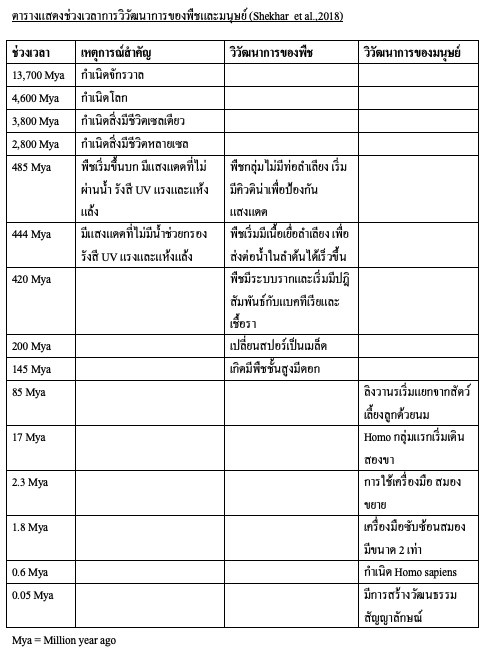
When plants first emerged on land around 485 million years ago, it took nearly 350 million years for them to adapt and evolve into the advanced plants we have today. After reaching their peak, it took another 60 million years for the ancestors of humans to diverge from other mammals. Another 60 million years later, the first Homo species began to walk on two legs. Not long after, we developed brain sizes that led to the emergence of Homo sapiens, capable of creating symbolic systems that set us apart from other Homo species. Overall, after the first Homo species, we spent 17 million years in the evolutionary process, but a significant leap occurred about 500 years ago with the development of technology and various conveniences, while simultaneously causing massive destruction of the planet's natural resources.
Current Adaptation and Learning of Plants
The theory of evolution, as we have learned, explains the mechanisms of past events through fossil studies, which may have some inaccuracies based on discoveries. If explanations exceed the truth from fossils, questions about their accuracy arise. Nevertheless, the conceptual frameworks or principles passed down to the present are crucial for further understanding. Currently, knowledge about the functioning of plants and other living organisms is advancing rapidly due to the development of tools that can analyze at the molecular level and gene sequencing. Research over the past 20 years has uncovered many new findings, often overturning previous knowledge, necessitating a relearning process. A clear example is the interdependent lifestyle between plants, microorganisms, and other living beings. Dr. Elaine Ingham studied the underground food web, explaining the relationships of underground life scientifically, leading to various forms of natural agriculture. Additionally, Dr. Suzanne Simard studied the life cycles in forests, resulting in the wood wide web, which fully explains the ecological living cycles, particularly the understanding of root systems and mycorrhizal networks. Notably, EMs and AMs, a type of mycorrhizal fungi, have lived in symbiosis with plant roots for over 400 million years. AMs receive housing and nutrients from plants while providing various nutrients to plants, stimulating their growth, and enhancing nutrient cycling. They also increase disease resistance and resilience in plants under stress conditions, with 80% of higher plants having a symbiotic relationship with AM fungi and plant roots (Harley & Smith, 1983; Smith & Read, 1997; Brundrett, 2009).

In addition to discovering relationships that have existed for over 400 million years, our understanding of the fundamental driving factors affecting plant life has also increased.

Overall, the fundamental driving factors for plants can be divided into two groups: abiotic factors (environmental) and biotic factors (related to living organisms). Both factors are interrelated, making the responses or adaptations of plants complex, closely resembling the mechanisms of humans and animals as we understand them. Nevertheless, we can illustrate the mechanisms of plant responses based on the main factors as follows:

All plant responses have research-backed evidence and have occurred within the last 20 years. Researchers widely acknowledge that human understanding of plants is still limited due to the restricted availability of modern tools and equipment. Thus, it can be said that the true secrets of plants and nature remain mysteries for humans to explore and learn further.
Lessons from Plants for Sustainable Development
After plants chose the path of living on land for the first time, opting not to use mobility to find food, unlike animals and humans, plants chose to adapt themselves to their environment and embraced a lifestyle of mutual dependence as their primary approach to sustain their species. This contrasts with humans, who prefer to modify the environment to suit our desires and promote competitive mechanisms that we believe will lead to our development and prosperity. When comparing the time since Homo sapiens walked the Earth 200,000 years ago with the 500 years since the advent of the scientific world, the conclusion suggests we should relearn. Compared to the 400 million years that plants have demonstrated, it is evident that humans are merely infants who cannot even walk independently. If we compare the Earth's age of 4.6 billion years to a 100-year lifespan, plants would be nearly 9 years old, while Homo sapiens would only be 1.6 days old, still in the incubator. This should be sufficient reason for us to learn the principles of life from plants, even if it contradicts our feelings. Over the 400 million years that plants have existed on this planet, the Earth has never suffered from their presence, unlike humans in the scientific world, who have raised many doubts about our actions in just 500 years.
We can only hope that our Homo sapiens can adapt and learn to embody the meaning of the term The illiterate of the 21st century, not leaving behind just documents for future generations to see. Let's continue to learn together.
“Lessons from Plants to Natural Agriculture”
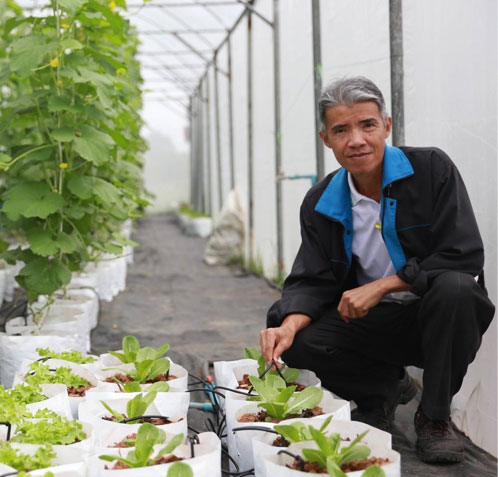
ABOUT THE AUTHOR
ดร.ประเสริฐ ปิ่นงาม (Ph.D., TREES-A NC) วท.บ. สาธารณสุขศาสตร์ ม.มหิดล