
The Plague and Cholera: Severe Epidemics in Siam
At the beginning of 2020, Thailand faced the 2019 Coronavirus (COVID-19) pandemic that was spreading worldwide. The Ministry of Public Health issued a notice regarding dangerous communicable diseases (No. 3), stating that the symptoms of the 2019 coronavirus infection, or COVID-19, include fever, cough, sore throat, shortness of breath, or pneumonia symptoms. In severe cases, respiratory failure may occur, potentially leading to death.
Throughout Siam's history, there have been several notable outbreaks of severe diseases, all of which were emergencies that shaped the development of Thailand's medical field up to the present day.
Ayutthaya faced the “Black Death”
The first severe disease in Siam was the plague or “the black death”. The plague spread across many regions worldwide, reaching Southeast Asia through trade with China. It can be said that the plague outbreak occurred around the time just before the establishment of Ayutthaya.
Circa 1350, or around 1893 BE, coinciding with the founding of Ayutthaya, was also a time of a major epidemic in world history. This outbreak was spread by rat fleas, which infested rats living under the holds of ships that traveled for trade in various lands. Plague patients exhibited symptoms that led to the term “Black Death,” as their bodies turned dark due to dead skin cells. Symptoms of those infected with the plague included egg-sized or orange-sized sores on various lymph nodes, followed by high fever and pain in the arms and legs. In severe cases, the pain became unbearable, leading to death.
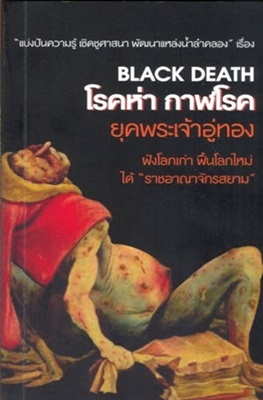
Ayutthaya and the surrounding regions in Southeast Asia experienced a plague outbreak due to trade with China. Historical evidence shows that the plague broke out in China around 1876 BE and then spread to Southeast Asia, with rat fleas hitching rides on rats under the ships. When the ships docked to unload goods, the rats would carry the fleas ashore, spreading the disease throughout the region. In Thailand at that time, many people died from the plague, as noted in the “Chronicles of King U-Thong fleeing the plague and establishing Ayutthaya in 1893 BE.”
During the plague outbreak, Ayutthaya's center was around Wat Phanan Choeng and Wat Yai Chaimongkol, located on the eastern side of the Ayutthaya island. The plague claimed the lives of many, including nobles, officials, and commoners. Survivors had to rebuild their homes and cities anew. Historical records indicate that the king of that era moved the royal residence from its original location to a new place called “Wieng Lek” near Wat Phutthaisawan. Once the plague subsided naturally in 1893 BE, corresponding to 1350 CE, a new name for the city was established to ward off bad omens: “Krung Si Ayutthaya.”
“The plague” is a severe epidemic from the past that is now considered eradicated from Thailand. The last recorded outbreak occurred in 1952 BE, with 2 reported cases and 1 death in Takli Market, Nakhon Sawan, marking the last report of the plague in Thailand.
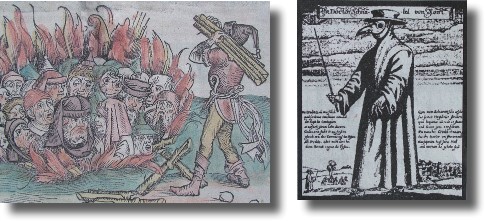
Left: During the major plague outbreak in Europe from 1347-1350 CE (1890-1893 BE), marginalized groups such as beggars, distant monks, and especially 'Jews' were suspected of being the cause. Many cities in Europe burned Jews alive (woodcut illustration from the Nuremberg Chronicle, first published in 1493 CE / 2036 BE). News 2/1
Right: The image of the “plague doctor” from Rome, treating the plague (woodcut by Paul First in Rome, Italy, circa 1656 CE / 2199 BE). News 2/2
The cholera epidemic in Siam claimed the lives of over 30,000 Thais
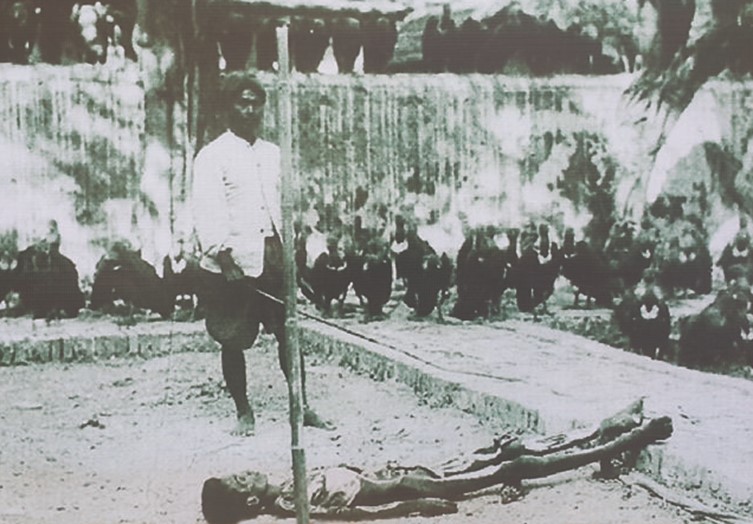
Image from Matichon Online, dated March 24, 2017
When discussing the outbreak of “cholera” in 1820 BE, it was sometimes referred to as the “vomiting disease” or “root disease,” which was severe and spread rapidly, claiming lives like never before. During that event, around 30,000 people died in Bangkok and nearby provinces.
Later, in 1850 BE, towards the end of King Rama III's reign, cholera broke out in Bangkok for about a month. English newspapers reported that the deceased were taken to Wat Sarakhet (2,765 bodies), Wat Tien Lane (now Wat Bophit Phimuk, 1,481 bodies), and Wat Bang Lamphu (Wat Sangwet, 1,213 bodies), totaling over 5,000 deaths.
Until in 1873 BE, during the early reign of King Rama V, cholera returned to outbreak again, and within just over a month, English newspapers reported the death toll on both the eastern and western sides reached as high as 6,660 people.
It is said that these events occurred at a time when medical treatment was not yet firmly established in modern medicine, and knowledge of hygiene was not widespread. Another contributing factor to the “cholera” outbreak was the lax regulations regarding international travel, allowing many to enter and exit easily, which led to foreigners unknowingly bringing in contagious diseases.
References: 1. Black Death, the plague during the reign of King U-Thong, discussion document "Sharing Knowledge, Honoring Religion, Developing Water Sources," organized by the Ministry of Culture, Friday Discussion Project, Faculty of Archaeology, Silpakorn University, College of Music, Mahidol University, and Matichon News, on July 9, 2010, at the National Theater (Small Theater), Bangkok.
2. Sujit Wongthes, "The Plague" during the reign of King U-Thong is the plague from China, dated June 3, 2009, Year 32, Issue 11407, Matichon Daily, column Siam Thailand.
3. Kwan Chai Damrongkwan. (2016). UNSEEN Disease Control Department, Historical Pathways and Memories. Nonthaburi: Knowledge Management and Disease Control Standards Research Institute, Disease Control Department, Ministry of Public Health.
And Hfocus, in-depth health system coverage.