Reflecting on the Past Coronavirus Crisis: What Has the World Lost?
The pandemic crisis caused by the coronavirus (Corona virus), now commonly referred to as COVID-19, which stands for Corona Virus Disease 2019, has created panic and concern across all sectors, particularly impacting the economy and public health. This is not the first time humanity has faced this strain of virus. TerraBKK will take us back to see how much economic damage the coronavirus has caused in the past.
Looking Back at the History of Coronavirus
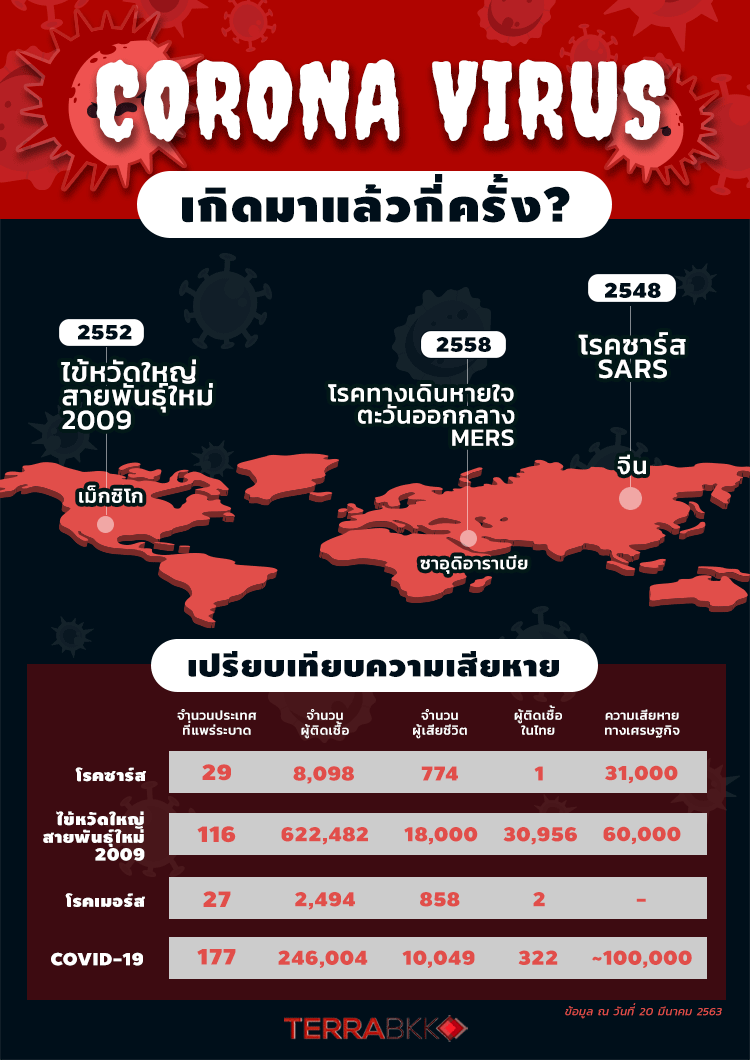
- 2002 - SARS (Severe Acute Respiratory Syndrome) - The coronavirus that affects the respiratory system first came to global attention in 2002, originating in Guangdong Province, China, and causing a severe outbreak worldwide in 2003, affecting 29 countries with 8,098 confirmed cases and 774 deaths, resulting in a mortality rate of 8%. At that time, this strain of coronavirus was known as SARS. In Thailand, only one case was reported, but the impact of SARS severely affected the economy and tourism. According to the National Economic and Social Development Office, SARS caused a drop in foreign tourists from April to June to 1.45 million, a decrease of 40.2%, leading to a loss of tourism revenue of about 31 billion baht.
- 2009 - H1N1 Influenza (Swine Flu) - After the world first encountered the coronavirus, it faced another outbreak ten years ago, starting in Mexico, known as H1N1 Influenza. The outbreak escalated to 116 countries, with the World Health Organization (WHO) reporting 622,482 confirmed cases and 18,000 deaths in 2009, resulting in a mortality rate of 28%. Although the death rate was lower than SARS, the spread was much more severe. In Thailand, there were 30,956 confirmed cases and 196 deaths, with the Kasikorn Research Center estimating that the H1N1 outbreak caused economic damage of about 60 billion baht.
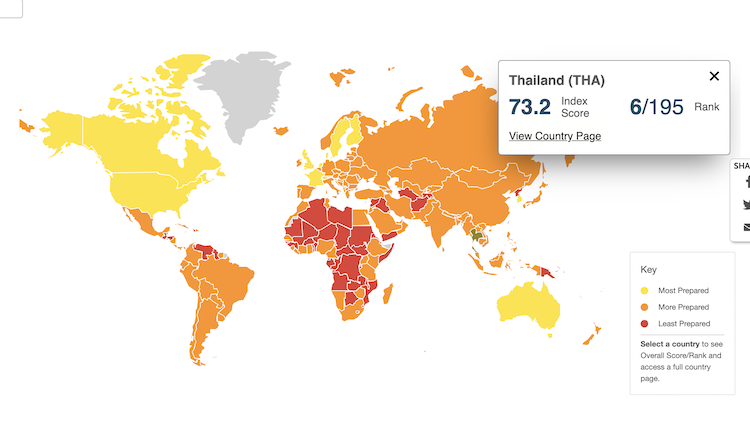
- 2015 - Middle East Respiratory Syndrome (MERS) - MERS was first identified in Saudi Arabia in 2012 and spread to 27 countries, with a total of 2,494 confirmed cases and 858 deaths, resulting in a mortality rate of 4%. MERS may not be as familiar to the Thai public as SARS or H1N1 Influenza because Thailand was minimally affected, with only 2 cases reported among an Omani and a Kuwaiti. In this year, not only did Thailand avoid significant impact, but the number of foreign tourists also increased to 29.92 million, a rise of 20.6% from 2014, which helped Thailand rank 6th in terms of preparedness for epidemic crises (Global Health Security Index).
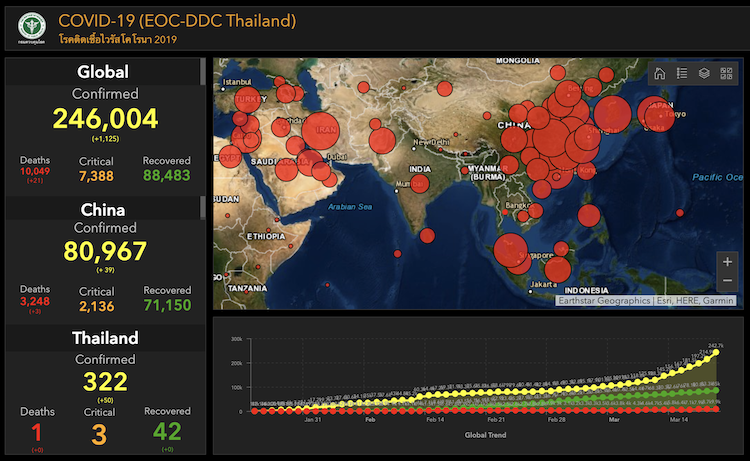
- 2019 - Coronavirus or COVID-19 (Corona Virus Disease 2019) - Just four years later, the coronavirus returned to humanity, with the first confirmed case in Wuhan, China. This outbreak represents the most severe escalation of the coronavirus in the past 17 years, affecting 176 countries worldwide. As of March 20, 2020, there were 246,004 confirmed cases and 10,049 deaths, resulting in a mortality rate of 4.08%. The severity of COVID-19 lies in its rapid spread, as the virus may not show symptoms for the first 7-14 days, leading to a continuous increase in cases and overwhelming healthcare systems. In Thailand, there were 322 confirmed cases and 1 death, with an estimated economic loss of about 100 billion baht already incurred.
Discussion
Follow breaking news Investment property articles on Facebook, click here.