Virtual Reality (VR), Augmented Reality (AR), and Mixed Reality (MR): Technologies of the Virtual World Leading to Profits in the Real World
Virtual Reality (VR), Augmented Reality (AR), and Mixed Reality (MR): Technologies of the Virtual World Leading to Profits in the Real World
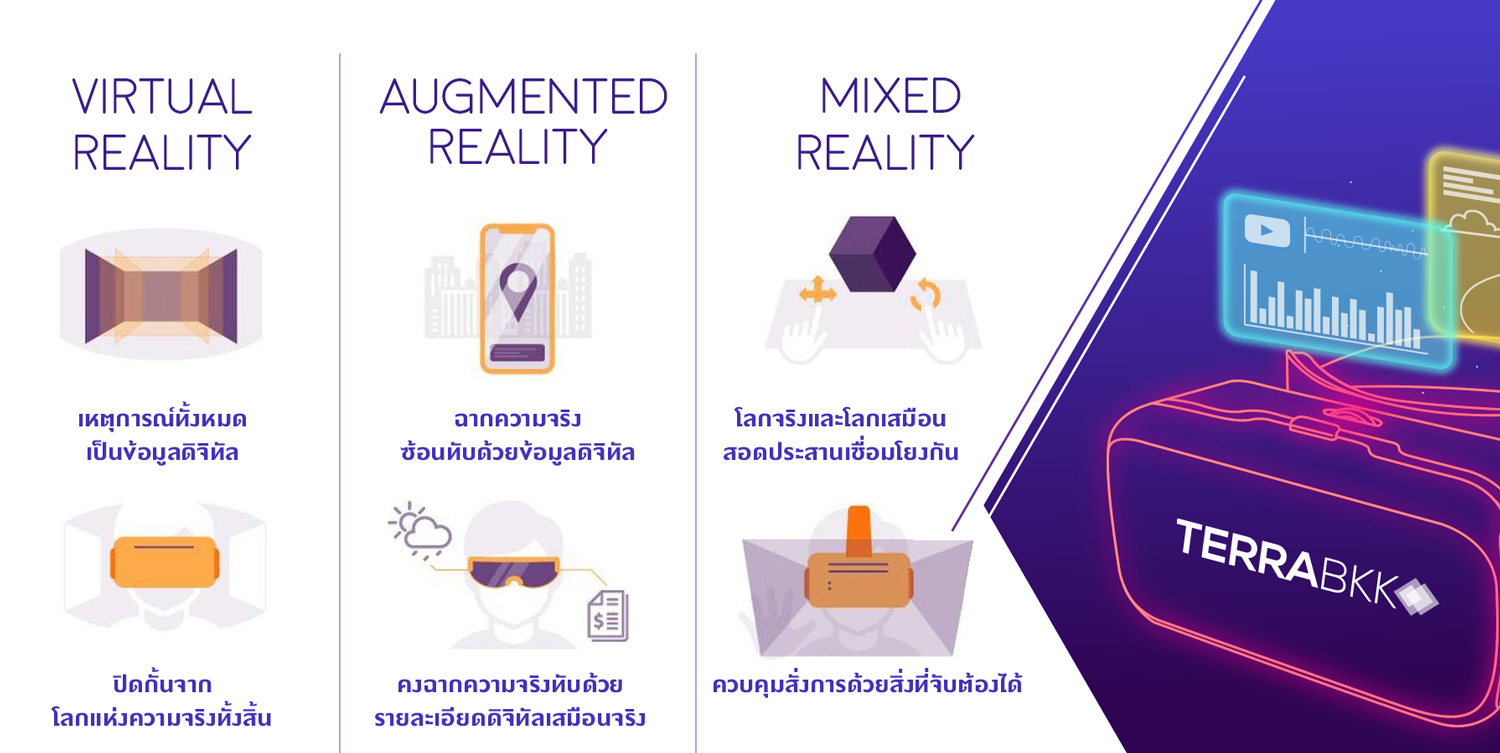
Is creating simulations and immersing oneself in a virtual world a reality? Ten years ago, it might have seemed like a joke or a scene from a science fiction novel. But not anymore. Today, we have technology that can create objects or even entire virtual worlds, akin to what we see in Sci-fi movies, through three types of technology: VR (Virtual Reality), AR (Augmented Reality), and MR (Mixed Reality). At this point, many may wonder: what are these three technologies, and how do they differ when they all create virtual worlds?
VR, or Virtual Reality, is the simulation of real environments to create a lifelike experience through visual, auditory, tactile, and even olfactory perceptions. It disconnects us from our current environment to enter a simulated one. To create a virtual world in VR, users typically wear a large headset known as a VR headset, which pulls them into the virtual realm, allowing them to interact with various elements within it. Although we cannot yet fully immerse a player's mind into the game as depicted in stories like Ready Player One or Sword Art Online, VR can still enable players to engage in games from a first-person perspective, making them feel as if they are truly inside the game. This virtual world can enhance the gaming experience across various genres, such as horror games developed by Thai creators like Home Sweet Home and Araya, where players can feel the terror through visuals and sounds, almost as if they are fleeing from ghosts in the game. Additionally, VR is also used for training employees in various fields. For instance, PIXO VR training utilizes VR technology to simulate factory work scenarios before actual hands-on work, reducing the risk of accidents and ensuring employee safety during training and real work.
Araya
POiiSED: https://youtu.be/t-2mZkumhzM
Ready Player One
Warner Bros. Pictures:https://youtu.be/PlpgcoR7kYk
PIXO VR Multi-user Virtual Reality Training Demonstration (Extended)
PIXO VR: https://youtu.be/APYz8n2H9RY
AR, or Augmented Reality, combines real environments with virtual objects simultaneously. The virtual objects can be images, videos, sounds, or various data processed from computers, mobile devices, tablets, or small wearable devices, allowing us to interact with the simulated elements. The primary function of AR is to project 3D images that react or appear through electronic devices like iPads or iPhones. Moreover, AR technology is also applied in education, such as simulating the operation of machinery or vehicles, and even projecting virtual images of historical figures to simulate their behaviors. A notable example of AR in gaming is Pokémon Go!, developed by Nintendo, which became a significant phenomenon among gamers worldwide. This game allows players to hunt and catch Pokémon in their vicinity by activating their mobile camera or tablet and scanning various locations on the map where Pokémon are located. This represents a significant step in utilizing AR technology in gaming, making it portable for play anywhere. Additionally, AR is also used in medicine, such as applying Augmented Reality technology in surgeries to display real-time information about patients' organs, like simulating ultrasound images to locate tumors within a patient's body, enhancing surgical accuracy and significantly reducing treatment costs.
Pokémon Go!
Trainer Tips: https://youtu.be/Sz3Duu9arfY
3D Visualization and Augmented Reality for Surgery: Top 10 Medical Innovations 2017
Cleveland Clinic: https://youtu.be/irs453Tf-2s
MR, or Mixed Reality, can be described as a system developed from a combination of AR and VR. It resembles AR more than VR, as MR brings virtual objects or worlds into the real world, allowing for direct interaction and real-time responses between the real and virtual environments. The key difference from AR lies in the perspective; when changing the viewpoint or distance, there are no visual changes. MR technology operates through head-mounted devices similar to VR, functioning as environmental sensors to calculate and display real-time results to the user and the surrounding 3D objects. This allows for the visualization of various structures of machinery, from intricate components to scanning for defects and alerting users immediately upon detection. Additionally, in the interior design business, MR can scan spaces and assess how much room is available for furniture placement, accurately simulating the structure of the furniture for trial positioning. While this aspect may seem similar to AR, MR offers greater dimensionality and detail. An example of MR usage in Thailand is the real estate developer Sansiri, which collaborated with AIS and Microsoft to implement MR technology in their MR Sales Gallery, allowing customers to experience a virtual sample room interactively without visiting the actual sample room, thereby increasing sales opportunities beyond just distributing brochures or talking to representatives.
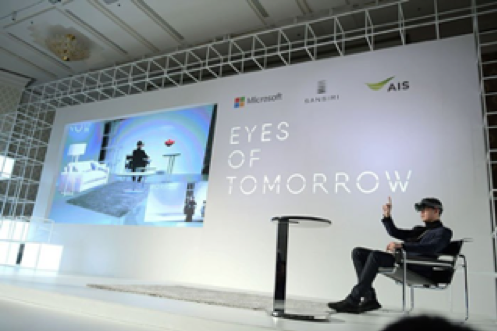
Source :https://techsauce.co/news/mixed-reality-sales-gallery-powered-by-sansiri-x-microsoft-x-ais
Microsoft HoloLens: Mixed Reality in the Modern Workplace
Microsoft HoloLens: https://youtu.be/EIJM9xNg9xs
Envisioning the Future with Windows Mixed Reality
Windows: https://youtu.be/2MqGrF6JaOM
The examples provided illustrate that the world today is evolving rapidly, and technologies like VR, AR, and MR are no longer distant concepts. They highlight the importance of understanding VR, AR, and MR technologies to differentiate from competitors and enhance consumer experiences. Technology is no longer out of reach; businesses must study and integrate these technologies to meet consumer demands that surpass competitors, as well as improve internal efficiency. For instance, using VR technology for employee training before actual work can mitigate risks associated with hazardous jobs, allowing inexperienced workers to learn and experiment more safely than traditional training methods. Furthermore, technology plays a crucial role in reducing management costs, production costs, and optimizing personnel utilization within organizations, leading to strategic success and a positive organizational image.