"Stroke"... Know Before It Happens, It Can Be Prevented
"Stroke"... Know Before It Happens, It Can Be Prevented
The severity of a disease that can take lives often comes unexpectedly. Stroke is another condition that gives no prior warning, but we can prevent it by maintaining our health and keeping our bodies strong.
Stroke can be classified into three types: (1) Ischemic Stroke caused by the deterioration of blood vessels due to the accumulation of fat and calcium deposits in the inner walls of the arteries, leading to narrowing and rigidity, accounting for about 70–85%; (2) Hemorrhagic Stroke, which involves bleeding in the brain or its membranes, damaging brain cells and causing brain tissue death, often found in individuals with high blood pressure and fragile, bulging blood vessels, accounting for about 15–30%; (3) Transient Ischemic Attack (TIA), similar to a stroke but with symptoms lasting no longer than 24 hours, is an emergency that requires immediate medical attention due to the risk of paralysis, accounting for about 15%. However, this disease can be prevented by regularly monitoring bodily abnormalities and continuously adjusting risk factors.
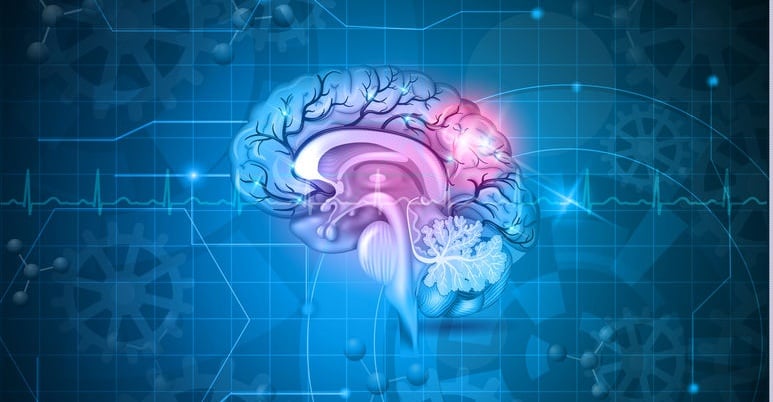
The symptoms of stroke can vary from person to person, depending on the location of the brain affected. Today, the Thai Health Promotion Foundation presents 10 warning signs that if someone close to you exhibits these symptoms, they should be taken to the hospital for immediate diagnosis.
- Weakness on one side of the body
- Numbness on one side
- Loss of balance
- Loss of vision in one half of the visual field
- Inability to see in one or both eyes
- Double vision
- Slurred speech, difficulty swallowing, drooping mouth, stiff tongue
- Language difficulties, incoherent speech, inability to speak, trouble finding words, misuse of language, inability to calculate
- Dizziness or vertigo
- Severe headache unlike any experienced before
The frightening aspect of this disease is that it has no warning signs. If any of the aforementioned symptoms occur, take the person to the hospital immediately for diagnosis and treatment. In cases of ischemic stroke, treatment may involve administering clot-dissolving medication, which is most effective if the patient sees a doctor within three hours of symptom onset. For hemorrhagic stroke, surgical intervention may be necessary.
Stroke can recur if preventive measures and lifestyle changes to control risk factors are not implemented. Therefore, to maintain health and prevent recurrence, one should:
- Regularly monitor blood pressure
- Control blood fat and sugar levels within appropriate ranges
- Quit smoking
- Reduce salt intake
- Avoid high-fat foods, especially saturated fats
- Consume fruits and vegetables daily
- Maintain a healthy weight
- Exercise regularly (at least 2-3 times a week)
- Consistently take prescribed medications to prevent recurrent strokes
It is crucial to be aware of "how to help those around you or those showing symptoms recognize that if they have a drooping face, numbness in limbs, or slurred speech, these are warning signs of stroke, and they must be taken to the hospital as quickly as possible" to give the patient a better chance of survival and returning to a normal life.
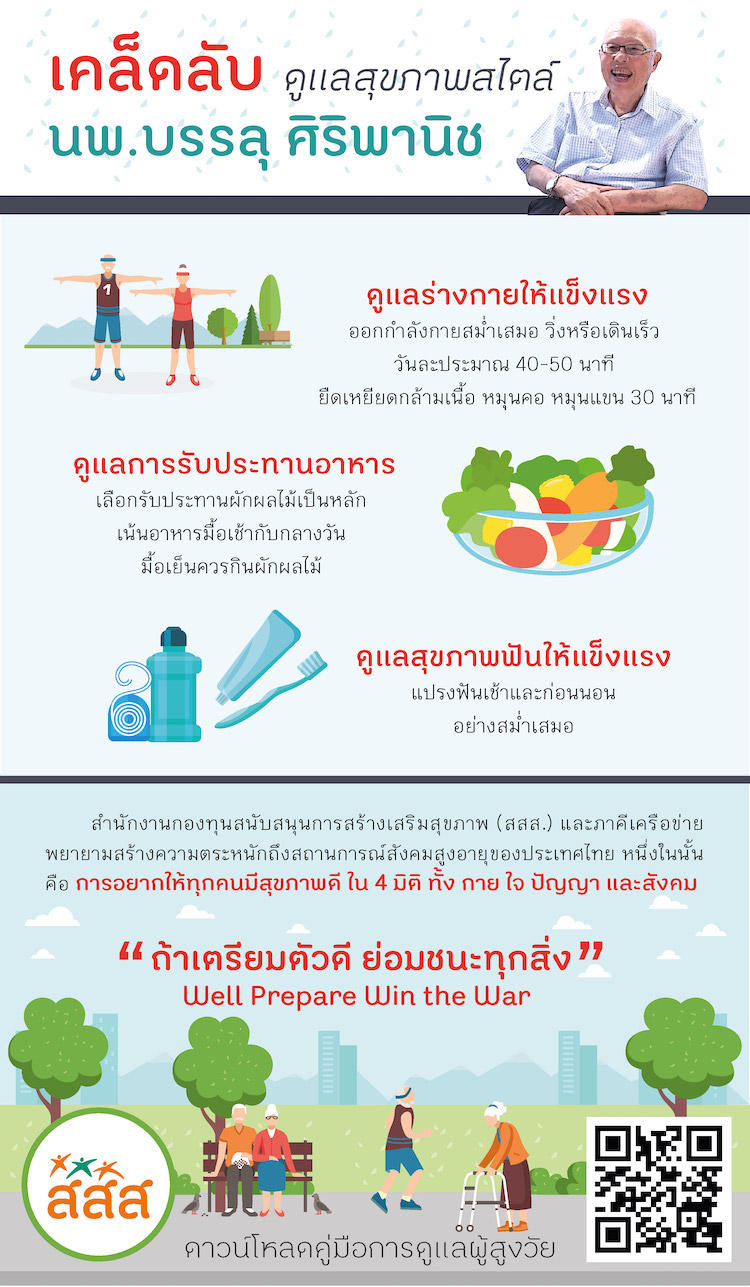
"If you prepare well, you will conquer everything" Dr. Banlu Siriphanit, President of the Thai Institute for Research and Development of the Elderly, and National Elderly Person of the Year 2019, shared experiences on how everyone can plan and prepare early for aging and become a healthy elderly person free from diseases as follows:
- Maintain a strong body by exercising regularly, running or brisk walking for about 40-50 minutes a day, and stretching muscles, rotating the neck and arms for 30 minutes.
- Watch your diet by primarily consuming fruits and vegetables, focusing on breakfast and lunch, and choosing fruits and vegetables for dinner.
- Maintain healthy teeth by brushing at least twice a day, in the morning and before bed, consistently.
It is evident that Dr. Banlu's recommendations align with the principles of preventing recurrent strokes, emphasizing that self-care leads to a strong body and longevity. Additionally, the Health Promotion Fund encourages Thais to reduce sugar, fat, and salt with a 6:6:1 formula: no more than 6 teaspoons of sugar, 6 teaspoons of oil, and 1 teaspoon of salt per day, while also shifting to a healthy diet with a 2:1:1 formula: two parts vegetables, one part rice or starch, and one part lean meat. Besides eating well, regular exercise, adequate rest, avoiding alcohol and smoking will keep you away from stroke and other non-communicable diseases (NCDs).
Thank you for the information from www.thaihealth.or.th