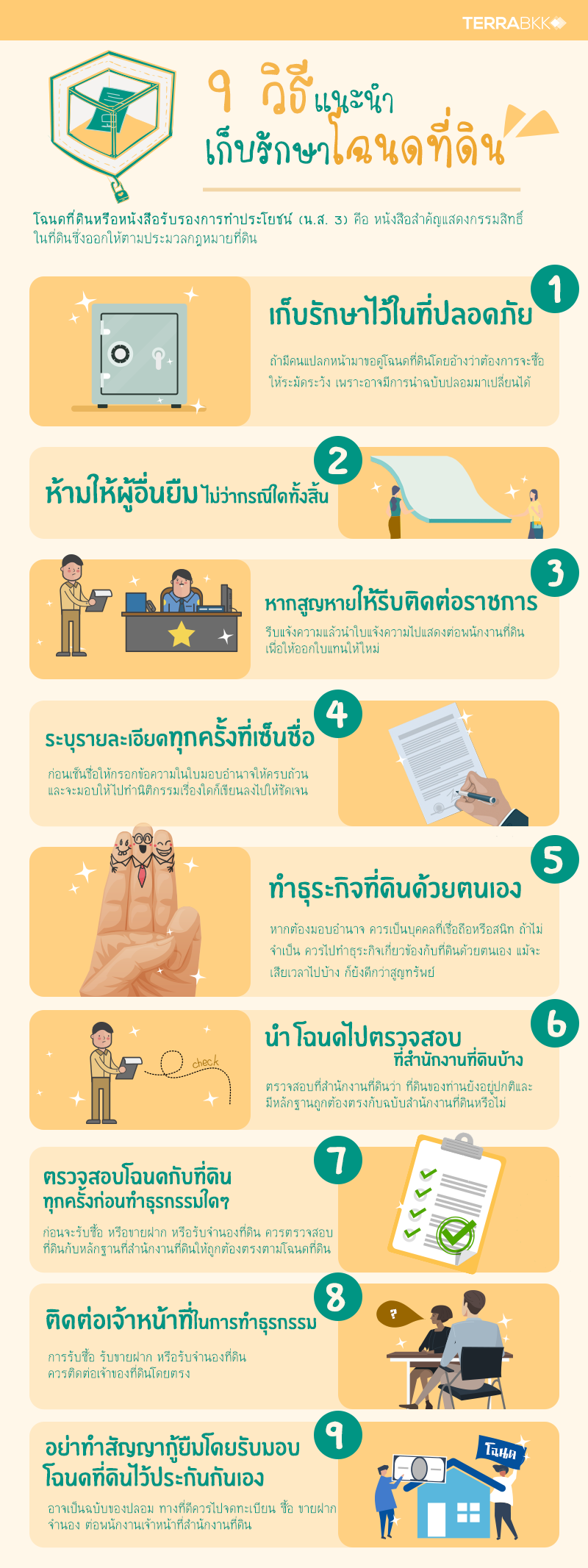
9 Tips for Safeguarding Land Title Deeds
Recommended Practices
1. Keep your land title deed or certificate of land use (N.S. 3) in a safe place. If a stranger asks to see your land title or N.S. 3, claiming someone wants to buy it, be cautious, as fraudsters may attempt to swap it with a counterfeit.
2. Do not lend your land title deed or N.S. 3 to anyone under any circumstances.
3. If your land title deed or N.S. 3 is lost or stolen, report it to the police immediately and take the report to the land office to request a replacement.
4. Never sign a power of attorney without filling in the details completely. Before signing, ensure all information on the power of attorney is filled out, and clearly state what legal actions it pertains to, such as selling or transferring ownership.5. Consider carefully who you grant power of attorney to. It should be someone you trust or know well, such as a family member. Avoid giving power of attorney to someone unfamiliar. If possible, handle land-related matters yourself for safety and convenience, even if it takes more time, as it is better than risking your assets.
6. If you have free time, check your land title deed N.S. 3 at the land office to ensure your land is in good standing and that the records match the official documents.
7. Before buying, selling, or mortgaging land, verify that the land matches the evidence in the land title deed or N.S. 3. If in doubt, check the records at the land office first.
8. For certainty in buying, selling, or mortgaging land, contact the landowner directly.
9. Do not create a loan agreement using the land title deed or N.S. 3 as collateral, as it may be a counterfeit. It is best to register the purchase, sale, or mortgage with the land office staff to ensure it is correct and secure.