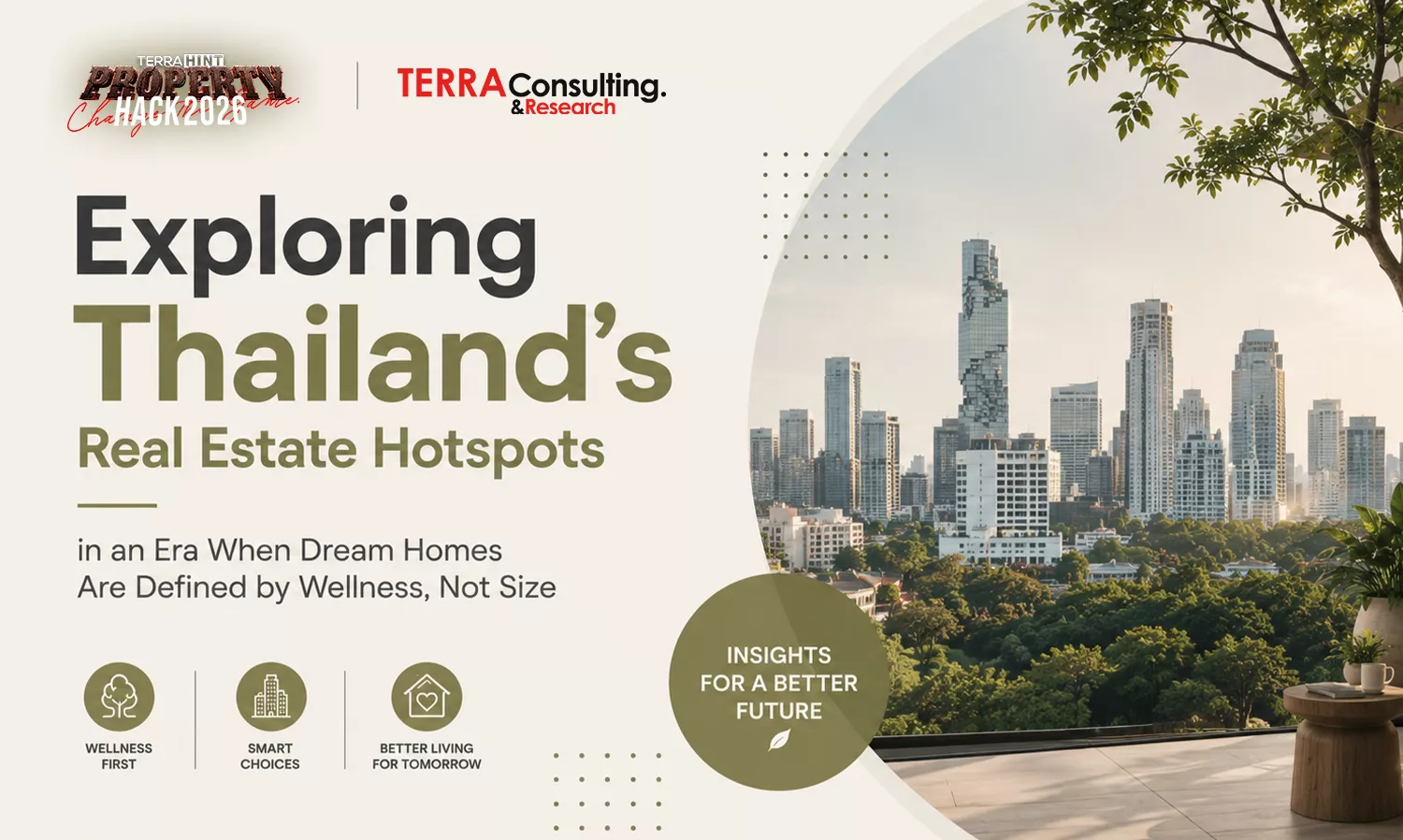
Exploring the Thai Real Estate Landscape: In the Era Where 'Dream Homes' Are Not About Size, But About Wellness Living
Despite the overall economic situation and consumer confidence being weak, leading to various challenges in the Thai real estate market,
there are still opportunities within the Thai real estate sector. One clear trend is the behavior of consumers in choosing locations and residences, which aligns with the concept of living for well-being or Wellness Living, and the science of quality longevity. This path has become a 'lifeline' and a 'way forward' with high potential for the new era of Thai real estate.
Key Locations in Bangkok
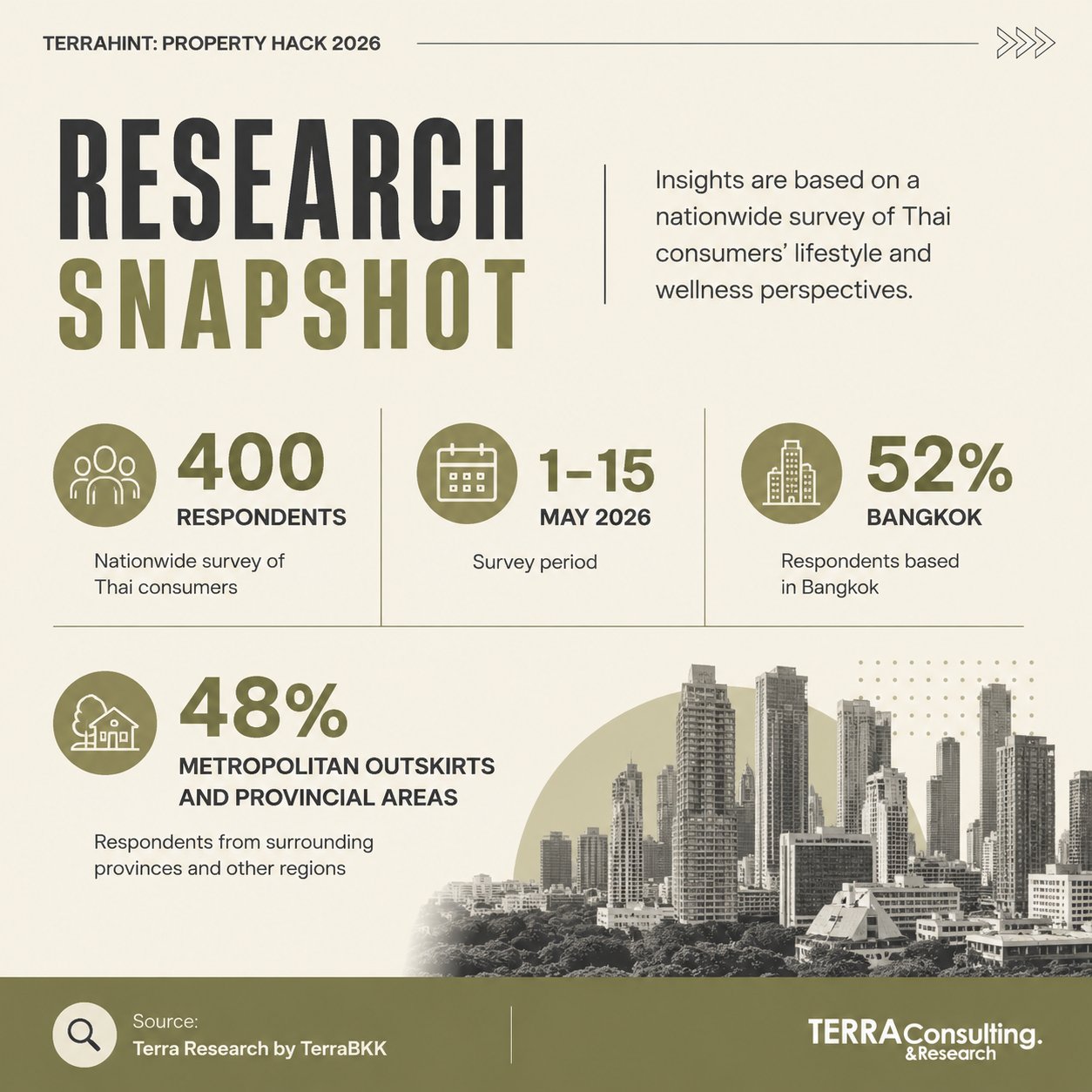
To truly engage with modern consumers who prioritize mental and physical health, it is essential to listen to their feedback. According to research from Terra Research by TerraBkk, which surveyed 400 people from May 1-15, 2023, covering areas across the country, 52% of respondents were from Bangkok, while 48% were from surrounding areas and provinces. The findings indicate that, from a physical perspective, consumers with high wellness indices prefer locations in Bangkok and its surrounding areas, including central urban areas, suburbs, and easily accessible outskirts, such as:
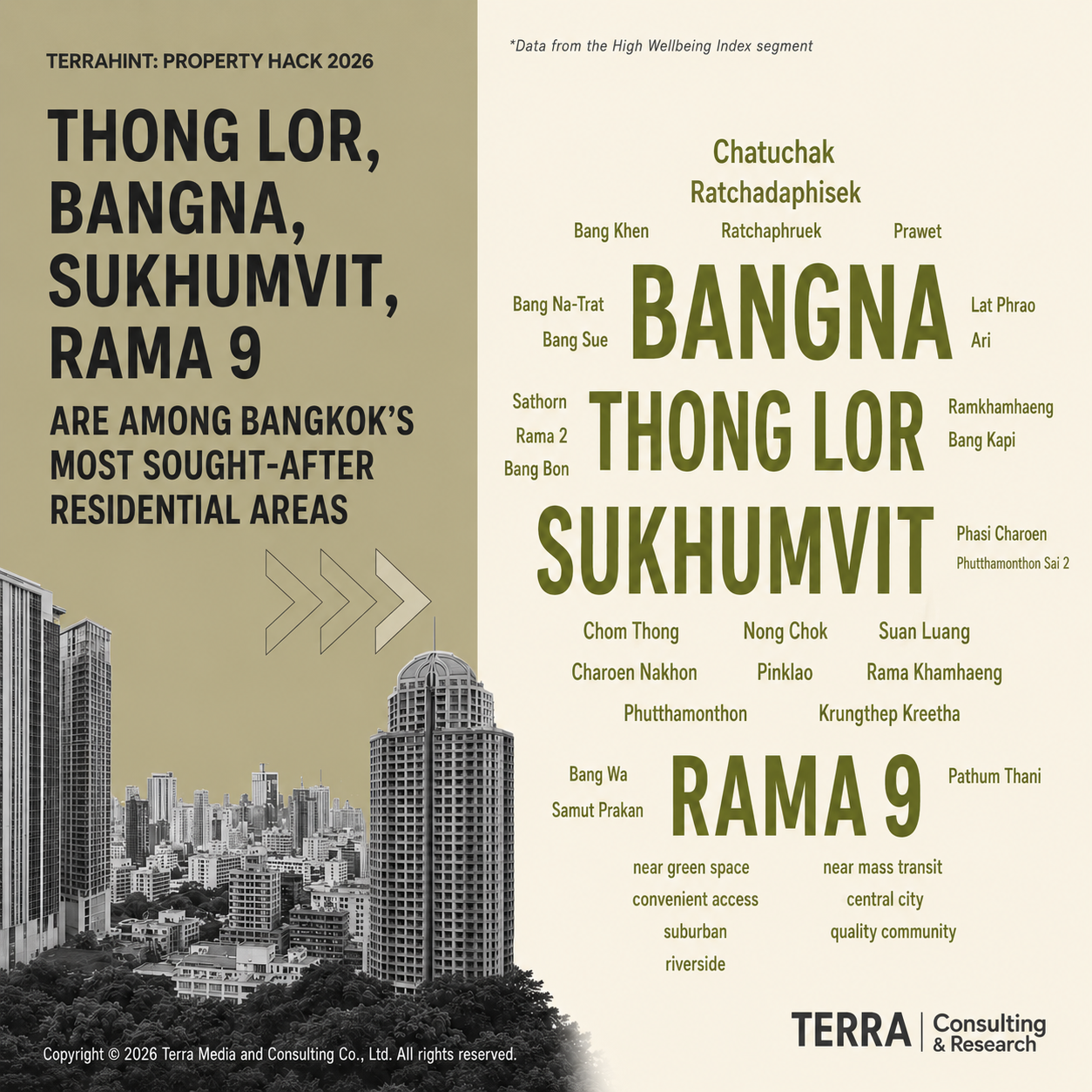
- Bang Na is a location that consistently generates high sales for single-family homes due to its spacious area and strong alignment with wellness needs.
- Sukhumvit and Thonglor are convenient central urban locations with a strong rental market, offering high returns on rental investments.
- Rama 9, Chatuchak, Ratchadapisek, Ratchaphruek, Prawet, and Bang Khen are also highly sought after, as consumers in this group do not necessarily insist on being in the city center, but prefer proximity to green spaces and essential amenities.
In addition to location, modern consumers equally value “the search for quality communities”. The same survey revealed that the definition of a quality community for today's consumers includes respect for each other's rights and differences, a society where everyone coexists with understanding, kindness, and a sense of safety in life and property.
If developers can create projects that incorporate these wellness concepts, they will likely see a rapid increase in sales.
From 'Prime Locations' to 'Wellness Living'
The trend of choosing locations that emphasize green spaces and safety reflects that consumers are no longer just looking for a specific location or luxury; this represents a new S-Curve that has formed and grown into the concept of living for well-being (Wellness Living), which addresses the need for quality longevity.
The same survey revealed an interesting statistic: 93% of Thais prioritize health, and as they age, they place even greater importance on it. About 43% of Thais spend an average of 1,000-3,000 THB per month on health-related expenses, including fitness services, healthy food, vitamins, health check-ups, or wellness activities.
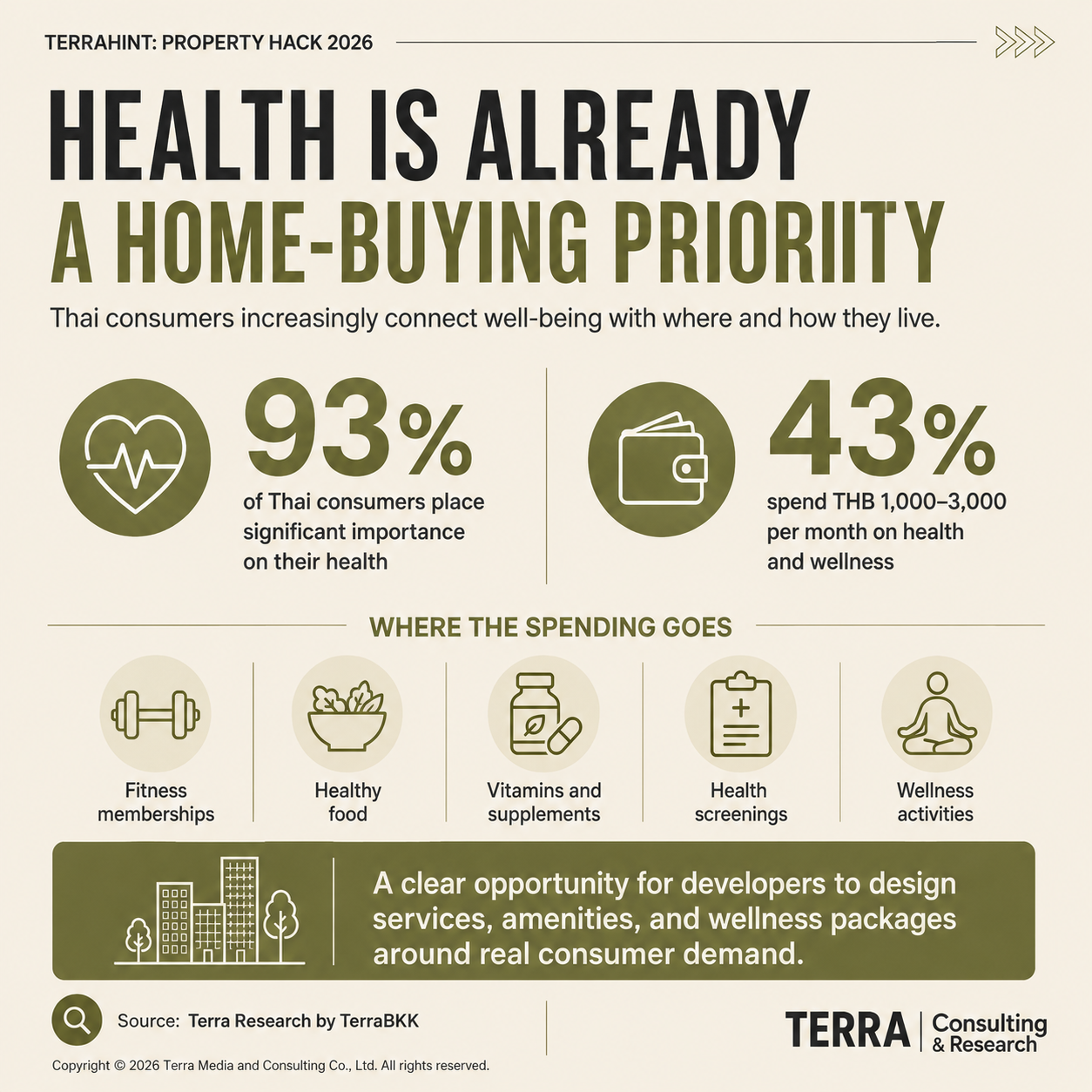
This data can help real estate developers calculate and design the pricing structure for health services or develop wellness care packages that align with the actual purchasing power of customers in each segment.
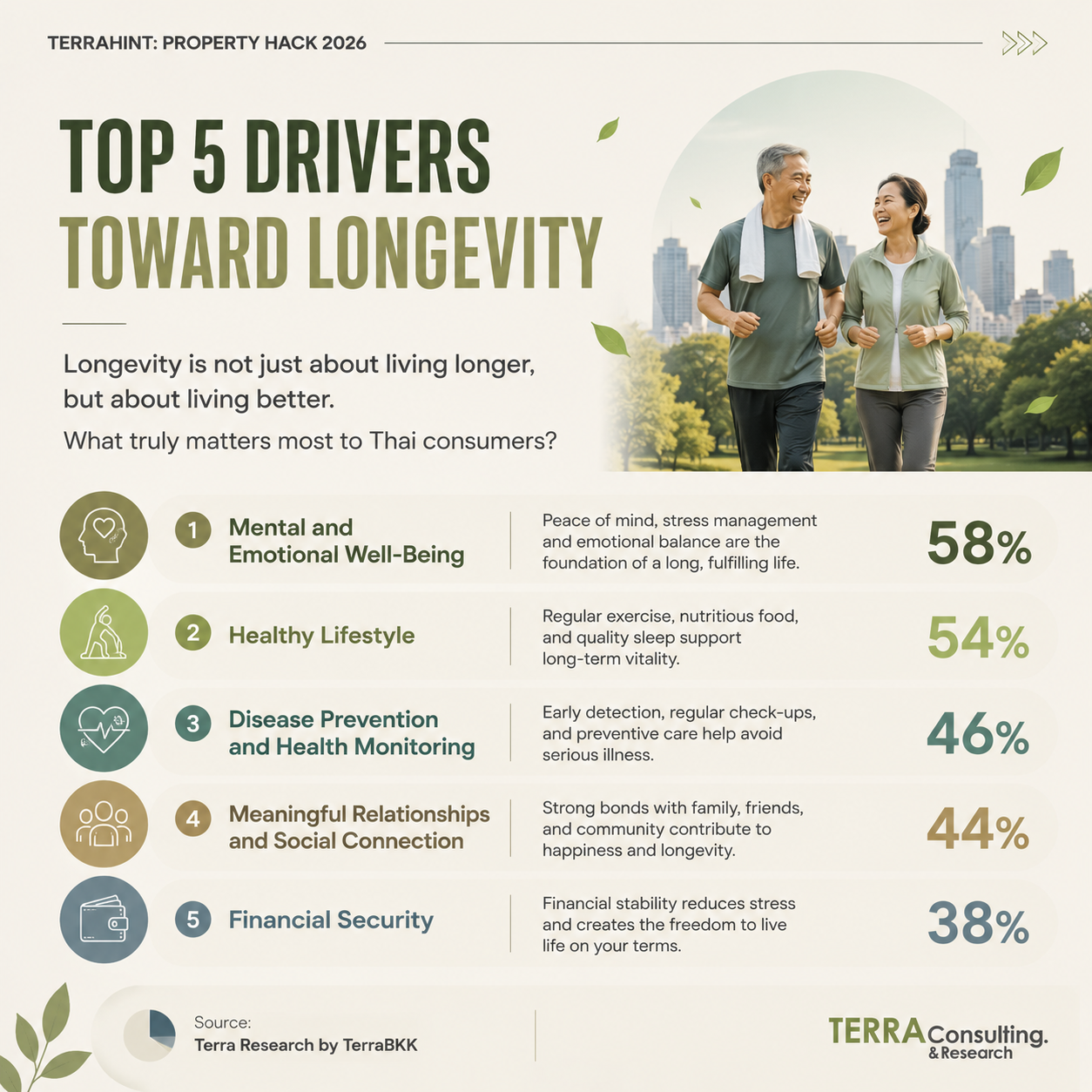
When delving deeper into the concept of Longevity, it becomes clear that consumers see its true meaning not just as living a long life in terms of years, but as maintaining good health and strength both physically and mentally over the long term, being self-reliant, and enjoying a good quality of life at every stage of life. The most important factors leading to Longevity, according to consumers, include:
- 1. Mental and emotional health: 58%
- 2. Regular exercise: 47%
- 3. Quality sleep: 43%, Good nutrition: 42%
- 4. Healthy environment: 37%
This data strongly confirms that mental and emotional health is the starting point and the most crucial aspect of achieving quality longevity.
Therefore, creating modern housing must shift from merely focusing on physical perfection to designing spaces that can nurture and heal the mind, reduce stress, and create a sense of calm and relaxation for residents every day.
How Much Does 'Wellness Living' Affect Purchase Decisions?
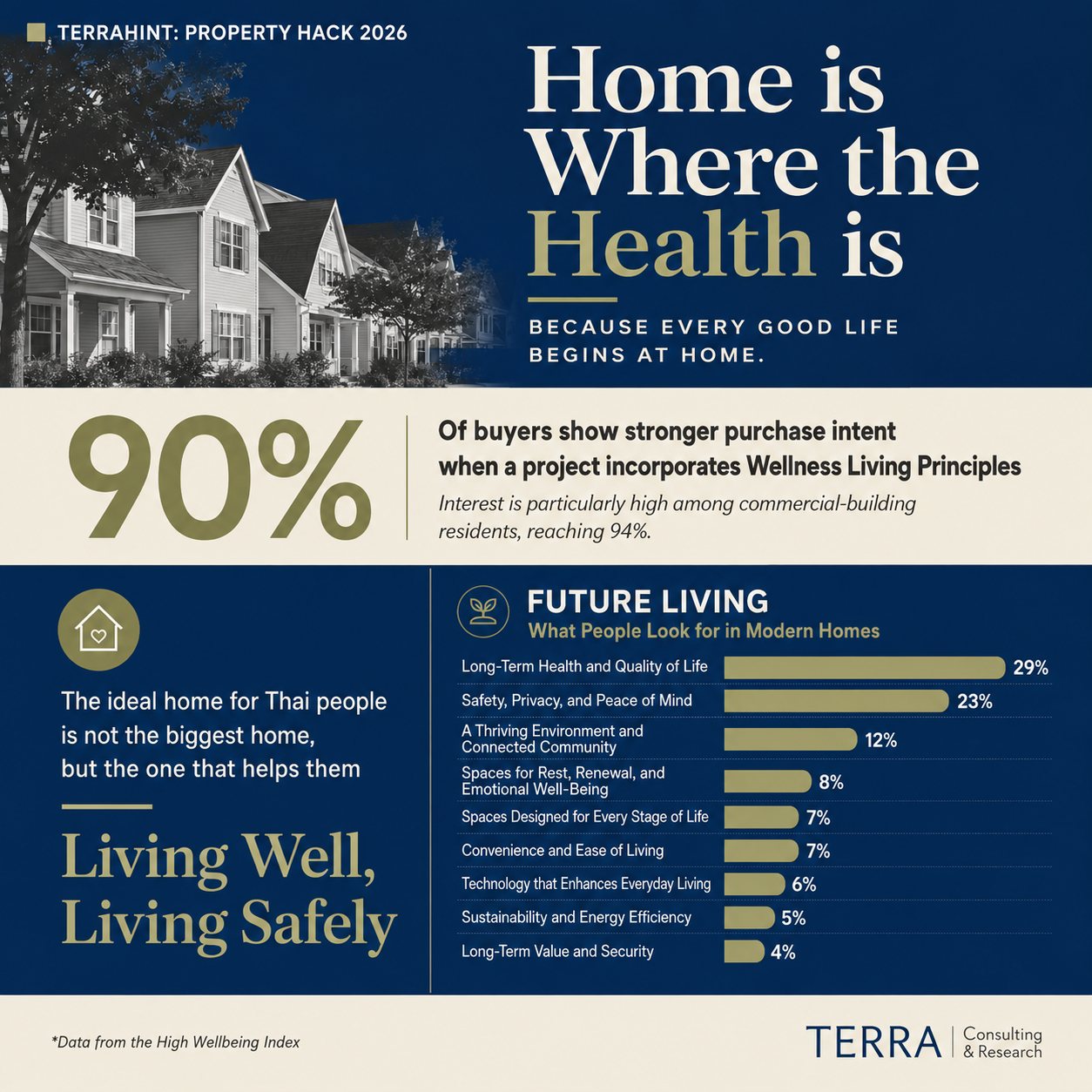
The connection between good health and housing has intensified to the point where 90% of consumers are more likely to be interested in and decide to purchase a residence if the project incorporates Wellness Living concepts into its design and services, especially among those living in commercial buildings or townhouses, with interest reaching 94%.
When considering what consumers are looking for in modern homes, it becomes clear that the definition of a dream home is not about size, but about a home that promotes health and safety. About 29% focus on health and long-term quality of life, while 23% prioritize safety, privacy, and peace of mind, and 12% value a good environment and community.
What Kind of 'Wellness Living' Do Residents Want?
If developers can decode these needs, they can transform them into tangible functions and create a significant competitive advantage in the market.
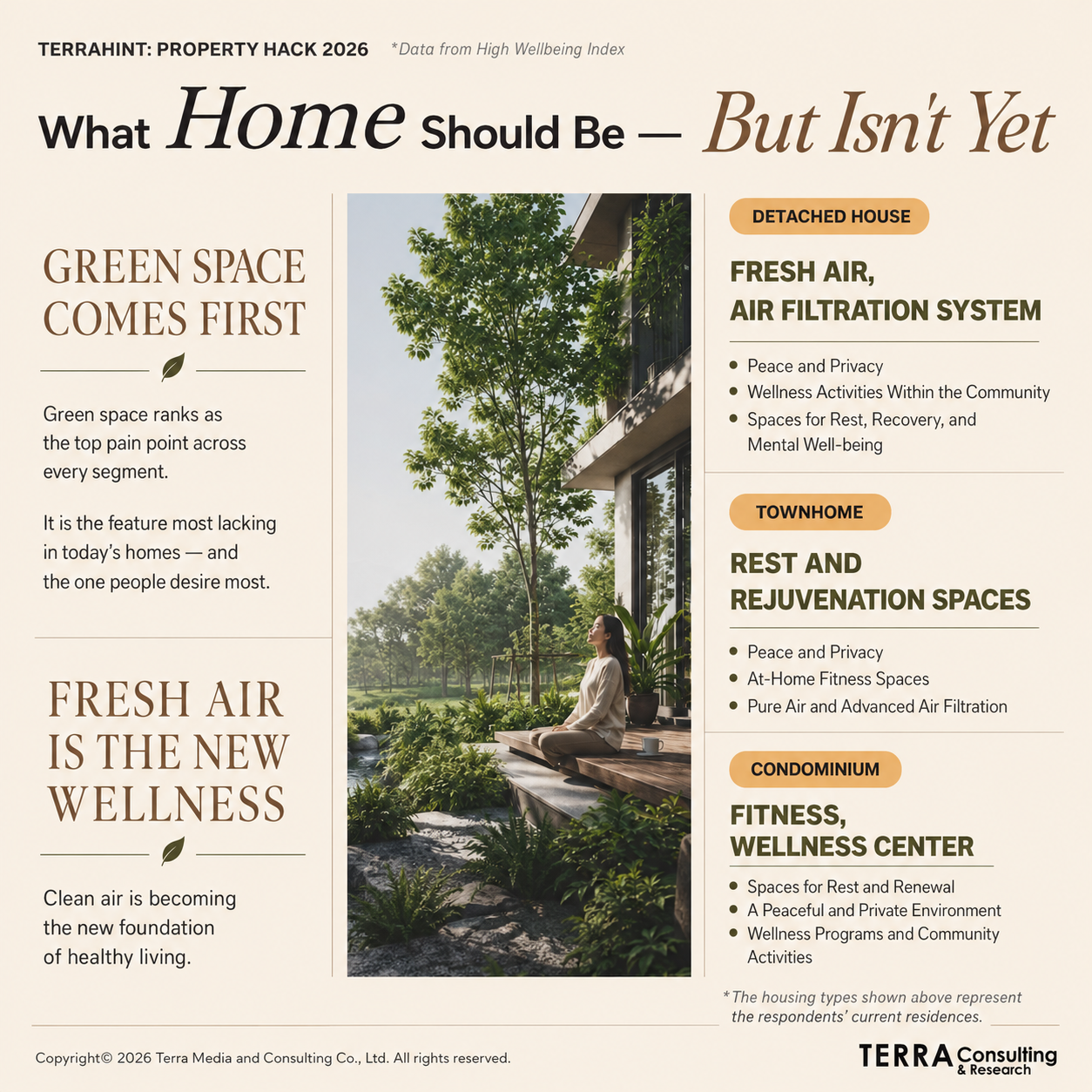
However, looking back at the current reality, there is still a significant gap between what consumers want and what homes currently offer in every segment, particularly regarding green spaces, which are currently lacking and highly desired by consumers.
Increasing green spaces is not just about landscaping for aesthetics but about creating a small ecosystem that helps heal the mind and draws residents closer to nature.
In addition to green spaces, fresh air is becoming “FRESH AIR IS THE NEW WELLNESS,” as modern consumers prioritize natural fresh air and efficient air circulation systems over just conventional air conditioning.
When examining the current types of residences, specific demands emerge:
- Single-family homes: Residents desire fresh air, effective air filtration systems, tranquility, privacy, health-promoting activities within the project, and spaces for relaxation to rejuvenate the mind.
- Townhomes: Residents prioritize spaces for mental rejuvenation, tranquility, privacy, and exercise areas within the home.
- Condominiums: Residents look for fitness centers or wellness facilities with standards within the project.
Understanding the differences among these housing groups will help developers design and deliver housing innovations that resonate more closely with consumer needs.
This direction not only helps the business sector navigate through the adjustment period but also serves as a bridge to develop real estate that genuinely fosters well-being and happiness in the long term.