Following the earthquake in central Bangkok, concerns about building safety have resurfaced as a significant issue! The seminar "Property Hack 2025: Real Estate in the Era of Earthquakes - In-Depth Insights, Quick Adjustments, and Preparedness for All Tremors" will delve into every crucial aspect, including the sources of earthquakes in Thailand, the likelihood of recurrence, the actual impacts on high-rise buildings, and most importantly, concrete strategies for real estate businesses and building owners to respond securely and effectively, turning challenges into future opportunities.

The event "Property Hack 2025: Real Estate in the Era of Earthquakes - In-Depth Insights, Quick Adjustments, and Preparedness for All Tremors" is a collaboration between the Thai Real Estate Association, the Nonthaburi Real Estate Trade Association, and Terra Media and Consulting Co., Ltd. Its purpose is to exchange and disseminate valuable knowledge and understanding for members of the real estate business and related industries, serving as a tool to elevate the real estate sector to operate efficiently and in line with current conditions.

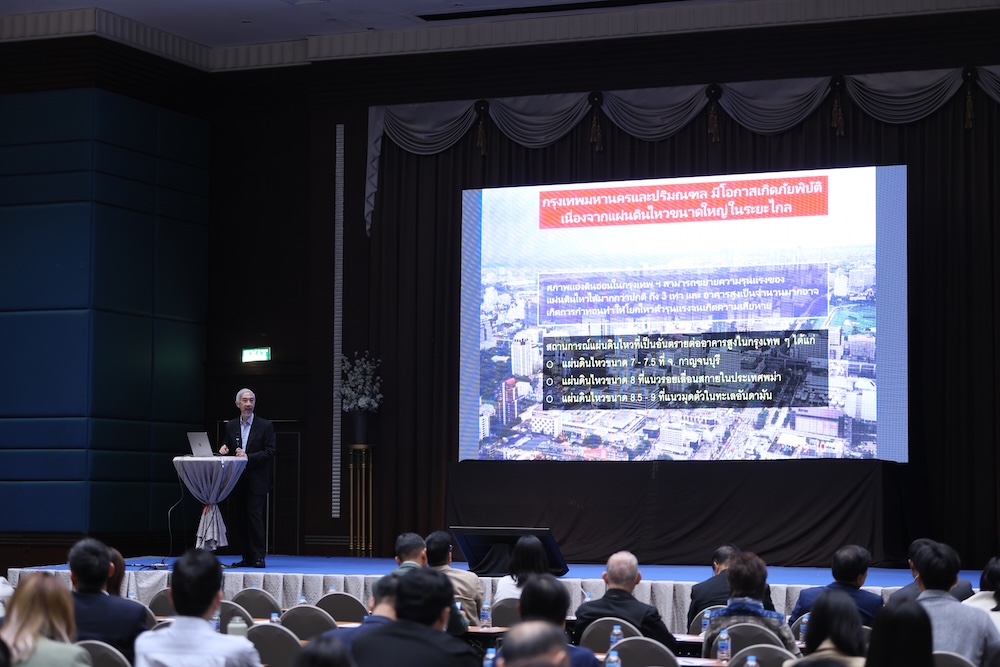
Among the topics discussed, “Bangkok on the Fault Line: Strategies for Building Safety and Transforming Real Estate Opportunities” is one that has garnered significant interest, as many are concerned whether Bangkok will face such events again and how buildings should prepare. The esteemed Prof. Dr. Pen-ung Vanichchai, Director of the Earthquake Research Center at the Asian Institute of Technology (AIT), will clarify the impacts of earthquakes on high-rise buildings in Bangkok and provide guidance on preparedness for the future.


The Chance of an Earthquake in Central Bangkok is Only 10%

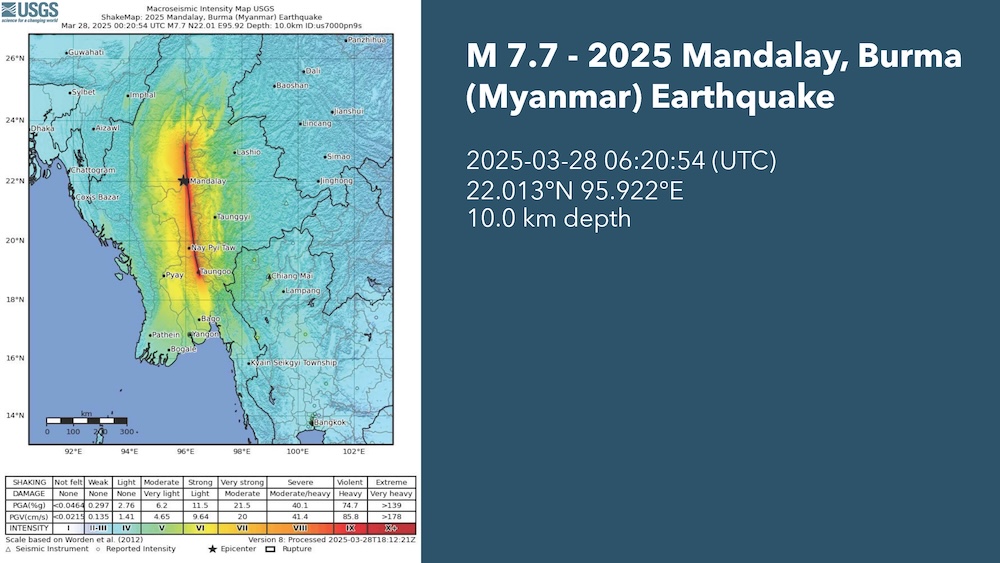
Prof. Dr. Pen-ung Vanichchai began by providing an overview of the origins of this earthquake, noting that Thailand and nearby areas, especially around Myanmar, the Andaman Sea, and northern Thailand, experience seismic activity. However, Bangkok does not have a direct earthquake source beneath it but is affected by tectonic movements from distant fault lines. Thailand is situated on the Sagaing Fault, which runs from central Myanmar and is one of the three most dangerous fault lines in the world, capable of producing earthquakes of magnitude 7.

The earthquake on March 28 was caused by the sliding of the Sagaing Fault from Mandalay to Naypyidaw, a distance of 300-400 kilometers, resulting in severe damage in Myanmar. Notably, the impact on high-rise buildings in Bangkok, located over 1,000 kilometers away, was significant, despite the areas in between experiencing minimal effects.

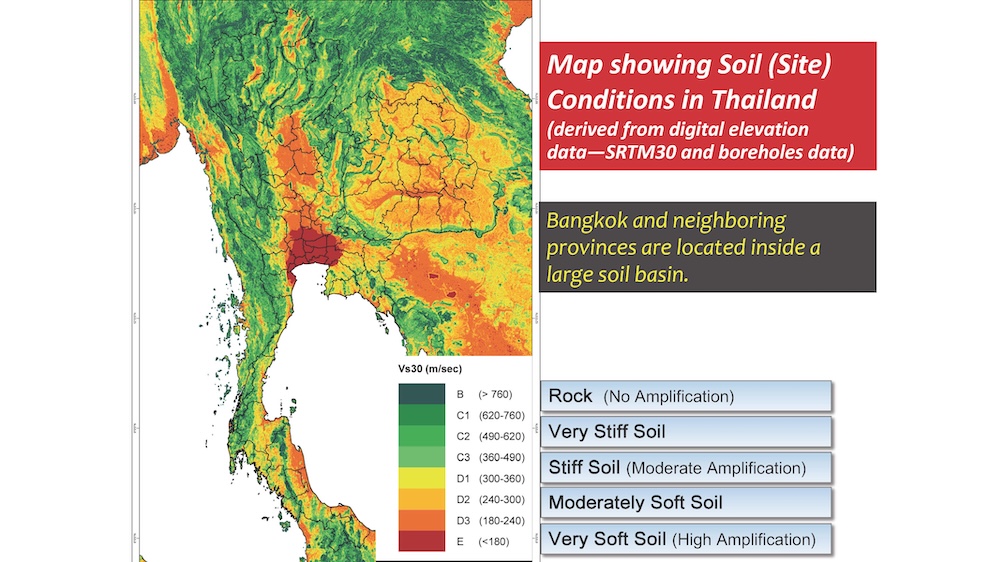
The significant factor contributing to the severe impact on Bangkok is the presence of large soft soil layers, which extend up to 800 meters deep and resemble a "bowl" with the bottom located beneath Bangkok.

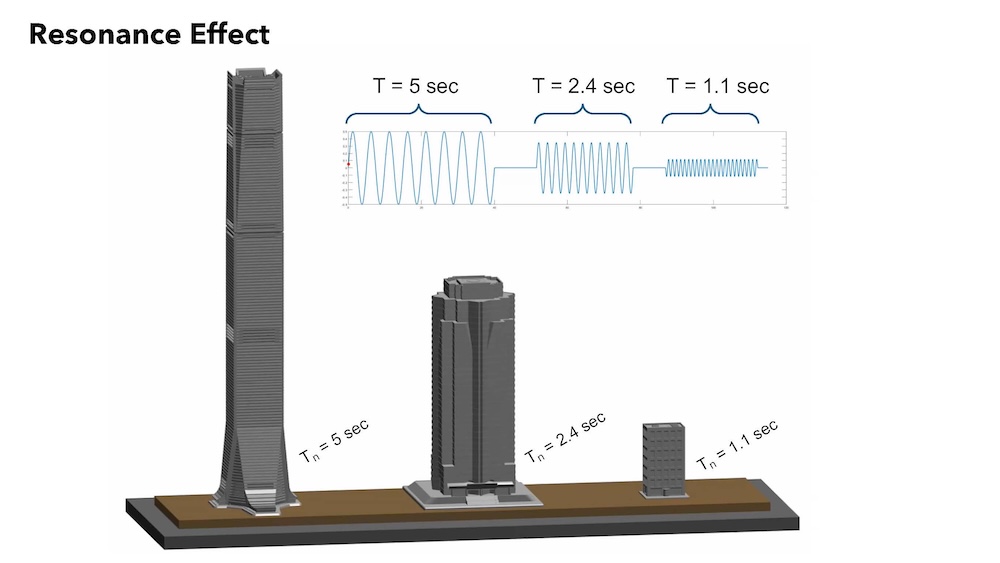
Research conducted over 20 years by Prof. Dr. Pen-ung indicates that this soft soil basin has special properties that amplify long-period seismic waves (Low Frequency/Long Period Waves) by 3-4 times more than normal. When these long-period waves reach Bangkok, they resonate with high-rise buildings that have similar oscillation periods, causing them to sway violently and slowly for extended periods (up to minutes). Buildings with 50 stories have a period of about 5 seconds, while those with 20-40 stories have periods of about 2-4 seconds, which are particularly affected, consistent with real events such as water splashing in swimming pools on high-rise buildings or even the collapse of the State Audit Office building.

Nevertheless, the likelihood of an earthquake occurring in the manner seen on March 28 is considered low, at no more than 10% during a person's lifetime. However, from an engineering perspective, preparedness is always necessary.

Building Regulations Related to Earthquake Preparedness
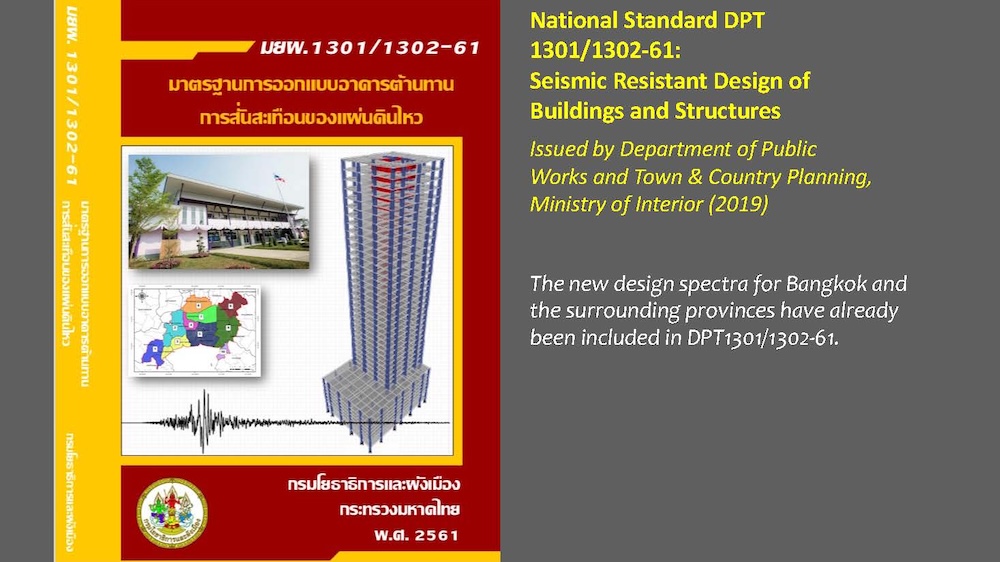
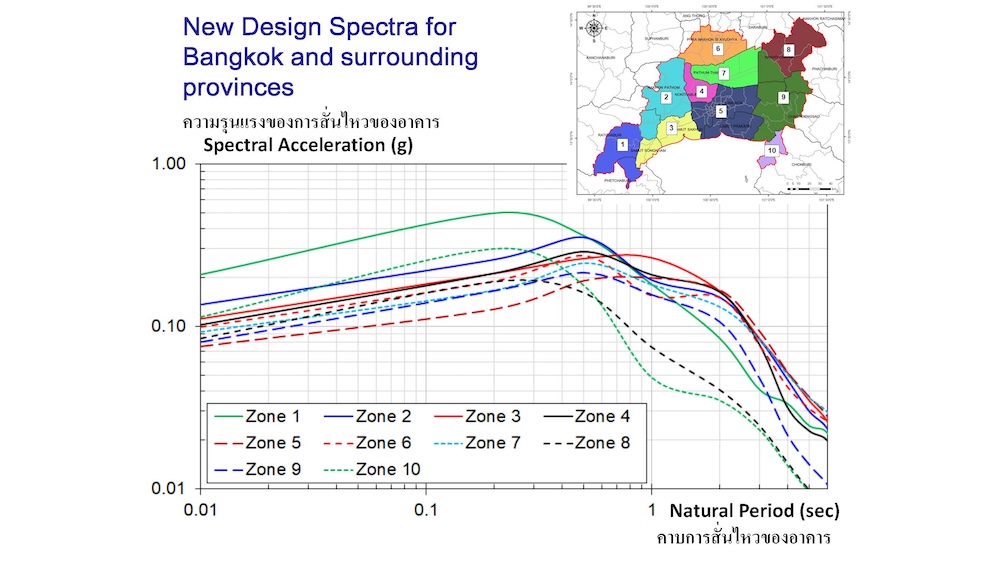
In response to this risk awareness, Thailand has enacted building control laws since 2007, designating Bangkok and four surrounding provinces within the soft soil basin as controlled areas. The scope has since expanded to include additional provinces, and there are standards for engineers set by the Department of Public Works and Town & Country Planning (latest version in 2018), dividing the Bangkok basin into 10 zones, each with a graph indicating the intensity of shaking according to the building's oscillation period for engineers to use in design.


The Actual Impact is Not as Severe as Expected
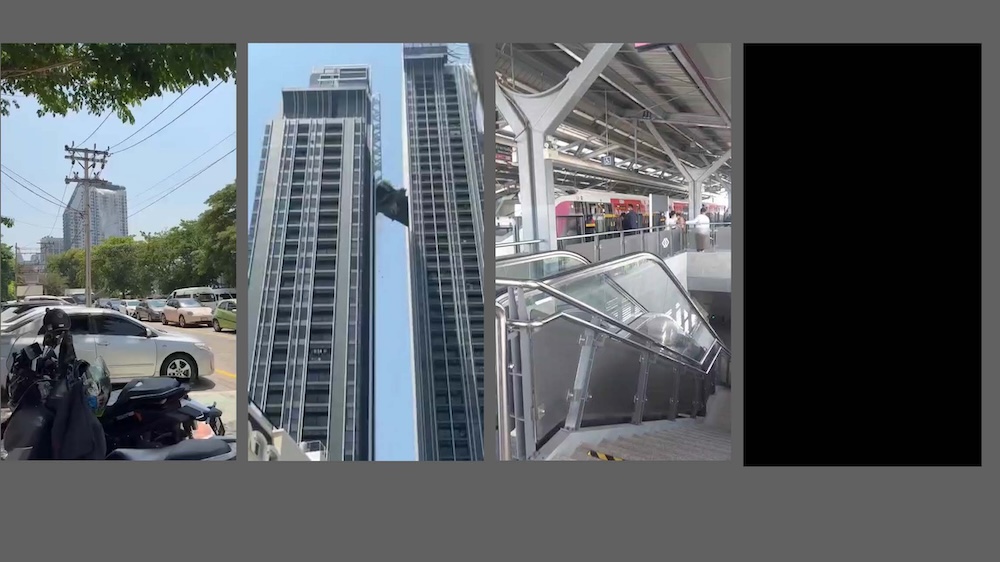
Statistics following this earthquake event reveal that hundreds of buildings in Bangkok sustained damage in non-structural components, such as walls, ceilings, glass, elevators, or various systems, indicating that buildings in Thailand can still withstand seismic vibrations. However, the non-structural impacts have rendered many buildings unusable, with only about 10 buildings affected structurally and one that collapsed, which should not have occurred if designed according to the intent of the law.

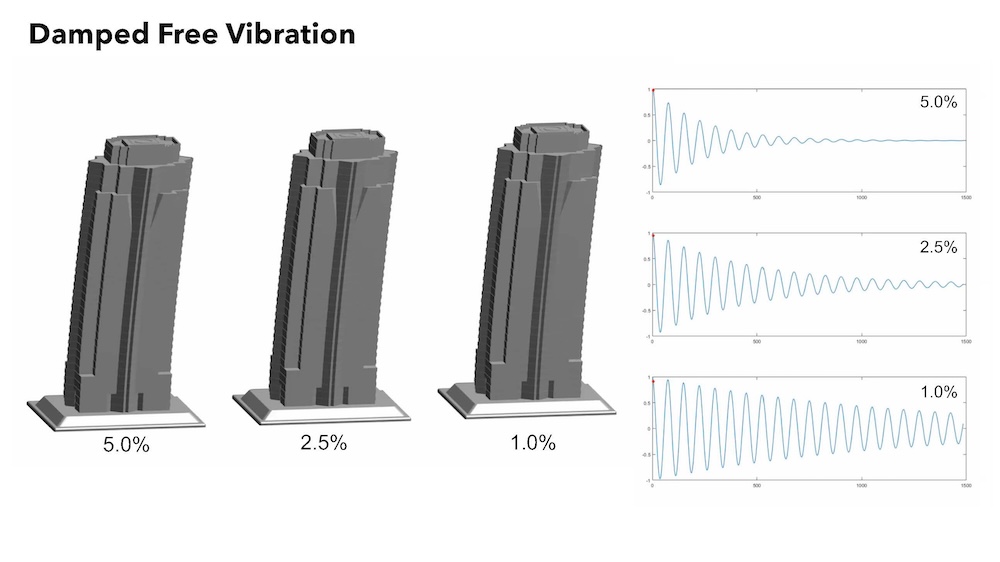
Prof. Dr. Pen-ung highlighted a crucial point: the energy dissipation rate of buildings (Damping Ratio), which was previously believed to be around 5% for high-rise buildings. However, data from around the world and measurements in Bangkok suggest that high-rise buildings may have a Damping Ratio lower than 2.5%, or even close to 1%. This means that buildings will sway more violently than previously anticipated if the Damping Ratio is low.


Practical Strategies for Future Building Preparedness

As an earthquake expert, Prof. Dr. Pen-ung also provided interesting strategies for buildings to cope with earthquake situations, which can be summarized as follows:

1. Reinforce the Shear Wall/Core Wall: Designing shear walls to be ductile enough to withstand up to 2% sway will help ensure the building's structural safety, even if non-structural components may be damaged.

2. Increase Damping with Technology: To ensure building safety and continuous usability while reducing non-structural damage, consider installing energy dissipation systems such as Oil Dampers or Metallic Dampers, which may be a cost-effective option for super tall buildings at high risk.

3. Health Monitoring System: Installing measurement devices in buildings to assess earthquake impacts in real-time will facilitate quick damage assessment and decision-making for reopening buildings without the need for lengthy inspections.

Prof. Dr. Pen-ung emphasized that although the chance of a severe earthquake occurring in Bangkok is low, when it does happen, it can cause immense damage. Comprehensive preparedness is therefore essential for the safety and sustainability of the city in the future.

Download PDF File