Second-Hand Homes: Sustainable Real Estate Development
The first quarter has been quite challenging for both the economy and the real estate sector in Thailand, but life must go on, especially when it comes to the concept of sustainable housing development. This idea leads to new opportunities and approaches for residential development.
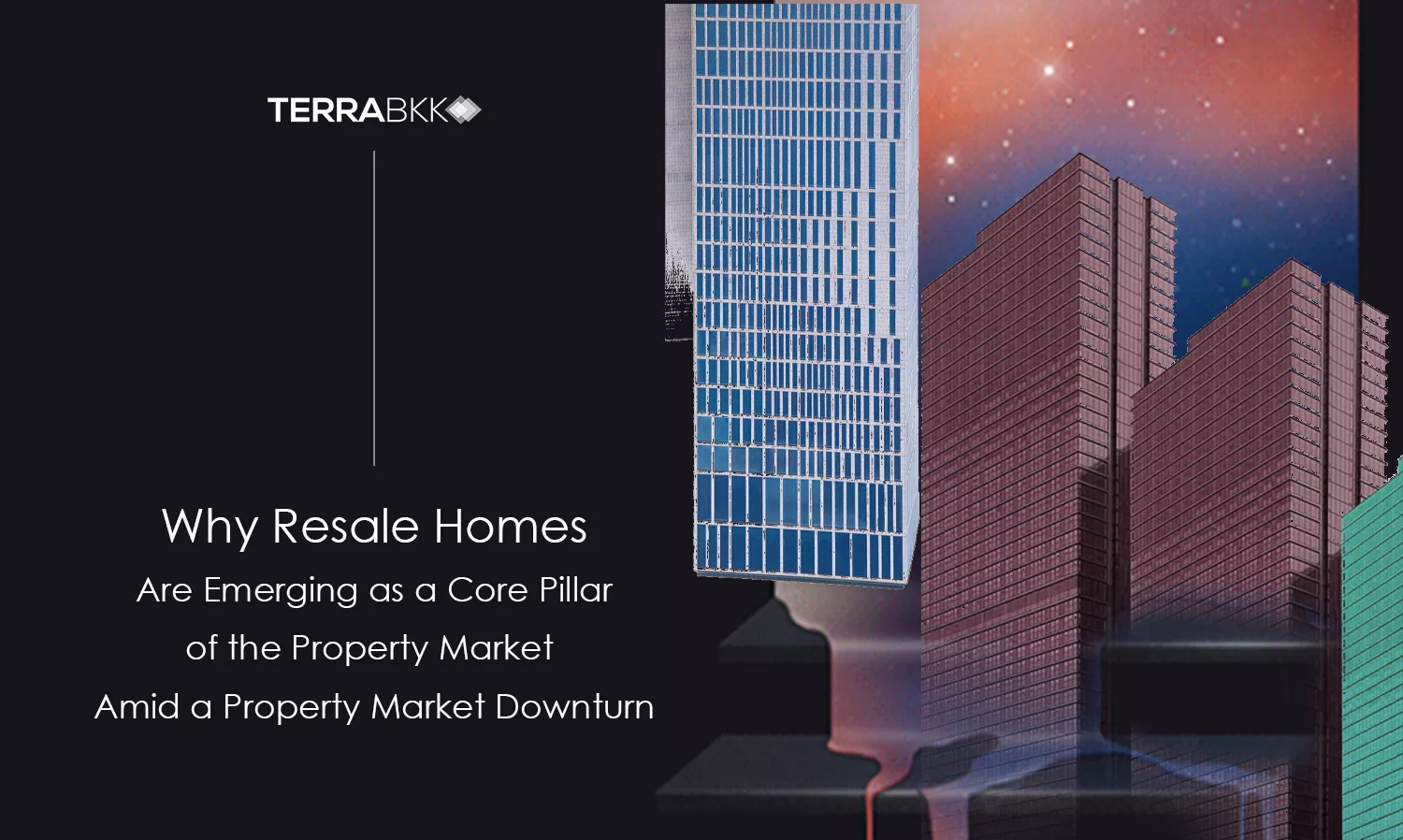
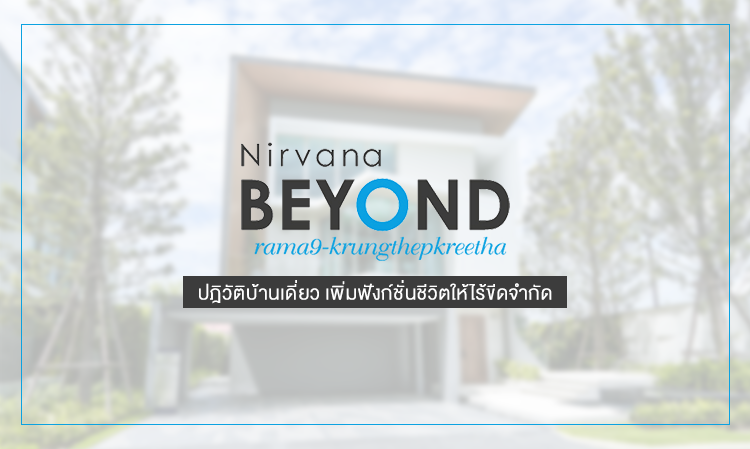
One such approach is the development of what is known as "second-hand homes." The term "second-hand homes" clearly refers to houses that have already been built, previously owned, and sold from the original owner to a new one. The new owner may either be someone looking to live in the home or an investor who buys the house, renovates it, and then resells it.
What I am writing about today pertains to the latter group: investors, both real estate developers and general investors, who are interested in purchasing older residences to renovate. This approach incurs lower costs compared to developing an entirely new project, especially given the higher land costs and the need to develop infrastructure for the entire project. Buying and renovating an old home is financially more feasible and, importantly, uses fewer construction materials, generates less renovation waste, and is more environmentally friendly compared to new developments.
Why am I so confident about this?
According to a survey by LWS, second-hand homes are priced 15-20% lower than new homes in the same location and often offer more space, allowing for customization according to the homeowner's preferences. This ranges from single-family homes in the city center to condos near public transport. Once renovated, these homes can be sold at prices lower than new projects in the same area.
Since second-hand homes already have a basic structure, this reduces construction time, leaving only repairs or renovations based on the buyer's preferences with new materials. This means they can move in right away. This process shows that renovating second-hand homes reduces construction steps, which in turn lowers carbon dioxide emissions and greenhouse gases generated from construction activities, excavation, dust, and waste.
Additionally, if we choose to use recycled furniture or sustainable construction innovations during the renovation process, such as installing solar panels that help save on household expenses, the overall design can be both aesthetically pleasing and environmentally friendly. This aligns with the principles of Sustainable Design, contributing to global conservation efforts while also reducing costs.
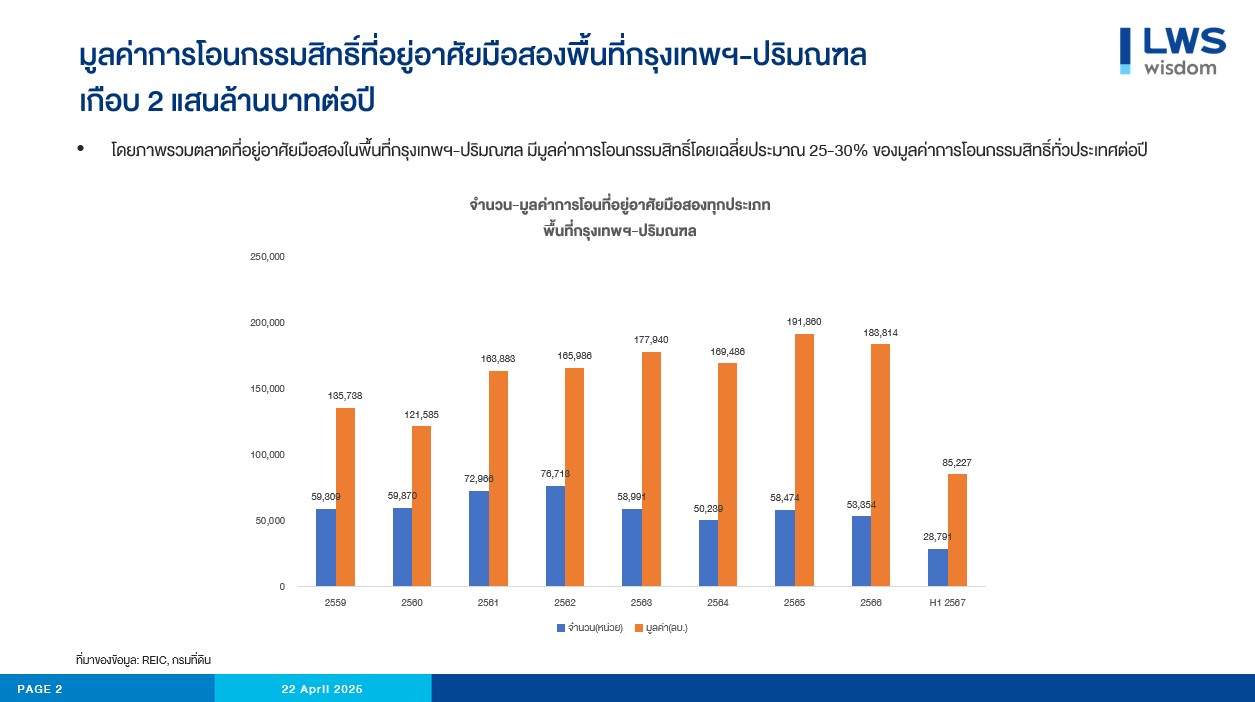
The second-hand housing market is valued at over 500 billion baht per year. According to LWS's survey, the second-hand housing market in the Bangkok metropolitan area has listings worth approximately 500-550 billion baht (as of the end of 2023), averaging 75,000-80,000 units per year, which is close to the number of new project launches in the same area annually.
Single-family homes have the highest number of listings and value compared to other types, with an average price ranging from 5.01 to 10 million baht. Meanwhile, properties priced over 10 million baht have the highest listing values. Overall, the second-hand housing market nationwide exceeds 2 million units, increasing by over 400,000 units per year. Additionally, the average value of transferring ownership of second-hand homes accounts for 25-30% of the total ownership transfer value nationwide.
This leads me to view the second-hand housing market as a sector with significant potential and opportunities for both real estate developers looking to develop smaller projects that can sell quickly and for investors. Purchasing second-hand homes for renovation and resale is a viable option, as the time from purchase to renovation can take 3-6 months, allowing for quick sales and high liquidity. At the same time, it reduces environmental pollution, making it a new alternative for real estate developers and investors. I have started to see some major developers entering this market. I believe that amidst crises, there are always opportunities, and the turmoil experienced in the first quarter of 2023 can create new opportunities for real estate developers as well. Second-hand homes, which are environmentally friendly, align with a global society that prioritizes reducing greenhouse gas emissions and building sustainable businesses. They represent one of the options for real estate developers to transition into sustainable real estate practices. For more details about the market and trends in the second-hand housing business, you can read more at www.lws.co.th.
See you again next month!
Prabhasak Raksaiwan
Managing Director
LWS Wisdom and Solutions Co., Ltd.