
Achieving Life Goals (Finally) with SMART Goals
Every new year, many people often set new goals to improve their lives, whether it's saving money for a mission, losing weight, reorganizing their home, exercising, quitting smoking, or taking additional courses.
But have you noticed? At first, there's a lot of enthusiasm, but within three days, many give up or lose motivation as if their intentions never existed. This is a common occurrence because changing behavior is challenging for everyone. We face various temptations that can pull us away from our original path.
However, we can overcome these failures with good planning. This year, I invite you to achieve your life goals successfully (finally) using the SMART Goals approach for sustainable behavior change.
Why do people often give up easily?
Let's understand why people tend to lose heart when they start to change something. The main reasons can be summarized as follows:
- Setting goals that are too high and expecting immediate results can lead to feelings of discouragement, making one feel incapable of achieving them.
- Lack of strong motivation.
- An unsupportive environment.
- Lack of a clear plan: This is a crucial point because without a clear plan on how to start and a step-by-step approach, one may feel confused and eventually give up.
- Lack of discipline: This is perhaps the most important point. Behavioral change must be something done every day consistently. Initially, it may be difficult, but if you start small and do it regularly, like eating or drinking water, it will become a habit that leads to success.
Tips for Changing Behavior with SMART Goals
Before introducing how to change yourself using SMART Goals, it's important to note that this concept is not new. It has been around for a long time, introduced by George T. Doran in his 1981 article titled “There’s a S.M.A.R.T. Way to Write Management’s Goals and Objectives” published in the Management Review Journal to provide a framework that helps people set clear goals with a higher chance of success.
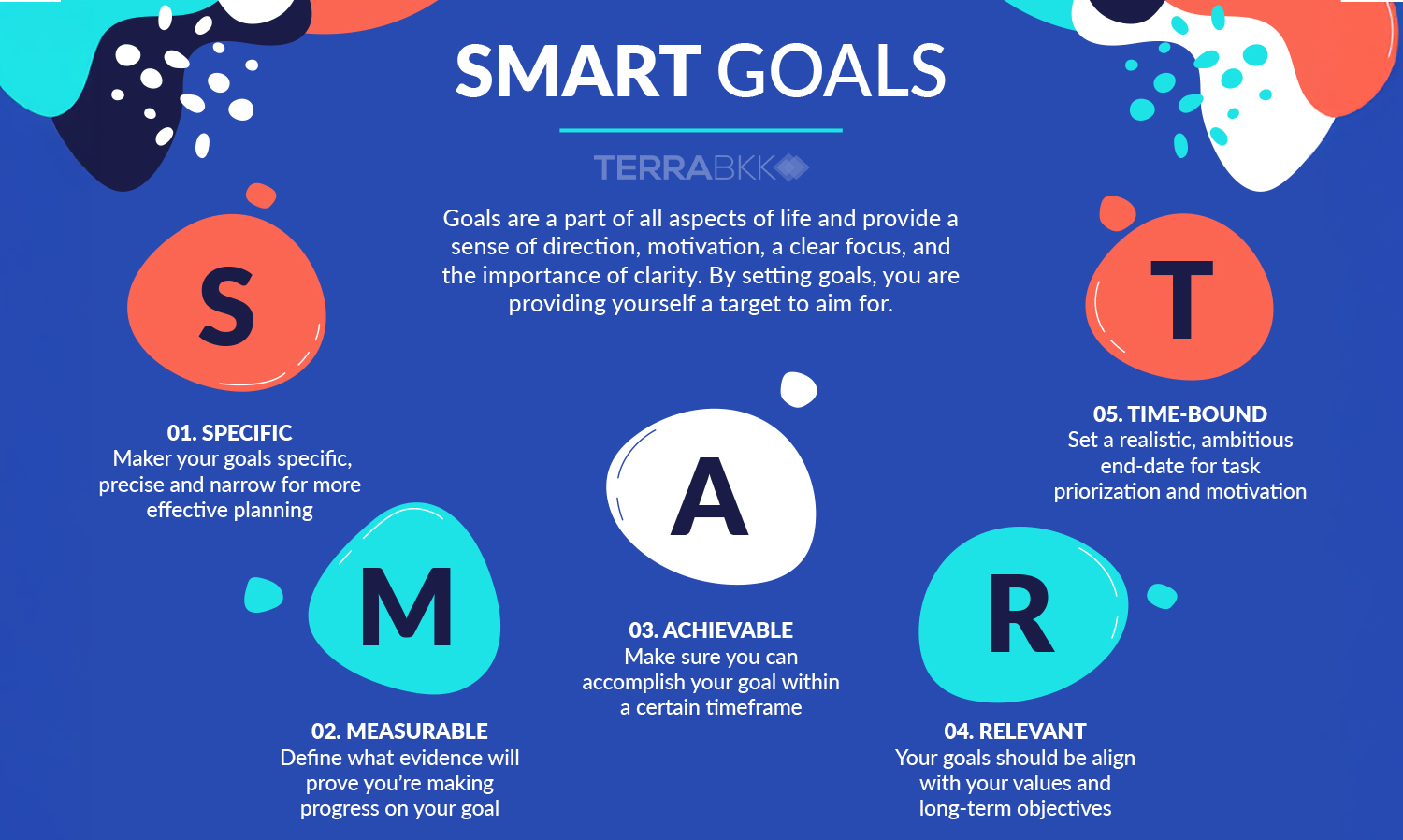
SMART stands for five components:
- S (Specific): Set specific, clear goals.
- M (Measurable): Goals should be clearly measurable.
- A (Achievable): Goals must be realistically achievable.
- R (Relevant): Goals should align with your needs or life priorities, which helps create motivation by finding the real reasons for wanting to change.
- T (Time-bound): Set a clear timeframe for achieving the goals. It's recommended to break down the timeline into smaller, manageable missions that can be consistently achieved or divide larger goals into smaller ones to clearly see progress and feel that the goals are within reach. Change may not happen immediately, but with continuous effort, satisfying results will emerge, and remember to reward yourself for achieving smaller goals.
For example, if you want to change your exercise habits, consider the following steps:
- Specific: Run three times a week.
- Measurable: Each session lasts 30 minutes, possibly using a timer.
- Achievable: Start by jogging slowly in a park or a place conducive to running, or somewhere you enjoy. Choose something realistic.
- Relevant: For better health and weight loss.
- Time-bound: Within the first three months of the year, start with easy, short routes and gradually increase the difficulty as you feel comfortable.
- Additionally, I suggest some extra tips for beginners looking to change their behavior:
- Find like-minded partners: This could be friends, family, or a coach in the same activity. Having companions can provide mutual encouragement to overcome obstacles along the way.
- Learn from mistakes and start anew: Failure is a normal part of being human. As long as we are ready to get back up and try again, the opportunity to reach our goals is always there.
References
https://en.wikipedia.org/wiki/SMART_criteria
https://www.scirp.org/reference/referencespapers?referenceid=2982408
https://www.achieveit.com/resources/blog/everything-you-need-to-know-about-smart-goals/