6 Guidelines for Designing Pet-Friendly Homes
By Mr. Prabhan Sak Raksaiwan
Managing Director, LWS Wisdom and Solutions Co., Ltd.
Hello, members of TerraBKK. Winter has arrived! How is everyone doing? The Meteorological Department has announced that Thailand is entering the winter season since late October. Is it cold enough for you?
As we approach the end of 2023, many may want to renovate their homes or are in the process of purchasing a new residence, especially those with pets. The LWS team would like to recommend some guidelines for choosing pet-friendly housing. According to data from the Thai Pet Product Industry Association and the Department of Livestock Development, in 2020, Thailand had approximately 15 million pets, including about 9 million dogs, an increase of 2 million from 2019, and around 3 million cats, up from 800,000 in 2019.
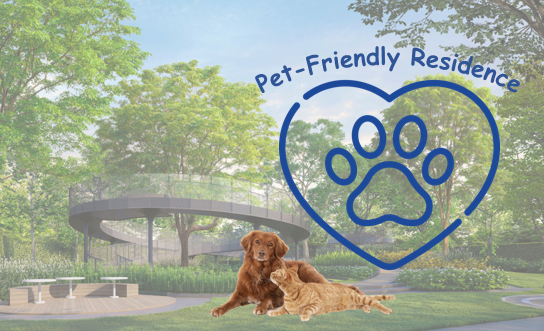
Meanwhile, a survey by the LWS real estate research and development team in August 2023 found that in 2022, there were 5,663 pet-friendly condominium units in Bangkok and its vicinity, a staggering increase of 4,394% from 157 units in 2018. This reflects a shift in buyer behavior, aligning with the current trend among Thais who prioritize pet ownership in a manner known as "pet humanization," where pets are treated as family members. The Department of Business Development, Ministry of Commerce, predicts that the Thai pet market will grow at an average rate of 8.4% annually, reaching 66.748 billion baht by 2026.
Given this trend, LWS has six recommendations for designing pet-friendly condominiums:
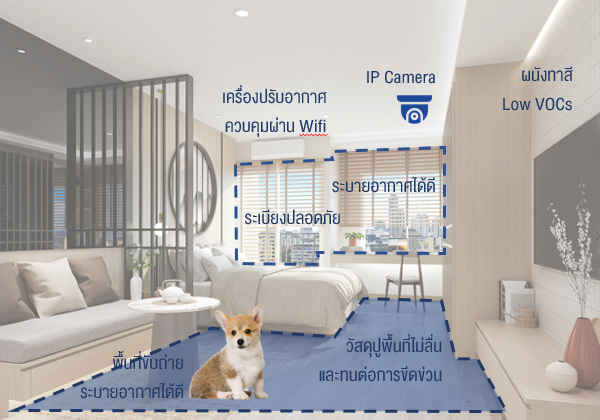
1. Use durable, scratch-resistant, and non-slip flooring materials
Since dogs and cats have sharp claws, running around can scratch the flooring. Additionally, overly slippery surfaces can lead to long-term hip joint injuries. Therefore, flooring materials are crucial. Suitable options include SPC or vinyl flooring, which are scratch-resistant, waterproof, and non-slip.
2. Design walls with rounded corners to prevent injuries
Walls should be designed with rounded corners to prevent injuries from running into them. Additionally, choose low-VOC (volatile organic compounds) paints that are safe for pets and residents, and that can be easily cleaned.
3. Design an appropriate ventilation system
During hot days, especially in summer, pets can suffer from heat stroke, which can be fatal. Proper ventilation is essential. Install ceiling fans along with exhaust fans to ensure adequate air circulation, which helps regulate temperature and eliminate unpleasant odors.
4. Install a Home Automation system
Pet-friendly homes or condominiums should be equipped with IP cameras, temperature and humidity sensors, and a universal Wi-Fi remote controller to manage air conditioning or fans. All of these can be controlled via the owner's mobile phone when they are away, ensuring the safety of the pets.
5. Design pet zones with good ventilation
In addition to sleeping and play areas, both dogs and cats need a designated spot for their litter box, which should be in a well-ventilated area to prevent moisture buildup and reduce odors and germs.
6. Ensure balcony safety
There are frequent accidents where cats fall from balconies, so it is important to install nets or railings with small gaps that are smaller than a cat's head and extend to the ceiling.
All of these are just basic guidelines for designing spaces and preparing materials and equipment to ensure safety and reduce the accumulation of germs. Each type of pet may have unique needs, so these six guidelines can be adapted to suit different pets. For more information or additional advice, feel free to visit www.lws.co.th.
See you again in December, where we will discuss the state of the real estate market in 2023 and what positive or negative factors may affect the real estate sector in 2024.