Net Zero Energy Building: The Future of Sustainable Buildings
As we enter the final stretch of 2023, how has everyone been? Let's take a moment to reflect on what we've accomplished according to the plans we set at the beginning of the year, and what remains to be done. Will we be able to complete everything in the time left? I hope this last part of the year brings good times for everyone. In today's column, I want to discuss a topic that I believe will interest many, especially in an era where sustainability is gaining attention in economic, social, and environmental contexts. As a consultant in sustainable building design, I would like to share insights on the concept of a Net Zero Energy Building.
The idea behind developing a Net Zero Energy Building aligns with the United Nations' action plan to reduce global greenhouse gas emissions by 45% by 2030 and achieve net-zero emissions by 2065, as agreed upon at the Paris Conference in late 2022. Thailand, as a UN member, has announced plans to reduce greenhouse gas emissions by 20% to 25% by 2030, prompting all sectors in the country, including real estate—which significantly contributes to waste and greenhouse gas emissions—to incorporate sustainable practices into their business and management plans. This makes the development of Net Zero Energy Buildings a viable path for real estate projects now and in the future.

According to research from the Department of Alternative Energy Development and Efficiency, developing Net Zero Energy Buildings can save up to 70% of energy compared to conventional buildings. In contrast, buildings designed according to energy ministry standards can only reduce energy consumption by about 10-20%. Thus, the development of Net Zero Energy Buildings is seen as a key approach for building development in Thailand, both now and in the future. The department predicts that by 2036, Thailand will have as many as 3,658 Net Zero Energy Buildings.
Although the cost of developing a Net Zero Energy Building is higher than that of a conventional building of the same size, it proves to be cost-effective in the long run. Studies on retrofitting buildings to achieve net-zero energy show that not only new buildings can be developed as Net Zero Energy Buildings, but existing buildings can also be upgraded to meet this standard.
For instance, a case study of a standard four-story government office building with an area of 7,020 square meters found that retrofitting the building by changing the frame and air conditioning system, along with installing solar panels, increased renovation costs by about 16.61% compared to the original building cost. The result was a reduction in overall electricity consumption to 94,963 kWh/year, while the energy produced from the solar panels was 147,713.84 kWh/year, making the energy produced exceed the total energy consumed within the building, achieving a net-zero energy status with a return on investment of 4.87%, which is considered a worthwhile investment with a payback period of approximately 14.39 years.
What is a Zero Energy Building (ZEB)?
A Zero Energy Building (ZEB) is an energy-efficient building that produces as much energy as it consumes over the course of one year. ZEBs are designed to reduce energy consumption while utilizing alternative energy sources to offset electricity use. These alternative energy sources can be generated on-site or purchased from renewable energy producers. The design standards for Zero Energy Buildings vary, including Thailand's energy conservation standards, ASHRAE standards, Zero Code, and ISO/TS 23764-2021 methodology for achieving non-residential zero-energy buildings (ZEBs).
In addition to energy savings, Zero Energy Buildings also benefit users and the overall environment in several ways:
- Cost savings: Efficient energy use design, including self-generated renewable energy from solar and wind, as well as insulation and other technologies, significantly reduces electricity and fuel consumption.
- Long-term environmental impact reduction: ZEBs significantly reduce greenhouse gas emissions, enhancing the environment and mitigating climate change impacts.
- Positive image and marketing: Environmentally conscious customers often seek companies that are environmentally responsible. Having a Zero Energy Building can enhance communication and public awareness, fostering sustainable trust among businesses across all sectors.
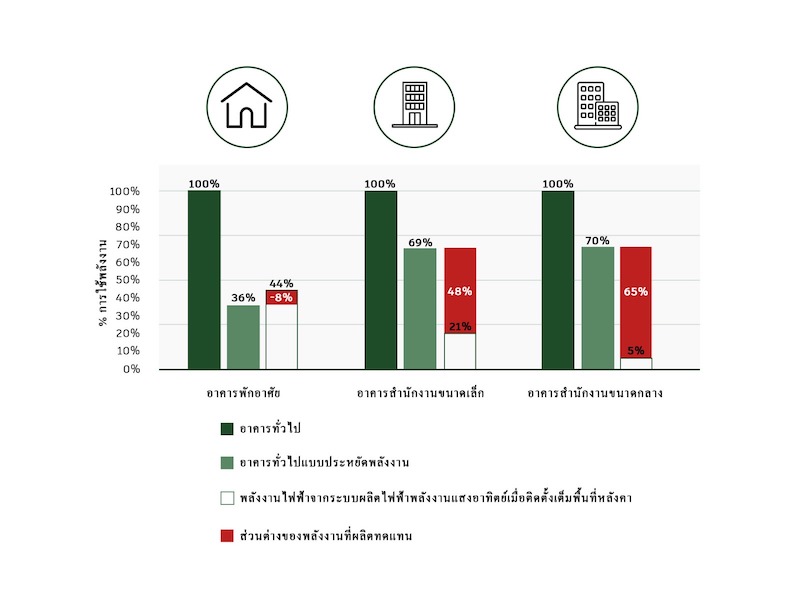
Can the concept of Zero Energy Buildings apply to all types of buildings? The development of Zero Energy Buildings can be applied to any building type, but a crucial consideration is the size of the building. Larger buildings tend to consume more energy, and their systems become increasingly complex.
The graph above illustrates that Zero Energy Buildings can be achieved in small buildings, but it becomes more challenging with medium to large buildings due to higher energy consumption ratios. Small residential buildings can easily install sufficient renewable energy systems, while medium to large buildings may lack adequate space for installation or may not generate enough electricity to meet their energy needs. Therefore, project developers must consider additional factors:
- Design energy-efficient buildings in line with usage context:
Building design should start with climate analysis, orientation, and shape to minimize heat gain, thus reducing electricity consumption. Choosing appropriate building materials and systems is crucial in reducing cooling loads and lighting energy use, as air conditioning and lighting are the largest energy consumers in typical buildings in Thailand.
- Management and behavior modification of building users:
For medium and large buildings, managing building usage and regularly maintaining equipment can help analyze and reduce overall energy consumption. Encouraging energy-saving behaviors among users, such as reducing elevator use, turning off water and lights when not in use, and setting air conditioning to 25-26 degrees Celsius, can also contribute to overall energy savings. Installing systems or devices to monitor energy consumption, such as electric meters, is essential for effective energy management.
- Reducing energy use with renewable energy systems:
In addition to overall energy reduction through management, buildings can install additional renewable energy systems to produce energy for internal use and potentially sell excess electricity back to the grid, providing an additional revenue stream for building managers.
- Other building technologies for management:
Both small residential buildings and medium to large buildings can incorporate building technologies to enhance energy efficiency and monitor energy use for better planning. Various innovations are currently being utilized, such as:
-
- Smart Appliances and Sensors: Utilizing IoT and Home Automation systems in conjunction with Net Zero Energy Building development, such as automated control systems that work with sensors and electrical devices to adjust and control equipment based on environmental conditions, reducing energy waste and enhancing building safety.
- Heat Recovery System: This system recycles heat lost from processes or equipment, maximizing energy efficiency.
- Energy Recovery Ventilation (ERV): This system exchanges heat between incoming fresh air and filtered indoor air, reducing energy consumption for heating or cooling and improving indoor air quality.
- Vertical Garden Wall: Plants grown vertically can enhance the building's aesthetics and serve as an additional layer of thermal insulation.
When considering the criteria for achieving Zero Energy Buildings according to ISO TS23764, non-residential buildings can be categorized into three levels:
- ZEB-ready: Buildings that are ready to become Zero Energy Buildings.
- Nearly ZEB: Buildings that are almost Zero Energy Buildings.
- (Net) ZEB: Buildings that achieve net zero energy.
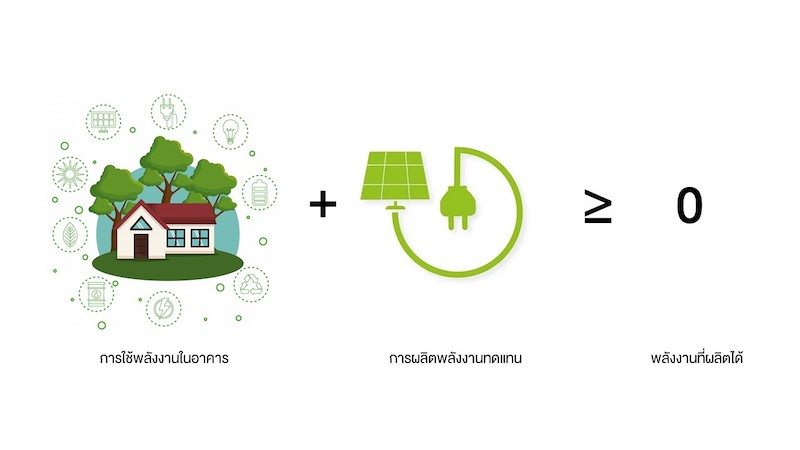
It is evident that transforming a building into a Zero Energy Building does not require a complete redesign or construction to achieve net-zero energy all at once. We can start with a “ZEB-ready” building and gradually upgrade it to a “net-zero energy” building in the future, which is a reasonable approach for business and economic success.
For organizations and businesses interested in techniques for assessing Zero Energy Buildings, including tools and methods to genuinely achieve this standard with measurable and reliable data according to international standards, reducing costs, saving energy, and ensuring sustainability, please visit www.lws.co.th.
See you again in November. Goodbye!