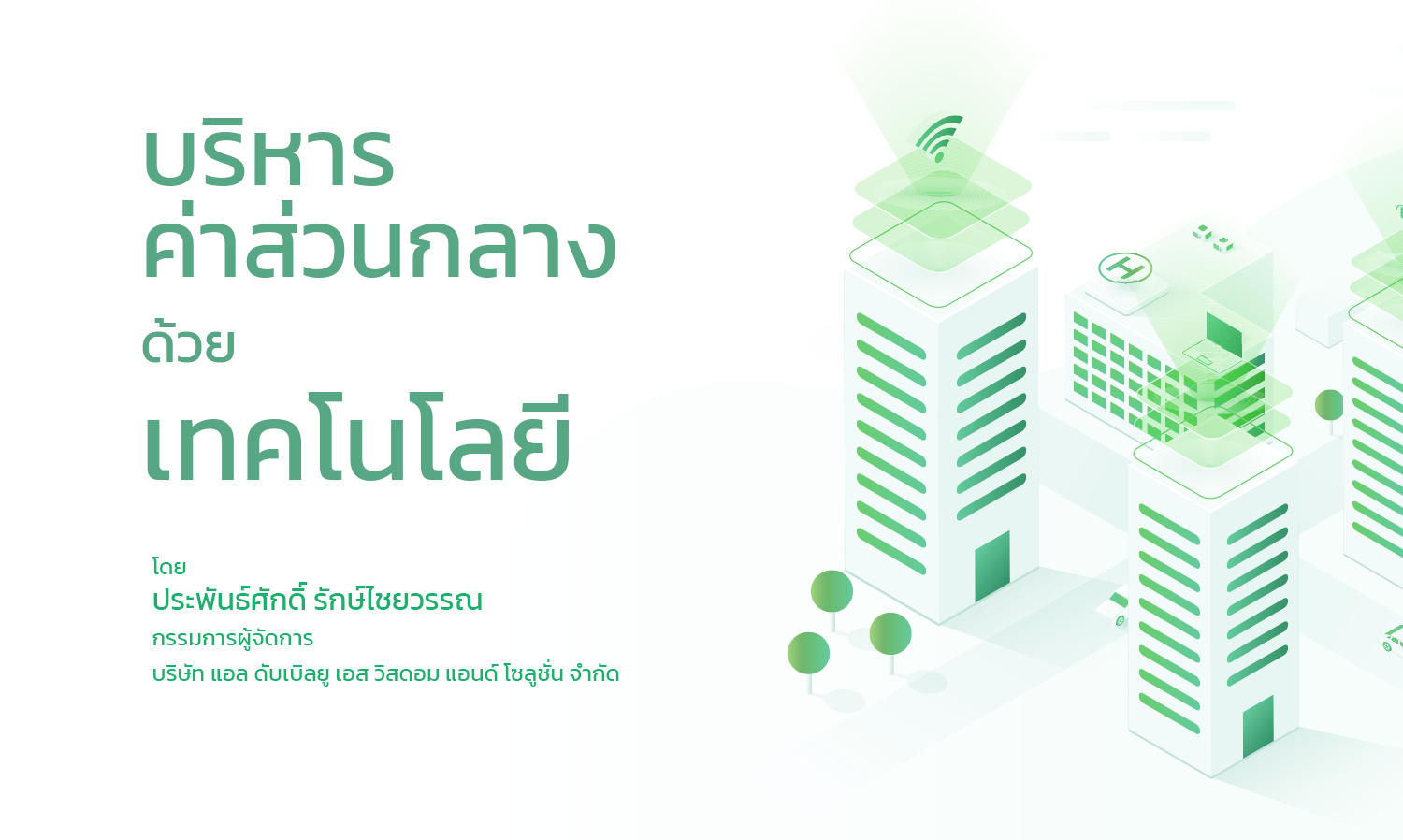
Managing Common Area Costs with Technology
By Prabhan Sak Raksaiwan
Managing Director, LWS Wisdom and Solutions Co., Ltd.
Hello, members of TerraBKK. As we reach August 2023, how is everyone doing in terms of physical health, mental well-being, and financial stability? Although the Thai economy is beginning to recover, particularly with the rapid growth in tourism, the export sector, investment, and government spending are still sluggish. This means that the recovery of the Thai economy is not yet fully realized. Given the current economic situation, I would like to share some strategies for managing common area costs for residential condominiums. These strategies can help condominium owners generate income from common areas and save on expenses by leveraging technology to manage limited budgets (monthly common area fees) effectively. This includes knowing when to spend wisely, conserving resources while maintaining quality service standards, and seeking additional income sources to enhance management budgets. In essence, it’s about managing finances efficiently and intelligently.
What is the common area fee used for?
Currently, condominium owners and homeowners in development projects are required to pay common area fees to the condominium management and homeowners' association. These fees are used to manage and maintain the common areas of the project in good condition and always ready for use in four main areas:
1. Project management fees paid to the management team we hire to oversee the condominium and common areas of the housing project.
2. Utilities which must be paid monthly as they directly affect living conditions, including water and electricity costs for residential condominiums.
3. Service contracts which include hiring security companies, cleaning services, garden maintenance, or auditors. This portion of the budget is necessary expenditure, and service contracts that the project earns from, such as leasing space for vending machines in condominiums and residential areas.
4. Maintenance costs for equipment and systems to ensure they are in working order for condominiums and residential homes.
The responsibility for covering these common area costs falls on the condominium owners and homeowners. Therefore, if we can manage these expenses effectively, it will allow owners to reduce their common area fees and save money.
Reducing Expenses through Smart Technology Use
1. Resource conservation
Conserving resources is a crucial method for reducing common area costs. The committee should establish policies that promote careful and efficient resource use, such as turning off unnecessary lights in common areas and installing automatic light control systems to reduce unnecessary usage. Using high-efficiency appliances and even installing solar panels to support daytime electricity use, especially in common areas frequently used by residents, such as powering air conditioning in the lobby, can reduce electricity costs, please the owners, and contribute to sustainable environmental practices by using clean energy.
2. Utilizing smart home technology
Smart home technology is an example of technology that helps conserve resources in the common areas of condominiums through systems that can be controlled and managed via electronic devices. For instance, smart home sensors can control lighting and temperature in rooms, adjusting light levels according to the time of day to save energy efficiently. Additionally, it can control the operation of appliances such as air conditioning and lighting to function only when there are actual users, thereby saving energy and reducing maintenance costs for appliances in common areas.
3. Automated management systems for common areas
Automation is an effective technology for conserving resources in the common areas of condominiums. One example is an automated water resource management system, which includes sensors that detect water levels in tanks and computers that calculate and control pumps according to demand, ensuring that water levels are maintained as required without wasting water. Furthermore, automation can efficiently control electricity usage, lighting, and security systems in common areas, leading to resource savings and reduced maintenance costs for various systems.
Increasing Income from Common Areas
1. Allocating common areas for the benefit of residents Currently, condominiums have various common areas and facilities, yet residents often do not utilize these services as much as they could, especially on weekdays. Providing additional services that meet residents' needs is a way to increase the usage rate of common areas and generate additional income.
- Income from compensation for common area space by setting up automated service kiosks that residents desire, such as beverage vending machines, convenience store kiosks, laundry services, and recycling bins.
- Income from renting out common rooms by the hour at a lower rate than external venues, such as for meetings, workshops, or community-building activities instead of off-site events, as well as musical events in the garden in conjunction with community market space rentals for residents.
- Monthly parking income is another interesting management method. In some condominium projects, common area fees do not include parking fees, meaning that if residents want to park their cars, they must pay separately. This has the advantage of keeping common area fees lower than those that include parking. The management can earn additional income from monthly parking fees, which can be significantly higher than 10% of common area income, and importantly, it reduces parking congestion by ensuring that only those who truly need to use their cars will pay for parking, preventing abandoned vehicles.
2. Recycling waste management Installing convenient and accessible waste sorting points can increase value as income from selling recyclable waste. Organizing organic waste management areas to create compost reduces waste volume and can also be used as fertilizer for the project's plants, further reducing expenses.
Both management strategies to enhance efficiency and reduce management costs for both condominiums and residential homes through the use of technology and increasing income to fund management expenses allow condominium and residential owners to lower their monthly common area fees. This represents a modern approach to managing common areas in both condominiums and residential homes, where technology serves as a tool to enhance project management efficiency at the lowest possible cost while still providing quality services. For more information on managing common areas through technology, please visit www.lws.co.th.
See you again in October!