EDGE Standards and Warehouse Building Improvements
Hello, TerraBKK members! We are now in the middle of 2023. Many of you may be reflecting on what you have accomplished so far this year and what remains to be done in the second half. Let's take our time to review.
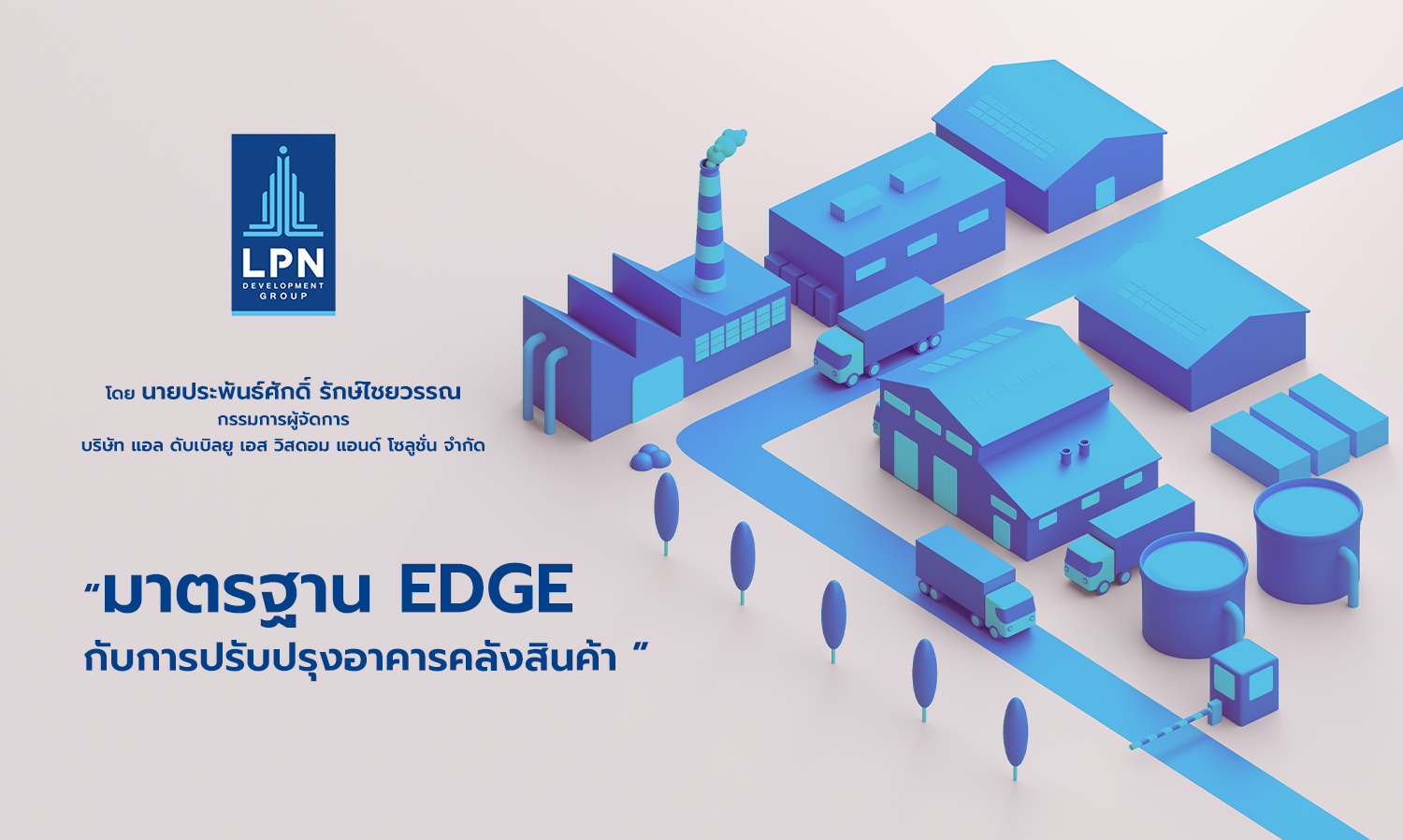
Today, I have an interesting topic regarding the implementation of a green building standard known as EDGE (Excellence in Design for Greater Efficiencies), developed by the International Finance Corporation (IFC). This standard is being used to improve warehouses, distribution centers, and rental factories to add value to these buildings and services, especially as the e-commerce sector continues to grow alongside manufacturing, exports, trade, and transportation, particularly since the onset of the COVID-19 pandemic.
According to a report from the Department of Business Development, Ministry of Commerce, as of the end of 2021, there were 1,240 registered warehouse companies with a capital value of 20,417.62 million baht. Most of these businesses operate as limited companies, totaling 1,024, which accounts for 82.58% of the total capital value of 20,025.54 million baht.
The report indicates that the warehouse business in Thailand has seen continuous revenue growth, with total revenue of 69,354.42 million baht in 2018, 71,291.73 million baht in 2019, and 87,240.63 million baht in 2020. The annual growth rates for total revenue from 2018 to 2020 were 2.79% and 22.37%, respectively.
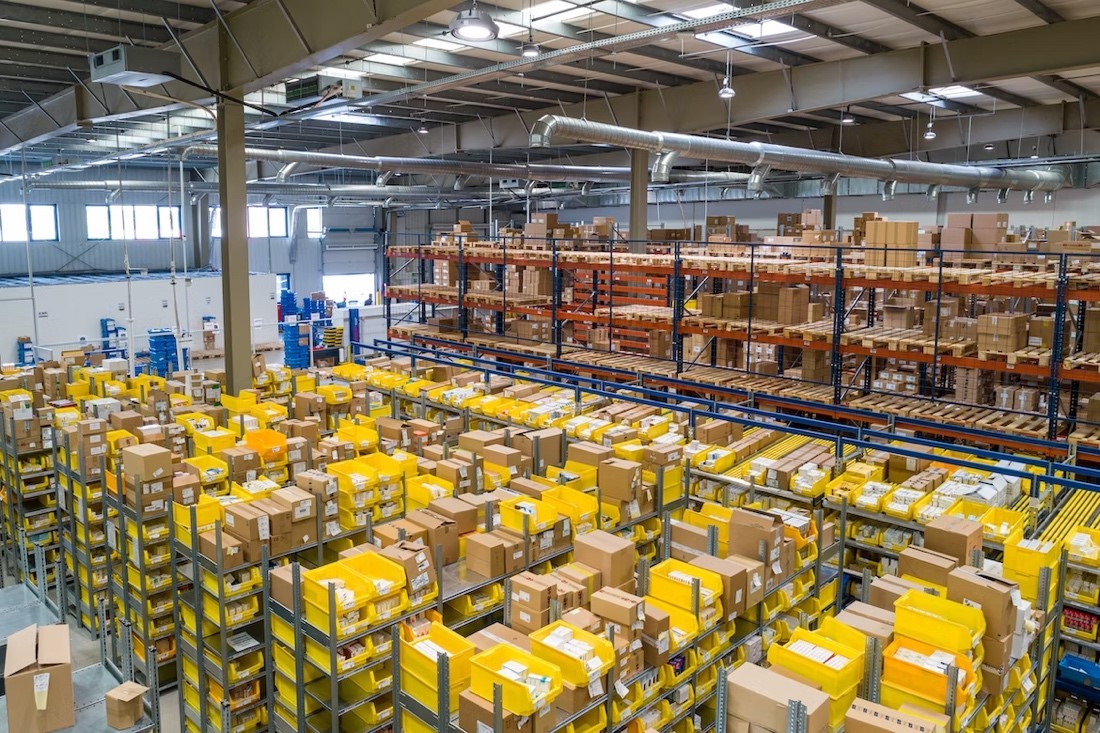
Due to the growth rate of the warehouse business, many real estate operators are interested in developing warehouse projects to meet the increasing demand, particularly in locations around Bangkok and the Eastern Economic Corridor (EEC) such as Samut Prakan, Ayutthaya, Chonburi, and Chachoengsao. These areas benefit from being industrial provinces with central distribution centers and convenient transportation routes, close to ports, the Inland Container Depot (ICD), and Suvarnabhumi Airport. However, general rental warehouse space remains concentrated in Samut Prakan, which accounts for 32.6% of the total rental area, while Chonburi, Ayutthaya, Chachoengsao, and Bangkok account for 21.0%, 13.1%, 11.4%, and 8.2%, respectively.
In Thailand, rental warehouses can be categorized into two types: 1.) Traditional warehouses, which make up over 95% of the total warehouses nationwide, primarily focusing on rental space, and 2.) Modern warehouses, which offer rental space that supports digital technology and comprehensive logistics systems, enhancing warehouse management efficiency.
The growth of the warehouse business has prompted real estate operators to prioritize the development of modern warehouse designs, moving away from traditional models to more visually appealing buildings that emphasize energy conservation standards, such as LEED (Leadership in Energy and Environmental Design), to attract more clients.
In addition to the LEED standard, there is now the EDGE standard, which is also developed by the IFC. Research by LWS indicates that the EDGE standard is highly suitable for assessing and improving building efficiency, especially for older warehouses looking to control renovation costs and the time required for certification. The EDGE standard focuses on three main areas: energy efficiency, water conservation, and material selection, which can be easily assessed through an application to guide strategies for effective and rapid energy savings.
The EDGE standard has three certification levels:
- EDGE Certified, requiring a minimum savings of 20% in the three main systems (energy use, water use, and material/resource use).
- EDGE Advanced, requiring a minimum savings of 40% in the same three systems.
- EDGE Zero, requiring a 20% savings in water and material/resource use, and 100% energy savings through renewable energy or carbon offsetting.
From the assessment of the renovation of older warehouse buildings, the structures are divided into two parts: the office area and the general warehouse area. The project plans to renovate and repair the building to achieve EDGE certification at the Certified level. After evaluating the building's capabilities through the application, it was found that the energy consumption from lighting is a major component of the annual electricity costs. The building will need to replace existing light bulbs with energy-efficient LED bulbs. This can be achieved through various methods, such as changing the type of bulbs, adjusting the number of installed bulbs, or modifying the arrangement to reduce power consumption while considering the impact on effective lighting for users.
Simultaneously, the project will include installing roof insulation and changing the building's color tone to reduce heat entering the building, creating a more comfortable environment. If the building has air conditioning, additional wall insulation can be installed to lessen the cooling load on the air conditioning and cold storage.
Regarding water conservation, the EDGE standard focuses on reducing water usage within the building by selecting or replacing fixtures with water-saving alternatives. Finally, when selecting materials, it is essential to choose those that require low energy for production and avoid wasteful new materials, such as reusing old materials within the building and utilizing the existing structure, which helps reduce carbon footprints.
As mentioned above, operators will need to allocate about 5% more budget for renovations under the EDGE standard compared to normal building construction costs. However, buildings renovated under the EDGE standard can reduce electricity costs by up to 50% and have a short renovation period of just 1-3 months, with the green building certification process taking only 1-2 months. During construction, the project can also reduce operational costs related to data collection for pollution prevention plans as per other green building standards, as the EDGE standard focuses solely on enhancing energy, water, and material/resource efficiency through design and material selection.
Based on the development guidelines of the EDGE standard, I believe that implementing EDGE standards for warehouse renovations is appropriate, as it reduces operational time and certification costs, meeting current customer demands while also helping to lower carbon emissions in project management.
For real estate operators planning to develop warehouse, distribution center, and rental factory projects, I recommend developing projects under the EDGE standard, which is easy to implement and recognized regionally and globally. This will help real estate operators reduce long-term costs while adhering to sustainable development principles.
See you again in July for another topic! If you have any specific interests, feel free to suggest them. Goodbye!
By Mr. Prabhand Sak Raksaiwan Managing Director of LWS Wisdom and Solutions Co., Ltd.