
Changing Consumer Demands Leading to Business Opportunities
Article by Mr. Pheeradet Dechawonganan, a student at Thammasat University, Faculty of Architecture and Planning, specializing in Real Estate Development Innovation.
The changing demands of consumers, driven by various global crises such as climate change, pandemics, and resource shortages, have led people to pay more attention to their health and adjust their consumption to align with the environmental conditions.

Consumer Groups with Different Demands
Image credit: https://www.bangkokjerky.com/
Current consumer surveys reveal four main types of consumer groups:
1. Meat-eating consumers
2. Vegetarian consumers
3. Seafood and fish consumers
4. Occasional vegetarian consumers
According to the survey results, 41.5% of Thai consumers and 58.5% of foreign consumers identify as meat-eaters, making up the largest group at 72.9%. This is followed by occasional vegetarians at 14%, vegetarians at 8.4%, and seafood consumers at 4.7%. It is evident that current consumption is becoming more diverse, but the majority still prefer to consume meat.
|
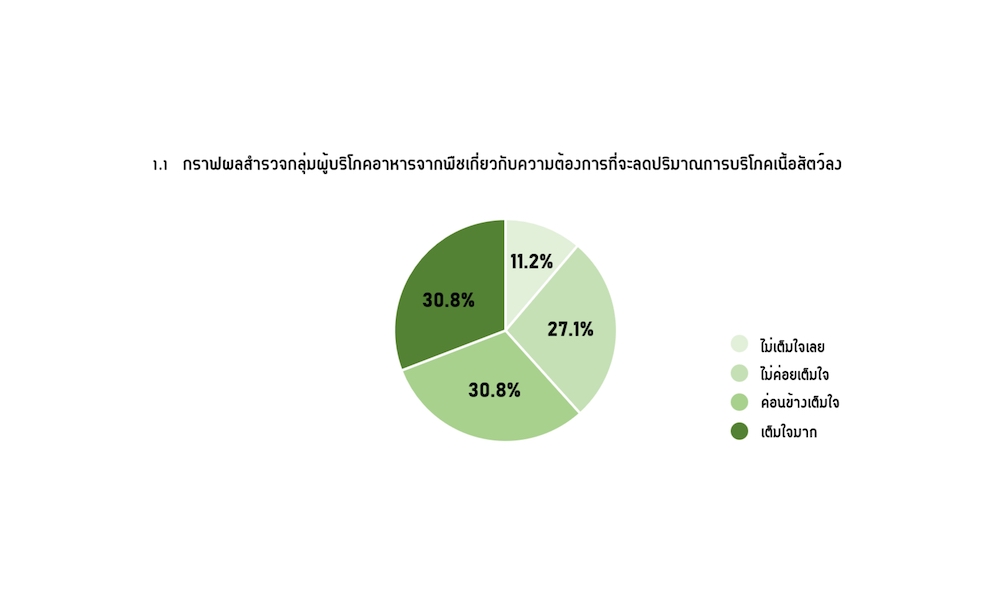
The survey on willingness to reduce meat consumption shows that 30.8% are somewhat willing, and another 30.8% are very willing to cut down on meat. The activities of consumers were categorized into three: consuming plant-based foods, learning to cook plant-based meals, and eating plant-based foods while traveling.
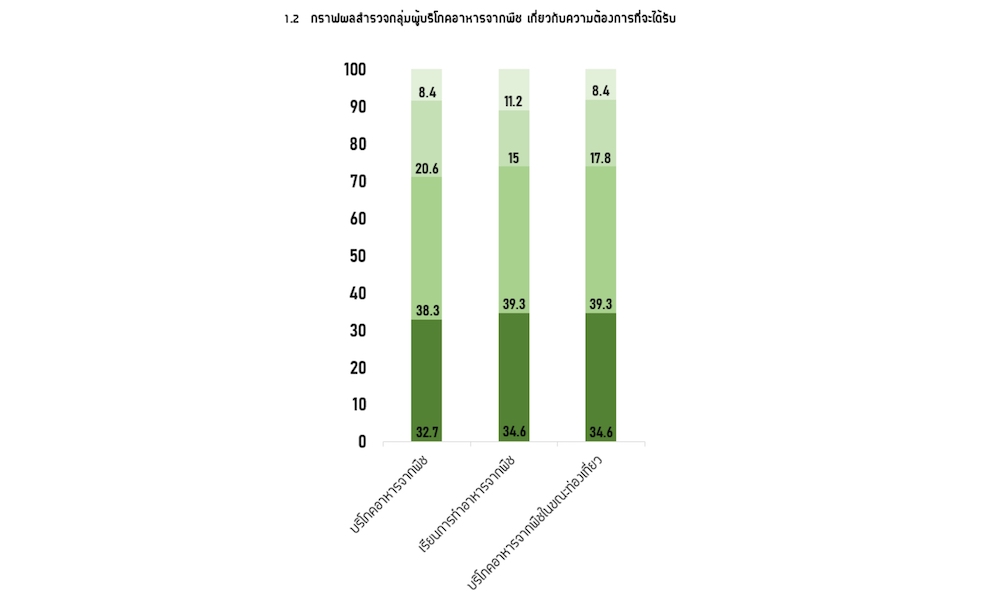
The survey indicates that consumers are quite willing or very willing to consume plant-based foods while traveling for health reasons, with an average of 60.8% being foreigners and 39.2% being Thai.
The survey results reveal that most people are starting to reduce their meat consumption and are becoming more health-conscious, indicating a growing trend in health-oriented businesses in both domestic and international markets.
Future Business Opportunities in Health
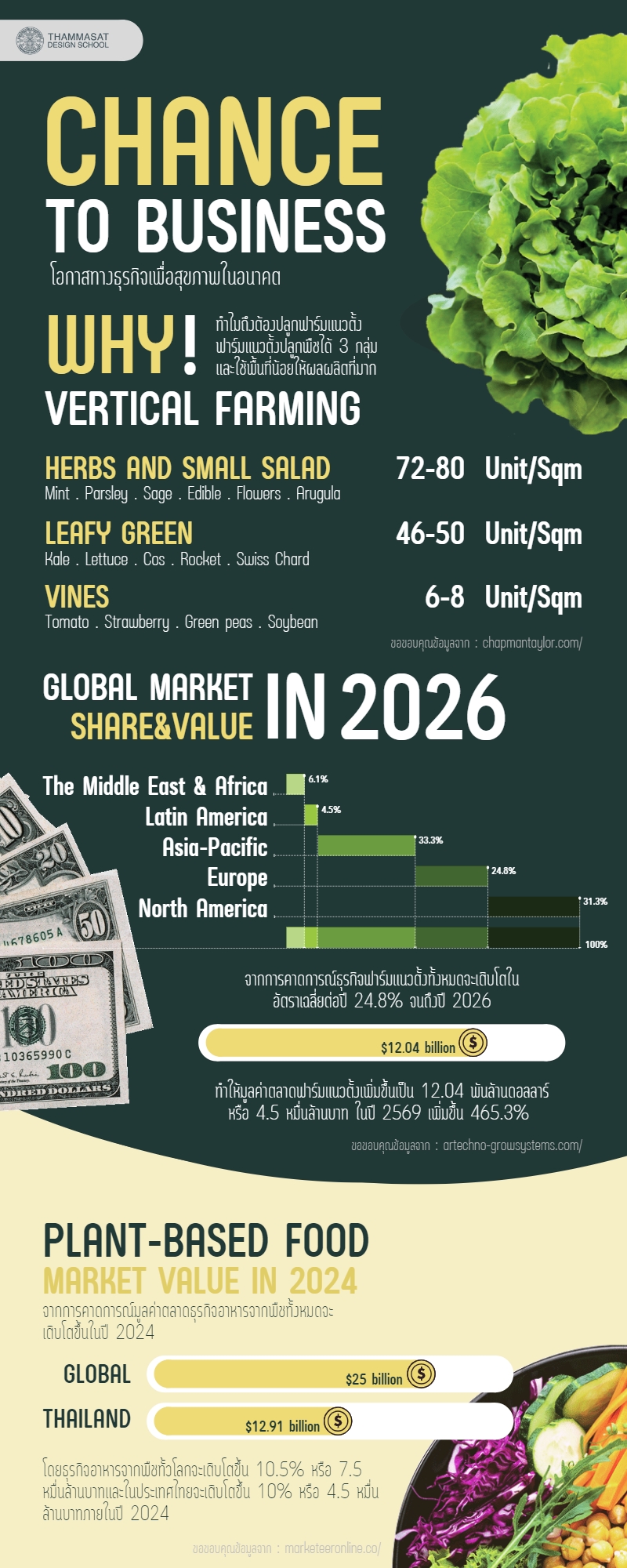
There is a noticeable increase in demand for vegetarian food based on survey results, which is also driving growth in the agricultural sector. However, to produce crops in larger quantities and faster, it is essential to control moisture, light, and surrounding environmental conditions, leading to the emergence of vertical farming businesses.
It is projected that the global market value of vertical farming will grow by 465.3% by 2026, with the Asia-Pacific region accounting for 33.3% of the market share.
The rapid growth of vertical agriculture is resulting in increased agricultural output, necessitating processing to extend product shelf life and enter the health-oriented plant-based food business.
Vertical farming is producing yields that support the health food business aimed at consumers looking for plant-based options.
Forecasts indicate that the business value from 2019 to 2024 is expected to grow by 10%, from 28 billion baht to 45 billion baht in Thailand, and by 10.5%, from 480 billion baht to 750 billion baht globally.
This indicates a significant upward trend in vertical farming businesses, as evidenced by the increasing availability of health products in convenience stores and health-focused restaurants in recent years, as well as the expansion of plant-based food businesses into larger manufacturing industries.
References