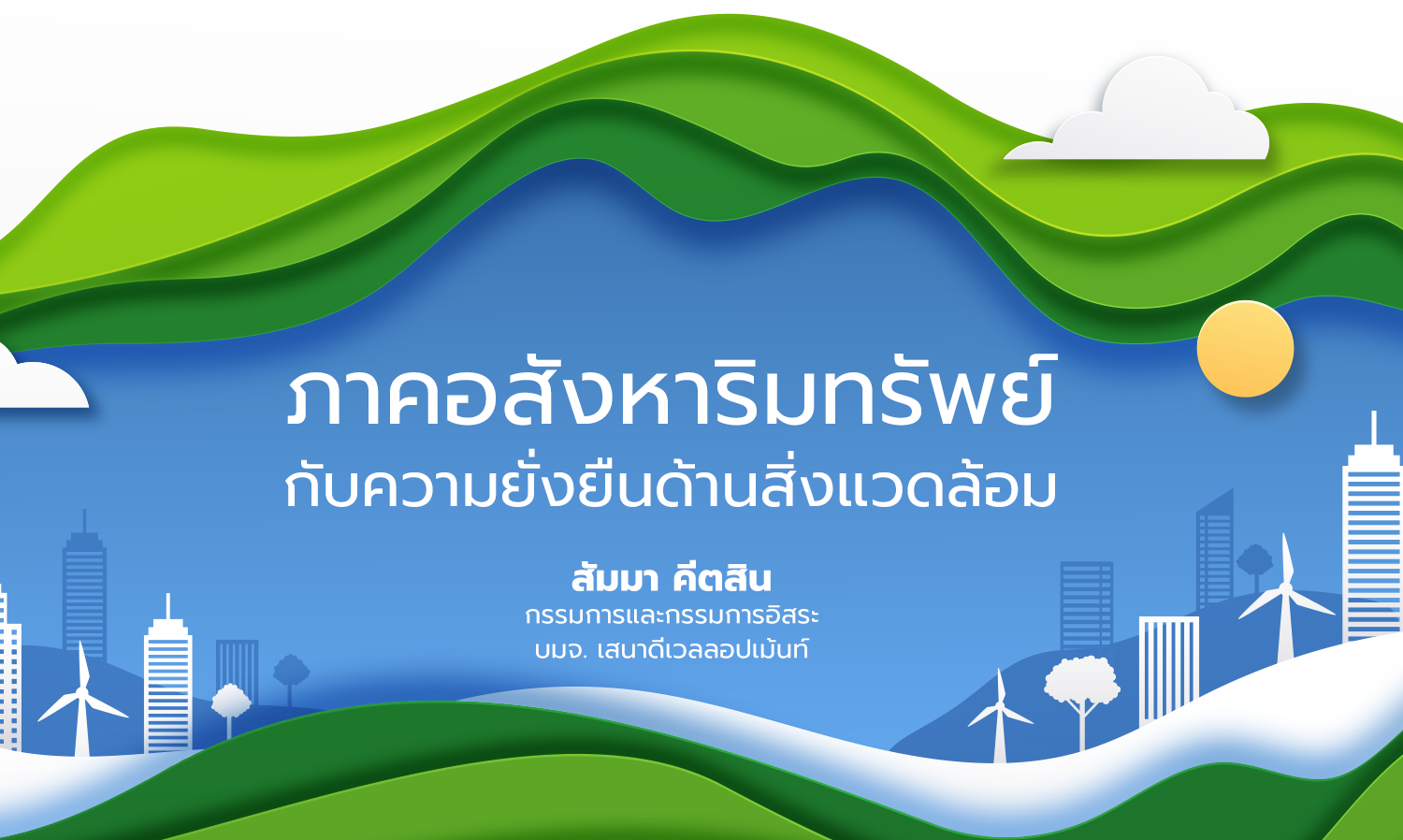
The Real Estate Sector and Environmental Sustainability
In the past decade, we have heard new phrases regarding global environmental changes such as Climate Change, Global Warming, Greenhouse Effects, Sustainable Development, Low Carbon, and Net-Zero Emissions. Public interest in these issues has been steadily increasing.
In September 2015, government leaders from various countries agreed at the United Nations General Assembly to set development goals aimed at achieving sustainability, known as the Sustainable Development Goals (SDGs), which consist of 17 main topics and 169 sub-goals to guide the world towards sustainability in environmental, social, and governance aspects.
At the Conference of the Parties (COP) 26 climate summit in Glasgow last year, participating nations discussed joint measures to phase out coal and halt deforestation while seeking alternative renewable energy sources. Many countries announced targets to reduce carbon dioxide emissions and other pollutants, with developed nations in the Western world aiming for Net-Zero Emissions or Carbon Neutrality by 2050, while some set longer-term targets, such as 2060-2070.
In the upcoming APEC summit, which Thailand will host in November this year, the topic of BGC Economy, which includes Bio-Economy, Circular Economy, and Green Economy, will also be on the agenda.
It is evident that governments around the world have become increasingly aware of the economic and social implications tied to environmental conditions over the past decade. The business sector in various countries is responding in the same direction. Additionally, investors in various capital markets are increasingly interested in investing in securities of companies that focus on environmental sustainability, as well as social and governance aspects.
The real estate sector in Thailand must adapt to the global changes in all aspects, aiming to create sustainability according to the established goals.
Development towards environmental sustainability includes resource and energy management, waste and pollution management resulting from business operations, the use of environmentally friendly construction materials and home equipment (Green Materials), and reducing processes and resource waste that impact the environment and society.
Development towards social sustainability includes responsibility towards customers, consumers, and partners, developing and caring for personnel within the organization to ensure good health and safety at work, and social responsibility, such as caring for the community during public health crises, natural disasters, and in normal times, as well as developing innovations to enhance the efficiency and effectiveness of production, work processes, delivery, and maintenance.
Development towards governance or economic sustainability includes good corporate governance, effective risk management, conducting business fairly, and combating corruption.
Note: Sena Development is an example of a real estate development company that has been continuously working towards sustainability in these areas, including environmental sustainability by utilizing solar energy in residential and commercial projects, wastewater treatment, promoting the use of electric vehicles by establishing Electric Vehicle (EV) Stations in projects, selecting energy-efficient electrical appliances, encouraging partners to use eco-friendly products, and designing projects with Active Building Strategies, among others.