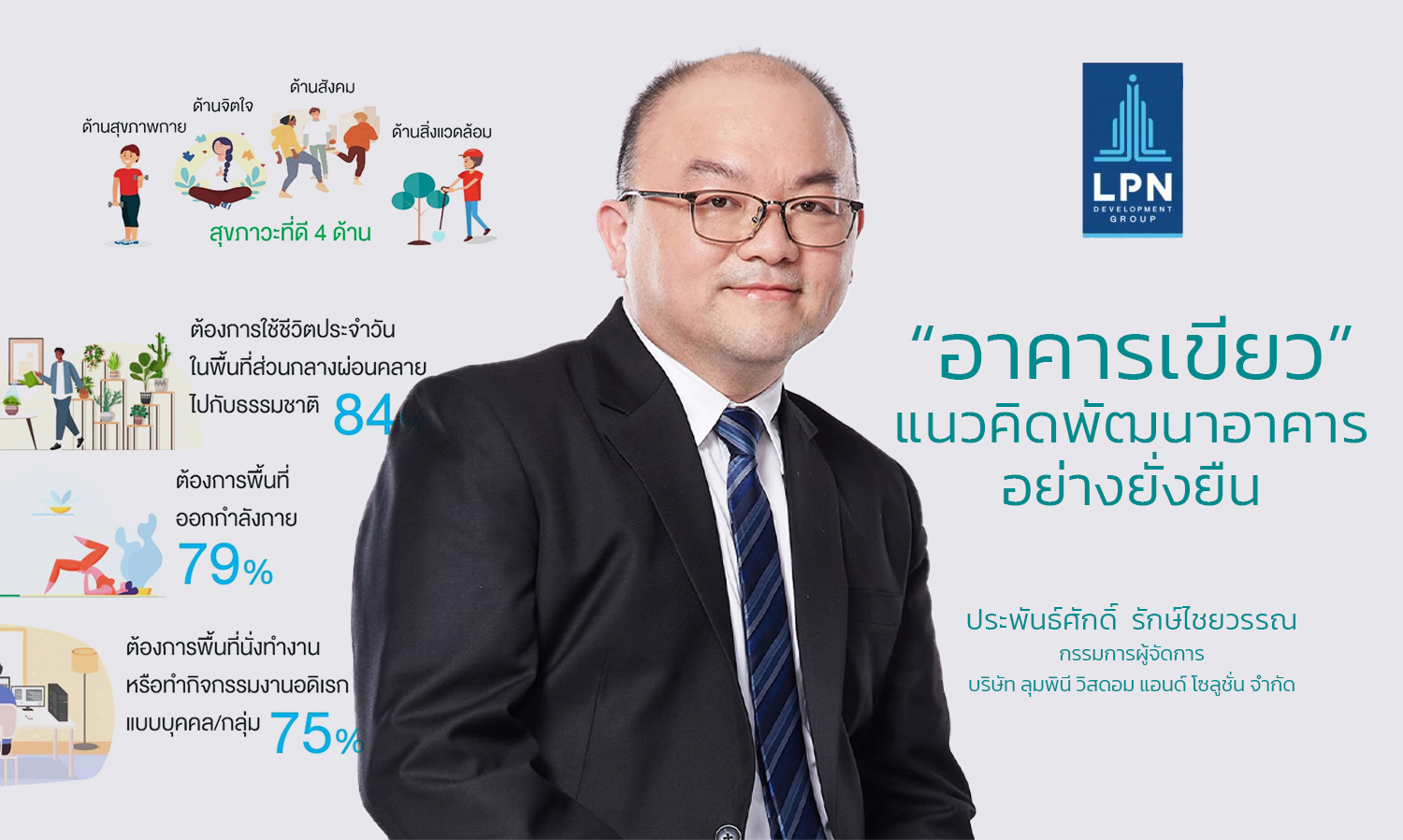
Green Buildings: The Concept of Sustainable Development
By: Prabhandak Rakchaiwan
Managing Director
Lumpini Wisdom and Solutions Co., Ltd.
First of all, I would like to greet the members and readers of “Terra BKK” and introduce myself. I am the managing director of Lumpini Wisdom and Solutions Co., Ltd., a research and development company in real estate under the L.P.N. Development Public Company Limited. Today marks the first day that my team and I will start writing articles on the Terra BKK platform, focusing on presenting approaches and developments in real estate under the concept of “Sustainable Development,” emphasizing the 3Ps: People, Planet, and Profit (in terms of happiness, comfort, financial returns, etc.). As Philip Kotler, the renowned marketing guru, wrote in 2016 and later discussed at the “World Marketing Summit Asia 2019,” this concept has become a scripture for marketers today and has expanded into other sectors, including the economy, society, and environment.
As a real estate entrepreneur, today I will talk about sustainable development in building development, specifically referring to “green buildings,” which encompass the development of all types of buildings, including residential, commercial, and other types, adhering to the green building standards of LEED (Leadership in Energy and Environmental Design) from the United States and the WELL Building Standard, which focuses on healthy living and originated in Canada, later becoming a global standard.
LEED is a concept for building development that considers energy-efficient and environmentally friendly construction, while WELL encompasses energy savings, environmental considerations, and emphasizes hygiene, covering seven key aspects that contribute to good health in living environments: Air, Water, Nourishment, Light, Fitness, Comfort, and Mind.
1. Air - The air quality must be pure, free from carbon dioxide and PM2.5 dust, with appropriate humidity for living.
2. Water - The water used in the building must be clean and safe, with good filtration systems, free from lead or other harmful substances.
3. Nourishment - This refers to having fresh, non-toxic food that is prepared hygienically and beneficial to the body.
4. Light - Good lighting must not only be bright in quantity but also consider quality, glare, and color visibility.
5. Fitness - This means having spaces for activities that promote regular physical movement, sufficient for the needs of building users.
6. Comfort - Creating an environment for building use that has pleasant sound, light, and temperature, free from disturbances.
And 7. Mind - This refers to being a place that promotes relaxation and peace of mind, possibly close to nature or creating a serene atmosphere.
By now, many may feel that this does not relate to them, as it seems distant and pertains to large real estate projects. However, both LEED and WELL Building Standards are applicable to real estate development, whether large or small projects, or even renovations for old buildings, including improvements to our own residences, whether condominiums or houses. When we are in spaces designed with energy efficiency, environmental considerations, and good hygiene in mind, we naturally work and live happily, resting comfortably with good hygiene.
“Energy-Efficient Buildings” Reduce Electricity Costs and CO2
In terms of environmental and hygiene aspects, there may not yet be clear comparative data on the effects of working or living in buildings designed under the WELL standard versus living in conventional buildings, as this data is abstract. However, regarding energy savings, research from the “Lumpini Wisdom” team found that developing a 10,000 square meter Grade B office building can save an average of 270,000 kilowatt-hours per year, translating to approximately 1.12 million baht annually, and helps reduce carbon dioxide emissions by no less than 151,470 kilograms of carbon equivalent per year. While the construction cost of such buildings is about 0.6% higher than that of conventional buildings, the payback period for the increased construction cost averages 4.5-5 years. The design of energy-efficient buildings emphasizes the design of building envelope systems, lighting systems, air conditioning systems, hot water production systems, and the use of renewable energy within the building.
This data reflects that with current technology, developing buildings or residences under the concept of energy efficiency, environmental friendliness, and good hygiene has lower development costs and benefits residents in the long term.
“WELL Building” for Better Health and Quality of Life
Regarding WELL, I have a friend who lives in a condominium and runs the air conditioning all day. That friend has to go to the hospital or clinic every two weeks, and the doctor diagnosed allergies. However, after my friend changed their living habits by turning off the air conditioning, opening the windows for air circulation, adjusting the lighting in the room, and planting trees using simple principles of WELL, their allergy symptoms improved, and they no longer need to visit the doctor for allergies. The air circulation and openness saved a lot on medical expenses and improved their health.
My friend's case is one example of applying the green building concept in a condominium. “Green buildings” are not just for developers but are concepts that everyone can apply in their workplaces and residences. After this lengthy introduction, I believe many are starting to take an interest in green buildings and improving their own buildings or residences to be green buildings, saving money in the long run through energy savings and enhancing good hygiene to reduce medical expenses from illnesses caused by living in spaces not designed with good hygiene in mind.
Let’s start with the importance of hygiene (Wellness) in designing residences under this concept. The design and selection of materials must consider the environment and good hygiene for residents, reducing touch points in areas at risk of infection in both residential and commercial projects. Currently, there are more construction materials and building supplies that consider hygiene available. The functionality must be diverse and adaptable (Multi-Function) to accommodate lifestyle and work-from-home needs. Social distancing in common areas and shifting from the shared space concept of Co-Working Space to Co-Separate Space allows shared spaces to be used with distance. This necessitates a change in design thinking for common areas in both horizontal and vertical projects, as well as incorporating digital technology (Virtual Livable Connect) into the design to enhance residents' comfort in their living environments.
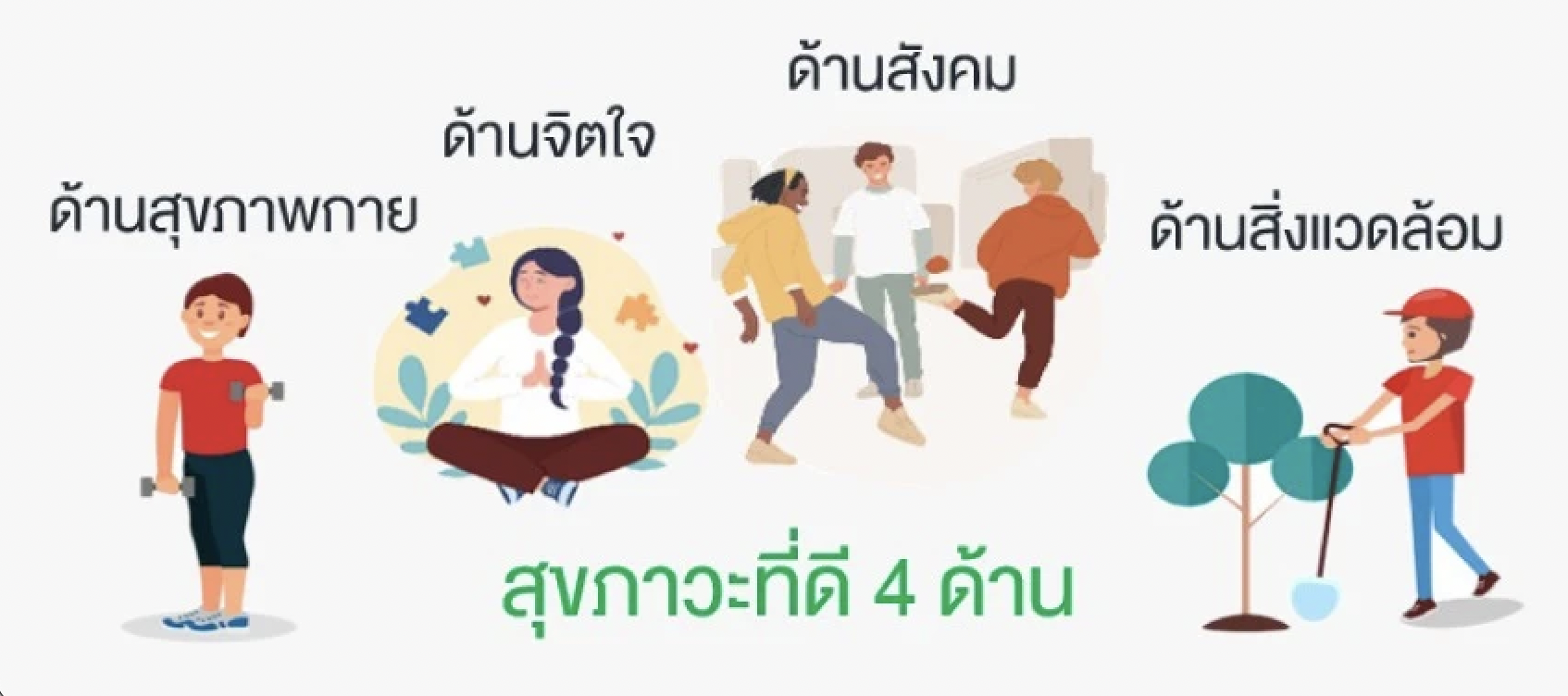
Implementing the design concept known as Sustainable Development Design involves considering material selection, energy use, and building resources that are environmentally friendly, while also creating good hygiene for residents, reducing greenhouse gas emissions or carbon dioxide (CO2) in the air, and promoting energy savings, water conservation, and other natural resources to meet the needs of creating good hygiene in living environments. Currently, there are effective design technologies like Building Information Modeling (BIM), which is an efficient design management technology that considers environmental conditions, functional organization, and the integration of living technologies in design to address lifestyles that consider health and the environment simultaneously.
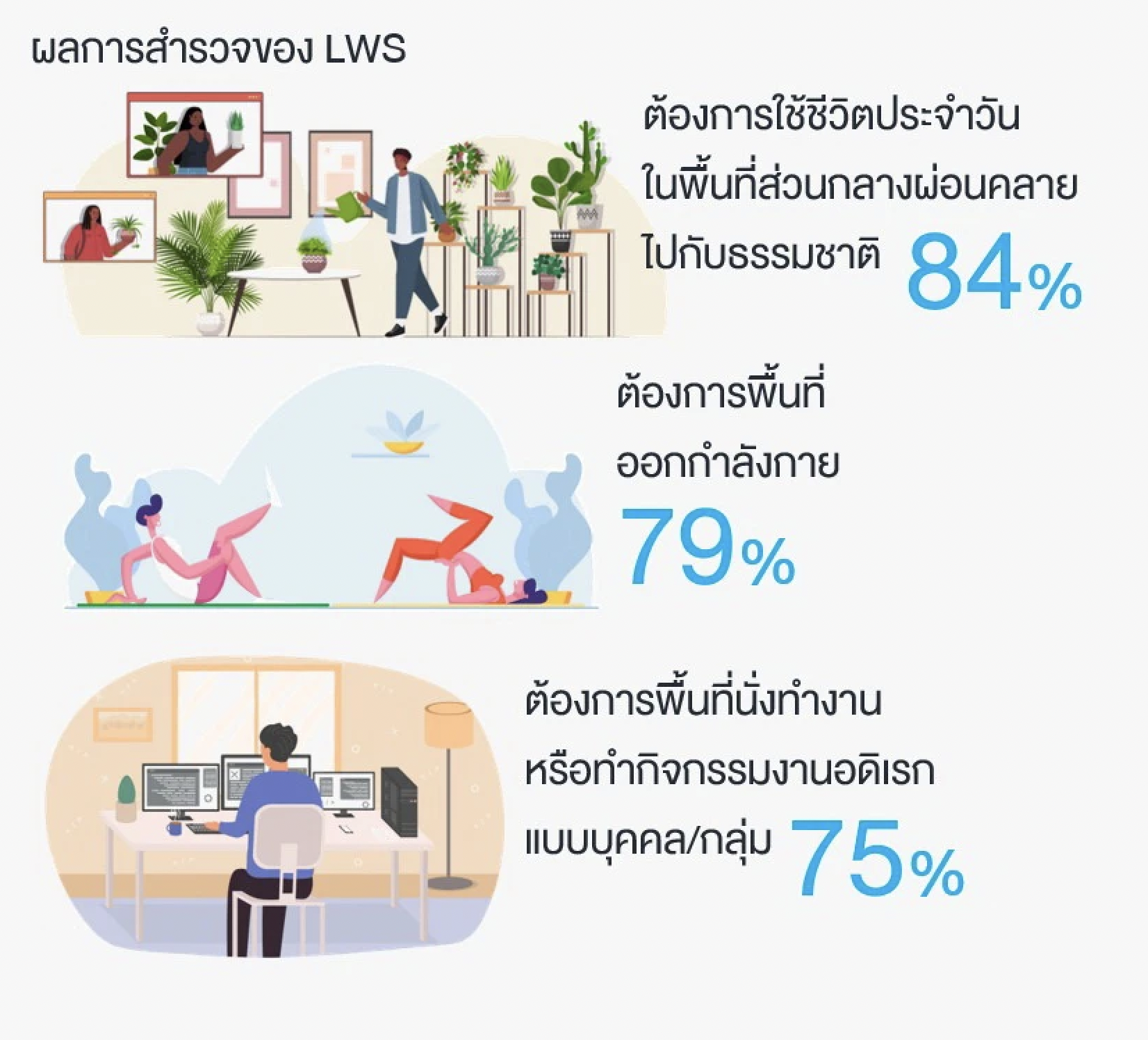
According to a survey by “Lumpini Wisdom,” over 84% of residents in Lumpini condominiums want to live in common areas that relax them with nature. Additionally, 79% want exercise spaces, and 75% want areas for working or engaging in personal/group hobbies. This aligns with the 2021 annual report from Google, which found that consumers searched for the phrase “online doctor” over 122% more than in 2020. When considering this alongside global sales data for smartwatches, which typically have basic health monitoring functions like heart rate and running metrics that cater to exercise needs, global sales reached $14.93 billion in 2020, a 16% increase from 2019, with sales of $17.35 billion in 2021, growing faster than luxury watches, and projected to reach $30.88 billion by 2025.
Since the outbreak of the new coronavirus (COVID-19) from late 2019 to the present, consumer behavior has changed. The discussion around green buildings that consider energy savings and good health (Energy Saving and WELL Building Standard) leads me to believe that “green buildings” are not just a trend but a necessity that is already happening and becoming the standard for building development worldwide, including in Thailand.
That's all for today. I look forward to sharing more about sustainable development in October. Stay tuned! Goodbye!