Krungthai Research Invites Understanding of GRESB and LEED: Two Global ESG Standards for Real Estate Businesses Embracing Carbon Neutrality and Net Zero Trends
Krungthai COMPASS Research Center evaluates the trends of Carbon Neutrality and Net Zero as driving forces for real estate developers to enhance their operations to meet ESG standards, particularly in environmental aspects, to maintain and expand their customer base while promoting operational performance. It advises operators to familiarize themselves with GRESB and LEED, which are globally recognized ESG standards for the real estate sector. Both standards share similar assessment criteria, such as reducing electricity and water consumption, lowering greenhouse gas emissions, and using environmentally friendly construction materials. Currently, there are 5 Thai real estate developers that meet the GRESB standard and 212 real estate projects in Thailand that meet the LEED standard.
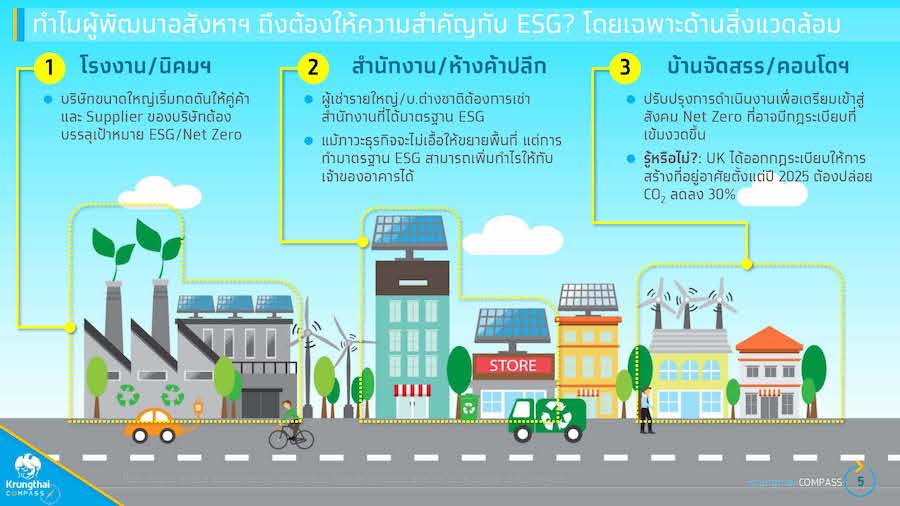
Dr. Patcharaporn Nantharamat, Assistant Managing Director of Krung Thai Bank, revealed that conducting business with consideration for Environmental, Social, and Governance (ESG) factors is becoming increasingly important in the real estate sector as the world plans to achieve Carbon Neutrality and Net Zero goals in the future. Currently, the real estate sector contributes to greenhouse gas emissions of up to 25-40% due to its supply chain links with high-polluting industries such as cement, steel, aluminum, and glass, along with high electricity and water usage in commercial real estate operations.

“The types of real estate that should prioritize enhancing operations to meet ESG standards, particularly in environmental aspects, include 1) factories/industrial estates, as major global companies like Toyota, Honda, or Apple have begun enforcing regulations requiring companies in their supply chains to reduce greenhouse gas emissions and achieve Net Zero. This means that tenants or buyers of factories/industrial estates in Thailand, who are part of the supply chain for these companies, must also meet the Net Zero Supply Chain goals. Similarly, 2) commercial real estate, such as offices and retail stores, which consume a significant amount of energy, reflected in high electricity and water costs accounting for about 15% of rental income. In the case of residential properties, developers of housing estates and condominiums should improve project development to prepare for a Net Zero society, which may face stricter environmental regulations, similar to the UK, where new housing regulations state that from 2025 onwards, CO2 emissions must be reduced by 30%.”
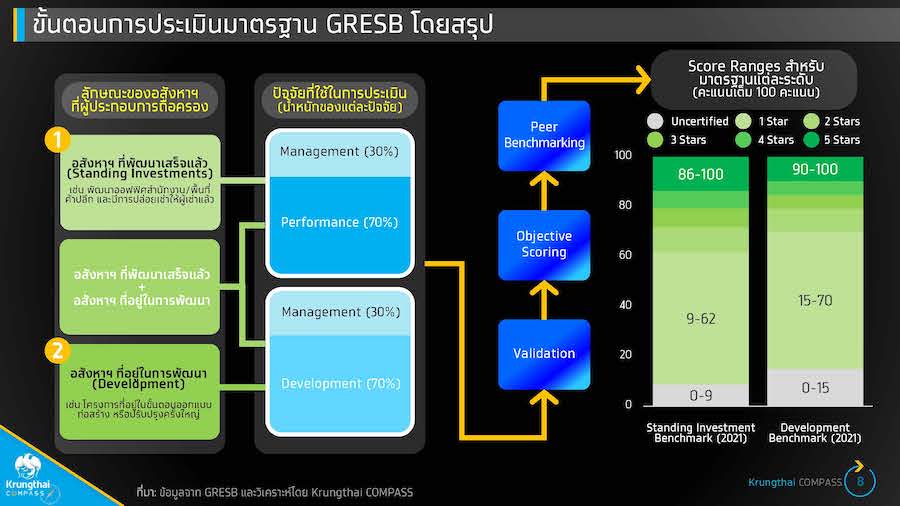
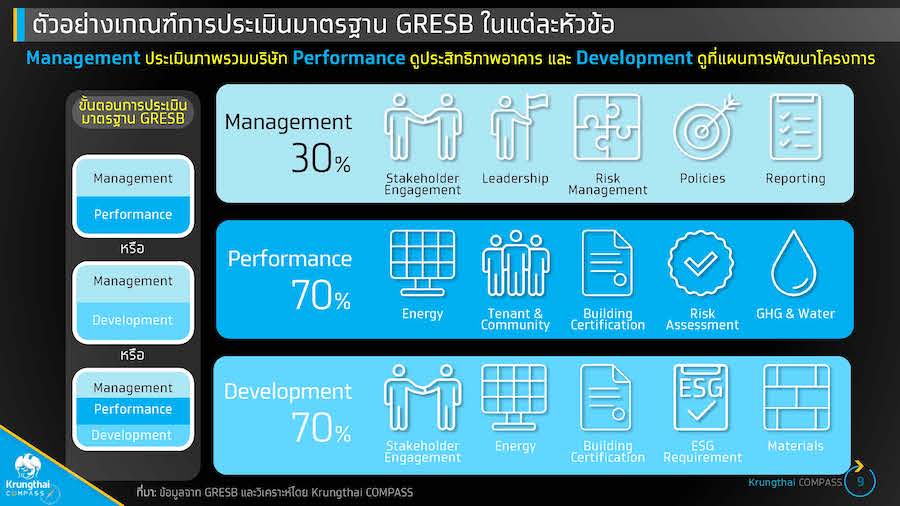
Mr. Kanit Amaskul, an analyst, stated that the Global Real Estate Sustainability Benchmark (GRESB) and Leadership in Energy & Environmental Design (LEED) are two globally recognized ESG standards for the real estate sector, as reflected by the number of operators and real estate projects worldwide that have been certified, totaling 1,520 for GRESB and nearly 92,700 projects for LEED, with an average annual increase of over 15% and 10% respectively over the past five years. Although both standards have some differences, with GRESB being a standard for operators and LEED being project-specific, the sustainability assessment criteria for both standards utilize similar factors, such as reducing environmental and community impacts, conserving electricity and water, lowering greenhouse gas emissions, and using environmentally friendly construction materials. The latest data shows that in Thailand, there are 5 operators that meet the GRESB standard and 212 real estate projects that meet the LEED standard.
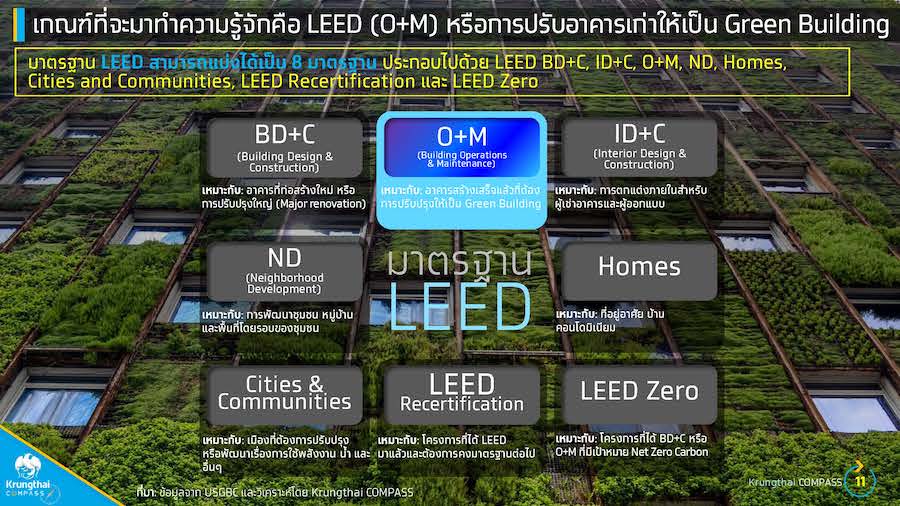
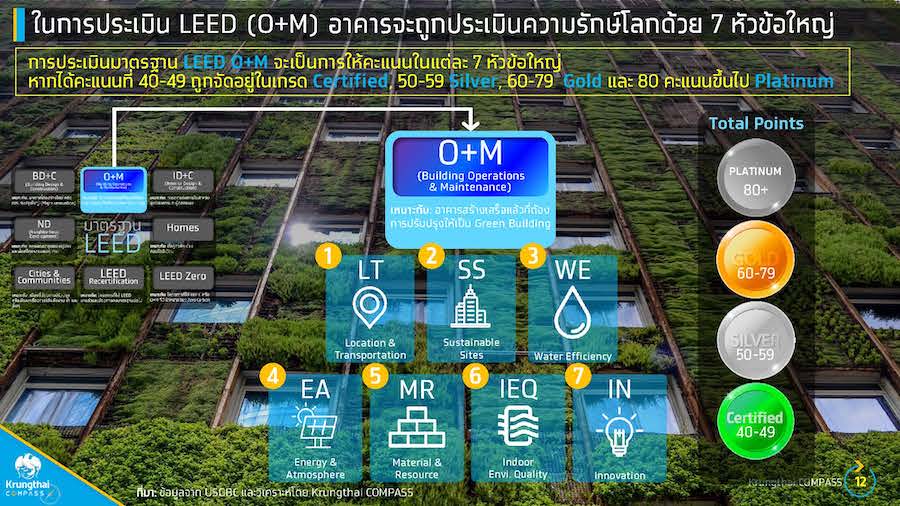
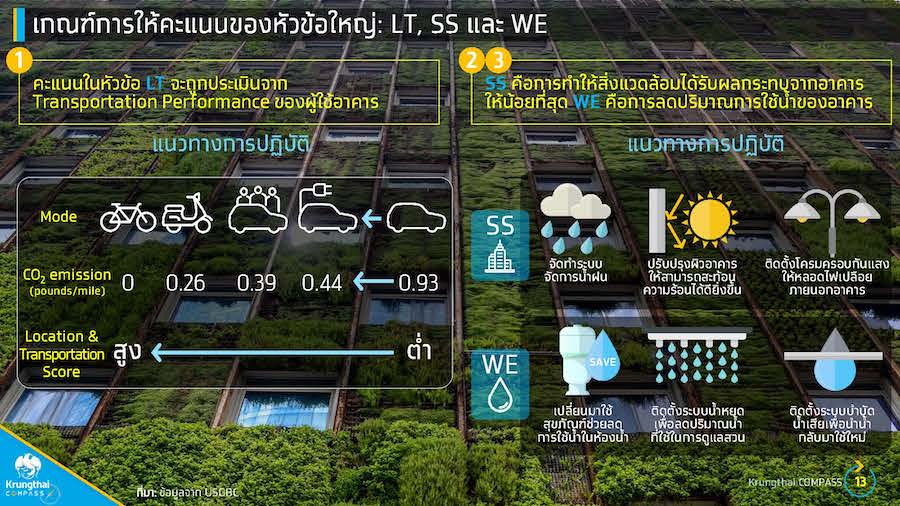
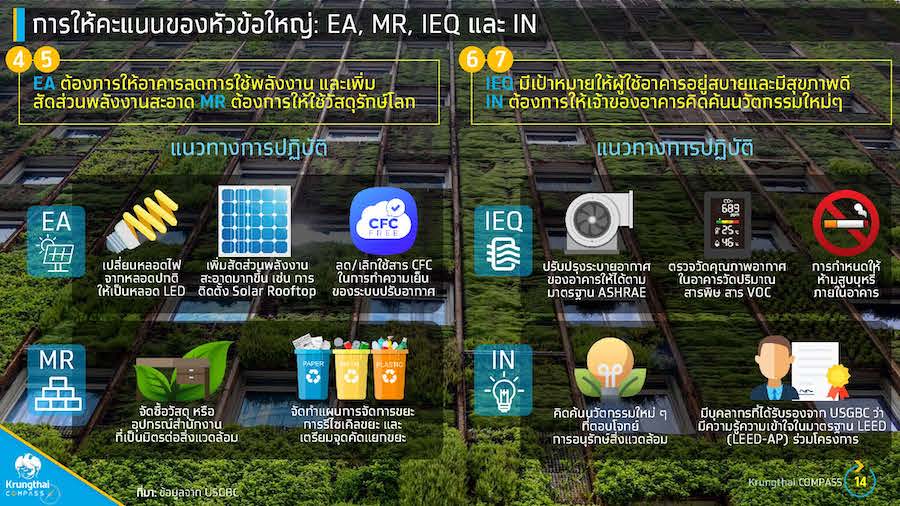
“In addition to improving operational processes for sustainability according to ESG standards to enter a Net Zero society, compliance with GRESB and LEED standards also benefits real estate developers in two ways: 1) Enhancing ESG image and reputation, which increases the likelihood of attracting foreign investment. Surveys from renowned consulting firms like PwC and Gartner indicate that 79-85% of investors consider ESG factors in their investment decisions. At the same time, 2) it helps increase profit opportunities for commercial real estate developers, such as offices and retail stores, as investing in retrofitting existing buildings to become Green Buildings according to LEED standards can reduce electricity and water costs by 30% and 10%, respectively, leading to a potential increase in net profit margins for office and retail businesses by about 3-4%. Developers interested in this can seek advice from consulting firms compiled in the article to ensure the effective implementation of GRESB and LEED standards.”