A Classic Lesson from the Absence of Updated Construction Drawings and Management "Plans" After Construction Completion
By Assoc. Prof. Dr. Porn Virulrak, Independent Scholar [email protected]
- Vice President of the BIM Association of Thailand
- Expert in Digital Twin Technology Thailand
- CEO of Asset Activator
There are two powerful and intriguing sentences that I would like you, the reader, to ponder:
Sentence 1: "You cannot change the world; what you should change is yourself."
Sentence 2: "If you want to change the world, start with yourself first."
The main idea of the first sentence is "adjusting your mindset". When we cannot change something, we must adapt ourselves to the situation in order to move forward.
The essence of the second sentence is to have "faith" that we will not give up and will not abandon our mission; if we cannot achieve it today, we must believe we can do it tomorrow.
In human existence, there are two philosophies we can use simultaneously in different life situations. Can we apply these two philosophies to the same issue?
The answer is "yes", by separating the perspectives: currently, we "adjust our mindset" to work without stress or despair, but we must keep our "faith" intact, not abandon our beliefs, and maintain hope that everything will improve and develop when the time is right.
However, what often happens is that we tend to go halfway by "adjusting our mindset" and then following it with "resigning ourselves" and losing our "faith". Many problems in the working world thus become issues of "acceptance", accepting that losses are inevitable, that things must fail, and that we cannot change anything.
When we lose faith, what should be a 'temporary' loss becomes a 'permanent' one, often without realizing that the outside world is changing, with tools, technologies, and innovations, even products and services available to solve those problems "for a long time now" at increasingly lower prices. Yet, we have not looked up to see this, leading to a state of "ignorance" because we are not interested in embracing new things in our lives.
How many times have you attended a seminar or a trade show, or had someone present products or services to you, and you were shocked, thinking to yourself, "Is this really possible now?" And the seller smiles back, saying, "This technology has been around for 10 years; my company has been established for 3 years."
The term 'innovation' in my opinion, is not linked to objects or technologies but rather to the mindset of "awareness" of those who experience it. Because 'innovation' at that moment is what rekindles their "faith" once again.
The problem of "adjusting our mindset" and "resigning ourselves" has also led many workers to lose their "faith" in the realm of Property Management. One of the most severe issues causing significant damage is the problem of As-Built Drawings (drawings created after construction is completed). Today, the issues arising from using As-Built can be resolved with Digital Twin technology.
But here, I would like to lay the groundwork for the use of As-Built in property management first.
What is As-Built Drawings?
First, it should be noted that 'As-Built' is not a technical term from the architecture or engineering world. Most people in the industry refer to it as "As-Built", understood to mean the drawings that "should be" like the actual completed construction (as actually built).
The producers of "As-Built" are the construction contractors, and As-Built is an essential document that must be delivered alongside the actual completed building. It serves as crucial evidence for building inspections regarding safety, verifying whether the contractor built according to the actual drawings.
The As-Built drawings, once the building is completed, become a vital document for the building management or Facility Manager in managing the building regarding machinery maintenance, cleaning, security, emergency planning, and even for temporary events within the building. If there are cases of interior decoration or additional construction, the As-Built will serve as a "starting database" that is crucial for further work with designers or interior construction contractors.
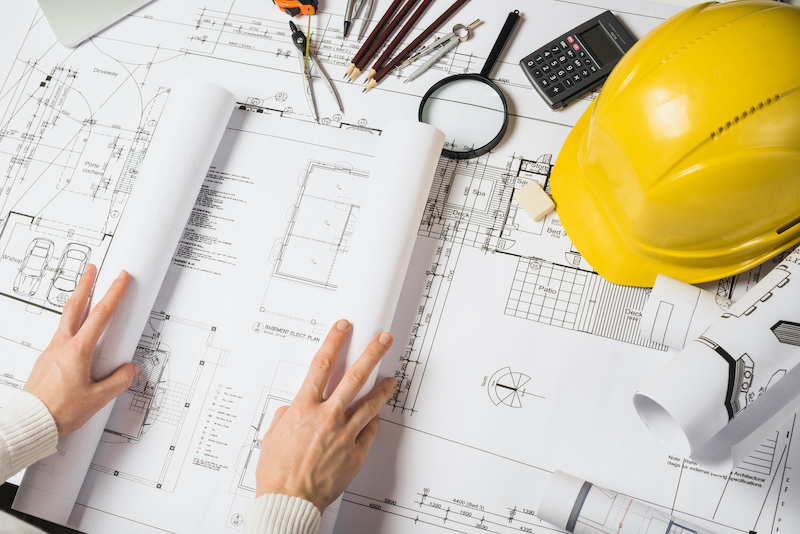
It is important to clarify to the readers that As-Built includes not only the drawings but also other accompanying documents such as specifications, operation manuals for machinery, and warranty documents. These are all considered part of the As-Built Document. These documents are vital information confirming the existence of various assets of the organization.
Thus, looking at the broader picture, it is "Data" that must be managed further. Therefore, This data is a type of 'asset' that is very important for the financial status of the organization. From now on, I will refer to it as As-Built Document to complete the picture.
The Problems of As-Built Document
As mentioned earlier, the As-Built Document is crucial for various operations after the building is completed, comparable to being a "map" for the journey toward the future of managing that building's assets, or if likened to accounting, the As-Built Document is the 'balance sheet' that is passed between managers (from construction to building management).

So what are the major problems of the As-Built Document that people have already "adjusted their mindset" and "resigned themselves" to?
Problem One: "No As-Built Document"
How can this be possible? When it is an important document and part of the handover from the construction contractor to the building owner? It should be noted that "there used to be one", but over 5-10-15 years, it has disappeared. Especially if it is a building that has not undergone much renovation or lacks a good management system (like doing whatever renovations without adhering to any plans), or if a professional is not managing the building, the As-Built Document becomes a "lost document".
Problem Two: "As-Built Document does not match reality"
If we exclude those who have issues with the absence of As-Built Document, focusing only on buildings with documentation, as someone who has been in the industry for a long time, I can confidently say that buildings with documents that do not match the actual construction are 99%.
I'm not joking; that 99% could even be more in practical terms!
At this point, some readers may wonder if no one has a correct As-Built Document? I would say, "Yes, there are some," but those are very few. Most buildings with accurate documents usually fall under these conditions:
(1) The construction contractor has a very high level of responsibility and does premium work.
(2) The building was completed less than a month ago (thus the As-Built Document is still accurate).
As of today (July 2021), during the COVID-19 crisis, with construction sites closed, I dare say that the correct As-Built in Thailand is 0.
However, it must be noted that the term "not matching" is not binary; it does not mean that if it does not match, it is a failure and unusable – it is not like that. The mismatch is more like a gray zone; if we compare 'white' to be perfectly accurate and 'black' to be completely chaotic, buildings will have varying shades of gray.
The damages caused by the As-Built Document not matching reality
Some may think, "Since everyone has the same problem, how can we call it a problem?" or "Even if the documents do not match, everyone can still work, and businesses are thriving."
If you think this way, try asking simply: In the COVID era, if all Thai citizens were infected with COVID-19, would we say that the COVID-19 problem is no longer a problem? That would not be correct, because those infected with COVID-19 are like buildings with mismatched documents; some show no symptoms, some have mild symptoms, and some are severely ill and end up in the ICU.
However, the issue of As-Built Document not matching reality is not a contagious disease but a problem stemming from the same root cause in terms of work systems, which I will elaborate on next.
Let’s analyze what damages may occur in cases where a building has no As-Built Document (considered completely black) or is significantly mismatched (dark gray)?
(1) Deaths and injuries: Many may be shocked that a mismatch in documents could lead to deaths. It may not be a direct cause, but rather an indirect one.
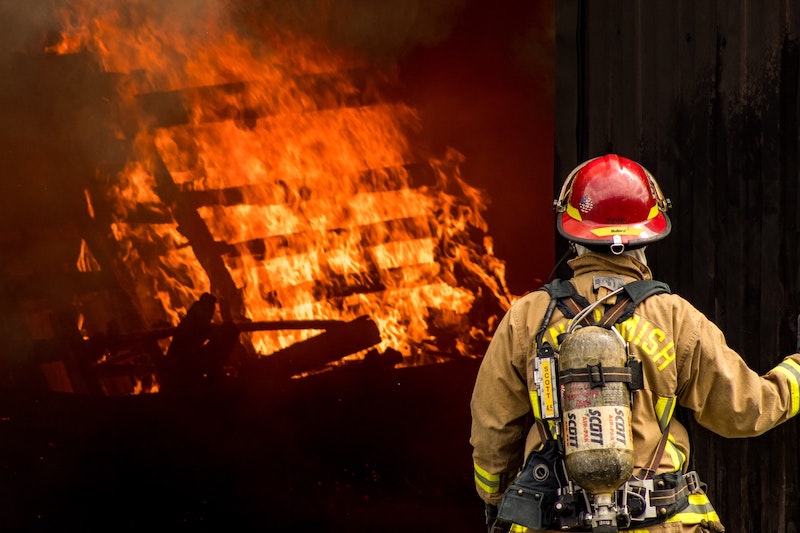
A common and recurring scenario is when a building catches fire and firefighters ask for the building plans, which are part of the As-Built Drawings, but 'there are none'. The firefighters then have to guess, which may prevent them from rescuing those trapped in the fire in time.
Or in cases of terrorist incidents in complex buildings, police and military personnel need the correct building plans, but when none are available, they must risk their safety or rely on guesses from those familiar with the building.
Sometimes, it may not be about a disaster but rather an attempt to repair or open high-risk systems, such as gas or electrical systems. However, due to the absence of updated or recorded plans, they may open the wrong points, leading to explosions, which are losses no one wants to see, especially when they stem from issues that could have been avoided.
(2) Financial damages: In this regard, I will reserve it in terms of direct costs or time lost without any loss of life or physical injury.
In the case of a fire, if no one is inside, it may still cause damage, such as factories with chemicals as fuel, where firefighters need to close valves releasing chemicals. If the documents are mismatched or absent, the critical question is, Where are the valves?
Or in general work scenarios, such as event organization, where the venue has been studied, and stages designed, but upon arrival, the shape and position of rooms and doors do not match the designed stages, leading to the need to redesign and rethink the work.
Even for building repairs or extensions, if the information is incomplete and actions must be taken without any plans, in some cases, it may be severe enough to require "surveys" and "new plans", similar to historical sites that need to be surveyed and measured to create construction plans. These new surveys will incur additional costs.
(3) Conflicts: In any work, conflicts are common due to various reasons, but resolving conflicts must start with "established facts" that no party disputes.
In cases where there are no plans, it may lead to conflicts when one party claims something is correct while another disagrees. This leads to challenges, and when one party loses, it does not mean the other party will be satisfied because there is no accurate information to settle the dispute.
Similarly, in legal disputes, ambiguous and incorrect documents will be discarded as unusable evidence, creating a gap for the other party to demand from us immediately.
(4) Corruption: Anything in the world that is unclear, ambiguous, or lacks evidence is the foundation for fraud. Just like things hidden under ceilings, underground, or behind walls, if there is no record of "what should be", when discovering "what actually is", it creates problems because there is no reference to determine what should be correct. For instance, if a broken water pipe under the ceiling should not be like this, what should it actually be? It cannot be concluded because there is no reference data.
At this point, you may begin to see how the absence of an As-Built Document or having one that does not match reality can cause significant damage. Isn't it shocking that we can "adjust our mindset" and "resign ourselves" to these problems? The reason lies in the root cause, which I will reveal to you in the next article, along with solutions that will help you regain your "faith" once again.