9 Essential Skills to Use Throughout Life
9 Skills Everyone Should Learn, Develop, and Use Throughout Life That Offer the Greatest Returns for Those Who Continuously Strive for Improvement in Every Era
“Live as if you were to die tomorrow. Learn as if you were to live forever.”
This quote by Mahatma Gandhi reflects the importance of learning as a lifelong companion for humanity.
We present an article discussing crucial skills for personal and professional development, drawing on recent research from Stanford University that tells the story of Carol Dweck and her colleagues through studies on the performance efforts of a group of actors in various aspects.
The key takeaway from Dweck's research is the finding that “we should never stop learning.” The act of learning is as important as what is learned, including the belief that you can improve yourself and achieve things in the future that exceed your current possibilities, which is both exciting and realistic.
However, each person's time is limited, so one should dedicate themselves to learning skills that yield the highest benefits. Here are the 9 skills that everyone should learn, develop, and keep for lifelong use:
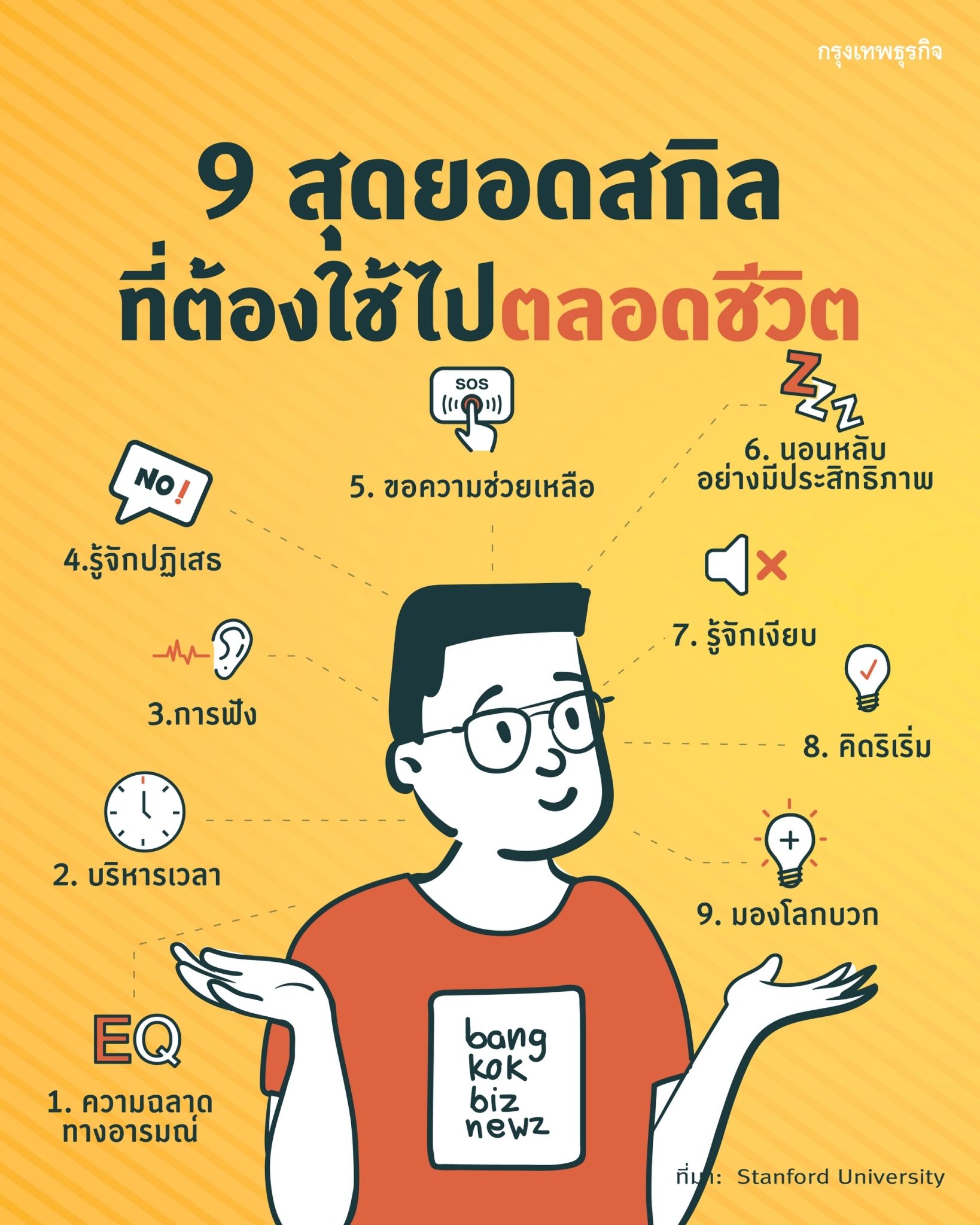
1. Emotional Intelligence (EQ)
Emotional intelligence affects how we manage behavior, navigate social complexities, and make positive personal decisions. EQ is your ability to recognize and understand emotions in yourself and others, as well as the relationships between people.
Over the past decade, TalentSmart has tested EQ alongside 33 other essential work skills and found that EQ is the strongest predictor of performance.
Research indicates that EQ is a key factor that distinguishes famous actors from others and is an effective way to unleash energy to create outstanding results.
When the group's performances were re-evaluated a few months later, the group taught to improve their performance actually worsened, while the group taught that they had the power to change their brains and improve their performance significantly improved.
Among all those studied, 90% of top actors have high EQ. Naturally, those with higher emotional intelligence have the opportunity to earn an average of $29,000 more per year than those with lower emotional intelligence, reflecting that EQ is directly related to income because it allows for better management of various matters. The key is not just increased income from emotional intelligence but also greater happiness and reduced stress, even in less-than-ideal environments.
2. Time Management
The greatest factor in creating effective time management is doing small things that lead to what is important in life. If we fail to manage our time, we will spend a lot of time doing other things that delay tasks, miss deadlines, or produce low-quality work.
Therefore, learning to manage time is a skill that requires significant practice, as this skill allows actors to perform at their highest level, just as it enables ordinary people to manage their time effectively every day and succeed in what they are doing.
3. Being a Good Listener
“Listening” seems like an easy task everyone should do, but it is much more important than that. Often, we are listening to something while simultaneously thinking about what to say next, which makes our listening ineffective. True “listening” means focusing solely on what the other person is saying, leading to understanding, not listening to argue.
The listening skills that should be developed involve learning how not to judge what you hear immediately and focusing on understanding what others are saying or communicating with us.
Moreover, accessing non-verbal cues such as tone of voice and body language is crucial for understanding the true meaning being communicated.
4. Knowing How to Say No
Research from universities in California and San Francisco indicates that the harder it is for people to say “no,” the more likely they are to experience stress, burnout, and even depression.
Saying no is a significant challenge for many people and a word that many fear to use. This leads to the use of phrases to avoid saying “no” outright, such as “I’m not sure” or “I think I can’t do it,” even though they would prefer to decline directly.
Thus, learning to say no or appropriately decline can free oneself from unnecessary limitations, allowing more time and energy for what is important in life.
5. Asking for Help
Recognizing that we need help is one of the essential skills that requires confidence and humility.
This skill is crucial in life because the last thing a leader wants to see is employees working in the wrong direction, too ashamed to ask for help or too proud of what they are doing to admit they don’t know what they are doing.
Therefore, asking for help when appropriate is a highly valuable skill, as it calls forth one’s courage. More importantly, it is about effectively following through on that assistance.
6. Getting Quality Sleep
We always know that quality sleep is good for everyone’s brain. Recent research from the University of Rochester found that when sleeping adequately, the human brain effectively eliminates toxic proteins.
(Read the article "10 Ways to Sleep for Good Health" here.)
However, when you do not get quality deep sleep, toxic proteins remain in brain cells, reducing your ability to think and be creative.
Moreover, caffeine, which many people consume to stimulate the brain, cannot repair or solve this problem. Learning to sleep well regularly is a challenging skill to control but can be practiced or organized effectively. Therefore, ensure you get enough sleep and eliminate distractions from your mind before bedtime, as investing in sleep pays huge dividends the next day.
7. Knowing When to Be Silent
Human nature often resorts to proving oneself right by explaining or arguing their thoughts. However, this approach is often ineffective as it can lead to endless emotional conflicts, and fighting through explanation or argument can severely damage relationships when you are caught in emotional responses.
The skill to develop is learning to be silent when faced with such situations, which is a wise response skill through silence.
8. Thinking Creatively
Creativity is a vital skill for long-term living. In theory, creativity is simple, but when it comes to taking action, there are always obstacles in the way.
Many people are too afraid or lazy to be creative. When this happens, it is necessary to take risks and push yourself out of your comfort zone and keep doing it until creativity becomes second nature, as creativity is the only essential skill that makes us “different.”
9. Maintaining a Positive Outlook
The real obstacle to optimism is that the human brain instinctively seeks and focuses on threats. This survival mechanism causes many to fall victim to negative thinking constantly.
This mechanism of negative thinking will continue until a “threat” is identified, as these instincts amplify the perceived likelihood of whether what is happening is good or bad according to imagination. The mechanism of negative thinking increases the likelihood of these negative perspectives becoming a reality and wreaks havoc in your life.
Therefore, maintaining a positive mindset is a skill that should always be developed to challenge what happens both daily and over the long term to overcome the negative thoughts you create.
Source: QUARTZ at WORK
SOURCE: www.bangkokbiznews.com