Lessons from the Illusion of GDP and How to Achieve Life Balance After the COVID-19 Crisis
Dr. Prasert Pinngam (Ph.D., TREES-A NC)
B.Sc. Public Health, Mahidol University
From being the country with the highest COVID-19 outbreak in the world to the current chaos stemming from the call for justice for George Floyd in the United States, it brings to mind an article I once used as a reference for my doctoral thesis over ten years ago. That article was a speech by Robert Kennedy on March 18, 1968, at the University of Kansas, which served as a wake-up call to Americans at that time, who were indulging in materialism after their country emerged victorious in World War II. Every word Robert Kennedy spoke that day has proven to be remarkably prophetic today. The topic of that day was a commentary on GDP (Gross Domestic Product) as an inaccurate measure that cannot be used to gauge true development, which can be summarized as follows:
Table Showing What is Included and Excluded in GDP Assessment (Human having VS Human being)
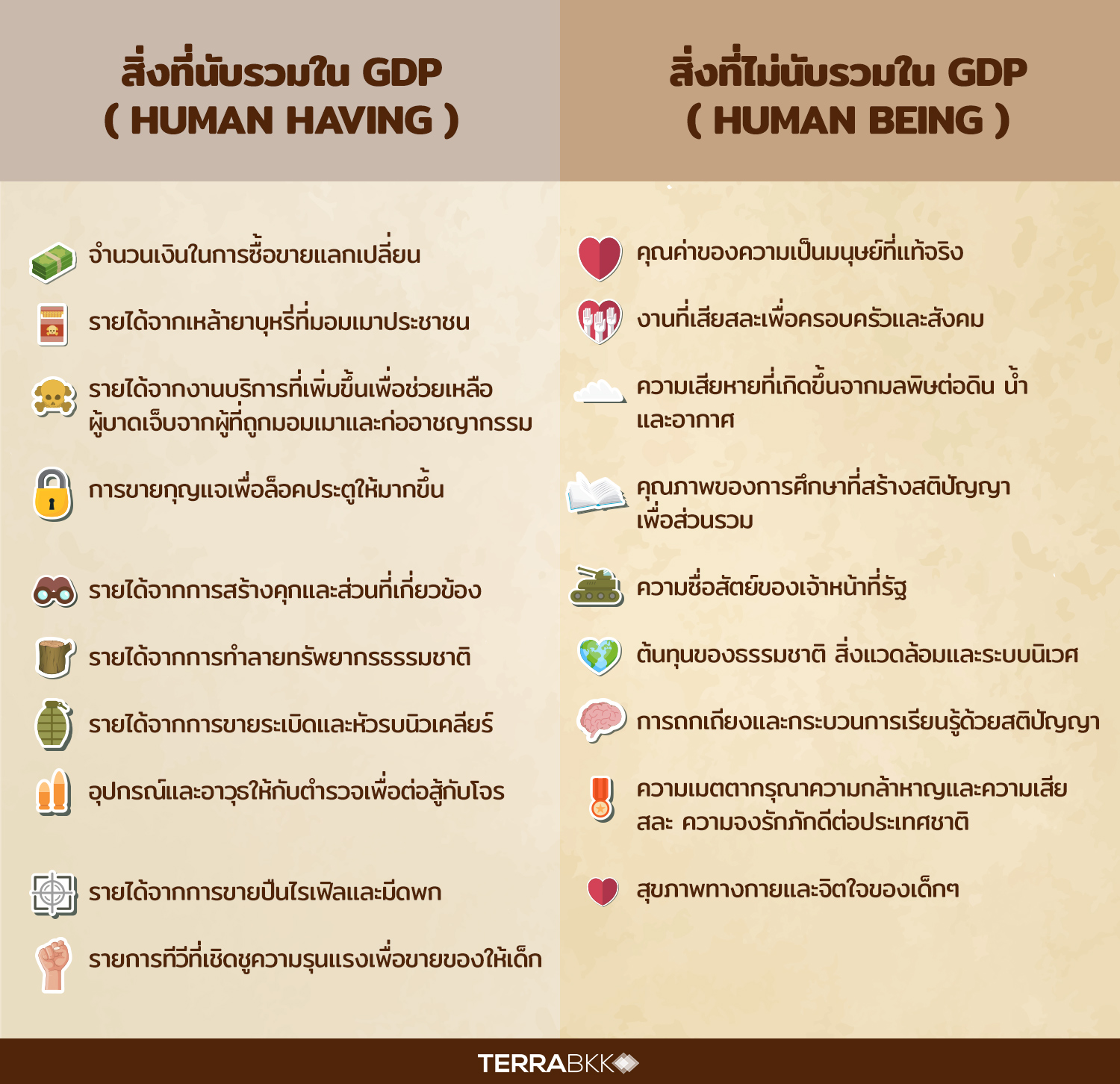
From the table, it is evident that counting growth from incorrect sources, such as increased sales of rifles or door lock systems, does not reflect true progress. However, aspects that indicate the growth of the human spirit, such as compassion or the integrity of public officials, are not included. In summary, GDP is a measure of growth that evaluates development based on the acquisition of goods without considering the negative impacts on third parties or the environment. This can be regarded as one of the best speeches in the history of the United States, as these matters have influenced the mindset of Americans and have implications for greatness in many generations to come, but certainly not in the present.
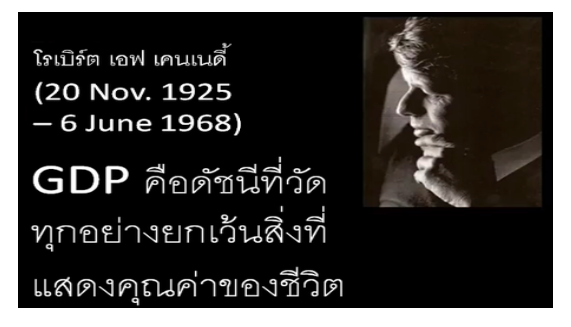
If Robert Kennedy were alive today, he would undoubtedly be shouting at the current leaders, as everything he compared over 50 years ago has come to fruition, including issues of theft, gun violence, environmental destruction, withdrawal from climate change solutions, as well as health and education for children. The distortions of GDP that Robert Kennedy warned about are still echoed by a group of Ecological economists who agree and have attempted to propose a new indicator called the GPI (Genuine Progress Indicator), which measures the true progress of a country by including the value of beneficial activities and accounting for the costs of crime, natural resources, and environmental damage as follows:
- Include the value of volunteer work or unpaid work, such as homemaking.
- Include the value of recreational activities.
- Subtract the value generated from activities that cause crime, such as income from arms sales.
- Subtract the value of services needed to manage pollution and environmental issues.
- Subtract the damage caused to nature and the environment.
This aligns with everything Robert Kennedy discussed, and when comparing traditional GDP with the new GPI, it is evident that the United States has a significantly lower rate of true growth when looking back. This shows that the increase in GDP, which many leaders take pride in, needs to be re-evaluated for its accuracy.
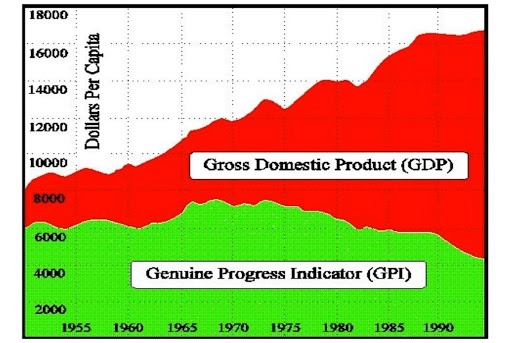
Comparative Chart of GDP and GPI in the United States
Two Main Streams of Economics and the Future of the World
Currently, the study of economic systems is clearly divided into two main streams. The first group, led by Adam Smith, still believes in managing efficiently to meet unlimited demands with limited resources. This concept is undoubtedly reaching its end. The second stream of economics believes in the limited nature of resources, with both streams originating from two main ecological perspectives as well (Patten and Odum: 2015).
- Stream 1: The ecosystem cannot self-manage to create sustainability; thus, humans must control and manage it.
- Stream 2: The ecosystem is capable of self-management to create sustainability; humans should disturb it as little as possible or not at all.
These differing perspectives lead to principles and create vastly different impacts.
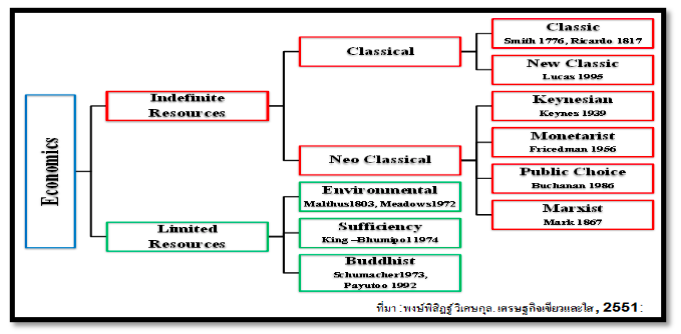
Illustration of the Two Main Economic Streams in the World Today
The principle of sufficiency economy proposed by His Majesty King Rama IX of Thailand falls within the second main stream, which has led many Thai people to recognize and begin living according to this approach. Additionally, there is the Buddhist economics of E.F. Schumacher, which presents another interesting perspective. E.F. Schumacher, the author of “Small is Beautiful” in 1974, was an economist sent by the British government to study Myanmar, which was then under British rule. The British government wanted him to investigate what areas Myanmar needed to develop further. Schumacher spent six years studying the living conditions of the Burmese people, and his response to the British government was “It is not Myanmar that needs further development, but England itself that should develop according to the example of Myanmar.” This sparked a broad discussion on development perspectives, as at that time, industrial development in Western countries was flourishing to its peak, leading to confidence that Western nations were on the right path. Meanwhile, Schumacher called for recognition of the value of the “human spirit,” viewing material success as merely superficial. Development based on the destruction of nature and the environment undermines the true human spirit according to Buddhist principles. Thus, E.F. Schumacher is regarded as a father of Buddhist economics. Research by Dennis Meadows and his team has tracked numerous changing factors over 30 years, starting in 1972, analyzing trends to predict what would happen if the world's development continued in this manner. This resulted in the book “Limits to Growth.” The findings from this study indicated trends in natural resources, population, pollution, food, and industrial output as follows:
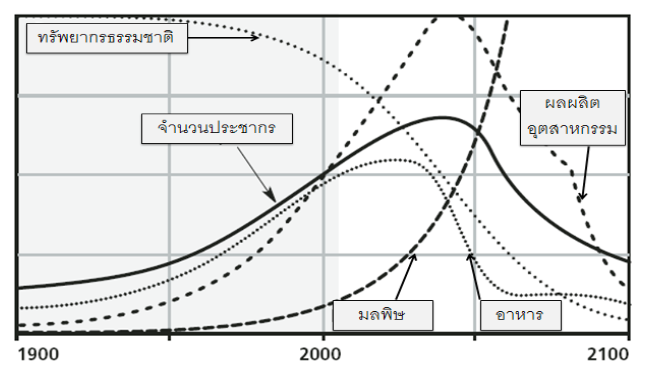
Graph Showing the Future of the World from Limits to Growth by Meadows and Team
According to the predictions of Limits to Growth, there will be a noticeable decline in natural resources, resulting in reduced food production capacity by 2030, which aligns with a UN report indicating that this is due to soil degradation and increased pollution. After 2030, food shortages and pandemics will threaten the world, leading to a massive loss of life. These warnings serve as an official reminder to the world, backed by scientific expertise. Besides predicting the future, Meadows and his team proposed several development alternatives, primarily based on the principle of sufficiency and using limited natural resources without further damaging nature and the environment. They also suggested five key tools to facilitate sustainable development:
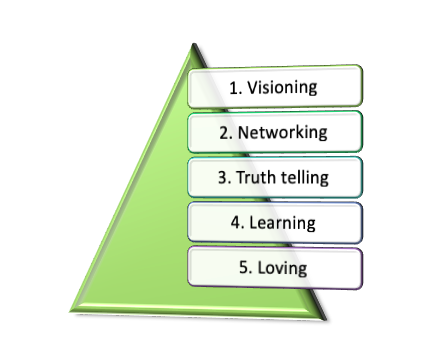
The tools proposed by Limits to Growth for sustainable development begin with creating a vision of a clear future of how we want to be and live on this planet. This vision must be achieved through collaboration (Networking) to work together. We can no longer afford to be divided. This collaboration must be based on acceptance and truth-telling to effectively address problems in a timely manner. While mistakes may occur, we will learn (Learning) from these experiences with purpose. Everything done together must be rooted in compassion and love (Loving) for one another, for fellow humans, animals, and plants. Importantly, it includes love for nature and the environment. If we can apply all five of these principles, I firmly believe we can collectively create balance in this world.
Lessons from the Illusion of GDP: An Indicator that Forgets the World and Humanity
It is believed that when Adam Smith, the father of capitalist economics, published The Wealth of Nations in 1776, he could not have anticipated that his ideas would lead to a clear division among the world's population today. This is evident from the Earth Summit in Johannesburg, South Africa, in 2002, which concluded that the global community has failed to achieve sustainability due to differing interpretations of the term sustainable development. One group emphasizes sustainability based on coexistence with the world and ecosystems, while another group prioritizes development, still focusing primarily on economic growth (Jirakorn, Nuntana Khosasene: 2015). Nevertheless, with our adaptive and learning capabilities, we can summarize the impacts of using GDP to guide our collective problem-solving as follows:
1. GDP cannot measure the true value of humanity. From the history of the Homo sapiens tribe, which has dominated the world to the present, what distinguishes us from other tribes is our social nature, living together in interdependence. Parents educate their children from family institutions to social institutions, where compassion or valuing humanity serves as the glue that binds our tribe together. GDP does not measure these developments at all.
2. GDP does not account for the costs of natural resources, the environment, and diverse ecosystems. GDP forgets that these elements are the property of all living beings on this planet, not just one person. Importantly, GDP does not recognize that this world is alive as well.
3. GDP or monetary units are used as a comparative measure to indicate levels of prosperity and modernity, even though they are the root cause of division and conflict. Family members, friends, and communities may harm each other for these things, forgetting their true roots in pursuit of monetary gain.
It is evident that development not based on balance and harmony with nature will yield adverse outcomes. If we continue to follow this development principle, many unforeseen events will escalate beyond our expectations.
Restoring Humanity and Life to the World is True Sustainable Development
The COVID-19 pandemic exemplifies that we are merely one species among many on this planet. We cannot set rules to meet our needs without considering other members. Therefore, as the elder species, we must consider the benefits and drawbacks of various regulations. The aftermath of the COVID-19 crisis has led to increased attention to personal and community hygiene, handwashing, and social distancing, which can be seen as a positive New Normal that everyone will maintain and practice as a long-term habit. Here, I propose a pathway that we can start and implement ourselves immediately to pave the way for life balance after the COVID-19 crisis:
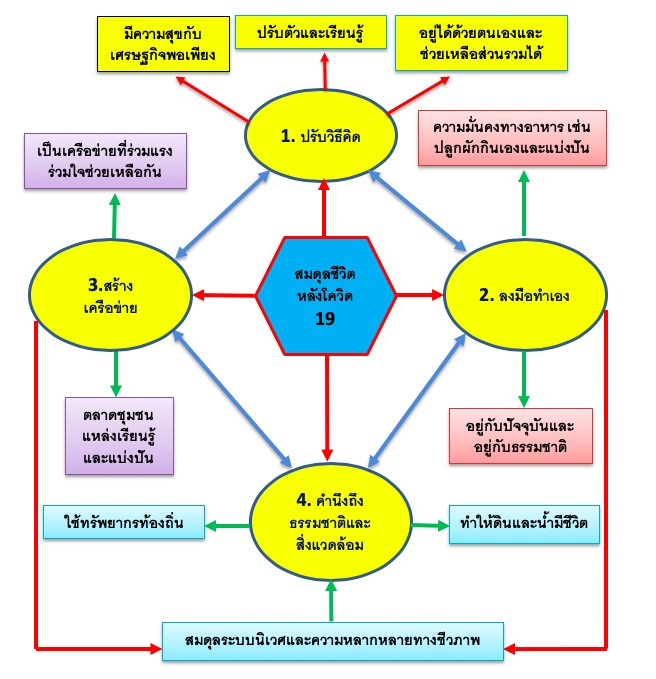
Four Fundamental Principles for Achieving Life Balance After COVID-19
- Adjust Your Mindset The chaos in this world began with an excessive focus on materialism. Therefore, we must start by correcting everything with a new mindset that prioritizes being human (Human being) over merely having (Human having). This can begin simply by setting goals for happiness based on basic necessities. When faced with unexpected challenges or disappointments, we must adapt and learn with a positive mindset to solve problems, enabling us to live independently. If we reach that point, we should help and share with others and society.
- Take Action Yourself To achieve long-term stability in life, we cannot predict when a situation like COVID-19 will occur again. Therefore, creating food security has become a fundamental necessity. Growing vegetables or producing food for oneself allows us to connect with nature and live in the present, benefiting both body and mind. Additionally, taking action enhances our understanding of nature.
- Build Networks Once we take action, we should join groups to create food security networks and exchange experiences. The realities of nature—soil, water, air, plants, and microorganisms—vary by locality. Continuous learning and collaboration will benefit the group as a whole more quickly. Furthermore, when we have surplus produce, we can sell it to generate income for our families.
- Consider Nature and the Environment Actions based on true humanity must consider the ecosystem and nature as one with us. We must view this world as a living entity capable of learning and adapting. To ensure sustainable practices, using local natural resources is essential, as we can manage and regulate quantities appropriately. A fundamental principle for Thais in agriculture today is to understand that keeping soil and water alive is crucial for determining long-term practices.
It is hoped that creating life balance through these four fundamental principles will restore our humanity and compassion after being lured into the trap of materialism for so long. Let us begin by achieving life balance, returning to the present, and reconnecting with nature for a complete humanity. See you next time...
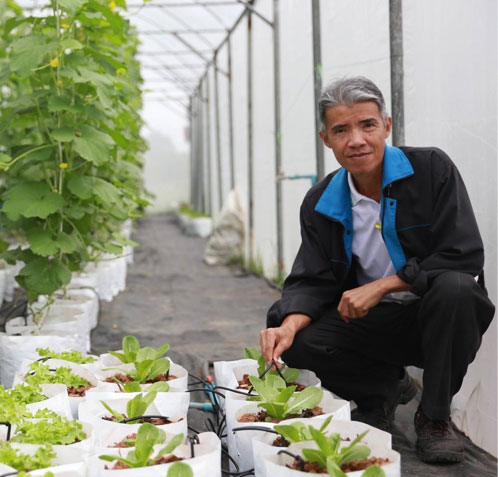
ABOUT THE AUTHOR
ดร.ประเสริฐ ปิ่นงาม (Ph.D., TREES-A NC) วท.บ. สาธารณสุขศาสตร์ ม.มหิดล