Understanding Customers Before They Realize It with Personalized Marketing
In an era where numerous shops and brands are emerging, all vying for customer attention through various advertising channels, how can we become the preferred choice? Khun Nui, Natthaphon Muangtham, from the Daily Marketing page and author of the book Personalized Marketing, reveals strategies for marketing that understands customers before they even realize it, which is both beneficial and intriguing.
Khun Nui defines Personalized Marketing as a modern marketing approach that requires understanding customers before they are aware of their needs, using individual-level DATA. Whether running a small or large business, DATA can be utilized to learn about customers in different ways. For instance, we may have visited a small restaurant that remembers our favorite dishes every time we come back. Upon our return, we can reorder or have our meals prepared without even saying a word. Larger establishments with POS systems can also use these tools to record information. In the case of large organizations, a CRM system may be employed to log data. This information must be recorded on an individual basis to categorize customers as regulars, walk-ins, or seasonal shoppers, and to understand their needs. The most crucial aspect is dedicating time to study all available data because merely recording it without analysis will yield no benefits.
How to Start with Personalized Marketing
- Begin by cultivating a mindset that is attentive and curious about customers, delving into individual levels. For example, determine whether the customer is a returning or new buyer, what they like to purchase, when they prefer to shop, and the quantity of items they buy.
- Once you have the DATA, take time to analyze the various information available to identify strengths, areas of customer satisfaction, and aspects that need improvement or development to deliver products and services that align closely with customer preferences.
- After gathering and analyzing all the data, you will develop customer personas for each individual and group. This will help you see what suits each customer and select what to offer them.
- When customers feel understood by the brand, it builds trust and confidence, making the brand their preferred choice.
Interesting Case Studies in Personalized Marketing
1. JD Central
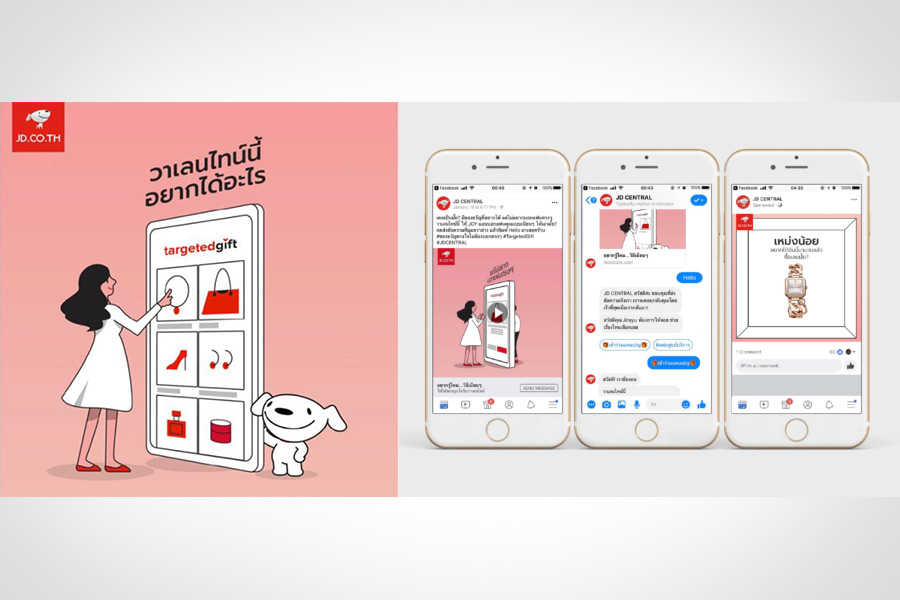
During Valentine's Day, when many couples may be confused about what gift to buy for their loved ones, JD Central launched a campaign allowing one partner to select a desired item and enter their loved one's phone number. A message would then be sent saying, "Namwan (the name of the gift chooser) wants this hair dryer model." This way, the loved one knows that to please the gift recipient, they just need to order that item, bringing joy to both the giver and the receiver.
2. Google Cloud
In the realm of cloud systems, Google understands that the first step in selling a product is often the hardest: scheduling a meeting with the CEOs of various companies. Therefore, Google researched the backgrounds, job roles, lifestyles, and visions of the CEOs of ten companies. They analyzed all the data and created ten different books tailored for each CEO, detailing how using Cloud in their companies would impact them in the next ten years. This approach successfully persuaded two CEOs to sign contracts to use Google Cloud.
3. Barack Obama
In 2008, during the presidential election in the United States, the Democratic Party needed funding for their campaign. To secure enough support, they experimented with various images on their website, using three images and three video clips. The image that received the best response was a family photo, which had initially not been selected as the main image by the team. Ultimately, this image helped the Democrats raise $60 million in support.
Precautions When Using Data
Regardless of the source of data, it is essential to remember:
- Do not rely on instinct or experience to make decisions instead of conducting in-depth data analysis, as this may lead to mistakes. In a rapidly changing era, past experiences may no longer apply.
- Do not use DATA without considering the surrounding context.
- Do not rely on a single set of DATA, as even correctly collected information can be complex. For example, a membership application may be filled out by a woman, but the payment is made by a man.
Manage Data Easily with Accessible Tools
- Google Trends is an excellent tool that allows for data searches at three levels:
- Your brand name and your competitors' brand names.
- The category of products sold. For example, if selling shoes, explore what people want to know or search regarding shoes.
- Context Data. For instance, if selling shoes, delve deeper to see if people are looking for work shoes or general footwear more.
- Utilize social media to gather data. For example, Adidas used IG Polls to collect data on what type of shoes people wanted, resulting in around 150,000 responses within 24 hours.
Final Thoughts
“Those who excel in Personalized Marketing must care for their customers, be willing to accept mistakes, and always strive for improvement.”
Source: LIVE SCBTV Business Playbook After COVID-19 Episode 1: DATA for Marketing aired on Facebook and YouTube SCB Thailand on May 18, 2020.
SOURCE: www.scb.co.th