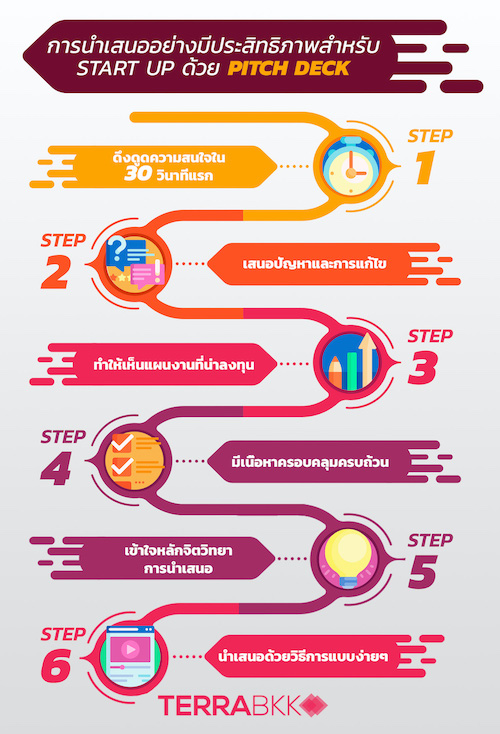
Effective Presentations for <\/u><\/strong>Startups <\/u><\/strong>with <\/u><\/strong>Pitch Decks<\/u><\/strong><\/span><\/p>

             "Every investment carries risk." As an investor, one must study and be confident that an investment is worthwhile before committing funds. Startups also want to attract investors and secure funding. However, to achieve this, startups must effectively present their plans in a way that impresses and engages potential investors. A well-crafted pitch deck can make a startup's presentation more appealing.

            So, what exactly is a pitch deck? A pitch deck is a communication tool used to summarize and convey the essence of our business to the audience in a short amount of time, typically consisting of no more than 13-15 slides. The format of a pitch deck can vary depending on the purpose of the presentation, such as:

             -      An investor deck, which must include supporting numerical data to clarify the business's appeal.

             -      A pitch deck for applying to startup incubation programs.

             -      A pitch deck for presenting to corporate clients (B2B).

             -      A pitch deck for finding co-founders, etc.

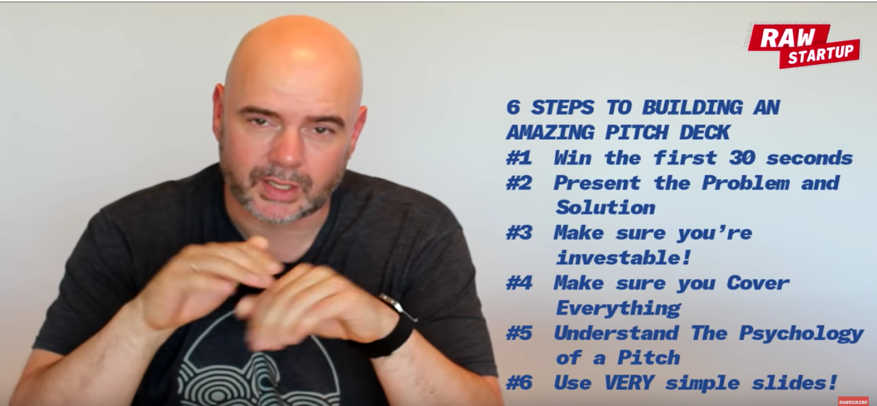
            For startups looking to present investment plans to attract investors, the core of the pitch deck should ensure that the presentation is concise while retaining essential content, avoiding excessive length that might bore the audience. Microsoft PowerPoint is commonly used to create pitch deck slides, and there are six steps to make the presentation engaging:
<\/p>

            Raw Startup : https://youtu.be/DkDg2svjkvE<\/a><\/p>

 <\/p>

  1. Capture attention in the first 30 seconds (Win the first 30 seconds)<\/strong> The first step in creating a pitch deck is to open with an interesting point, especially within the first 30 seconds of the presentation. Use a catchy title or statement to impress the audience and pique their interest. On the first slide, we should use an image or a short phrase to attract the audience's attention.
  2. Present the problem and solution (Present the Problem and Solution)<\/strong> The key content of the presentation is to explain the origin of the idea, which may stem from a problem you want to solve, leading to the creation of your product. Explain how your product addresses this problem and how it is innovative compared to other products. Using images or charts in this slide will enhance the presentation, and if you have a prototype or test results, it will help the audience better understand your solution.
  3. Show that your plan is investable (Make sure you're investable!)<\/strong> This slide should emphasize the revenue generation methods or sources of income for the business. Explain who your customers are and why they would be willing to buy your product. This section involves marketing and financial planning, detailing how you will reach customers and analyzing market competition. The more the audience understands the competitive landscape, the more credible your plan will appear, along with investment budgets and expected returns that will entice them to invest.
  4. Ensure comprehensive content (Make sure you Cover Everything)<\/strong> The next step is to ensure that you have all necessary information for the audience, particularly investors. Conduct feasibility studies, research, and analyze current and future situations to demonstrate how your plan will yield returns in both the short and long term. Presenting clear evidence of your achievements will enhance the credibility of your investment plan, as investors typically review multiple companies before making decisions. Therefore, your pitch deck should highlight your strengths and present a plan that offers valuable returns, helping the audience visualize the differences and growth potential of your business.
  5. Understand the psychology of pitching (Understand The Psychology of a Pitch)<\/strong> Startups should be aware that (1) they are presenting to unfamiliar individuals, which can be nerve-wracking, but remember that the investors are businesspeople seeking returns and need confidence in your readiness and assurance. (2) Your presentation must be based on reality, highly feasible, and excite the audience about investing. (3) To build confidence in your presentation, startups should practice extensively to ensure they understand what they are going to say, avoiding sounding overly rehearsed and aiming for a natural delivery.
  6. Use very simple slides (Use VERY simple slides!)<\/strong> The slides used in the presentation do not need to have elaborate designs or excessive elements, as this can make them cluttered and uncomfortable for the audience. Use simple, concise language and easily understandable images to create a more engaging and attractive presentation.

            In summary, a good pitch deck should have quality content, complete information, simple and direct language, and thorough preparation through practice is crucial for building confidence in presenting your plans to investors.

<\/p>