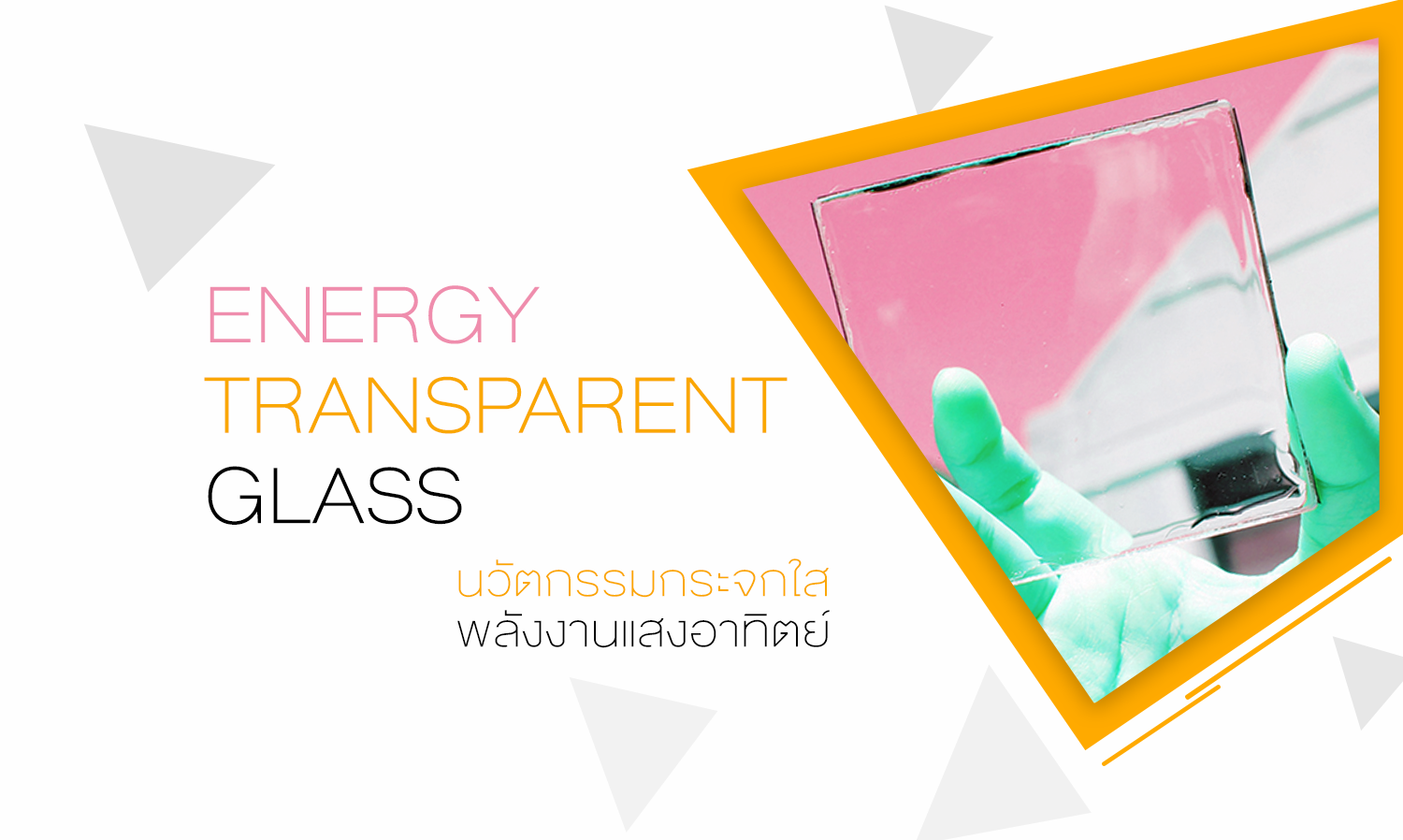
Energy Transparent Glass: An Innovation in Solar-Powered Clear Glass
When "clear glass" is not just for decorating buildings but can also generate "electricity" from sunlight.
With limited living space in urban areas, the trend of vertical living has become popular. The construction of high-rise buildings has grown, and most building designs often choose to use "clear glass" as a key element to create a striking and modern appearance, while also allowing residents to feel open and enjoy the surrounding views. However, the transparency of glass presents a challenge for researchers to innovate and develop products that enable designers and engineers to work together effectively and sustainably, while maintaining the aesthetic appeal of buildings and addressing environmental concerns simultaneously.
Forget the traditional image of large black solar panels installed on rooftops. Meet the new innovation of clear glass that is almost indistinguishable from regular glass but functions as "solar cells." Previously, researchers attempted to install Crystalline Silicon solar cells directly onto building glass because they can capture sunlight well in sunny areas, are relatively affordable compared to other types, can be connected to various control devices and electrical circuits, are durable, and have a long lifespan. However, they faced challenges with the opacity of the cells, which obstructed views and made it difficult to design aesthetically pleasing buildings.
Previously, the production of transparent solar cells relied on making Crystalline Silicon films as thin as possible, which significantly reduced energy conversion efficiency. Until 2019, the Ulsan National Institute of Science and Technology (UNIST) in South Korea published research that developed products overcoming these limitations, presenting transparent solar cells with an energy conversion efficiency of 12.2% by making the opaque Crystalline Silicon more transparent, creating small cells with a diameter of just 0.1 millimeters and a spacing of 1.75 millimeters between cells, allowing light to pass through almost all wavelengths, resulting in a new film layer that filters light into natural colors.
Additionally, Ubiquitous Energy, founded by the Massachusetts Institute of Technology (MIT) in collaboration with Michigan State University (MSU), has designed and developed ClearView Power™, a new type of transparent solar film that is cost-effective and environmentally friendly. Currently, ClearView Power™ allows up to 90% of natural light to pass through, with an energy conversion efficiency of 10%, and is less than 0.1 micrometers thick, making it suitable for powering various portable devices. In October 2019, the company also began commercial production of ClearView Power™ for use in building windows.
Before long, these technologies will be increasingly integrated into high-rise building designs. Glass will not only serve as an exterior decoration but will also be an alternative material capable of generating electricity from clean energy. The future of creating Green Cities will no longer be just a hope.
Image source: arch2o.com
Source: Article "New transparent solar cell for window applications" by EMILIANO BELLINI from pv magazine / Article "Transparent Solar Panels Will Turn Windows Into Green Energy Collectors" by Ana Cosma from ARCH2O
Written by: Montnapha Lapphanaphrong
SOURCE: www.tcdc.or.th