The Language of COVID
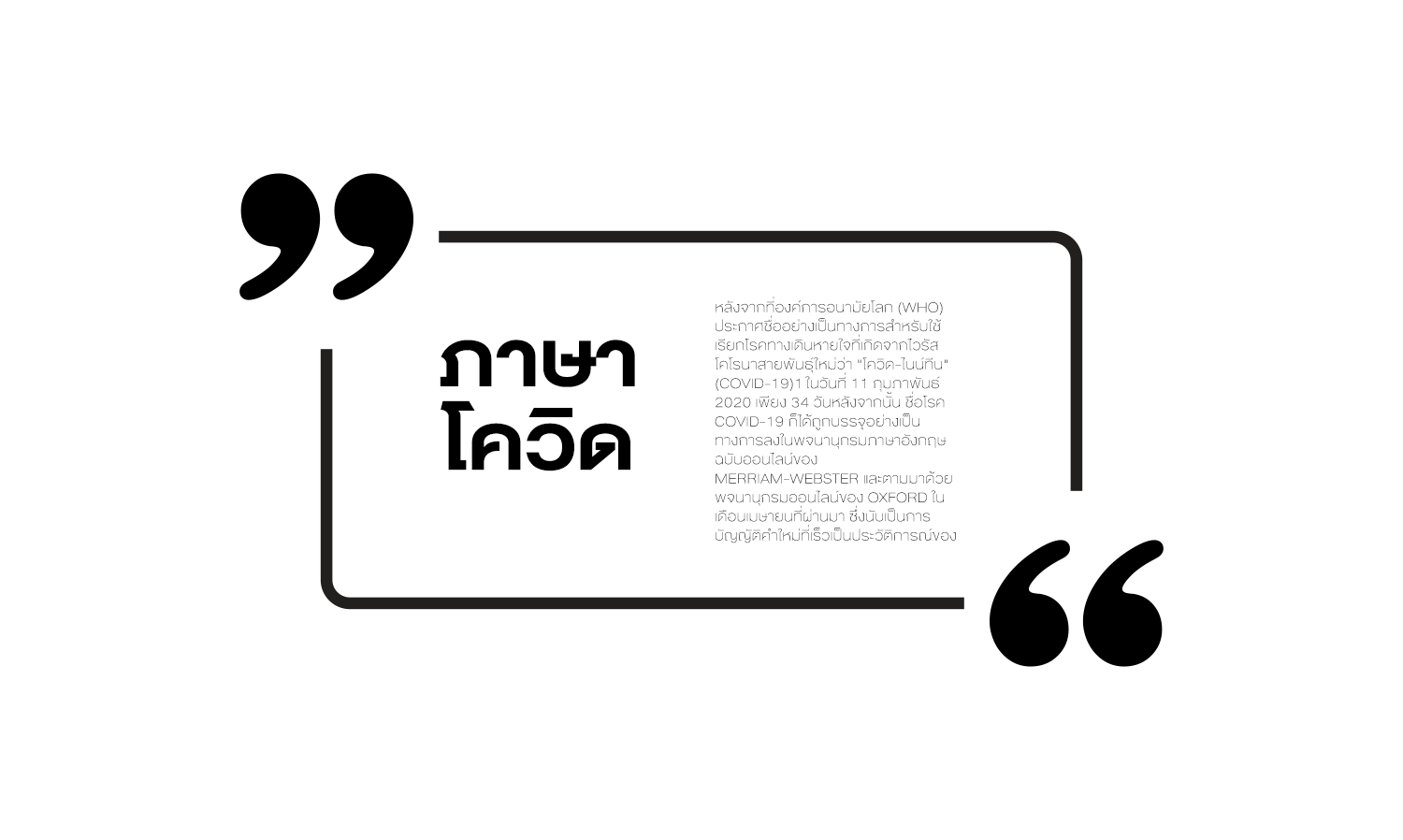
After the World Health Organization (WHO) officially announced the name for the respiratory disease caused by the novel coronavirus as "COVID-19" on February 11, 2020, just 34 days later, the term COVID-19 was officially added to the online English dictionary of Merriam-Webster, followed by the Oxford online dictionary in April. This marks the fastest creation of a new word in the history of dictionaries.
In addition to causing changes in nearly every aspect of life, the COVID-19 pandemic has also significantly altered language. Terms that were previously unfamiliar, such as “social distancing,” “quarantine,” and “work from home,” have become widely used and have become popular phrases for many.
When people face events together, new words are often created to describe situations and things they have never encountered before. The changing lifestyles of people during the COVID era have led to the emergence of new slang to describe behaviors in this context, such as:
- “Covidiot”
A person who disregards and does not follow public health recommendations, such as hoarding masks beyond necessity, leaving those who truly need them without access, or gathering in public places without justification, thus increasing the risk of disease transmission for themselves and others.
- “Doomscrolling”
The behavior of continuously consuming negative news, regardless of how depressing or distressing it may be.
- “Covideo Party”
A virtual gathering where people watch a movie together, inspired by Irish comedian Alison Spittle, who encouraged Twitter users to choose a Netflix film to watch simultaneously while sharing comments and discussions on Twitter, creating a sense of watching together with friends.
- “Quarantini”
The name of a specific alcoholic drink that individuals mix for themselves at home during quarantine.
One inherent nature of language is that it is “always changing,” whether through the creation of new words, shifts in meanings, changes in spelling, or alterations in pronunciation. This pandemic is yet another clear example reflecting this aspect of language.
1COVID-19 is derived from the English abbreviation for “coronavirus” and the word “disease,” with the number 19 referring to the year 2019 when the outbreak was first reported.
Image source: Glen Carrie/Unsplash
Sources: Article “From Covidiot to Doomscrolling: How Coronavirus Is Changing Our Language” by Arwa Mahdawi from theguardian.com
Article “How COVID-19 Led Merriam-Webster to Make Its Fastest Update Ever” by Stefan Fatsis from slate.com
Article “Oxford Dictionary Revised to Record Linguistic Impact of COVID-19” by Alison Flood from theguardian.com
Written by: Nuttacha Tawanachoti