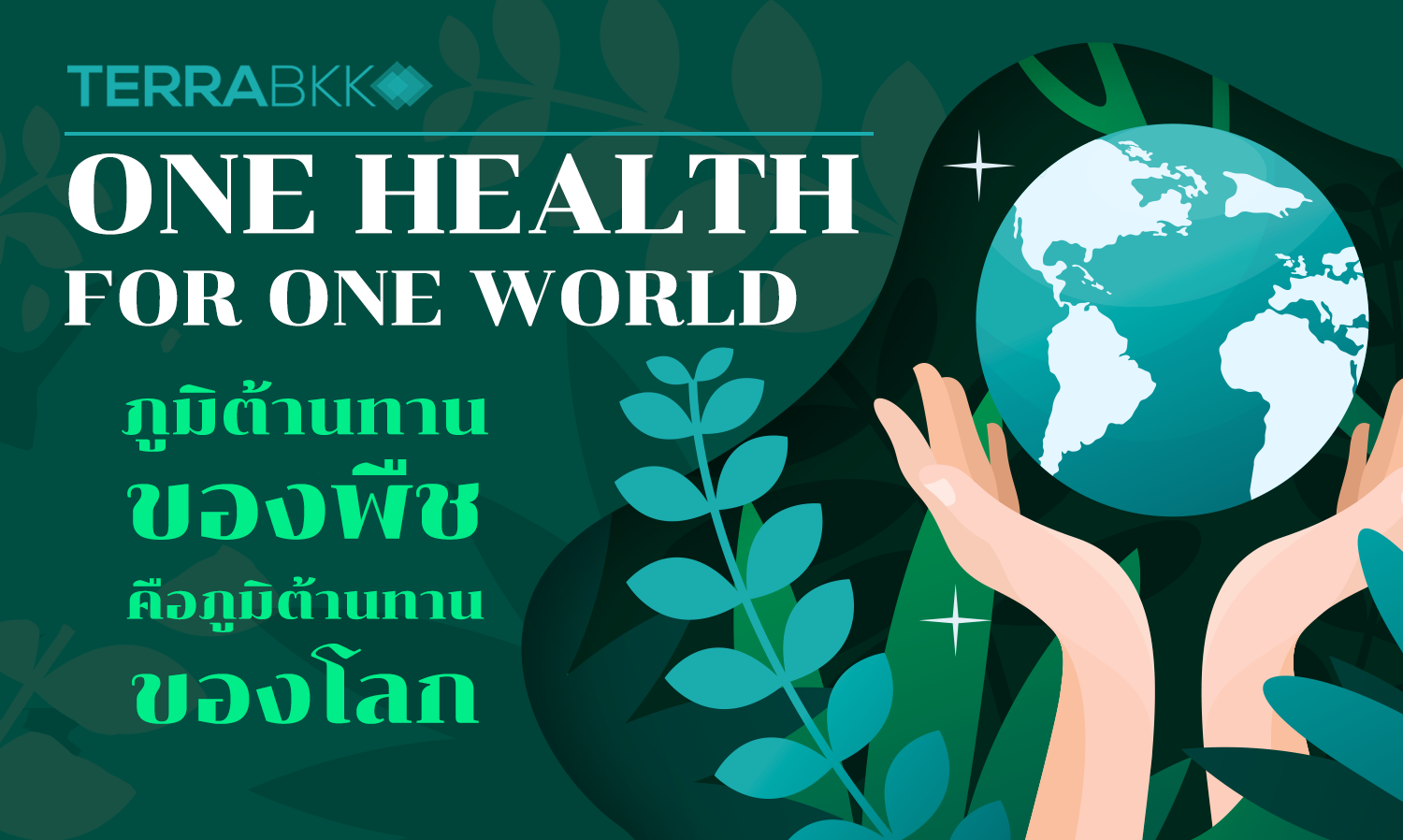
The Immunity of Plants is the Immunity of the World
Dr. Prasert Pinngam (Ph.D., TREES-A NC)
B.Sc. Public Health, Mahidol University
Currently, we still cannot clearly identify the true cause of COVID-19. Each country is tirelessly trying to produce vaccines to control it. As public health professionals, we are taught to recognize that disease prevention is the best method of disease control. Disease prevention can be implemented in various forms, and since living organisms and environmental factors are interconnected in a chain, analyzing the causes to design control and prevention processes requires integrating all relevant factors. A research paper published in 2019 titled “One Health – Cycling of Diverse Microbial Communities as a Connecting Force for Soil, Plant, Animal, Human, and Ecosystem Health” by Bruggen gathered a team of experts from various fields, including plants, animals, ecosystems, and medicine, to work together to demonstrate the interconnectedness of all things. The term One Health was given a broader meaning. This research can be seen as a new perspective for all fields, including medicine, public health, agriculture, veterinary science, ecosystems, and the environment. Typically, scholars in these fields rarely interact, so it is hoped that readers of this article, who are experts in their respective fields, will come together to discuss and establish a collaborative system. Please take a look at the details, as this article will serve as a foundation for designing effective disease prevention systems that encompass all relevant factors.
A New Meaning of the Term One Health
Previously, the World Health Organization (WHO) defined the term One Health as encompassing the interconnected health status of humans, animals, and the environment, but it lacked clarity regarding plants, microorganisms, and soil significantly. Bruggen and the team believe that the original definition does not encompass the reality needed to comprehensively address the world's problems, so they proposed a new definition that includes research supporting each part of the cycle clearly.
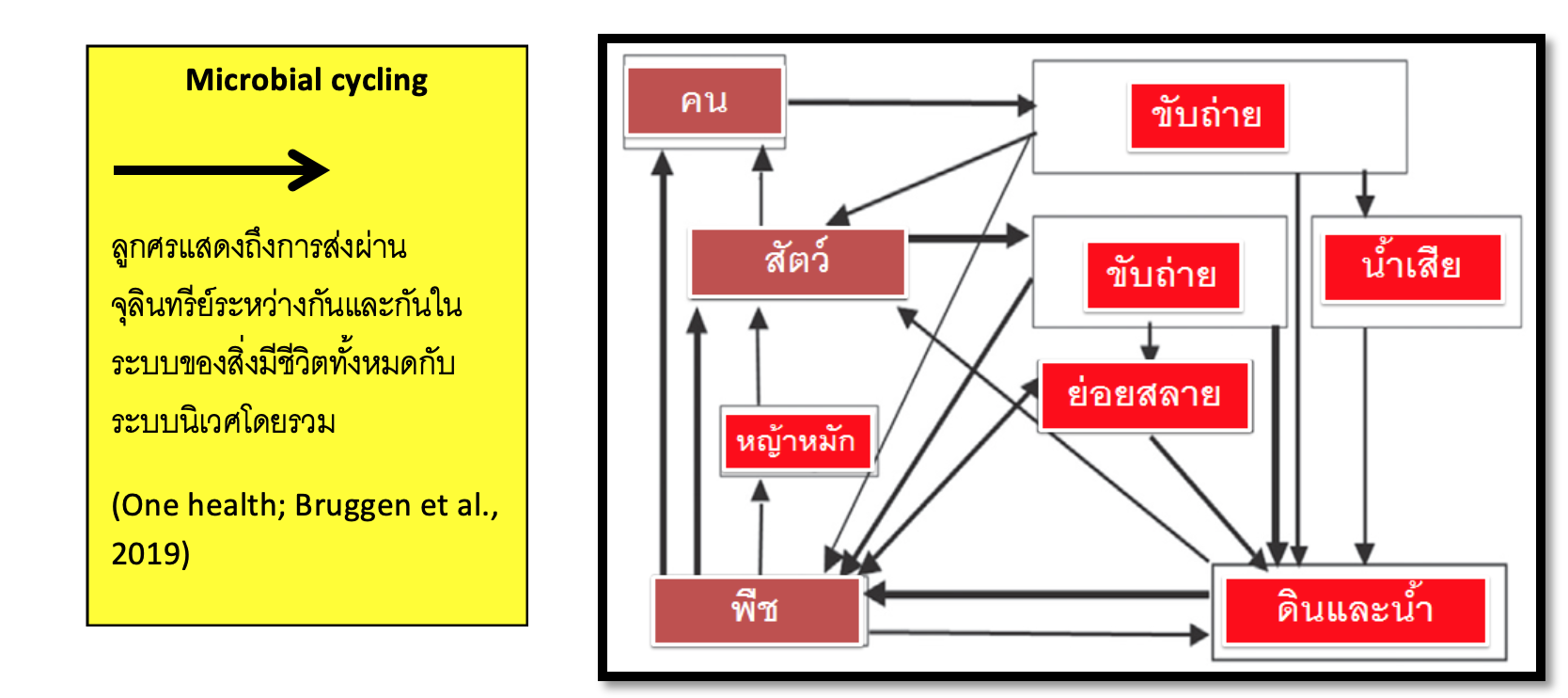
The New Definition of One Health, Including Plants, Soil, Water, and Microorganisms
The image illustrates that the health status of all living beings, which includes humans, animals, and plants, has a cycle of microbial activity in soil, water, and air as a connecting link. If any disturbance or change occurs in this cycle, it will inevitably impact everything else. It is suggested that the method of caring for the health of all living beings must start with the health of the soil and ecosystems through the diversity of plants and water sources. These elements are considered the starting point of the food chain for all life on Earth. Advances in genetic sequencing technology over the past 20 years have revealed that the human body consists of approximately 100 trillion cells, of which no more than 30 trillion are human cells. Humans have 23,000 genes, while the microorganisms in our bodies have up to 20 million genes, significantly more. Importantly, the role of these microorganisms in the functioning of the human body, especially regarding the immune system, has been discovered to be largely derived from microorganisms. Chemicals that control inflammation, digestion, or even stress primarily come from these microorganisms. This entire system operates similarly to the microbial activity at plant roots, which are mostly in the soil. Therefore, if we make the soil alive and diverse in microorganisms, it will strengthen plants and enhance their disease resistance. When humans or animals consume these plants, they pass on good immunity to both humans and animals. Thus, starting with living soil and a diverse range of soil microorganisms is crucial to this cycle.
Western Diet as a Cause of Reduced Disease Resistance
Reports of COVID-19 fatalities in Thailand show that most deceased individuals had obesity or diabetes. In medicine, it is well known that non-communicable diseases (NCDs) that have proliferated over the past 50 years directly weaken the immune system. Dr. Erica and Dr. Justin Sonnenburg, a married couple, studied the causes of these issues and published a book titled The Good Gut, examining the diversity of microorganisms in the human body from the time when humans were hunter-gatherers to the present agricultural era.
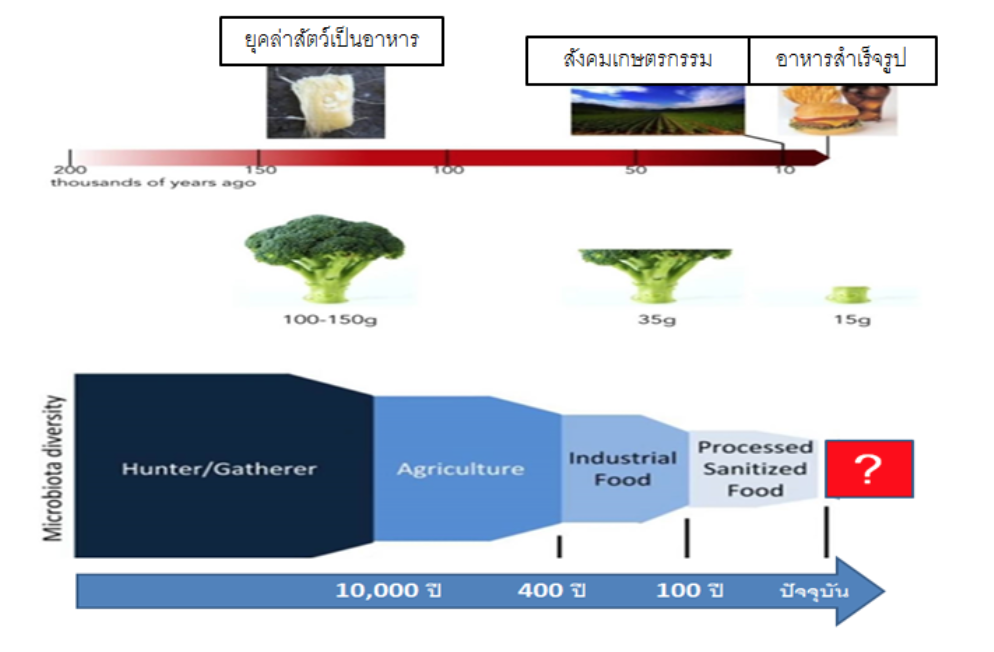
Comparison of Microbial Diversity in Humans from the Hunter-Gatherer Era to Present (The Good Gut)
When comparing lifestyles over 10,000 years, from the time when humans lived as hunter-gatherers, they consumed fresh foods, both meat and plants, averaging 100-300 grams of vegetables per day. This resulted in a high biodiversity of microorganisms in their bodies. Over time, the current trend shows a significant reduction in fresh vegetable consumption to just 15 grams per person per day, coupled with increased consumption of starch and sugar, leading to a clear decline in microbial diversity. In-depth studies comparing microbial diversity at the national level also show significant differences.
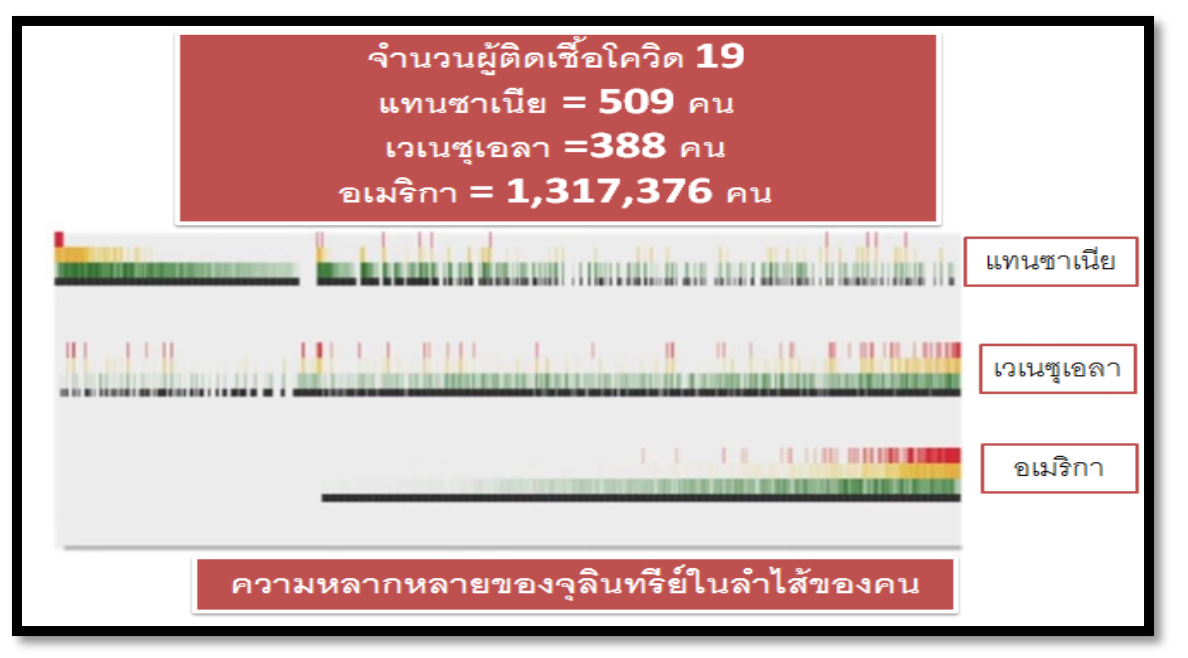
Image Comparing Microbial Diversity in the Body
This survey of microbial diversity in the body over the past 10 years found that traditional Tanzanian diets maintain higher microbial biodiversity than American diets, which are the origin of Western-style food. It may be coincidental that during the COVID-19 outbreak, Americans, with their lower microbial diversity, experienced the highest infection rates in the world. This can be explained academically: over 90% of the microorganisms in the human body produce essential chemicals and nutrients (short-chain fatty acids) that primarily build immunity. The preferred foods for these microorganisms are fresh vegetables and fruits from nature, known as prebiotics. Therefore, high consumption of starch and sugar in Western diets deprives these microorganisms of food, resulting in insufficient production of immune-boosting nutrients. When new pathogens emerge, Americans or Westerners are more susceptible to infections. While there is no research to support this yet, the connection is clearly logical. Research to prove these points requires collaboration among experts from various fields to understand the complex answers. Nevertheless, increasing the consumption of seasonal fresh vegetables and fruits while reducing starch and sugar intake to boost disease resistance is a recommendation we can all implement, as dietary diversity affects microbial biodiversity, akin to building immunity without waiting for a vaccine.
Bruggen's research and the team's efforts to connect the relationships between living organisms and the environment, with the life cycle of microorganisms as a linking factor, have led to a new dimension of the term One Health. Coupled with the work of Drs. Sonnenburg, which concretely confirms this relationship between plants, microorganisms, and humans, it may represent a hopeful beginning for us in the future.
1.5 Plant Immunity to Human and Global Immunity
Everything is interconnected. This phrase remains a core principle for us to explore the hidden secrets further. Starting to learn about external things by comparing them to what we are familiar with is one method I would like to propose for us to continue exploring together. The previous article opened comparative perspectives in four areas between plants and humans, including the sensations of heat or cold, the systems related to microorganisms, the necessity of consuming natural foods, and the absorption of nutrients by plant roots compared to our intestines. These four topics serve as a starting point for the fifth topic on immunity, as all parts are interconnected.
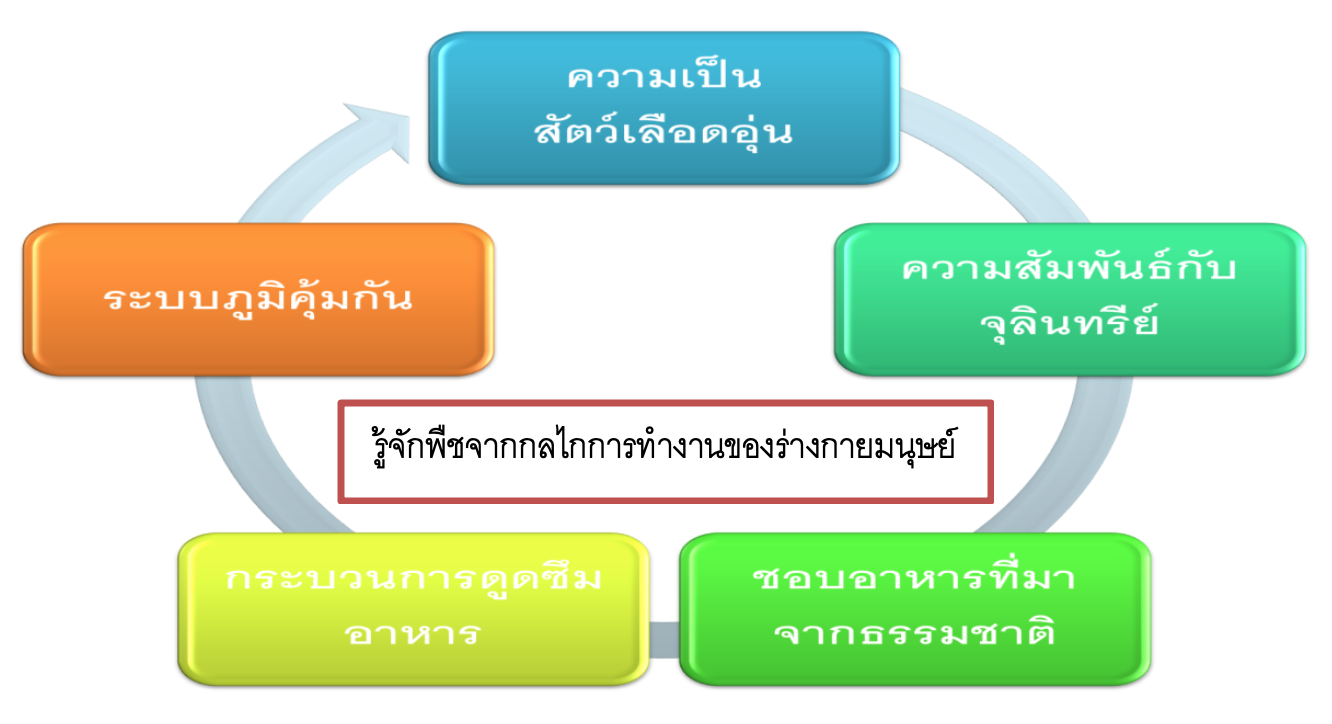
It is well known that the human immune system has two types: innate immunity and specific immunity (COVID-19 vaccines provide specific immunity). Plants only have innate immunity, but recent research shows that plants may also have specific responses to pathogens similar to humans. Importantly, plant and human immunity are related and move in the same direction. Deteriorating soil quality weakens plants, necessitating chemical use, which disrupts the absorption of essential nutrients in plants, leading to reduced nutritional quality. Consequently, humans and animals consuming these plants receive fewer necessary nutrients, resulting in decreased disease resistance. A report by D. Thomas in 2003 to the Ministry of Public Health indicated that the nutritional value of vegetables and meat has decreased significantly when comparing data from 1940 to 1991, with the following key reductions:
- Copper decreased by 76%
- Calcium decreased by 46%
- Iron decreased by 27%
- Magnesium decreased by 24%
- Potassium decreased by 16%
This data confirms that nutritional value has significantly declined over the past 50 years. If we connect the cycle occurring with soil and plants before reaching us, it can be illustrated as follows:
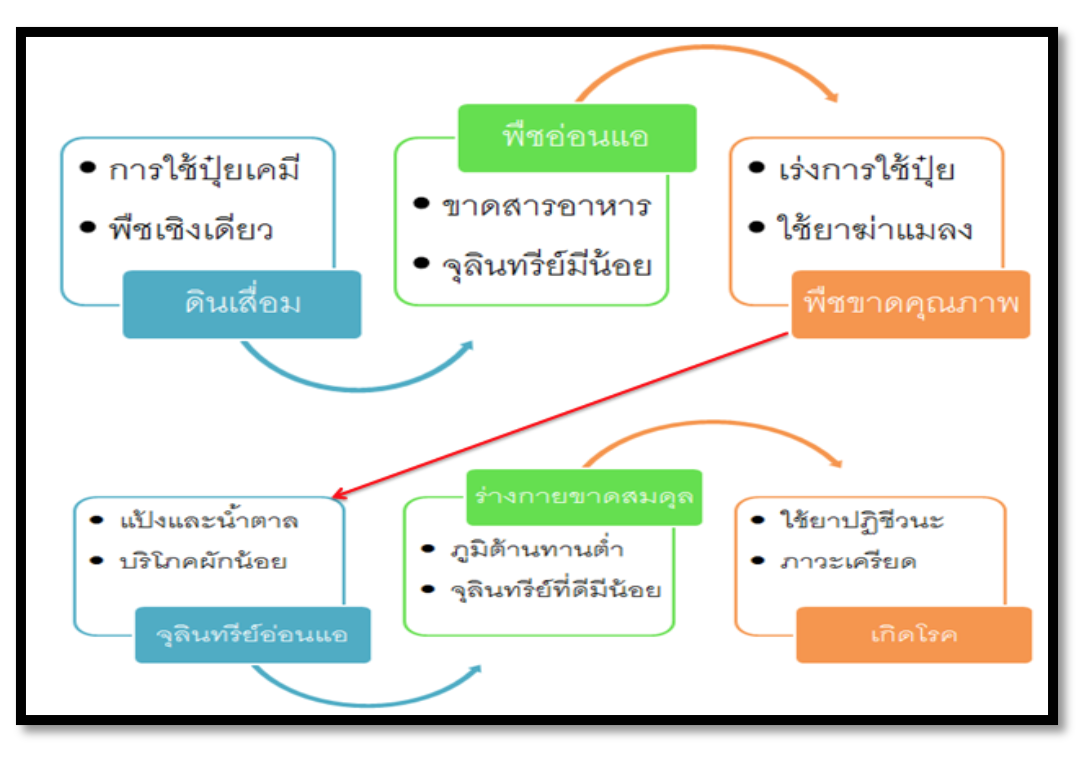
Image Showing the Connection Between Soil, Plants, Humans, and Disease
The image shows that if we start to address and improve the soil and strengthen plants to enhance their immunity, it will also be a method to build our immunity. All these methods will be part of natural agriculture. Stay tuned for more.
Simple methods to build immunity can be achieved as follows:
- Reduce starch and sugar intake
- Consume prebiotic (high-fiber) and probiotic foods in balance
- Avoid antibiotics
- Eat seasonal vegetables and fruits, ensuring at least 30 different types per week
- Spend time enjoying nature, parks, mountains, waterfalls, and seas
- Exercise and rest adequately
Each of these points affects the biodiversity of microorganisms in our bodies. If we can accomplish all of these, our immunity will achieve balance and be ready to combat diseases that may disturb us for a long time.
Through this comparison of the potential of plants and humans via the mechanisms of human body functioning, I hope we can shift our perception of plants to a different perspective. Let’s stop relying solely on the knowledge passed down to us and embrace the spirit of understanding and accepting plants as they are. We have only just begun this journey recently. Let’s continue to uncover this secret together.
ABOUT THE AUTHOR
ดร.ประเสริฐ ปิ่นงาม (Ph.D., TREES-A NC) วท.บ. สาธารณสุขศาสตร์ ม.มหิดล