Consumer Attitudes During the Covid-19 Crisis (Case Study of 5 Countries)
The Covid-19 pandemic has severely impacted countries worldwide. In addition to affecting people's health, it has also had a significant impact on the global economy and the economies of individual nations. Today, TerraBKK will explore how, in the current situation, the attitudes and confidence of people regarding the economy, income, and purchasing power have changed, and how people's behaviors have evolved during this Covid-19 crisis.
The data presented by TerraBKK is based on a survey that monitors consumer confidence and attitudes to gauge people's expectations regarding the domestic economy, personal income or expenses, and behavioral changes during this crisis. The information is sourced from McKinsey & Company, with the survey conducted from April 1-6, 2020, involving samples from five countries: 1,896 Chinese respondents, 1,484 Americans, 1,009 Italians, 1,006 Spaniards, and 600 Japanese respondents.
Attitudes and Confidence Regarding the Economy
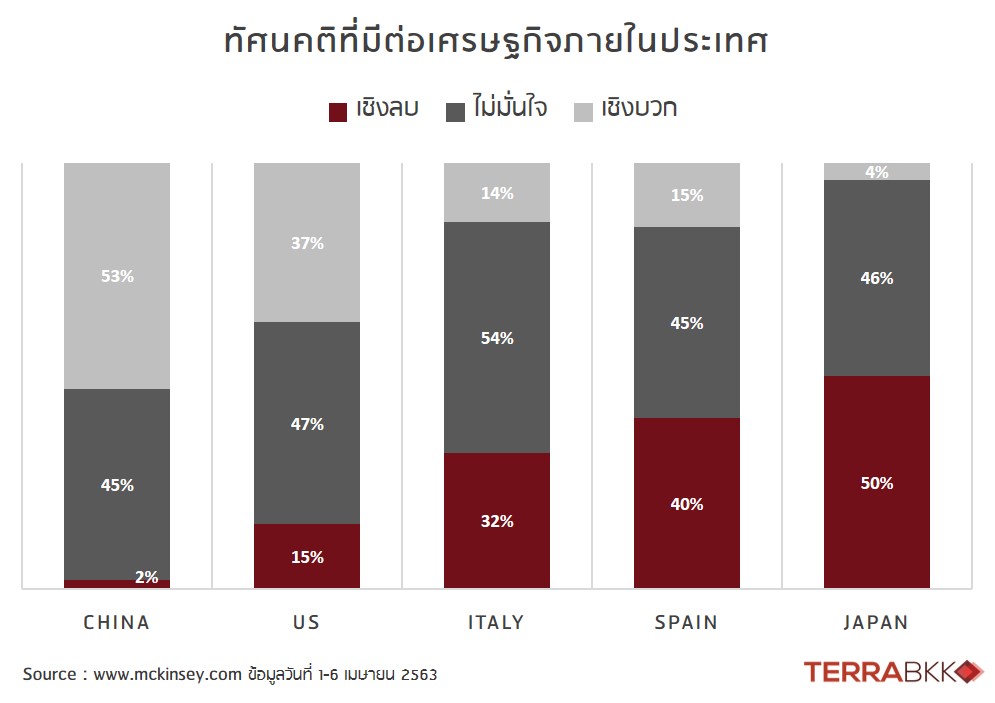
The survey results from various countries indicate that the majority of people lack confidence in the economy and believe it will be affected for 6-12 months or longer, with a slow recovery or stagnation expected post-crisis. Notably, respondents from Japan, Spain, and Italy exhibit a relatively high level of negative sentiment, perceiving that Covid-19 will have a long-lasting impact on the economy, leading to a prolonged recession. In contrast, only in China and the United States do most respondents believe the economy will improve within 2-3 months and grow better than before the Covid-19 outbreak.
Attitudes Towards Personal Financial Impact During the Covid-19 Crisis
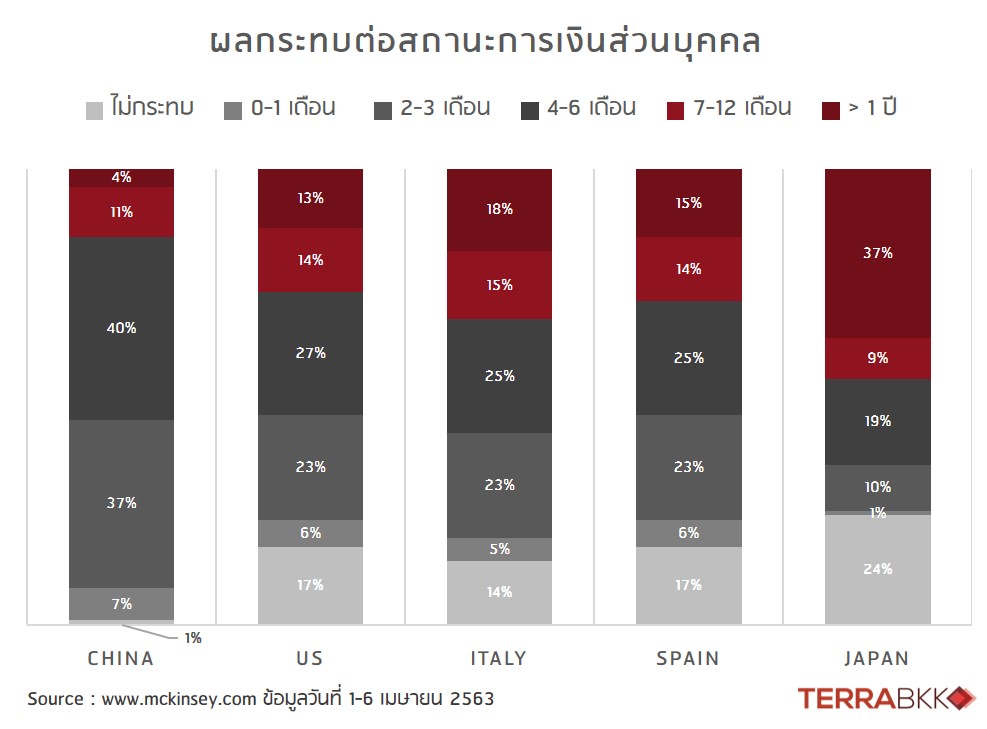
The attitudes regarding the impact on personal financial status among respondents from different countries reveal that most believe the Covid-19 crisis will affect their financial situation for a duration ranging from 2 months to over 1 year. In Japan, 37% express significant concern that their personal finances will be impacted for more than a year due to a lack of confidence in the economy and a belief that the domestic economy will suffer greatly. Following Japan are Italy, Spain, the United States, and China. Conversely, a segment of respondents believes that Covid-19 will not affect their financial status, with 24% of Japanese respondents stating they are not impacted by this crisis, followed by Spain, the United States, and Italy. Only 1% of respondents from China feel unaffected by the crisis.
Opinions on Adaptation During the Covid-19 Crisis
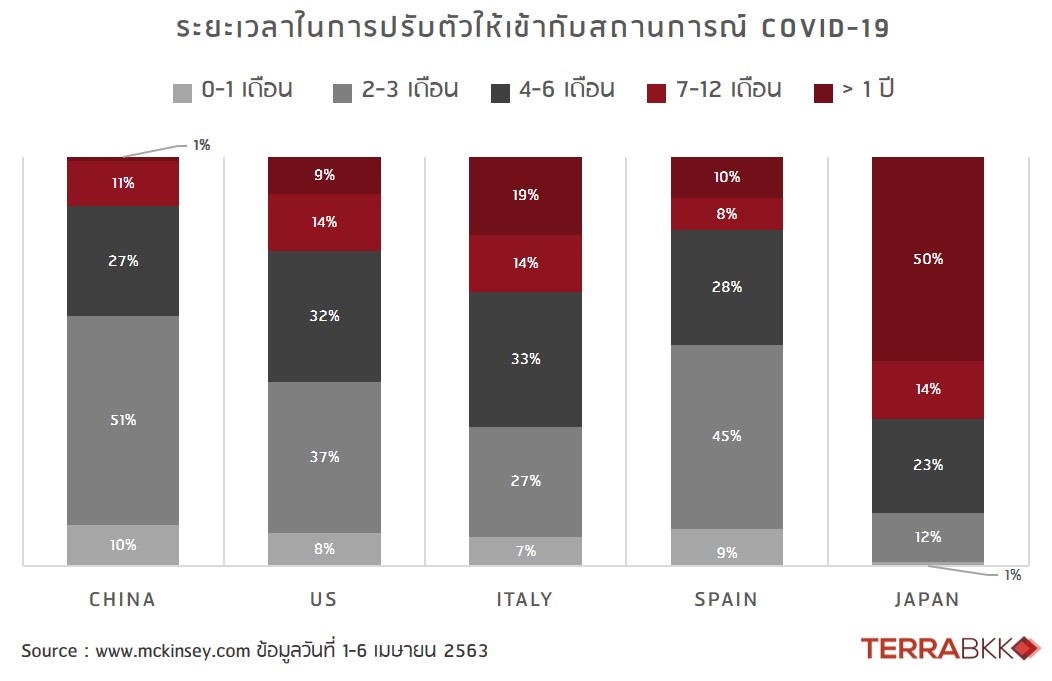
When asked about the time required for people to adapt to the current situation regarding daily routines, work, spending behaviors, and travel, most respondents from various countries expect it will take more than 4 months to adjust, with half of the Japanese respondents believing it will take over a year. In contrast, 99% of Chinese consumers believe they can adapt within a year, while Americans, who currently have the highest infection rates, also feel they can adjust within a year.
Concerns About Uncertainty During the Covid-19 Crisis
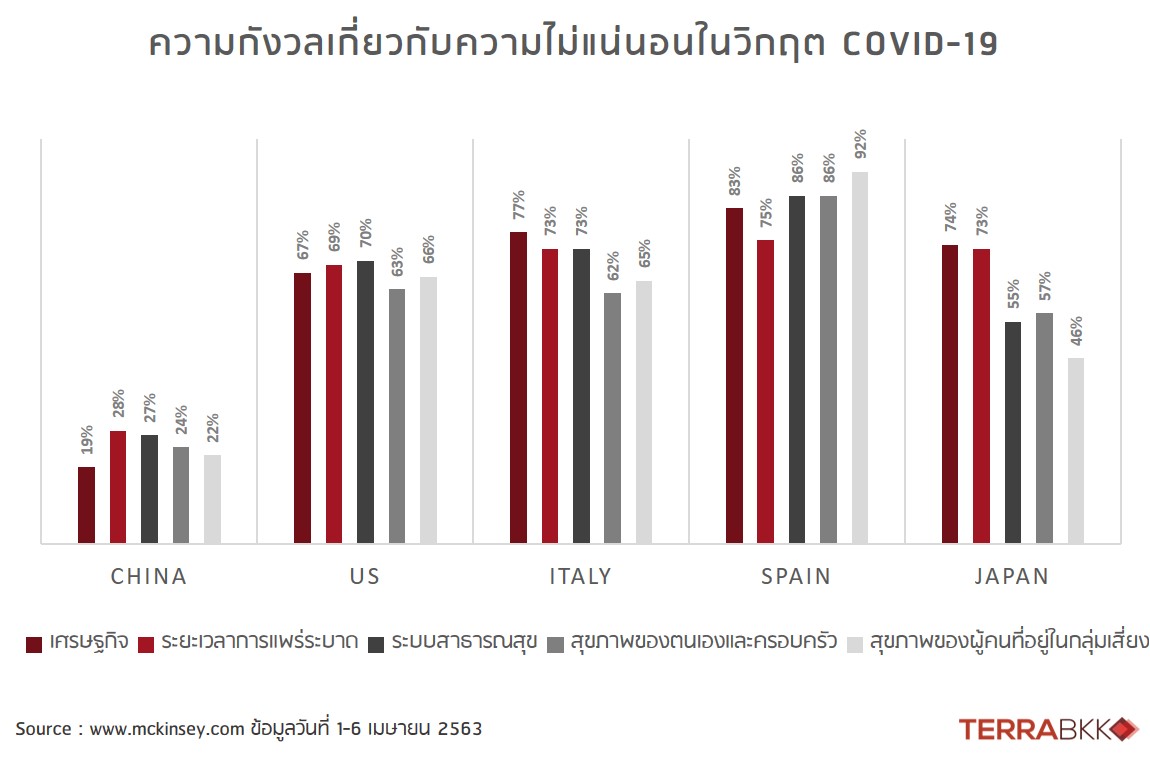
One in four Chinese respondents expresses the greatest concern about the uncertainty of how long Covid-19 will continue to spread and when it will end, as well as the state of the healthcare system. They are also worried about their own health and that of their families, with the least concern being about the country's economy, as they have confidence that it will improve.
69% of Americans are highly concerned about the uncertainty during the Covid-19 crisis, particularly regarding the duration of the outbreak, the state of the healthcare system, personal safety, and the economy, as most believe the economy will stagnate and take time to recover.
73% of Italians express significant concern, with the greatest worry being about the domestic economy, as they perceive it to be heavily impacted by the Covid-19 crisis, along with concerns about their health, family, and overall public health, as well as the duration of the outbreak.
Over 74% of Japanese respondents are highly concerned, primarily about the domestic economy, as most believe it will enter a prolonged recession, along with worries about the duration of the outbreak and their health and that of their families.
Over 80% of Spaniards are highly concerned about health, particularly for those they know who are at risk, as well as the state of the public healthcare system. They are also worried about their own health and that of their families, believing the economy has been heavily impacted and will take time to recover.
Changes in Consumer Behavior During the Covid-19 Crisis
Now, let's look at the survey results regarding spending behaviors and how citizens in each country differ in their spending habits.
China
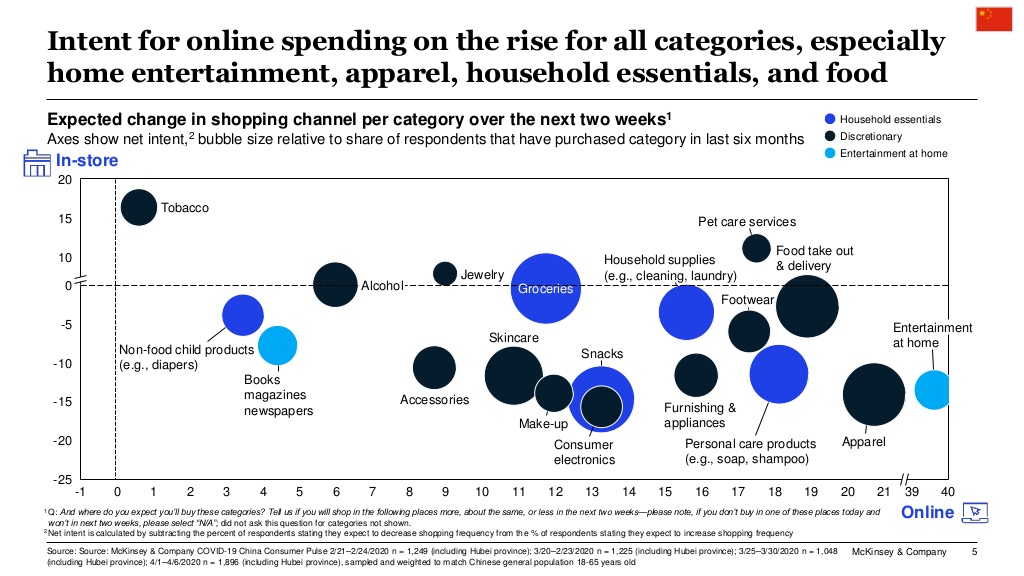
People are increasingly inclined to spend online, particularly on home entertainment, clothing, household consumables, food delivery services, and home appliances.
US
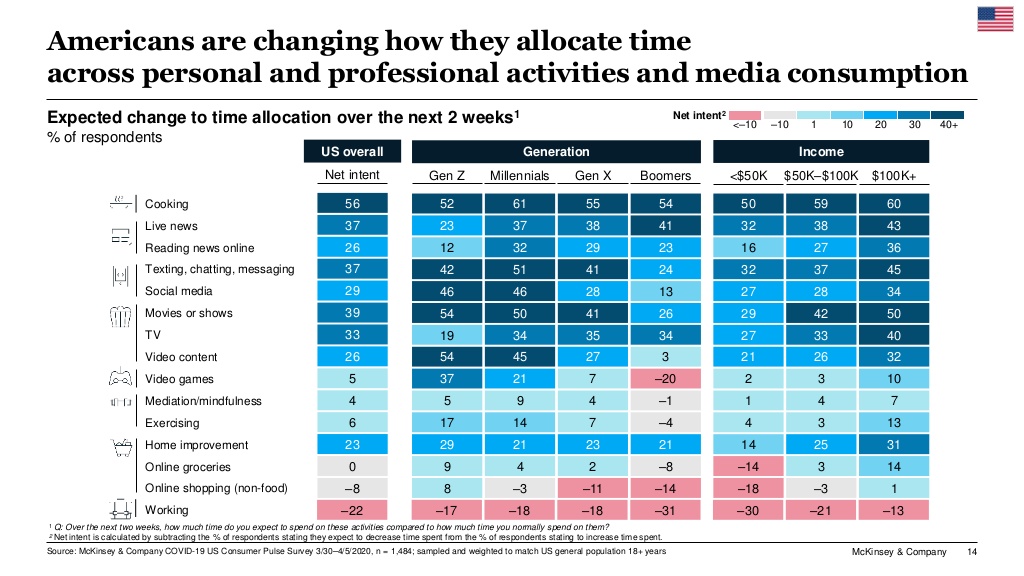
It is evident that Americans have significantly altered their daily activities, with cooking being a predominant activity across all age groups, from Gen Z to Baby Boomers. Additionally, there has been an increase in other activities across all age groups, particularly among Gen Z and Millennials, such as watching live news, reading online news, and engaging in social media.
Italy
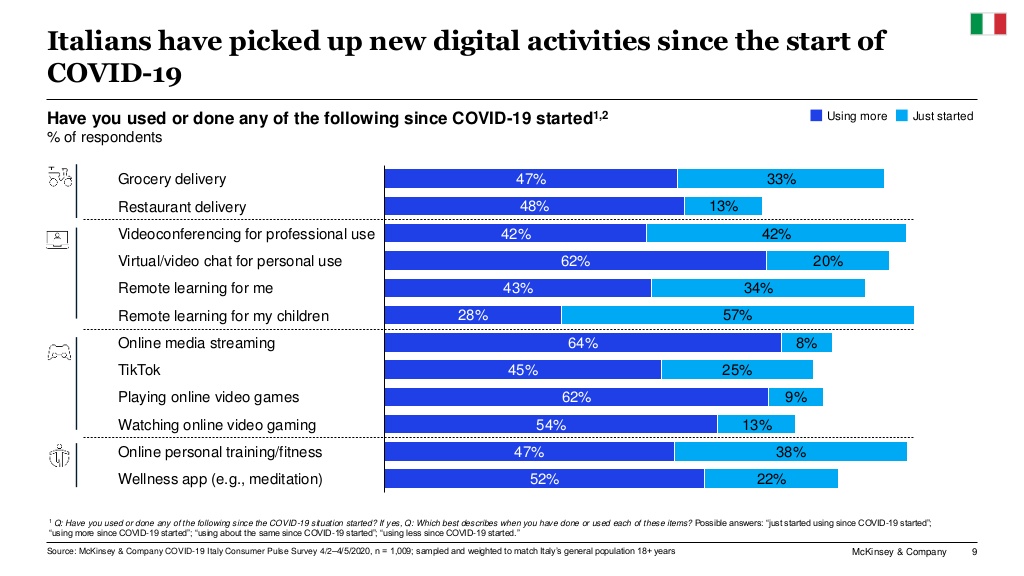
Italians are engaging more in online activities, such as online media streaming, playing video games, video calling, and using health-related apps. New activities have emerged since the Covid-19 outbreak, including online meetings, online learning for the general public and students, and online exercise classes.
Spain
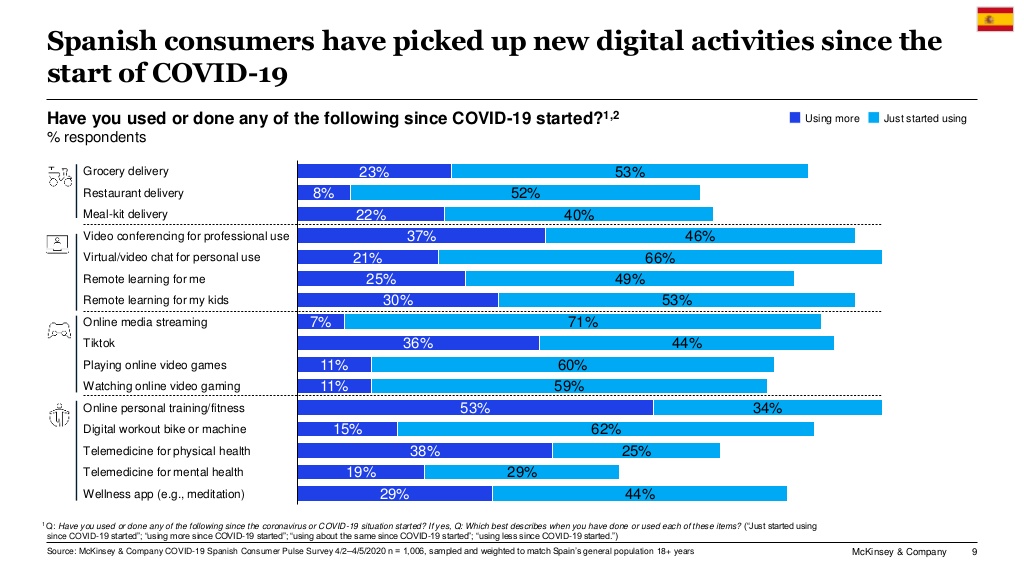
Since the Covid-19 outbreak, Spaniards have noticeably increased their online activities, such as using delivery services for general goods and food, working and studying online, home entertainment, online media streaming, and online health and exercise.
Japan
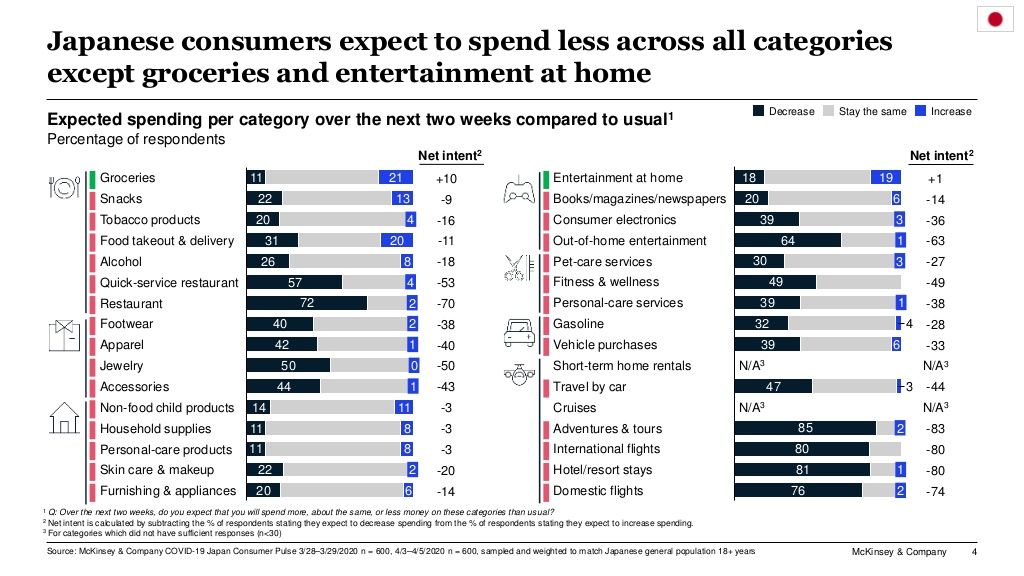
Japanese consumers are expected to spend less on all types of goods, such as snacks, takeout food and delivery services, clothing, exercise, and electronics. However, they are likely to increase spending on essential items and home entertainment, as they view these as necessary in the current situation.
From this event, it appears that the Japanese population is the most concerned about issues such as the economy and health, while the survey data (from April 1-6) was collected during a time when China was beginning to see improvements, resulting in lower levels of concern among Chinese respondents. Overall, the behavioral changes among citizens in each country show that regardless of their previous lifestyles, the commonality in this situation is a shift towards online work, increased online activities, and a focus on home life, particularly with home entertainment gaining special popularity during this time.
Source: www.mckinsey.com