How COVID-19 Affects Workers Both in and Out of the System
The COVID-19 pandemic has shaken every aspect of social and economic life on a large scale, particularly in emerging market economies like Thailand, which has a still-fragile economic structure. Before the arrival of the coronavirus, the world was already facing issues of unemployment among the working-age population and was heading towards a job crisis.
The International Monetary Fund (IMF) revealed that the global unemployment rate in 2019 averaged around 4.9%, with Thailand's unemployment rate at 1.2%, lower than the global average. However, the number of unemployed people worldwide has been steadily increasing since 2012, when Thailand's unemployment rate was at 0.7%.
Meanwhile, the International Labor Organization (ILO) assessed the impact of the coronavirus outbreak, estimating that in the baseline scenario, over 25 million jobs would be lost from the labor market, and in the worst-case scenario, up to 188 million jobs could be lost due to the coronavirus.
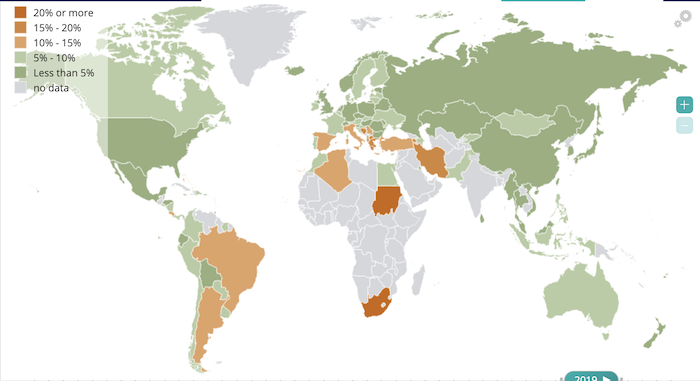
Source: https://www.imf.org/external/datamapper
How Much Has the Coronavirus Affected Thai Workers?
The sudden outbreak and rapid spread of the coronavirus have forced affected countries worldwide to implement emergency social distancing measures. In Thailand, measures to control the spread of the disease included a state of emergency declaration, leading to the closure of malls, shops, and various services, except for those related to essential goods. This caused many small businesses to temporarily shut down, immediately rendering informal workers in those places unemployed.
The National Statistical Office has been continuously collecting data on the employment situation every month. According to the employment data for December 2019, there were 38.21 million people in the labor force, with 37.66 million employed, 367,000 unemployed, and 1.79 million waiting for seasonal work. Of the 37.66 million employed, 43.69% were covered by social security under sections 33, 39, and 30, totaling 16.45 million. Meanwhile, 56.31%, or more than half of the employed population, approximately 21.21 million people, were informal workers.
Focusing specifically on informal workers in Bangkok, which is the area most affected, a survey conducted by the National Statistical Office in 2019 found that Bangkok had 26.3% of informal workers, or about 2.13 million people. In addition to the informal workers who have been abruptly halted, another directly affected group is service workers in shops and markets, totaling about 7.75 million people.
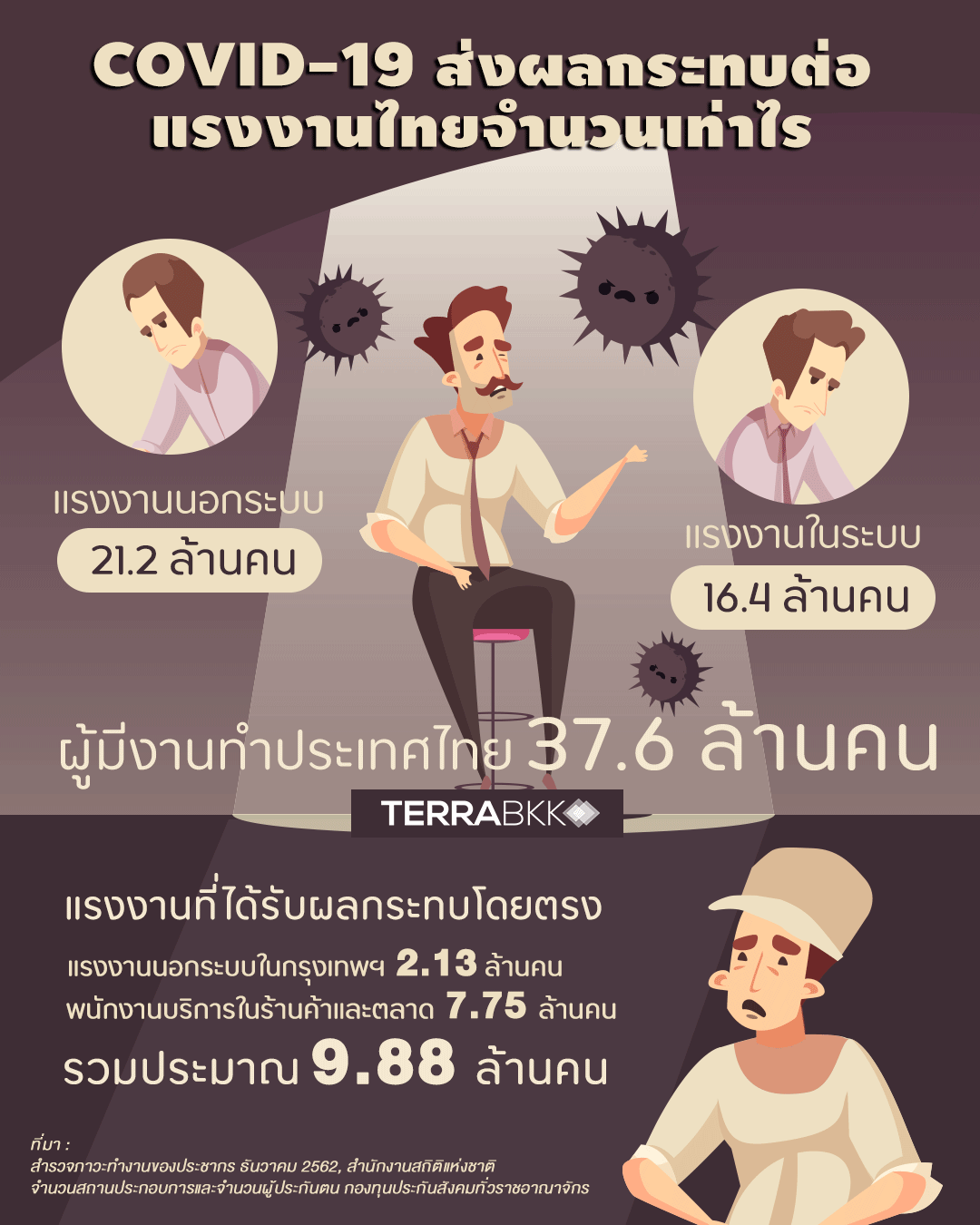
The unexpected emergence of the pandemic has been a nightmare for the labor sector and the economy worldwide, especially in Thailand, where it is estimated that approximately 9.88 million people have been directly affected, including informal workers and those in the service sector. Meanwhile, government assistance measures to support those affected during this time only cover about 3 million informal workers. This does not include formal workers who have been affected by layoffs or salary adjustments, meaning that even after the nightmare of COVID-19 passes, the nightmare of an economic crisis affecting both the global economy and Thailand will not easily fade away.
References:
COVID-19 and the world of work: Impact and policy responses
Informal Workers: A Fragile Life
Survey of Employment Conditions of the Population, December 2019
Number of Establishments and Insured Persons under the Social Security Fund Nationwide