Industries Highly Dependent on Labor May See Profits Drop by 5%-15% Due to Minimum Wage Increase
Based on Area, Cost Structure, and Adaptability
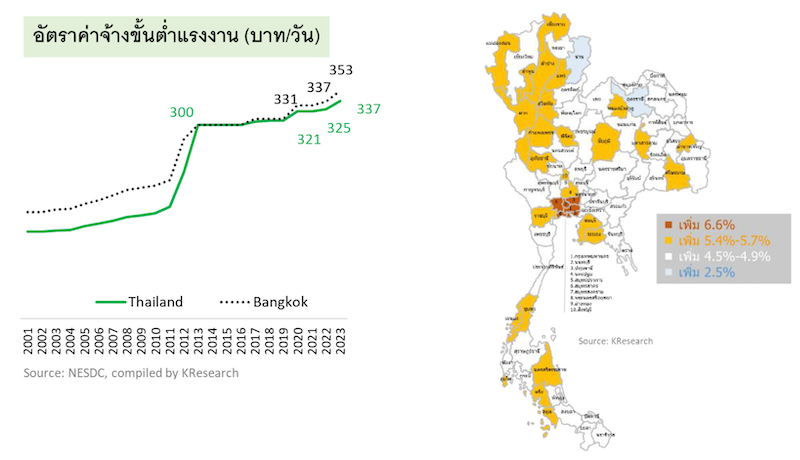
- Starting from October 1, 2022, the minimum wage for Thai workers will be adjusted for the first time in over 2 years since the last change on January 1, 2020, if the Cabinet approves the proposal from the Wage Committee, which recommends that the daily minimum wage be raised to 328-354 baht, with the national average (77 provinces) set at 337 baht, representing an increase of 5% from the previous rate.
- The new rate will take effect in the last quarter of the year, meaning that in 2022, the average minimum wage across the country will be 325 baht/day (the first 9 months averaged 321 baht), which is an increase of approximately 1.3% from 2021. In 2023, the average minimum wage is expected to rise to 337 baht/day for the full year, an increase of 3.7% from 2022, assuming no further changes occur.
- The uneven increase across provinces means that industries located in different areas will be affected differently. Initially, businesses located in Bangkok and its surrounding areas will face a greater impact from rising labor costs compared to other regions.
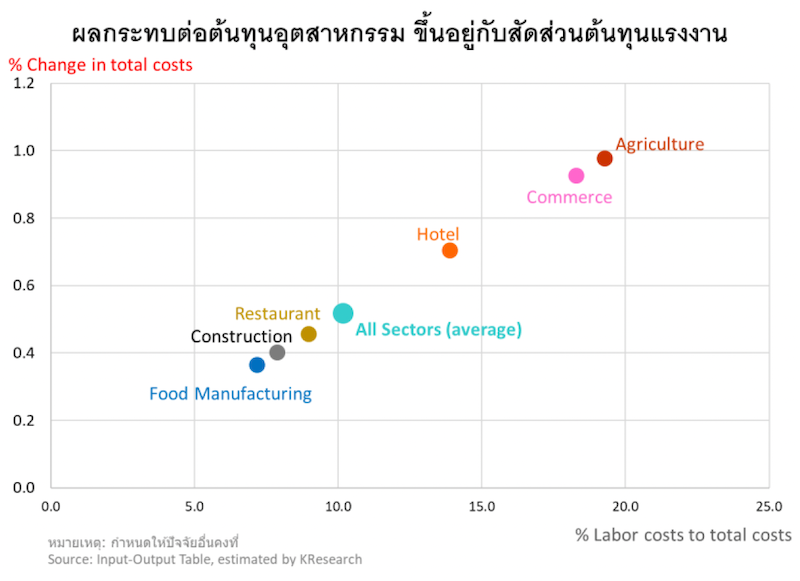
- In addition to geographical differences, variations in cost structure and adaptability also lead to unequal impacts on industries from the minimum wage increase. The Kasikorn Research Center estimates that the overall average Operating Profit Margin (OPM) for the industrial sector may be affected by approximately 4.6% due to labor costs accounting for about 10.2% of total costs, with the minimum wage increase expected to raise overall costs by about 0.5%, assuming other factors remain constant and businesses must raise wages accordingly, even if some do not base their wages on the minimum wage.
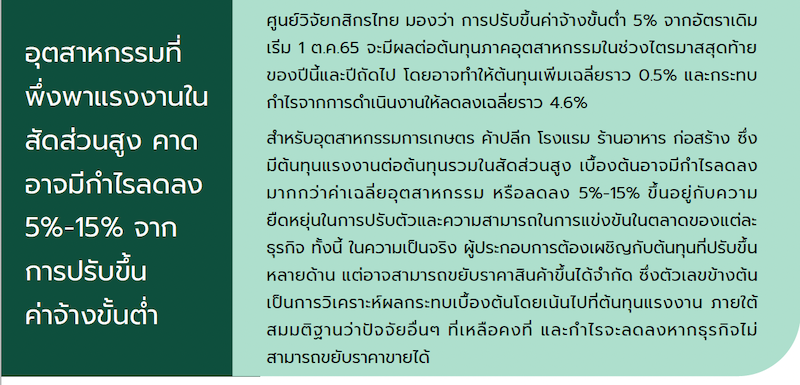
- Furthermore, the Kasikorn Research Center believes that industries highly dependent on labor, such as agriculture (farming, fishing, etc.), retail, hotels, restaurants, and construction, will be the groups most affected, with profits potentially decreasing by 5%-15% or more than the industry average. Some businesses in the hotel and restaurant sectors face significant challenges, as the timing for returning to profitability may be delayed due to rising costs. In reality, operators are facing increased costs in various areas but may have limited ability to raise product prices. The figures mentioned above are preliminary impact analyses focusing on labor costs, under the assumption that other factors remain constant, and profits will decline if businesses cannot adjust selling prices.
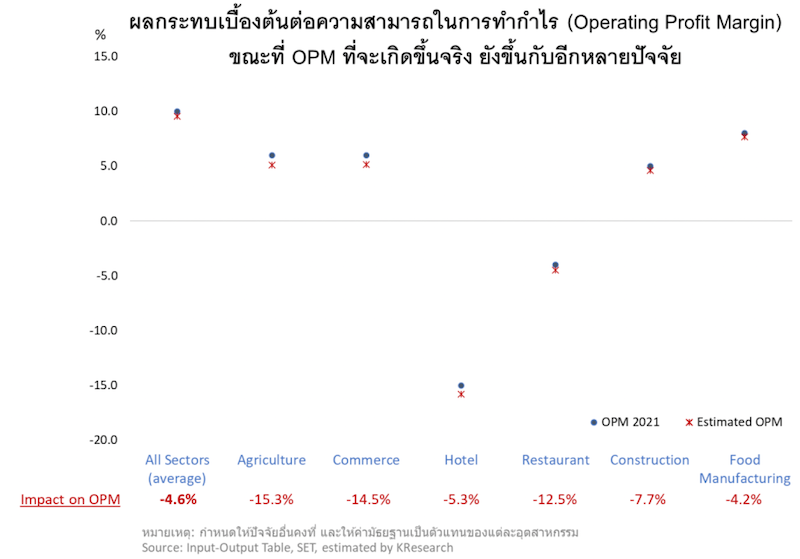
- Not only labor costs, but the industrial sector has already faced cost pressures previously and is likely to continue experiencing high levels of costs, including raw materials and energy. Additionally, there may still be financial costs amid a revenue situation that, while gradually improving, remains fragile and reflects a recovery trend that is not robust. This means that maintaining profitability will continue to be a pressing challenge for the industrial sector.
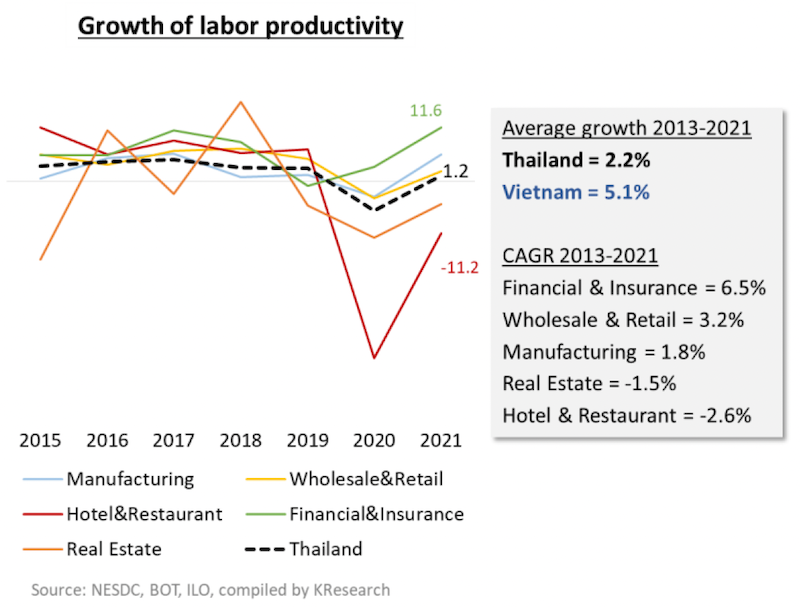
- The Kasikorn Research Center views labor issues as increasingly important moving forward as Thailand's demographic structure begins to decline, with an aging workforce leading to a hyper-aged society in less than 10 years. Therefore, improving labor productivity is a crucial task that the industrial sector must accelerate now if possible to maintain competitiveness and survive in an increasingly complex and rapidly changing environment. Historically, labor productivity growth in the Thai industry has been uneven and, at the national level, has increased at a slower rate than in Vietnam.

Disclaimers This research report is prepared by Kasikorn Research Center Co., Ltd. (KResearch) for general dissemination, relying on publicly available information or data deemed reliable at the time of preparation, which may change over time. KResearch cannot guarantee the accuracy, reliability, suitability, completeness, or timeliness of such information and does not intend to solicit, recommend, advise, or persuade any decision-making actions. Therefore, you should study the information carefully and exercise caution and sound judgment before making any decisions. KResearch will not be liable for any damages arising from the use of such information.
Any information contained in this research report is the property of KResearch and/or third parties (as applicable). The use of such information (in whole or in part) must acknowledge the ownership rights of KResearch and/or third parties (as applicable) or the source of that information. You may not reproduce, modify, adapt, alter, distribute, publish, or engage in any such activities for commercial purposes without prior written permission from KResearch and/or third parties (as applicable).