
Why Thailand's Covid-19 Death Rate is Low
The Covid-19 pandemic is considered one of the largest outbreaks in decades, with many infections and deaths reported globally, including in Thailand. Currently, Thailand has 1,978 confirmed cases, averaging 0.0028% of the total population of 69,799,978, ranking 36th in the world (data from worldometers.info as of April 3, 2020). This is a remarkably low rate compared to other countries with similar populations.
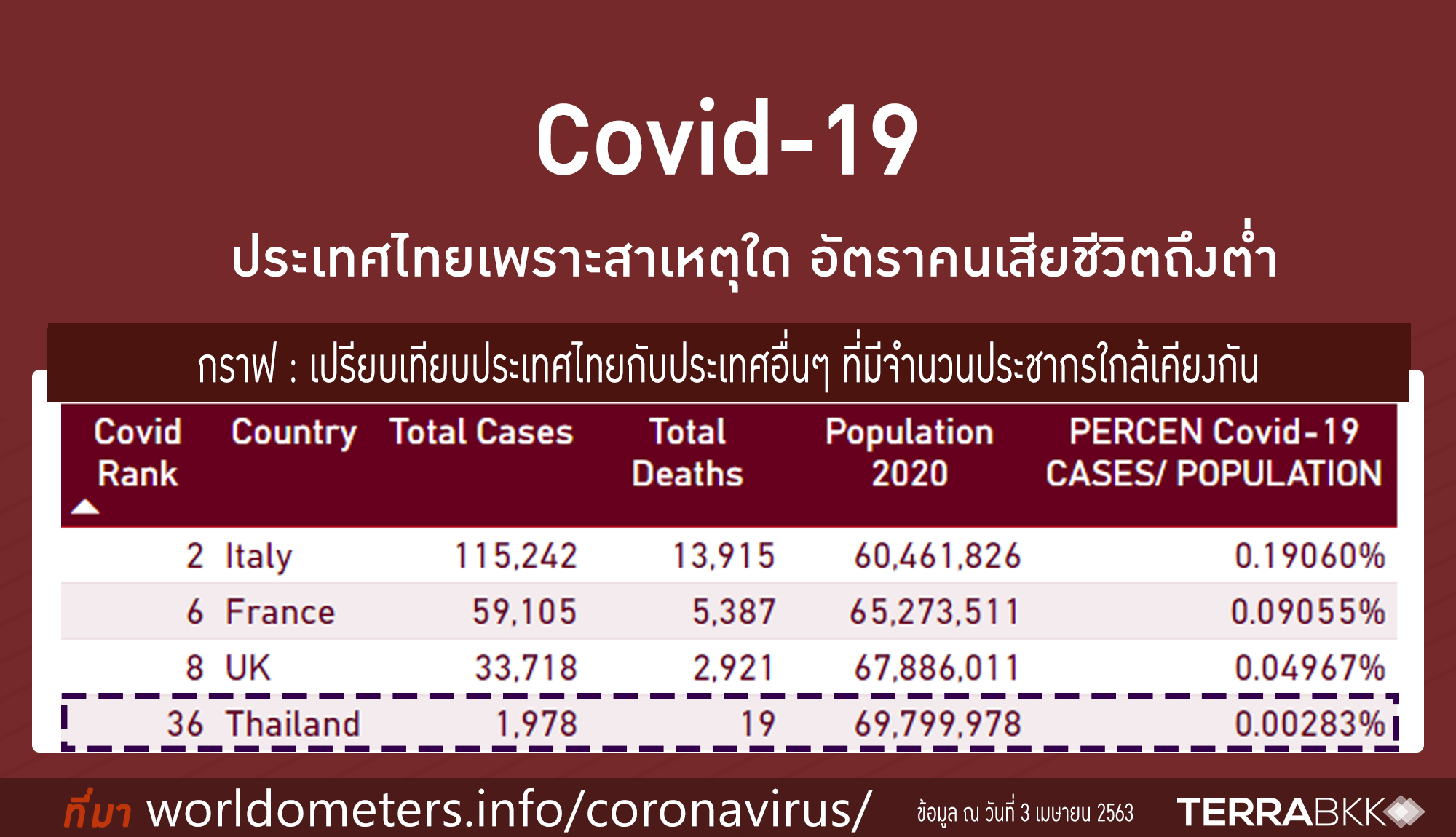
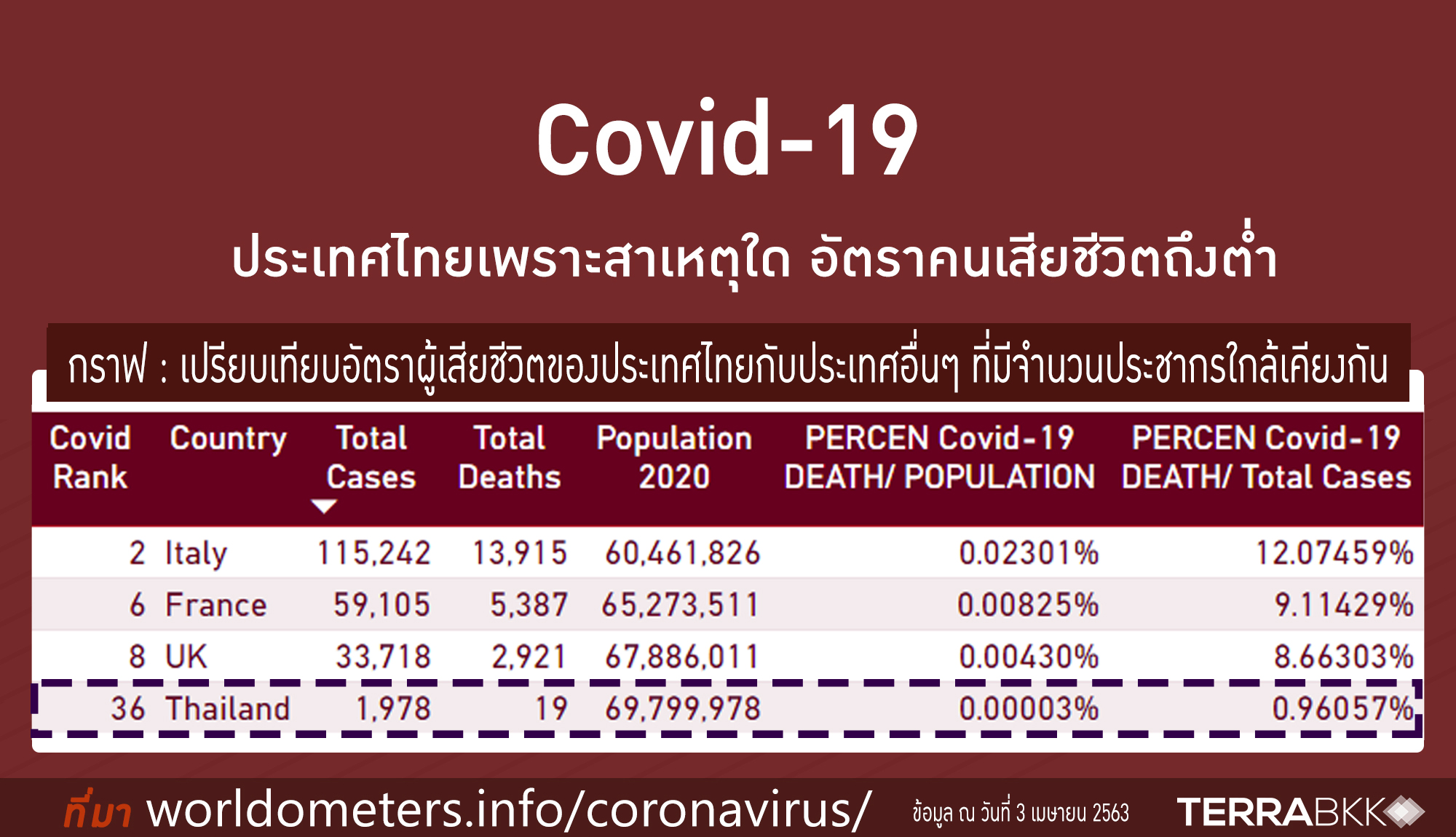
When examining the death rate in Thailand, there have been 19 deaths from Covid-19 out of 1,978 confirmed cases, which is 0.96% of the infected and 0.00003% of the total population. Both figures for infections and deaths remain very low compared to other countries with similar populations.
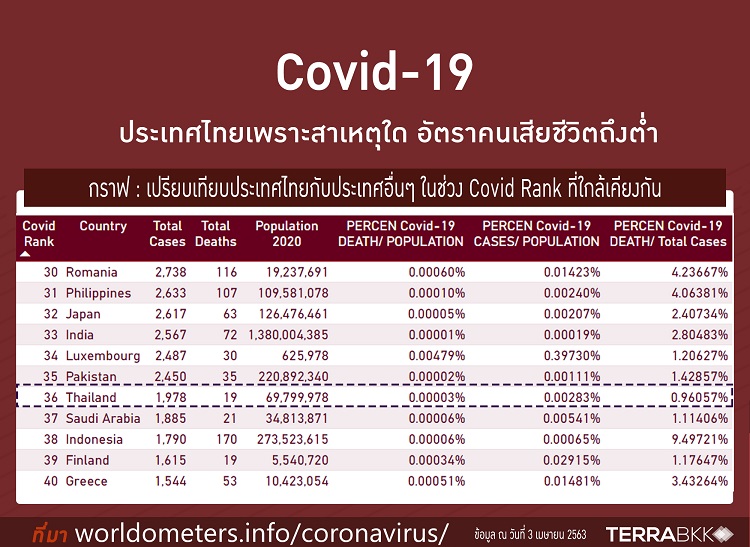
Furthermore, when comparing with countries that have similar Covid-19 case rankings, it becomes even clearer that Thailand's rates of infection and death are significantly lower.
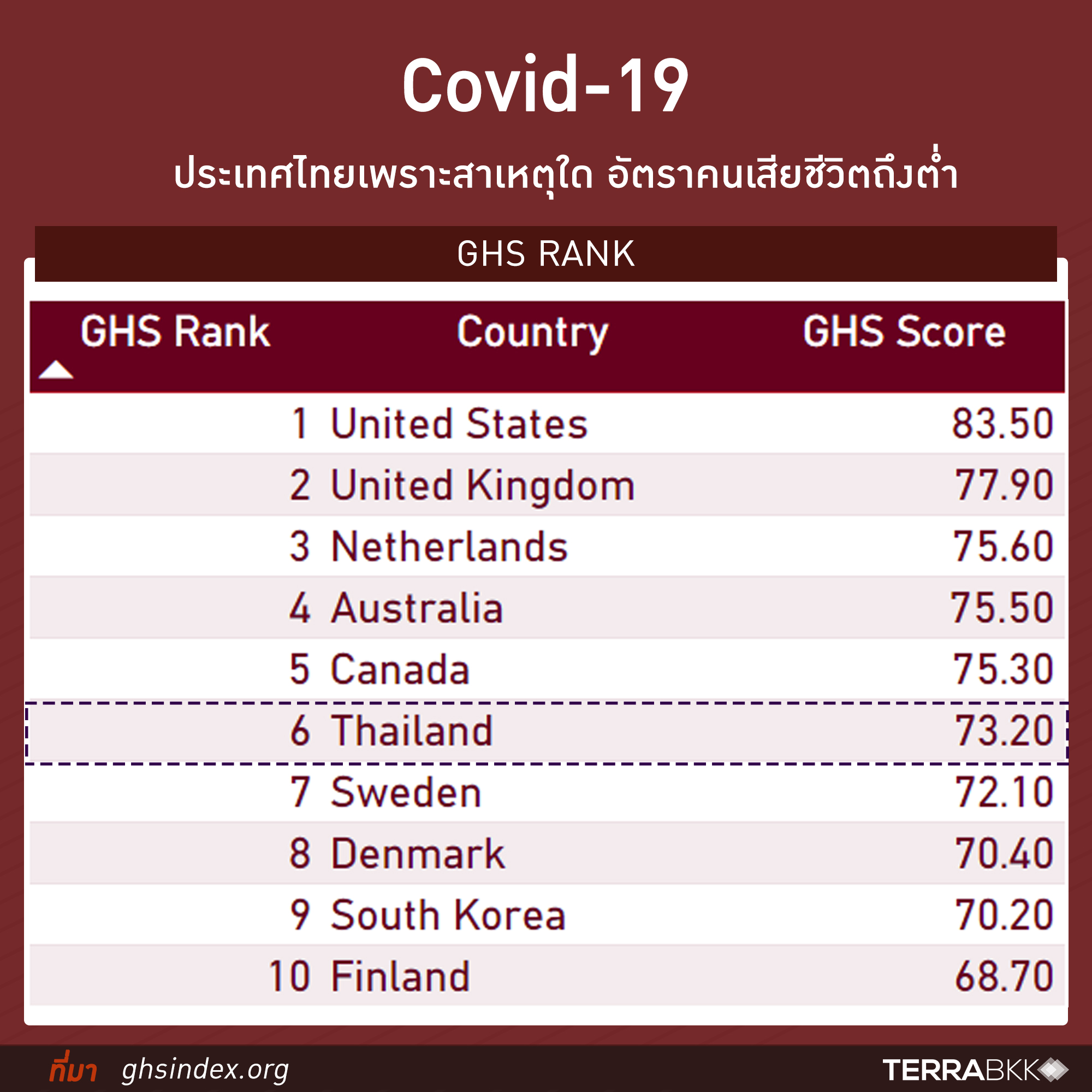
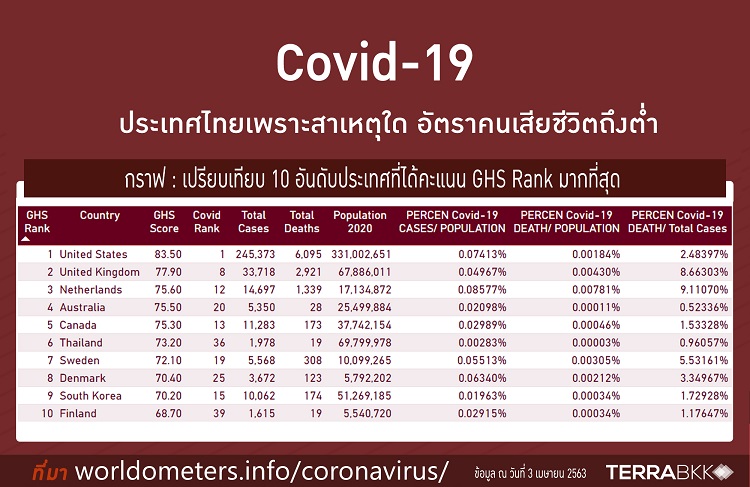
It cannot be denied that Thailand excels in medical care, with well-prepared and skilled healthcare personnel. Thailand is also recognized for its high readiness to address health issues. According to the Global Health Security Index 2019, Thailand ranks 6th overall, following the United States, United Kingdom, Netherlands, Australia, and Canada.
Additionally, the GHS has categorized the scoring into six categories:
- Emergency preparedness
- Rapid disease detection and effective reporting of outbreaks
- Quick response and reduction of disease spread
- Personnel readiness
- Commitment to developing national capabilities
- Overall risk and environmental conditions of the country regarding biological threats
The Terrabkk team has provided details of each category, showing the Top 10 countries in each category.
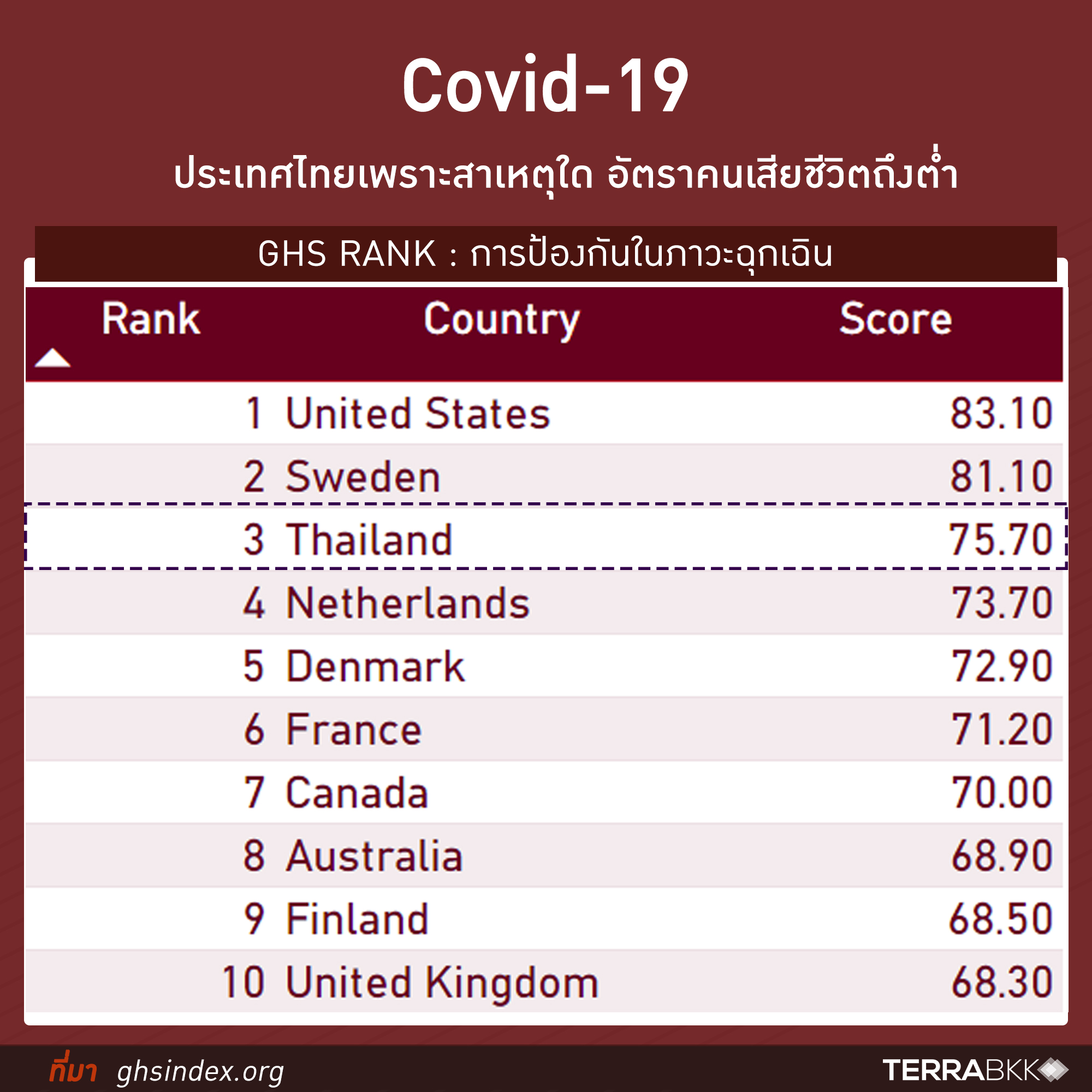
Emergency Preparedness
Thailand ranks 3rd in this category, demonstrating its readiness to handle emergencies effectively.
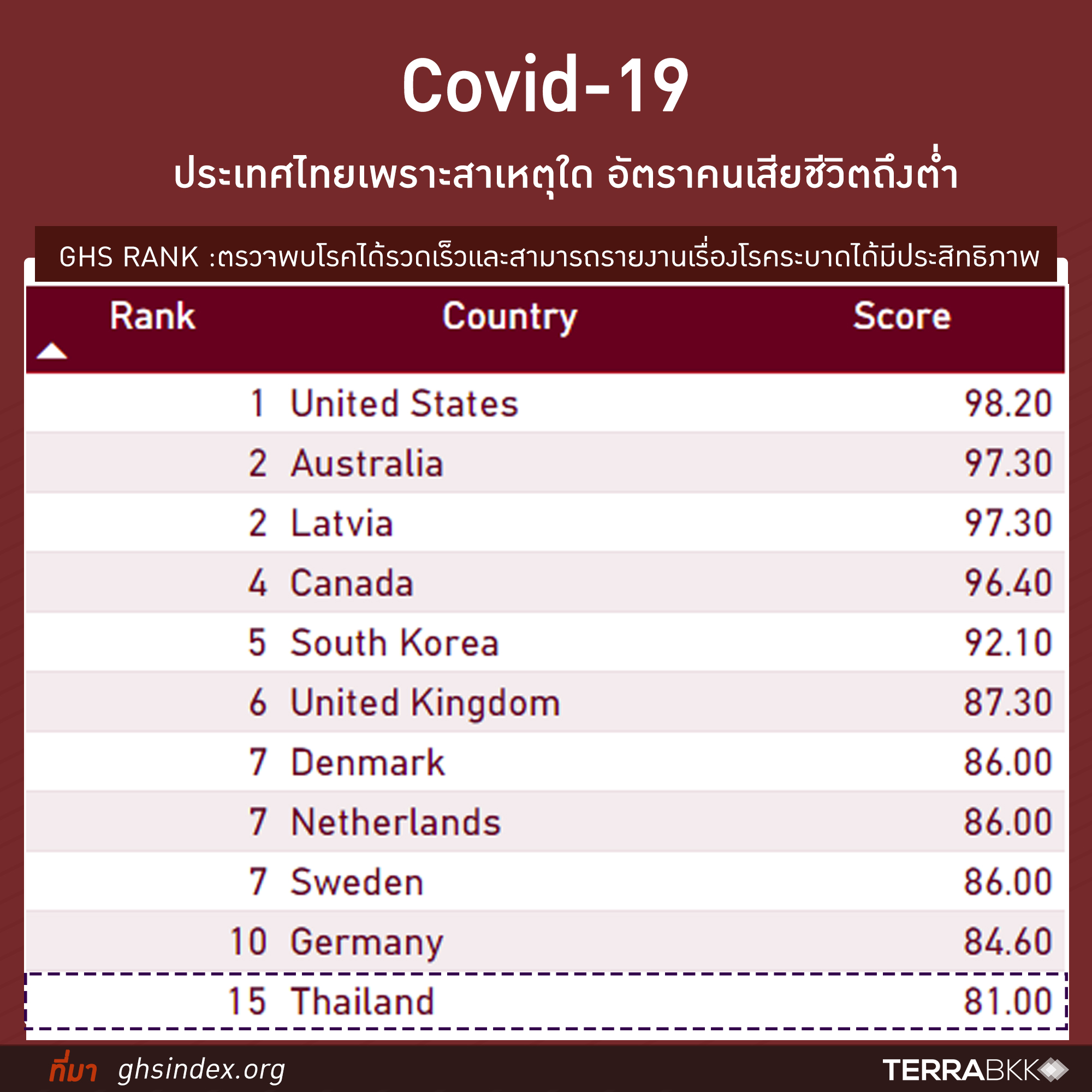
Rapid Disease Detection and Effective Reporting
Thailand does not rank in the Top 10 in this category but still holds a good position at 15th in the world with a score of 81.
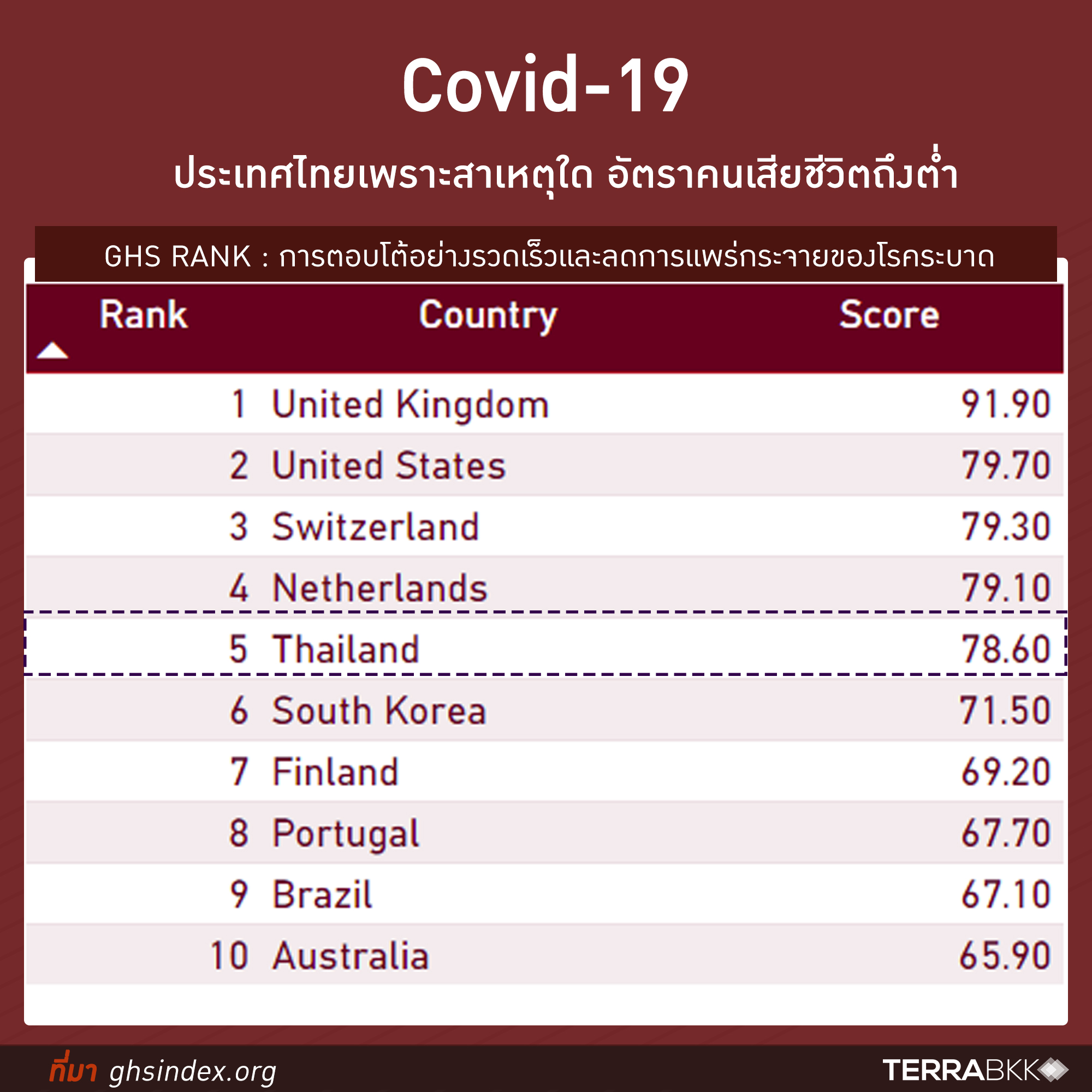
Quick Response and Reduction of Disease Spread
Thailand ranks 5th in this category, indicating its readiness and quick response to health issues.
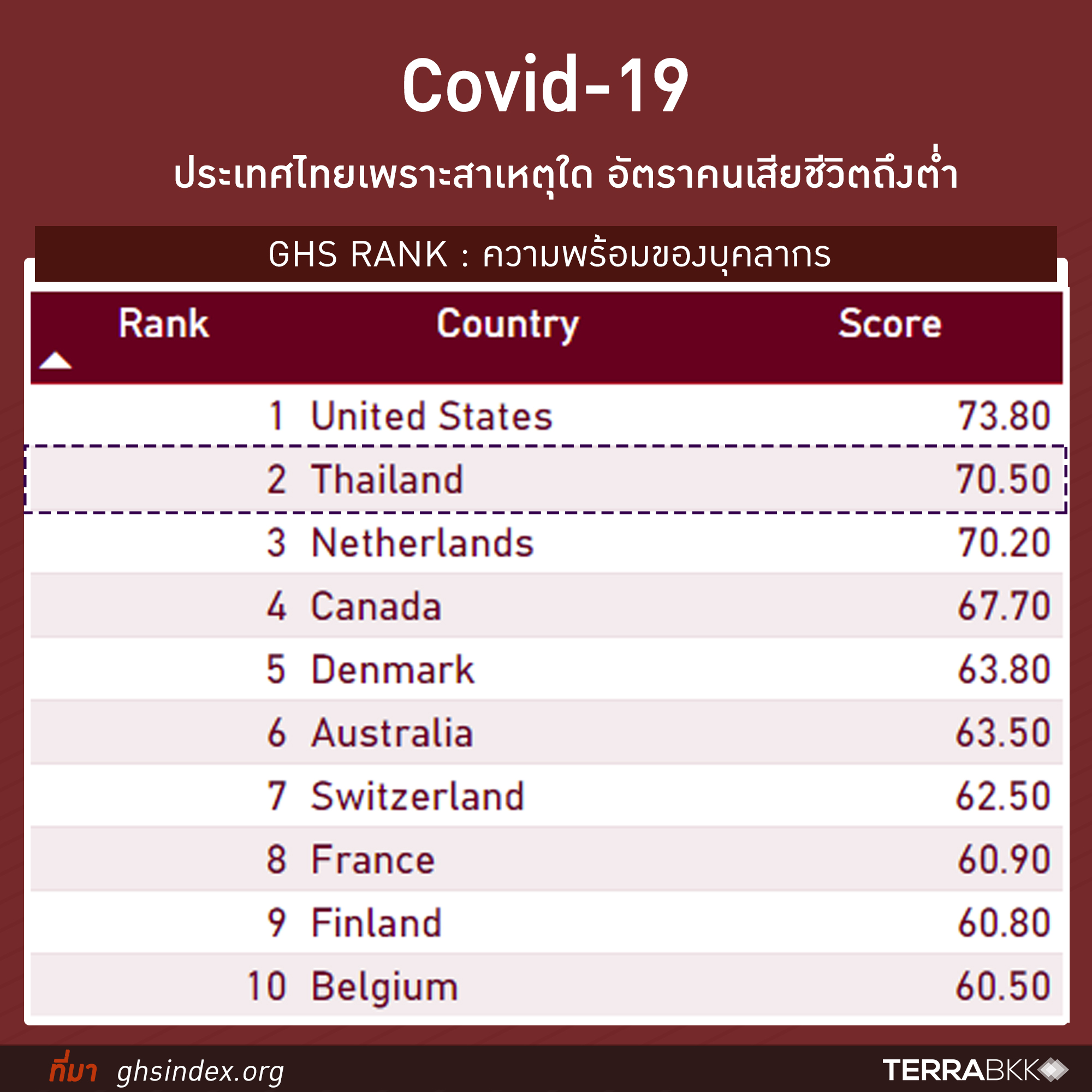
Personnel Readiness
Thailand ranks 2nd in this category, showcasing the quality and potential of its healthcare personnel.
Commitment to Developing National Capabilities
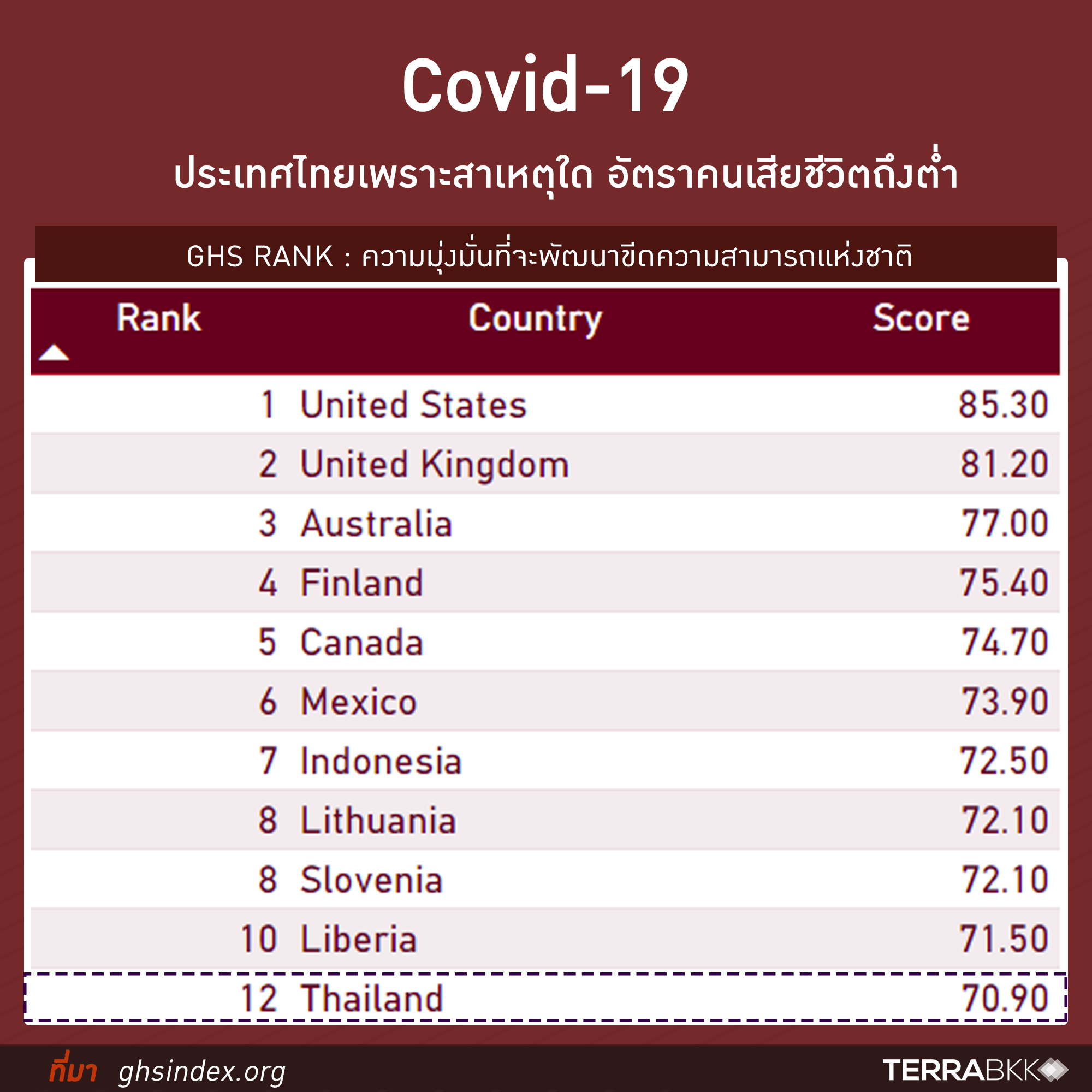
Thailand ranks 12th in this category, reflecting its commitment to enhancing the capabilities of healthcare personnel and medical tools.
Promoting research to develop new tools and knowledge for national advancement.
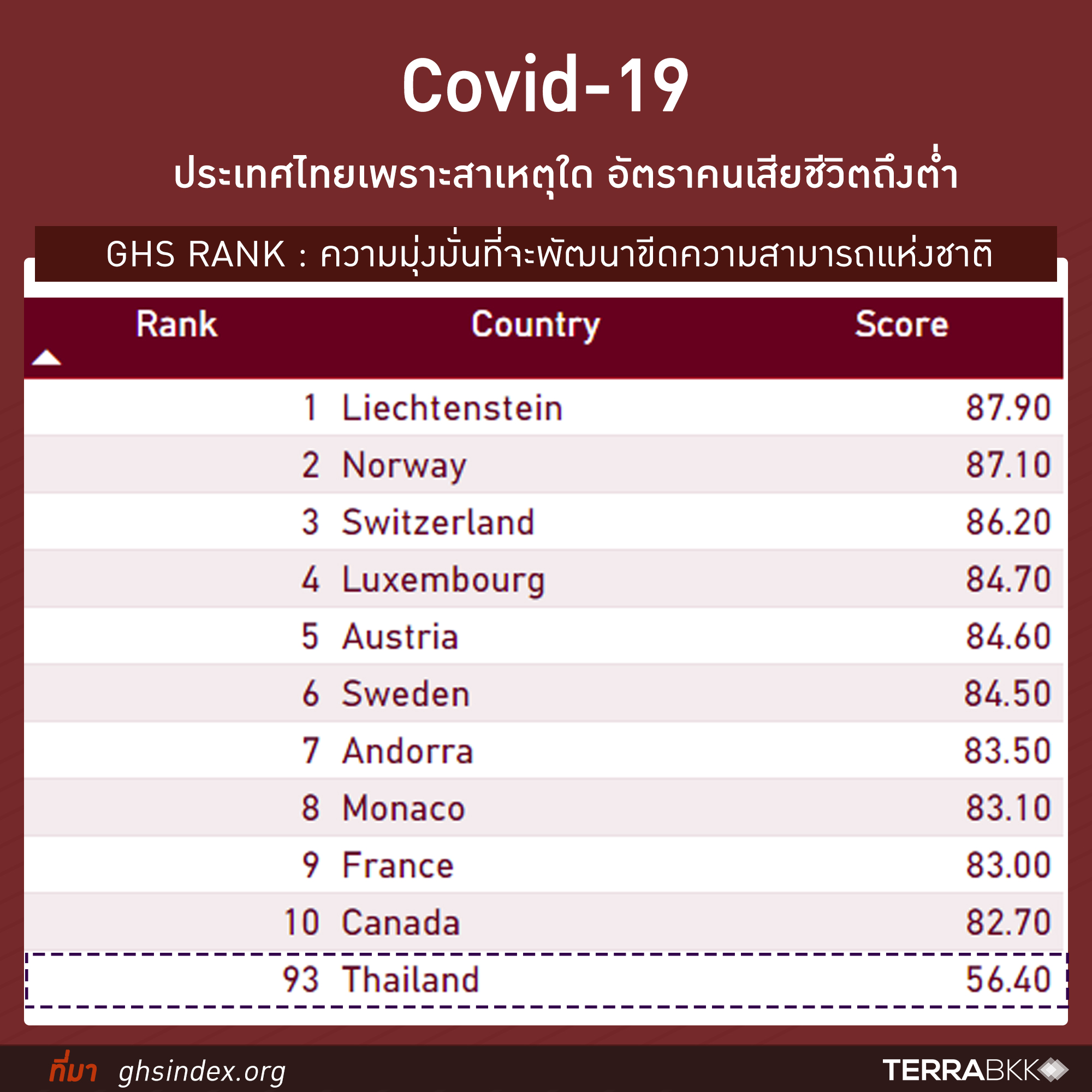
Overall Risk and Environmental Conditions Regarding Biological Threats
This category received the lowest score for Thailand among all categories, indicating a need for development. Thailand ranks 93rd.
With a score of 56.4, it shows that the general environment is at risk of disease accumulation, which could lead to outbreaks.
Looking at other countries in the Top 10 of the GHS index, it is evident that countries well-prepared to handle health issues have significantly low rates of infection and death compared to their populations, as shown in the image below.
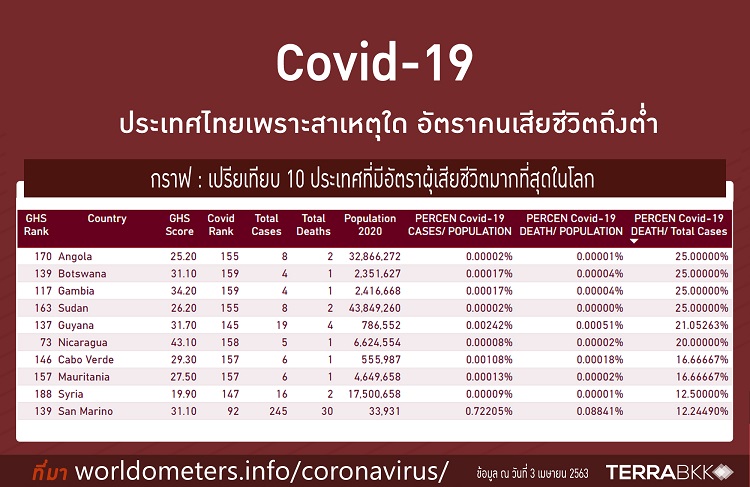
Countries with the highest death rates are mostly in southern Africa, where medical preparedness is lacking. Observing the graph below, it is clear that while the number of deaths and infections in this group is not high, the death rates exceed those of many countries with higher infection numbers. For example, Sudan has only 8 confirmed cases, which is lower than many countries, but has already recorded 2 deaths, resulting in a death rate of 25.00%. If Sudan had the same number of cases as the United States, which currently has the highest number of infections at 245,373, it would average over 61,300 deaths.
Therefore, Terrabkk concludes that if each country is well-prepared and maintains high healthcare standards, it can effectively control the situation during crises like the Covid-19 pandemic and resolve issues quickly. Terrabkk wishes everyone strength in overcoming this situation together.
Source: Infection numbers and population data from worldometers.info as of April 1, 2020, and ghsindex.org