Choosing the Right Tires for Your Car
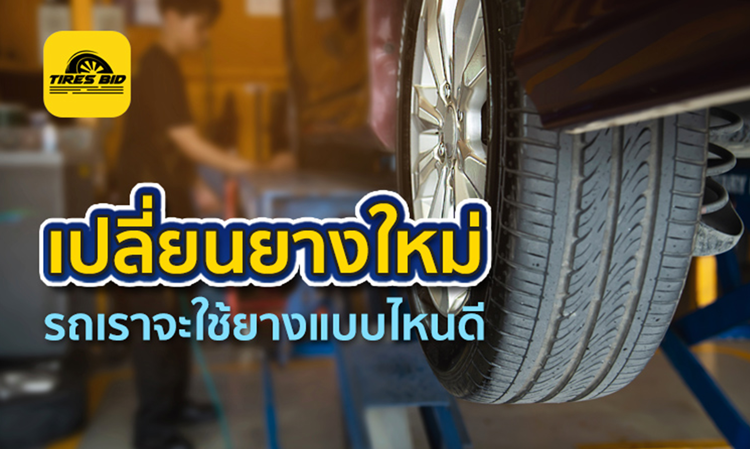
Hello everyone! Many of you might be wondering how to choose the right tire model for your vehicle, right? There are various brands and models available, each with different characteristics. Today, TiresBid will help guide you through the basics of selecting the right tire model and tread pattern.
The main categories for choosing tires are as follows: fuel-efficient tires, quiet comfort tires, sport performance tires, heavy-duty tires, and on/off-road tires. Here’s how to differentiate them:
For fuel-efficient tires, they are mostly suitable for small cars up to the D-segment (like Camry, Accord, etc.). These tires are ideal for city driving with lower speeds and frequent starts. The unique feature of energy formula tires is their ability to rebound quickly upon contact with the road, which helps reduce energy consumption during acceleration or driving. However, if you prefer high-speed driving, you might notice a slight instability with these tires. On the plus side, they provide a comfortable ride, as they are typically comfort tires that offer a satisfactory level of quietness. Examples include “Michelin XM2+ Energy, Dunlop EC300 Ensave, Bridgestone Ecopia EP300, and Hankook Kinergy.”
The second category focuses on quiet comfort tires, suitable for vehicles from the B-segment and above. These tires offer higher performance than the first category in terms of road grip, water dispersion, and quietness. Typically, they feature asymmetrical tread patterns (the left and right sides of the tread are different) and denser tread patterns to minimize noise. The construction of these tires allows for better shock absorption, resulting in a smoother ride and reduced energy consumption due to less vibration. Examples include Michelin Primacy4, Bridgestone Turanza T005A, Continental UC6, and Yokohama V552.
The third category is sport performance tires, which serve three main purposes: excellent water dispersion, strong road grip, and good cornering ability. These tires typically have asymmetrical and directional tread patterns. The asymmetrical tread provides better grip during cornering, while the directional tread offers superior straight-line performance and water dispersion. The construction of these tires is stiffer than that of quiet comfort tires, reducing body roll during cornering and providing better stability at high speeds. This category offers the best road grip performance among the three. Examples include Michelin Pilot Sport 4, Bridgestone T005A, Continental MC6, Goodyear F1D5, Maxxis I-Pro, and Apollo Aspire. For SUVs, examples include Michelin Primacy SUV, Bridgestone HL001, Continental UC6 SUV, Dunlop PT3, Maxxis HT770, and Apollo Apterra HT2.
The fourth category is heavy-duty tires, which we divide into two groups: those for loads under 2 tons and those for loads over 2 tons. These tires are marked with “Light Truck” for standard pickups under 2 tons, while those for over 2 tons are labeled as Heavy Duty, with Michelin XCD2 being a popular choice.
Finally, the last category is for those who drive both on and off-road. For this type, we recommend selecting based on the most demanding use, which is off-road driving. These tires typically have a blocky tread pattern to aid in traction, as other tire types may not perform well in off-road conditions. Additionally, these tires are made from tougher rubber to reduce damage when used off-road. However, they may not be suitable for high-speed driving on highways and can be noisier. Examples include Michelin LTX Force, Bridgestone AT693, Dunlop AT3, and Maxxis AT700, which usually have “AT” in their tread pattern name.
These are the four main categories I wanted to introduce to help you understand when purchasing tires. Choosing the wrong type that doesn't meet your needs could make your investment of 10,000 to 20,000 baht less worthwhile. If you need advice, feel free to consult us at www.tiresbid.com, where our knowledgeable team can provide insights on the best tire brands and models for your needs. Stay tuned for our next article, where we’ll cover more tips on tire selection!



Thank you for the information from www.tiresbid.com